




One autumn evening almost 12 years ago, young Dusan Jovanovic left his home in central Belgrade to buy a fizzy drink.
He never made it to the shop. His father found the teenager's lifeless body outside his home just minutes later, mauled to death by a group of skinheads.
Dusan became Serbia's first Rom known to have been slain in a racially motivated attack.
Since his killing, assaults on ethnic minorities, particularly Roma -- one of the most victimized groups in Serbia and indeed Europe -- have continued unabated.
"They attacked me for no reason and brutally beat me up. I fell to the ground," a Romany man who was attacked by strangers in the streets of Belgrade last year tells RFE/RL's Balkan Service. "I was barely able to walk back home."
Serbia is not alone. Over the past decade, countries of the former communist bloc have provided fertile soil for ultranationalism and racial violence.
'Friendship Of Peoples'
In Russia, 30 hate-motivated murders have been reported so far this year. That number is a sharp drop from 2008, when 66 fatalities were reported during the first five months of the year. But it is still shockingly high, with racist and neo-Nazi attacks reported in 20 regions of Russia.
Similar cases have been registered, to a lesser degree, in Ukraine, Belarus, and elsewhere. Even in postcommunist countries that have since joined the European Union, like the Czech Republic, attacks and discrimination against Roma are routine.
 Nationalists in Russia shout anti-immigrant slogans in Moscow in March 2009.From country to country across the postcommunist world, some suggest, xenophobic sentiment springs from the same source.
"The main cause is an identity crisis: the old system has shattered and a new one has yet to be created," says Emil Payn, the head of the Moscow-based Center for Ethnological and Anthropological Studies. "All these countries are experiencing nationalist processes. This can be viewed as a negative phenomenon, but one has to understand that it inevitably arises in post-imperial, post-totalitarian societies."
The Soviet regime did little to encourage genuine ethnic diversity, ordering the mass deportation of whole minority populations and confining local traditions to watered-down, approved folklore.
Despite the notion of the "friendship of peoples" upheld by communist leaders, xenophobia and anti-Semitism merely lay dormant, only to resurface following the Soviet demise.
The communist model, Payn notes, also produced a general culture of intolerance that postcommunist societies have yet to shed.
"None of these countries ever experienced democracy and, by extension, tolerance," he says. "Tolerance doesn't only apply to ethnic minorities. Tolerance comes with an understanding that all others -- those who are politically, ideologically, or socially different -- also have a right of expression, a right to their own opinions."
Tough To Predict
Just like their communist predecessors, current governments across the region have largely failed to keep eruptions of xenophobia in check. Critics say they have even contributed to mounting racist violence by turning a blind eye to hate crimes and allowing ultranationalist groups to flourish, out of negligence or sometimes even sympathy with xenophobic attitudes.
A reporter for RFE/RL's Balkan Service in Belgrade, Milos Teodorovic, in 2008 co-authored "Hot Blood," an award-winning film on Serbian ultranationalist group Nacionalni Stroj (National Alignment).
The initial goal of the film was to put Nacionalni Stroj, then a small, marginalized organization, under the microscope. But Teodorovic ended up documenting the group's extraordinary rise, which he ascribes to staunch political backing in Belgrade.
"That year, Kosovo declared independence and a lot of other things happened -- for example, [former Bosnian Serb leader Radovan] Karadzic's arrest. Over this period, this small organization became very strong and very loud," he says. "My impression is that it wasn't accidental. It had the support of a few very strong parties, including the Democratic Party of Serbia of Vojislav Kostunica, who was then prime minister and who wanted to send the message to the European Union and the international community that Serbia didn't accept the idea of an independent Kosovo. He used this organization to send his message."
 A scene from "Hot Blood," the award-winning film on Serbian ultranationalist group Nacionalni StrojThere have been relatively few racism deaths in Serbia, where attackers usually stop short of killing their victims. But in the Balkans, still reeling from a bloody interethnic war, ultranationalism has an explosive potential.
The presidential election in February 2008 of reformist Boris Tadic, who vowed to crack down on ultranationalists, has brought a lull in xenophobic violence -- illustrating the intimate ties between power structures and xenophobia.
Scapegoat Communities
That connection is perhaps most obvious in Russia and Ukraine, two of the region's most dangerous countries for foreigners.
The rights watchdog Amnesty International sounded the alarm in a report released last week, denouncing the "lack of political will to tackle racism" in these countries.
It mentioned the case of four young Ukrainians who in April were handed 13-year prison sentences for murdering a South Korean citizen. Despite the brutality of the attack -- the victim died after repeated blows to the head with spiked boots -- the four were initially accused only of causing bodily injury and hooliganism.
Only after prolonged lobbying by the South Korean Embassy in Kyiv were the assailants charged with murder and racial hatred, which prompted an unsuccessful attempt by the Prosecutor-General's Office to scrap the racist element of the charge.
John Dalhuisen, an Amnesty International researcher on discrimination in Europe and Central Asia, says this lack of political will to combat racism becomes all the more dangerous in the current context of global economic crisis.
 Romany boys watch as shanties burn as part of an official effort to shut down a housing area outside Sarajevo in June."The crisis is obviously forcing a rise in social tensions, discontent, and an increasing attempt to scapegoat minority communities, and to pass the buck onto others," Dalhuisen says.
A weak civil society and state crackdowns on human rights groups, particularly in Russia, have compounded the problem.
This climate of impunity has emboldened ultranationalists to extend their attacks to non-Slavic Russian citizens as well as human rights defenders, intellectuals, and students engaged in the fight against racism.
In one of the most high-profile murders of activists, Nikolai Girenko, a prominent scholar and antiracism campaigner, was shot dead in 2004 through the front door of his St. Petersburg apartment as he approached to answer the doorbell.
Although such killings have earned neo-Nazis and ultranationalists much attention, such groups still represent a small minority in postcommunist societies.
Everyday xenophobia, however, is pervasive. And it's this more subtle, socially accepted form of racism that may prove the hardest to root out.
"The extreme form of this xenophobic sentiment is anchored in a society in which common stereotypes and xenophobic attitudes remain pervasive," says Amnesty International's Dalhuisen. "And that's really the issue: the failure of these societies to address the xenophobia that they have within them, to look at themselves critically."
RFE/RL's Balkan Service contributed to this report

He never made it to the shop. His father found the teenager's lifeless body outside his home just minutes later, mauled to death by a group of skinheads.
Dusan became Serbia's first Rom known to have been slain in a racially motivated attack.
Since his killing, assaults on ethnic minorities, particularly Roma -- one of the most victimized groups in Serbia and indeed Europe -- have continued unabated.
"They attacked me for no reason and brutally beat me up. I fell to the ground," a Romany man who was attacked by strangers in the streets of Belgrade last year tells RFE/RL's Balkan Service. "I was barely able to walk back home."
Serbia is not alone. Over the past decade, countries of the former communist bloc have provided fertile soil for ultranationalism and racial violence.
'Friendship Of Peoples'
In Russia, 30 hate-motivated murders have been reported so far this year. That number is a sharp drop from 2008, when 66 fatalities were reported during the first five months of the year. But it is still shockingly high, with racist and neo-Nazi attacks reported in 20 regions of Russia.
Similar cases have been registered, to a lesser degree, in Ukraine, Belarus, and elsewhere. Even in postcommunist countries that have since joined the European Union, like the Czech Republic, attacks and discrimination against Roma are routine.
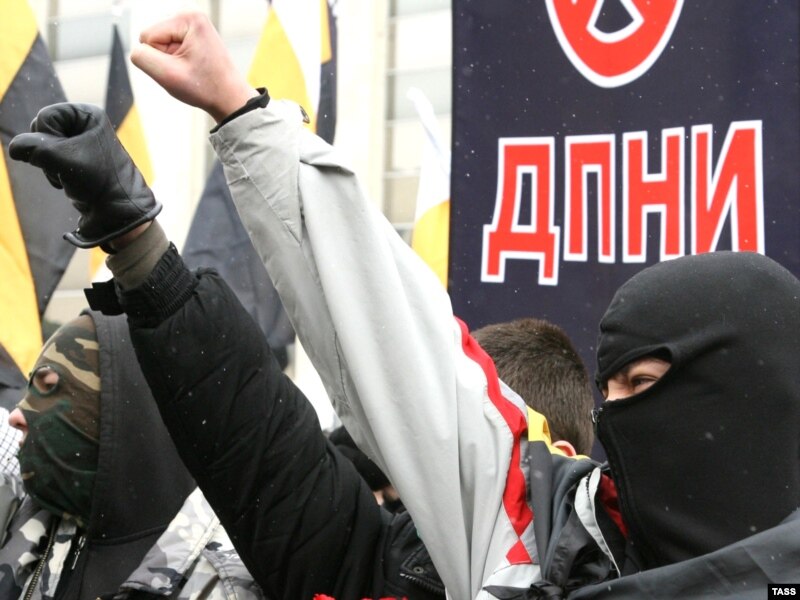
"The main cause is an identity crisis: the old system has shattered and a new one has yet to be created," says Emil Payn, the head of the Moscow-based Center for Ethnological and Anthropological Studies. "All these countries are experiencing nationalist processes. This can be viewed as a negative phenomenon, but one has to understand that it inevitably arises in post-imperial, post-totalitarian societies."
The Soviet regime did little to encourage genuine ethnic diversity, ordering the mass deportation of whole minority populations and confining local traditions to watered-down, approved folklore.
Despite the notion of the "friendship of peoples" upheld by communist leaders, xenophobia and anti-Semitism merely lay dormant, only to resurface following the Soviet demise.
The communist model, Payn notes, also produced a general culture of intolerance that postcommunist societies have yet to shed.
"None of these countries ever experienced democracy and, by extension, tolerance," he says. "Tolerance doesn't only apply to ethnic minorities. Tolerance comes with an understanding that all others -- those who are politically, ideologically, or socially different -- also have a right of expression, a right to their own opinions."
Tough To Predict
Just like their communist predecessors, current governments across the region have largely failed to keep eruptions of xenophobia in check. Critics say they have even contributed to mounting racist violence by turning a blind eye to hate crimes and allowing ultranationalist groups to flourish, out of negligence or sometimes even sympathy with xenophobic attitudes.
A reporter for RFE/RL's Balkan Service in Belgrade, Milos Teodorovic, in 2008 co-authored "Hot Blood," an award-winning film on Serbian ultranationalist group Nacionalni Stroj (National Alignment).
The initial goal of the film was to put Nacionalni Stroj, then a small, marginalized organization, under the microscope. But Teodorovic ended up documenting the group's extraordinary rise, which he ascribes to staunch political backing in Belgrade.
"That year, Kosovo declared independence and a lot of other things happened -- for example, [former Bosnian Serb leader Radovan] Karadzic's arrest. Over this period, this small organization became very strong and very loud," he says. "My impression is that it wasn't accidental. It had the support of a few very strong parties, including the Democratic Party of Serbia of Vojislav Kostunica, who was then prime minister and who wanted to send the message to the European Union and the international community that Serbia didn't accept the idea of an independent Kosovo. He used this organization to send his message."

The presidential election in February 2008 of reformist Boris Tadic, who vowed to crack down on ultranationalists, has brought a lull in xenophobic violence -- illustrating the intimate ties between power structures and xenophobia.
Scapegoat Communities
That connection is perhaps most obvious in Russia and Ukraine, two of the region's most dangerous countries for foreigners.
The rights watchdog Amnesty International sounded the alarm in a report released last week, denouncing the "lack of political will to tackle racism" in these countries.
It mentioned the case of four young Ukrainians who in April were handed 13-year prison sentences for murdering a South Korean citizen. Despite the brutality of the attack -- the victim died after repeated blows to the head with spiked boots -- the four were initially accused only of causing bodily injury and hooliganism.
Only after prolonged lobbying by the South Korean Embassy in Kyiv were the assailants charged with murder and racial hatred, which prompted an unsuccessful attempt by the Prosecutor-General's Office to scrap the racist element of the charge.
John Dalhuisen, an Amnesty International researcher on discrimination in Europe and Central Asia, says this lack of political will to combat racism becomes all the more dangerous in the current context of global economic crisis.

A weak civil society and state crackdowns on human rights groups, particularly in Russia, have compounded the problem.
This climate of impunity has emboldened ultranationalists to extend their attacks to non-Slavic Russian citizens as well as human rights defenders, intellectuals, and students engaged in the fight against racism.
In one of the most high-profile murders of activists, Nikolai Girenko, a prominent scholar and antiracism campaigner, was shot dead in 2004 through the front door of his St. Petersburg apartment as he approached to answer the doorbell.
Although such killings have earned neo-Nazis and ultranationalists much attention, such groups still represent a small minority in postcommunist societies.
Everyday xenophobia, however, is pervasive. And it's this more subtle, socially accepted form of racism that may prove the hardest to root out.
"The extreme form of this xenophobic sentiment is anchored in a society in which common stereotypes and xenophobic attitudes remain pervasive," says Amnesty International's Dalhuisen. "And that's really the issue: the failure of these societies to address the xenophobia that they have within them, to look at themselves critically."
RFE/RL's Balkan Service contributed to this report
Racism Rises To Serbia's Surface
Video
Racism Rises To Serbia’s Surface
Serbia’s Roma minority has been the target of violent attacks and other hate crimes in recent years. But some Roma leaders say that hidden, institutionalized racism presents an even greater danger. Play

