


Opium-poppy eradication has been hailed as a success in much of Afghanistan's north and east, allowing counternarcotics officials to declare 18 provinces there as "poppy-free" despite record opium cultivation in the south and southwest.
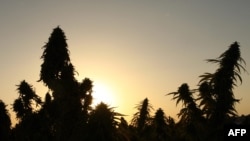
But UN officials tell RFE/RL that many former opium farmers in those poppy-free areas have switched to another lucrative and illegal drug crop: cannabis.
As a result, the United Nations Office on Drugs and Crime (UNODC) says, Afghanistan is now the world's largest producer of two illegal drugs -- heroin from opium poppies and cannabis.
The UNODC's latest assessment on the Afghan narcotics trade, released in February, says cultivation of opium poppies in Afghanistan is likely to fall this year compared to the record crops of previous years.
It says the 18 provinces labeled "opium-free" in 2008 will probably remain so in 2009. It also says seven other Afghan provinces are likely to reduce opium-poppy cultivation this year -- including the biggest opium-producing province, Helmand, in the volatile south.
That means opium cultivation in Afghanistan is now overwhelmingly concentrated within the seven most unstable provinces in the south and southwest.
But officials in neighboring countries say the size and frequency of drug seizures from smugglers near the Afghan border continues to increase -- highlighting the fact that many Afghan farmers who have stopped growing opium poppies are now growing cannabis crops instead.
In Plain View
UNODC spokesman Walter Kemp tells RFE/RL it is becoming "increasingly obvious" that the successes of opium-eradication programs in parts of Afghanistan are being offset by record cannabis cultivation:
"In Afghanistan, most of the attention is on opium," Kemp says. "But Afghanistan is now one of the biggest, if not the biggest, producer of cannabis in the world. This is often in provinces that have become opium-free. So we do have concerns that although some provinces are becoming opium free, they are not completely drug-free because they are growing cannabis."
Reports from RFE/RL correspondents in northern Afghanistan suggest that many farmers who used to grow opium poppies have responded to the pressure of poppy eradication programs by growing cannabis instead.
In fact, UNODC data suggest that more than 70,000 hectares of Afghan farmland is now being used to grow cannabis -- putting Afghanistan ahead of Morroco as the leading producer of cannabis and hashish made from cannabis.
Kemp admits that eradication efforts in recent years have been so focused on opium cultivation that cannabis farming has been able to proliferate:
"There's been a lot of focus on the opium cultivation -- and therefore opium eradication or finding alternatives to opium," Kemp says. "Less attention has been on finding out exactly how much cannabis there is, and also using development incentives and security deterrents to reduce the problem of cannabis cultivation."
Bigger And Badder
Security experts say local Afghan militia commanders who once funded their private armies with profits from the illegal opium and heroin trades still have their smuggling networks in place. But now, instead of sneaking relatively small packages of opium or heroin out of Afghanistan, drug traffickers increasingly smuggle larger shipments of hashish, made from cannabis.
Bobojon Shafei, a spokesman for Tajikistan's counternarcotics police, tells RFE/RL that the size and number of narcotics shipments being seized at the Afghan border continues to increase.
"Drug smuggling from Afghanistan to Tajikistan [has] only increased," Shafei says. "You know in comparison with 2007, last year's production of drugs in Afghanistan increased. If we look at the first two months of this year, we can see that confiscation of drugs has increased. That is why we can confirm [overall] production of drugs [in Afghanistan] has increased."
A recent attack on Tajik counternarcotics officers near Afghanistan's northern border has raised concerns in Dushanbe about the power and boldness of traffickers with ties to Afghan drug lords in the so-called opium-free provinces.
Local officials in Tajikistan's southern Khation Province tell RFE/RL that about 30 gunmen attacked the border crossing at Sari Ghor on the night of February 27, killing two officers and injuring at least three border guards before fleeing back to the Afghan side of the border.
Shafei says the attackers included smugglers from both sides of the border. Shafei also suggests that Tajik authorities let down their guard because they had not seen such a violent attack in the area for years:
"We did not expect that smugglers would be heavily armed," Shafei said. "We did not expect that drug-smugglers from [the Tajik] side and their accomplices from the Afghan side of the border would attack our officers. It is the first such case in several years."
Officials in Dushanbe say the killing of the Tajik counternarcotics officers may have been a retribution attack by drug smugglers. Several weeks earlier, Tajik border guards had killed six Afghan smugglers and confiscated a large amount of narcotics -- including hashish from cannabis -- that they were trying to smuggle into Tajikistan.
Subsistence Question
The Afghan government has launched poppy-eradication programs across Afghanistan with varying degrees of success. One complication is that many poor Afghan farmers have become dependent on the income they can earn from narcotics.
Internationally backed Afghan government eradication programs aim to help farmers develop alternative crops as a source of livelihood -- from fruits and vegetable crops, to spices or even fish farming.
But farmers who have joined those programs -- sometimes after having their poppy crops destroyed -- complain that the income from growing legitimate food crops does not come close to the amount of money they earned from opium poppies or cannabis.
There also is debate within NATO about whether NATO-led ISAF troops should get involved in drug-eradication efforts, which some alliance members consider to be an issue for law enforcement rather than military troops.
General John Craddock, NATO's supreme allied commander in Europe, said during a visit to Afghanistan in December that he was surprised to discover a gap between the approval by NATO defense ministers of aggressive counternarcotics missions in Afghanistan and the actual conduct of NATO troops there.
NATO officials in Brussels have declined to list the countries that oppose widening NATO's ISAF mandate to include attacks on narcotics networks. And no country has publicly expressed legal objections to a wider counternarcotics mandate.
But several NATO countries have described their reluctance publicly -- including Germany, Italy, Poland, and Spain.
RFE/RL's Tajik Service contributed to this report
But UN officials tell RFE/RL that many former opium farmers in those poppy-free areas have switched to another lucrative and illegal drug crop: cannabis.
As a result, the United Nations Office on Drugs and Crime (UNODC) says, Afghanistan is now the world's largest producer of two illegal drugs -- heroin from opium poppies and cannabis.
The UNODC's latest assessment on the Afghan narcotics trade, released in February, says cultivation of opium poppies in Afghanistan is likely to fall this year compared to the record crops of previous years.
It says the 18 provinces labeled "opium-free" in 2008 will probably remain so in 2009. It also says seven other Afghan provinces are likely to reduce opium-poppy cultivation this year -- including the biggest opium-producing province, Helmand, in the volatile south.
That means opium cultivation in Afghanistan is now overwhelmingly concentrated within the seven most unstable provinces in the south and southwest.
But officials in neighboring countries say the size and frequency of drug seizures from smugglers near the Afghan border continues to increase -- highlighting the fact that many Afghan farmers who have stopped growing opium poppies are now growing cannabis crops instead.
In Plain View
UNODC spokesman Walter Kemp tells RFE/RL it is becoming "increasingly obvious" that the successes of opium-eradication programs in parts of Afghanistan are being offset by record cannabis cultivation:
"In Afghanistan, most of the attention is on opium," Kemp says. "But Afghanistan is now one of the biggest, if not the biggest, producer of cannabis in the world. This is often in provinces that have become opium-free. So we do have concerns that although some provinces are becoming opium free, they are not completely drug-free because they are growing cannabis."
Reports from RFE/RL correspondents in northern Afghanistan suggest that many farmers who used to grow opium poppies have responded to the pressure of poppy eradication programs by growing cannabis instead.
In fact, UNODC data suggest that more than 70,000 hectares of Afghan farmland is now being used to grow cannabis -- putting Afghanistan ahead of Morroco as the leading producer of cannabis and hashish made from cannabis.
Kemp admits that eradication efforts in recent years have been so focused on opium cultivation that cannabis farming has been able to proliferate:
"There's been a lot of focus on the opium cultivation -- and therefore opium eradication or finding alternatives to opium," Kemp says. "Less attention has been on finding out exactly how much cannabis there is, and also using development incentives and security deterrents to reduce the problem of cannabis cultivation."
Bigger And Badder
Security experts say local Afghan militia commanders who once funded their private armies with profits from the illegal opium and heroin trades still have their smuggling networks in place. But now, instead of sneaking relatively small packages of opium or heroin out of Afghanistan, drug traffickers increasingly smuggle larger shipments of hashish, made from cannabis.
Bobojon Shafei, a spokesman for Tajikistan's counternarcotics police, tells RFE/RL that the size and number of narcotics shipments being seized at the Afghan border continues to increase.
"Drug smuggling from Afghanistan to Tajikistan [has] only increased," Shafei says. "You know in comparison with 2007, last year's production of drugs in Afghanistan increased. If we look at the first two months of this year, we can see that confiscation of drugs has increased. That is why we can confirm [overall] production of drugs [in Afghanistan] has increased."
A recent attack on Tajik counternarcotics officers near Afghanistan's northern border has raised concerns in Dushanbe about the power and boldness of traffickers with ties to Afghan drug lords in the so-called opium-free provinces.
Local officials in Tajikistan's southern Khation Province tell RFE/RL that about 30 gunmen attacked the border crossing at Sari Ghor on the night of February 27, killing two officers and injuring at least three border guards before fleeing back to the Afghan side of the border.
Shafei says the attackers included smugglers from both sides of the border. Shafei also suggests that Tajik authorities let down their guard because they had not seen such a violent attack in the area for years:
"We did not expect that smugglers would be heavily armed," Shafei said. "We did not expect that drug-smugglers from [the Tajik] side and their accomplices from the Afghan side of the border would attack our officers. It is the first such case in several years."
Officials in Dushanbe say the killing of the Tajik counternarcotics officers may have been a retribution attack by drug smugglers. Several weeks earlier, Tajik border guards had killed six Afghan smugglers and confiscated a large amount of narcotics -- including hashish from cannabis -- that they were trying to smuggle into Tajikistan.
Subsistence Question
The Afghan government has launched poppy-eradication programs across Afghanistan with varying degrees of success. One complication is that many poor Afghan farmers have become dependent on the income they can earn from narcotics.
Internationally backed Afghan government eradication programs aim to help farmers develop alternative crops as a source of livelihood -- from fruits and vegetable crops, to spices or even fish farming.
But farmers who have joined those programs -- sometimes after having their poppy crops destroyed -- complain that the income from growing legitimate food crops does not come close to the amount of money they earned from opium poppies or cannabis.
There also is debate within NATO about whether NATO-led ISAF troops should get involved in drug-eradication efforts, which some alliance members consider to be an issue for law enforcement rather than military troops.
General John Craddock, NATO's supreme allied commander in Europe, said during a visit to Afghanistan in December that he was surprised to discover a gap between the approval by NATO defense ministers of aggressive counternarcotics missions in Afghanistan and the actual conduct of NATO troops there.
NATO officials in Brussels have declined to list the countries that oppose widening NATO's ISAF mandate to include attacks on narcotics networks. And no country has publicly expressed legal objections to a wider counternarcotics mandate.
But several NATO countries have described their reluctance publicly -- including Germany, Italy, Poland, and Spain.
RFE/RL's Tajik Service contributed to this report

