



At one level, Russia's termination of the mandate of the United Nations Observer Mission in Georgia (UNOMIG) was an opportunist bid in an incremental strategy of garnering international recognition for Abkhazia and South Ossetia as independent states. The debate on June 15 that led up the Russian veto of a UN Security Council resolution needed to extend the UNOMIG mandate centered on one thing -- whether reference would be made to earlier Resolution 1808 reaffirming Georgia's territorial integrity.
The debate pitted Russia against the United States, Britain, and France, permanent members of the Security Council which all backed Georgia. In the end, Russia was alone to veto the resolution, with the fifth veto power, China, abstaining.
An EU diplomat in Tbilisi says the vote was the first shot in a "continuation war" between Russia and Georgia that could last years.
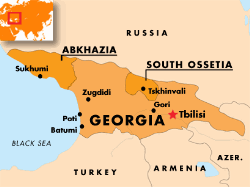 Russia knows, of course, that securing outright international recognition for Abkhazia and South Ossetia will remain mission impossible in the foreseeable future. It is content to bide its time, muddying waters at the United Nations and other international bodies by working to accumulate precedents where such organizations drop the term Georgia from references to Abkhazia and South Ossetia. For instance, in May a report on Abkhazia commissioned by UN Secretary-General Ban Ki Moon dropped all references to Georgia.
But behind the institutional harrying tactics, there's another level, on which Russia is working steadfastly to eject international organizations from Abkhazia and South Ossetia with the apparent aim of decoupling the territories from the international community -- and irreversibly bind them to itself. In May, Russia vetoed the continuation of an OSCE mission in South Ossetia.
This is part of a subtle strategy that will force international observers, present one-sidedly in Georgia proper, into the role of de facto border guards whose very presence gradually cements the impression of the demarcation lines with Abkhazia and South Ossetia as borders in all but name.
No Unsupervised Access
Any mission with the word "Georgia" in its title is automatically prevented by Russia from entering Abkhazia or South Ossetia. The European Union's Monitoring Mission (EUMM) for Georgia is the most prominent example of this. Mandated to monitor the entire territory of Georgia, the EUMM has no unsupervised access to either Abkhazia or South Ossetia.
EU officials, currently debating the extension of the EUMM mandate, are acutely aware of the danger that they could soon be facing "Russians erecting border posts on the other side," as one official put it in Brussels. The EUMM has been reduced to petitioning EU member states for long-range surveillance equipment -- radars, access to satellite photography, unmanned drones, helicopters, and speedboats. But, as ever, money is tight and many member states fear any such investment could inflame tensions in what is already a very explosive setting.
The best the EUMM can hope for in the foreseeable future is to function as a kind of early warning mechanism to discourage provocations along the demarcation lines. The extension of its mandate by the EU for another year is said to be virtually certain.
The Geneva talks involving Georgia, Russia, and Abkhaz and South Ossetian representatives have been all but written off by the EU. Reporting back to EU capitals after the latest round of talks on May 18-19, the bloc's special representative for the diplomatic effort, Pierre Morel, concluded that Russia is using the Geneva forum to pursue its own interests. Fixing a date for the next round is in itself an achievement, Morel observes dryly. Diplomats in Brussels expect Russia to terminate the talks as soon as it believes they no longer serve a useful purpose.
Russia appears to be calculating that time is on its side. Slowly, but inexorably, Georgia appears to be destabilizing, prompting EU Special Representative for the South Caucasus Peter Semneby to note in a recent assessment that there are signs the state institutions are ceasing to function.
Mood Of Defiance
For now, the mood in the EU is one of defiance. Russia's gamesmanship at the UN Security Council has incensed France and Germany (as it did the United States and Britain). The UNOMIG resolution Russia torpedoed was drafted by Germany, and Paris also reacted in harsh terms, mindful of its special responsibility for the cease-fire arrangements negotiated by President Nicolas Sarkozy last August. Diplomats say all agree within the EU that the bloc must not acquiesce to any change of borders brought about by war.
It is a different matter when it comes to action. The EU's lame-duck Czech Presidency will be taken over by Sweden on July 1 for six months, to be followed by Spain and Belgium. The latter two are seen as fellow travelers of the "Friends of Russia Club." Sweden has traditionally been outspoken on Russia and would not be in a strong position to mediate in an all-too-possible renewal of hostilities between Russia and Georgia. If Swedish Foreign Minister Carl Bildt is picked to succeed the current EU foreign policy supremo Javier Solana, the bloc's policies might gain coherence. But any such gain would be limited, ipso facto, by the fact that foreign-policy making within the EU remains firmly a member-state prerogative.
Most member states agree the EU will have to work with Russia. Its own interests dictate this on many fronts, not least in the energy sector. The best, therefore, that Georgia can hope for is an open-ended nonrecognition policy on Abkhazia and South Ossetia, reminiscent of that pursued by the United States vis-a-vis the Soviet-occupied Baltic States during the Cold War.
The EU, as the only major regional alternative to Russia, must nevertheless tread very carefully. Georgia will be extraordinarily sensitive to any EU-Russian cooperation in the security sphere. Suggestions -- like the one recently made by the influential European Council of Foreign Relations -- that the bloc cooperate with Russia in stabilizing its Eastern neighborhood or embrace Russian President Dmitry Medvedev's proposals for a “new European security architecture” run the risk, if carried out, of driving Georgia into isolation.
No conceivable Georgian government will be in a position to contemplate ceding Abkhazia or South Ossetia, and perceived EU collusion in Russian attempts to manufacture legitimacy for its dismemberment of the country could force it to withdraw from the bloc's Eastern Partnership, rendering the latter defunct in the process.
Ahto Lobjakas is RFE/RL’s Brussels correspondent. The views expressed in this commentary are the author's own and do not necessarily reflect those of RFE/RL.
The debate pitted Russia against the United States, Britain, and France, permanent members of the Security Council which all backed Georgia. In the end, Russia was alone to veto the resolution, with the fifth veto power, China, abstaining.
An EU diplomat in Tbilisi says the vote was the first shot in a "continuation war" between Russia and Georgia that could last years.
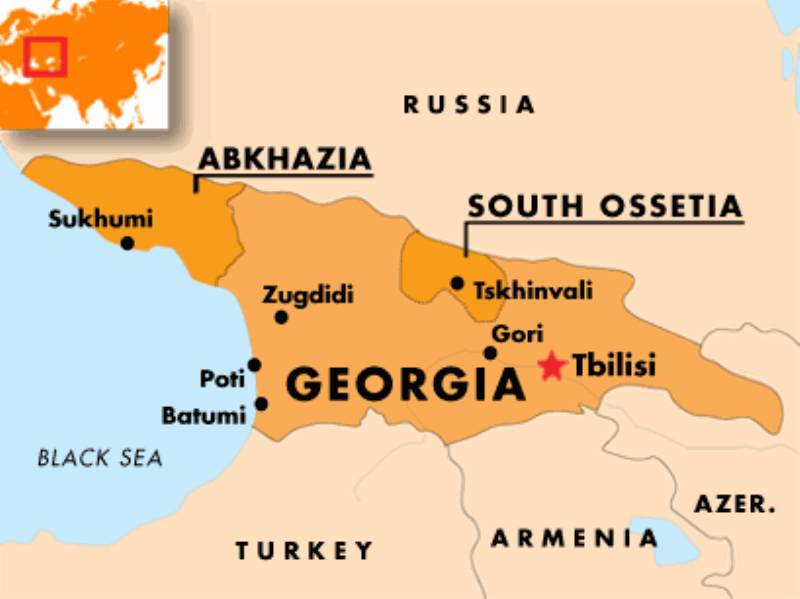
But behind the institutional harrying tactics, there's another level, on which Russia is working steadfastly to eject international organizations from Abkhazia and South Ossetia with the apparent aim of decoupling the territories from the international community -- and irreversibly bind them to itself. In May, Russia vetoed the continuation of an OSCE mission in South Ossetia.
This is part of a subtle strategy that will force international observers, present one-sidedly in Georgia proper, into the role of de facto border guards whose very presence gradually cements the impression of the demarcation lines with Abkhazia and South Ossetia as borders in all but name.
No Unsupervised Access
Any mission with the word "Georgia" in its title is automatically prevented by Russia from entering Abkhazia or South Ossetia. The European Union's Monitoring Mission (EUMM) for Georgia is the most prominent example of this. Mandated to monitor the entire territory of Georgia, the EUMM has no unsupervised access to either Abkhazia or South Ossetia.
EU officials, currently debating the extension of the EUMM mandate, are acutely aware of the danger that they could soon be facing "Russians erecting border posts on the other side," as one official put it in Brussels. The EUMM has been reduced to petitioning EU member states for long-range surveillance equipment -- radars, access to satellite photography, unmanned drones, helicopters, and speedboats. But, as ever, money is tight and many member states fear any such investment could inflame tensions in what is already a very explosive setting.
Slowly, but inexorably, Georgia appears to be destabilizing, prompting EU Special Representative for the South Caucasus Peter Semneby to note in a recent assessment that there are signs the state institutions are ceasing to function.
The Geneva talks involving Georgia, Russia, and Abkhaz and South Ossetian representatives have been all but written off by the EU. Reporting back to EU capitals after the latest round of talks on May 18-19, the bloc's special representative for the diplomatic effort, Pierre Morel, concluded that Russia is using the Geneva forum to pursue its own interests. Fixing a date for the next round is in itself an achievement, Morel observes dryly. Diplomats in Brussels expect Russia to terminate the talks as soon as it believes they no longer serve a useful purpose.
Russia appears to be calculating that time is on its side. Slowly, but inexorably, Georgia appears to be destabilizing, prompting EU Special Representative for the South Caucasus Peter Semneby to note in a recent assessment that there are signs the state institutions are ceasing to function.
Mood Of Defiance
For now, the mood in the EU is one of defiance. Russia's gamesmanship at the UN Security Council has incensed France and Germany (as it did the United States and Britain). The UNOMIG resolution Russia torpedoed was drafted by Germany, and Paris also reacted in harsh terms, mindful of its special responsibility for the cease-fire arrangements negotiated by President Nicolas Sarkozy last August. Diplomats say all agree within the EU that the bloc must not acquiesce to any change of borders brought about by war.
It is a different matter when it comes to action. The EU's lame-duck Czech Presidency will be taken over by Sweden on July 1 for six months, to be followed by Spain and Belgium. The latter two are seen as fellow travelers of the "Friends of Russia Club." Sweden has traditionally been outspoken on Russia and would not be in a strong position to mediate in an all-too-possible renewal of hostilities between Russia and Georgia. If Swedish Foreign Minister Carl Bildt is picked to succeed the current EU foreign policy supremo Javier Solana, the bloc's policies might gain coherence. But any such gain would be limited, ipso facto, by the fact that foreign-policy making within the EU remains firmly a member-state prerogative.
Most member states agree the EU will have to work with Russia. Its own interests dictate this on many fronts, not least in the energy sector. The best, therefore, that Georgia can hope for is an open-ended nonrecognition policy on Abkhazia and South Ossetia, reminiscent of that pursued by the United States vis-a-vis the Soviet-occupied Baltic States during the Cold War.
The EU, as the only major regional alternative to Russia, must nevertheless tread very carefully. Georgia will be extraordinarily sensitive to any EU-Russian cooperation in the security sphere. Suggestions -- like the one recently made by the influential European Council of Foreign Relations -- that the bloc cooperate with Russia in stabilizing its Eastern neighborhood or embrace Russian President Dmitry Medvedev's proposals for a “new European security architecture” run the risk, if carried out, of driving Georgia into isolation.
No conceivable Georgian government will be in a position to contemplate ceding Abkhazia or South Ossetia, and perceived EU collusion in Russian attempts to manufacture legitimacy for its dismemberment of the country could force it to withdraw from the bloc's Eastern Partnership, rendering the latter defunct in the process.
Ahto Lobjakas is RFE/RL’s Brussels correspondent. The views expressed in this commentary are the author's own and do not necessarily reflect those of RFE/RL.