


An outspoken figure who strongly backed issues that matched the Kremlin’s foreign policy -- from opposition to NATO’s bombing of Serbia to the U.S. invasion of Iraq -- the patriarch in recent years had forged closer to ties to the Roman Catholic Church under German Pope Benedict XVI.
Russian Orthodox officials say Aleksy died on December 5 in his residence near Moscow. No cause of death was given.
Born Aleksy Rediger in Tallinn, into a family with Baltic German ancestors, he began his priestly career in an era of Soviet control of the Orthodox Church. But when he took over the church in 1990, Aleksy II was believed to be the first patriarch in Soviet history to be elected without direct government intervention, though he was seen as closer to the reform spirit of Mikhail Gorbachev than other candidates.
Later, in the Orthodox tradition in which the church marches hand in hand with the state, Aleksy II forged close alliances with new Russian leaders, including Presidents Boris Yeltsin and Vladimir Putin.
'Two Very Different Situations'
Romano Scalfi, who met the patriarch several times, is an Italian priest who for 50 years has run Russia Cristiana, a Milan-based foundation on the Russian Orthodox world and its ties with the Roman Catholic Church. Speaking to RFE/RL, Scalfi says Aleksy’s greatest achievement was to help keep alive Christian faith in Russia, even if he and other clerics paid a price by collaborating with the authorities.

Aleksy entered a seminary at the most inauspicious of times -- during the reign of terror of Josef Stalin. And things didn’t get much better during the antireligion campaigns of Stalin’s successor, Nikita Khrushchev. He then rose through church ranks in the 1970s under Soviet leader Leonid Brezhnev, at a time when the KGB mostly controlled the church and rebel clerics were imprisoned.
When Aleksy took over in 1990, the Russian Orthodox Church was devastated. Polls showed that only a small fraction of Russians considered themselves believers, compared to the vast majority who were atheists. And while there were more than 100,000 parishes in Russia in 1917, by 1990 there were hardly more than a dozen fully functioning ones, Scalfi says.
In collaboration with Yeltsin and Putin, Aleksy II slowly began to rebuild the church’s place in Russia. Seminaries were reopened. Churches were rebuilt, including the Christ the Savior cathedral in Moscow that was destroyed under Stalin and replaced with a swimming pool. Gradually, with help from tax revenue granted by the government, church finances were boosted.
Strong Orthodox Majority
Today, many polls show Orthodox believers to be a strong majority in Russia, reversing the situation that Aleksy inherited in 1990. Nonetheless, in his last televised Christmas address in January, Aleksy took a page from Pope Benedict XVI’s playbook, exhorting more Russians to embrace God and not to banish faith from the realm of rationality.
"Many today have become used to the notion that their free and independent rational mind alone can bring them happiness and make their lives right," Aleksy said. "Yet the church over the many centuries of its existence has seen many times those people, who have become swelled in pride and have distanced themselves from God, ultimately become unhappy."

Over the last two decades, Aleksy regularly took strong foreign policy stances in line with the Kremlin, clashing with the West over Kosovo, the war in Iraq, and the defense of ethnic Russians in former Soviet states, such as his native Estonia.
And while other Orthodox churches and leaders forged closer to the Roman Catholic Church, following a dream of the late Pope John Paul II the reunite Christianity’s main branches, Aleksy kept the Russian Orthodox at a safe distance.
John Paul, widely credited with helping to bring down Soviet communism in his native Poland and elsewhere, was the most traveled pope in history. But Aleksy repeatedly refused to meet with him or his successor Benedict XVI, and John Paul died without achieving one his final dreams – to pay a visit to Russia.
Poaching For Souls
Wary of Catholicism, Aleksy regularly accused the Roman church of poaching for souls in Russia, and the opening of four Catholic dioceses further raised Orthodox suspicions. Negotiations between Russian Orthodox and Catholic officials never cleared up their differences, even if their efforts appeared to raise goodwill.

"You can’t base relations between the Orthodox and Catholic relations on a pope’s mission to visit Russia," Scalfi says. "For example, the pope went to Georgia, but then the situation got worse. The [Georgian] government invited the pope, but the [local Orthodox] church didn’t really agree with it. After the pope visited, things got worse, not better. The churches should unite not when the top leaders decide to, but when the people themselves want it."
In recent months, however, Aleksy was reportedly becoming more open to improving ties with Rome. Part of that was due to his admiration for Benedict. That admiration, among other things, was based on common concern for the Christian world’s rejection of faith, embrace of secularism, and "moral relativism."
'Lose Their Place In History'
Aleksy raised the issue in October 2007 in an address to the Parliamentary Assembly of the Council of Europe in Strasbourg.
"The destruction of moral norms and propaganda of moral relativism can undermine the world view of Europeans and lead the peoples of the continent to a borderline beyond which they could lose their spiritual and cultural identities, which means they could lose their own place in history," he said.
Aleksy’s successor is to be formally chosen by a Synod Council, which in 1990 was convened one month after the death of his predecessor, Patriarch Pimen. However, that gathering should be preceded by a Bishops’ Council, which will narrow down the list of candidates to take over as head of the Russian Orthodox Church.
Church leaders have called a special meeting for December 6 in Moscow to plan funeral arrangements for the deceased patriarch.
Facts About Aleksy II
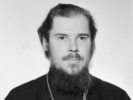
The Life Of Aleksy II
-- Aleksy Mikahilovich Rediger was born on February 23, 1929, in the Estonian capital, Tallinn, into the family of a Russian Orthodox priest. He became a priest himself in 1953.
-- In 1990, after a series of increasingly powerful posts, he became patriarch of the Russian Orthodox Church, the largest and most influential in worldwide Orthodoxy, with national churches totaling some 220 million members.
-- He oversaw a major religious revival in Russia after the collapse of the Soviet Union, with hundreds of new churches built across the country.
-- Aleksy II stood in the way of a visit to Russia by the Polish-born leader of the Catholic Church, Pope John Paul II, reflecting annoyance at attempts by Catholics to win converts in Russia and neighboring Ukraine, which he saw as the traditional sphere of influence of the Orthodox world.
-- Since the election of Pope Benedict in 2005, relations improved and Vatican officials said they had been working toward an eventual meeting between Aleksy II and the pontiff.
-- Aleksy II moved the Orthodox Church closer to political circles and was himself a frequent visitor to the Kremlin. Vladimir Putin, as president, attended many key ceremonies led by Aleksy II.
-- Under his leadership, the church became involved in numerous business ventures, including bottled mineral water and vodka.
(Reuters)