

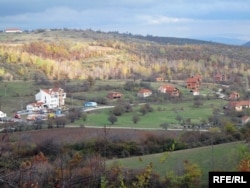
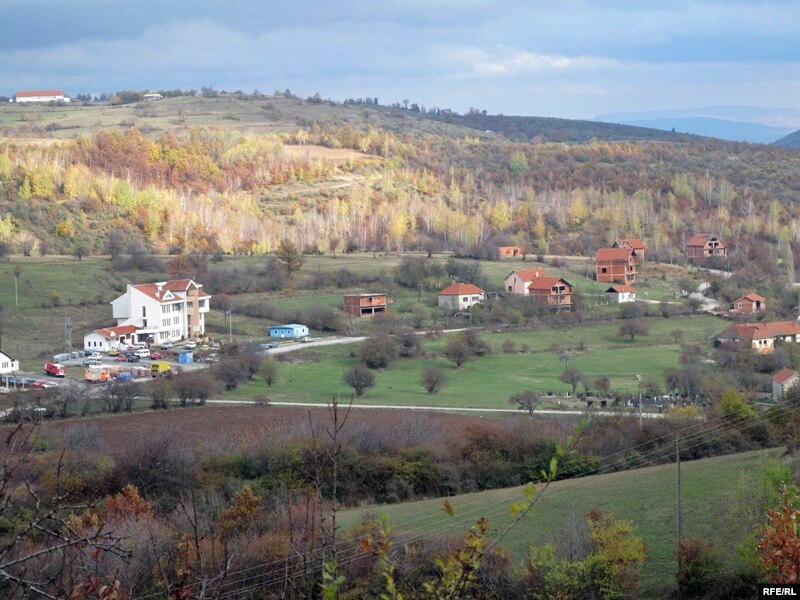
NOVO BRDO, Kosovo -- The crumbling walls of the medieval Gumnishte fortress can still be seen atop an extinct volcano in Novo Brdo -- a relic of the city's heyday as a European mining and trade center.
Tourists and history buffs still travel to Novo Brdo, along with illicit collectors hoping to unearth some of the area's rare, 14th-century silver coins. But the gold and silver mines that once made Novo Brdo one of the most prosperous regions in Kosovo have been closed for a decade. Today its inhabitants are among Kosovo's poorest.
But Novo Brdo -- or Artana, as it is known in Albanian -- still has a special distinction. It is one of the few regions in Kosovo where Albanians and Serbs have historically lived peacefully together, even during the ethnic bloodshed of the 1998-99 war.
Velibor Trajkovic is an elderly Serb living in Novo Brdo. For him, the city's long history is one of peaceful coexistence.
"Up until now, we haven't had any problems. Not even during the most difficult times, after the war," he says. "The situation now is getting better and better."
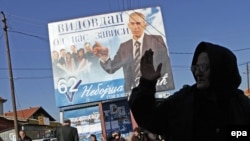
That harmony is being put to the test during today's municipal elections as two Serbian and two Albanian candidates compete for the Novo Brdo mayoral post.
 Novo BrdoThroughout Kosovo, Serbs make up nearly one-third of the 74 candidates participating in the elections, the first since Pristina declared independence from Serbia in February 2008.
The presence of Serbian names on the ballots, it is hoped, will help persuade Kosovo Serbs to engage in the republic's political process, and override calls from Belgrade for a boycott. Kosovar President Fatmir Sejdiu this week called on ethnic Serbs to "exercise their constitutional and human rights" by participating in the vote.
Belgrade Urges Boycott
In Novo Brdo, at least some of the Serbian residents said they were ready to cast ballots. Twenty-year-old Marko Markovic said the vote is the best way to ensure that the lives of Kosovo Serbs change for the better.
"I can only guarantee that, as for myself, I'll go out and vote. I can't speak for anyone else," Markovic said.
"I think that if Serbs vote, especially the young ones, there will be big benefits for us. We've been asked by the Serbian government not to participate in the elections. But they've done nothing to help us so far."
Belgrade, which continues to view Albanian-majority Kosovo as a Serbian province, has repeatedly appealed to Kosovo Serbs to boycott the vote.
Serbian officials have said that participating in the elections is tantamount to recognizing Kosovo's independence -- a concept that Belgrade, and its powerful ally Moscow, reject. (More than 60 countries, including the United States and 22 EU members, have recognized Kosovo.)
The call from Belgrade has been echoed by a number of influential Kosovo Serbs. Marko Jaksic of the Serbian National Council, the central governing body in Kosovo's majority-Serb north, reiterated a warning by Serbian President Boris Tadic, who said there are no circumstances under which Kosovo Serbs should consider it proper to vote.
"Each attempt by a Serb to go out and vote means recognizing Kosovo's independence and giving up our own state," Jaksic said.
Fears Of Violence
Incidents of violence have already raised concerns that the elections may be undermined by unrest.
A motorcade carrying Kosovo's prime minister, Hashim Thaci, was targeted by a barrage of stones and eggs as he was leaving a November 11 campaign rally in the western town of Decani. An Albanian mayoral candidate in the ethnically divided city of Mitrovica was targeted by gunfire the following day.
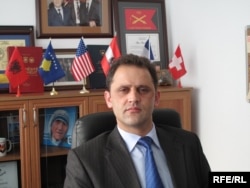 Novo Brdo Mayor Bajrush ImeriElection-day chaos would deal a blow to Kosovo's development as a free-standing political entity. The U.S. Embassy in Pristina has called on parties, political leaders, and activists to refrain from "provocations." NATO, which maintains 13,000 troops in Kosovo, is on the alert for any outbreak of violence.
In Novo Brdo, current Mayor Bajrush Imeri must juggle two tasks: ensuring a trouble-free and fair vote while campaigning for his own reelection bid.
Imeri, an ethnic Albanian, will face off against three rivals, one Albanian and two Serbs -- a potentially tricky situation that he attempts to smooth over.
"I know all my fellow candidates, and I have good relations with them," Imeri said. "I've worked with them all for a long time."
Pushing Local Government
An Albanian candidate like Imeri in an Albanian-majority republic might appear to be a sure bet. Even Novo Brdo, once majority-Serb, is now roughly two-thirds Albanian. (Roma make up a tiny fraction of the town's estimated 4,000 residents as well.)
That, however, is about to change. The Novo Brdo municipality is set to expand its borders, a step meant to deliberately absorb the populations of nearby Serbian communities. Similar expansions are taking place in several Serb-populated regions of Kosovo.
At the same time, greater responsibility for governing the newly expanded municipalities is being handed to local officials. This decentralization initiative is a critical part of the independence road map drafted for Kosovo by Finnish diplomat Martti Ahtisaari.
It's hoped the shift, like the November 15 election itself, will encourage Kosovo Serbs to integrate with Kosovo's official government institutions, rather than constructing "parallel" courtrooms and civil offices with ties to Serbia, as is currently the case.
It is hoped that the presence of Serbian candidates on the ballots will finally tempt reluctant Serbs to see local governments as their own. U.S. Ambassador to Kosovo Christopher Dell said decentralization is "vital to the future" of Kosovo.
"Decentralization will provide the vehicle for fully integrating all of Kosovo's communities into the country. That's not only good for Kosovo, that's good for the minority communities themselves," Dell said.
"I believe the November elections are a critical opportunity for the Kosovo Serb community to assume much greater control for the day-to-day running of their lives, in ways that really matter."
...But Pushing Too Far?
Decentralization has won grudging approval from some Serbs, even those in hard-line northern Kosovo.
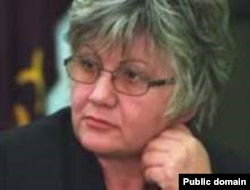 Rada Trajkovic has urged fellow Kosovo Serbs to vote.Rada Trajkovic, a member of the Serbian National Council, has appealed to fellow Kosovo Serbs to ignore Belgrade's call for a boycott, saying that "when it comes to improving the living conditions of Serbs in Kosovo, Serbia's action is deeply irresponsible and disingenuous."
Trajkovic said that Kosovo's Serbs "can now choose the lesser of two evils. For me, it's normal to choose the option that offers Serbs a chance to survive in this territory, through the process of decentralization."
But the initiative has stirred resentment among Kosovo's Albanians. With 1.5 million eligible voters, Albanians vastly outnumber Serbs. For many, the Serbian candidacy drive and the decentralization program are overaccommodating the needs of the small Serbian minority.
Hamit Krasniqi, an Albanian voter in Novo Brdo, said the issue may be enough to keep him away from the voting booth. "I'm going to vote only if Novo Brdo maintains its current borders, not the extended ones," he said. "I'll only vote for the current Novo Brdo, not a new one. Decentralization is not in our favor."
Another Albanian voter from Novo Brdo, Muhamet Vllasaliu, acknowledged that decentralization may mean a shift in favor of Serbian political candidates. It's a change he said he can accept -- as long as the candidates come from his hometown, and not from a district outside.
"Even if the next mayor is a Serb from Novo Brdo, it's OK. We've all known each other since childhood," Vllasaliu said. "But if it's someone from far outside Novo Brdo, it may be a problem, since we don't know each other."
Crossing Ethnic Lines
The political platforms of Novo Brdo's four current mayoral candidates appear to vary only slightly. In a town where hundreds of local men lost their earning power following the collapse of the local mining industry, the key issues are economic development, fighting unemployment, and encouraging investment in local agriculture and tourism.
The candidates were nearly unified in their approach to voters as well. Three of the four said they have met with potential supporters in both the Serbian and Albanian communities. Only one, Radovan Denic, said he is limiting his campaigning to fellow Serbs.
"To be honest, I haven't talked to any Kosovo Albanian voters, because I think my potential voters will only come from the Kosovo Serb community, or possibly from the Roma community," Denic said.
"I haven't talked to the Kosovo Albanian voters. They have their own representatives."
Under the decentralization plan for Novo Brdo, the newly reconfigured municipality is estimated to be 31 percent Albanian and 69 percent Serbian.
The continued threat of a Serbian boycott, however, means Novo Brdo, may remain for now in the hands of an ethnic Albanian mayor -- despite efforts by local and international authorities to convince local Serbs before November 15 that they have a critical role to play in restoring Novo Brdo to its multiethnic, prewar prosperity.
Albanian candidate Gafurr Mustafa said that regardless of who wins, the race is about issues -- not identity.
"We all know each other. We're conducting a fair race. I don't think we'll face any tensions here. We're having a race based on the values of each of the candidates and their platforms," Mustafa said.
Tourists and history buffs still travel to Novo Brdo, along with illicit collectors hoping to unearth some of the area's rare, 14th-century silver coins. But the gold and silver mines that once made Novo Brdo one of the most prosperous regions in Kosovo have been closed for a decade. Today its inhabitants are among Kosovo's poorest.
But Novo Brdo -- or Artana, as it is known in Albanian -- still has a special distinction. It is one of the few regions in Kosovo where Albanians and Serbs have historically lived peacefully together, even during the ethnic bloodshed of the 1998-99 war.
Velibor Trajkovic is an elderly Serb living in Novo Brdo. For him, the city's long history is one of peaceful coexistence.
"Up until now, we haven't had any problems. Not even during the most difficult times, after the war," he says. "The situation now is getting better and better."
That harmony is being put to the test during today's municipal elections as two Serbian and two Albanian candidates compete for the Novo Brdo mayoral post.
The presence of Serbian names on the ballots, it is hoped, will help persuade Kosovo Serbs to engage in the republic's political process, and override calls from Belgrade for a boycott. Kosovar President Fatmir Sejdiu this week called on ethnic Serbs to "exercise their constitutional and human rights" by participating in the vote.
Belgrade Urges Boycott
In Novo Brdo, at least some of the Serbian residents said they were ready to cast ballots. Twenty-year-old Marko Markovic said the vote is the best way to ensure that the lives of Kosovo Serbs change for the better.
"I can only guarantee that, as for myself, I'll go out and vote. I can't speak for anyone else," Markovic said.
"I think that if Serbs vote, especially the young ones, there will be big benefits for us. We've been asked by the Serbian government not to participate in the elections. But they've done nothing to help us so far."
Belgrade, which continues to view Albanian-majority Kosovo as a Serbian province, has repeatedly appealed to Kosovo Serbs to boycott the vote.
Serbian officials have said that participating in the elections is tantamount to recognizing Kosovo's independence -- a concept that Belgrade, and its powerful ally Moscow, reject. (More than 60 countries, including the United States and 22 EU members, have recognized Kosovo.)
The call from Belgrade has been echoed by a number of influential Kosovo Serbs. Marko Jaksic of the Serbian National Council, the central governing body in Kosovo's majority-Serb north, reiterated a warning by Serbian President Boris Tadic, who said there are no circumstances under which Kosovo Serbs should consider it proper to vote.
"Each attempt by a Serb to go out and vote means recognizing Kosovo's independence and giving up our own state," Jaksic said.
Fears Of Violence
Incidents of violence have already raised concerns that the elections may be undermined by unrest.
A motorcade carrying Kosovo's prime minister, Hashim Thaci, was targeted by a barrage of stones and eggs as he was leaving a November 11 campaign rally in the western town of Decani. An Albanian mayoral candidate in the ethnically divided city of Mitrovica was targeted by gunfire the following day.
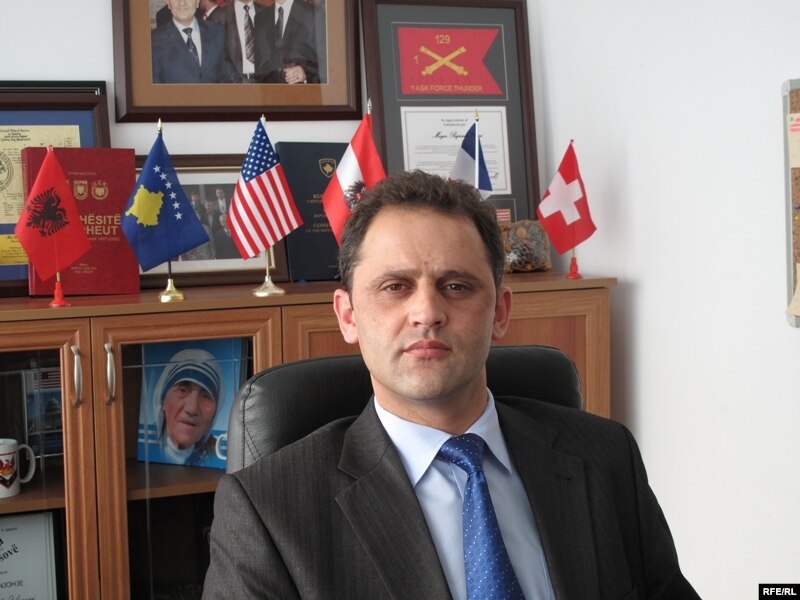
In Novo Brdo, current Mayor Bajrush Imeri must juggle two tasks: ensuring a trouble-free and fair vote while campaigning for his own reelection bid.
Imeri, an ethnic Albanian, will face off against three rivals, one Albanian and two Serbs -- a potentially tricky situation that he attempts to smooth over.
"I know all my fellow candidates, and I have good relations with them," Imeri said. "I've worked with them all for a long time."
Pushing Local Government
An Albanian candidate like Imeri in an Albanian-majority republic might appear to be a sure bet. Even Novo Brdo, once majority-Serb, is now roughly two-thirds Albanian. (Roma make up a tiny fraction of the town's estimated 4,000 residents as well.)
That, however, is about to change. The Novo Brdo municipality is set to expand its borders, a step meant to deliberately absorb the populations of nearby Serbian communities. Similar expansions are taking place in several Serb-populated regions of Kosovo.
At the same time, greater responsibility for governing the newly expanded municipalities is being handed to local officials. This decentralization initiative is a critical part of the independence road map drafted for Kosovo by Finnish diplomat Martti Ahtisaari.
It's hoped the shift, like the November 15 election itself, will encourage Kosovo Serbs to integrate with Kosovo's official government institutions, rather than constructing "parallel" courtrooms and civil offices with ties to Serbia, as is currently the case.
It is hoped that the presence of Serbian candidates on the ballots will finally tempt reluctant Serbs to see local governments as their own. U.S. Ambassador to Kosovo Christopher Dell said decentralization is "vital to the future" of Kosovo.
"Decentralization will provide the vehicle for fully integrating all of Kosovo's communities into the country. That's not only good for Kosovo, that's good for the minority communities themselves," Dell said.
"I believe the November elections are a critical opportunity for the Kosovo Serb community to assume much greater control for the day-to-day running of their lives, in ways that really matter."
...But Pushing Too Far?
Decentralization has won grudging approval from some Serbs, even those in hard-line northern Kosovo.
Trajkovic said that Kosovo's Serbs "can now choose the lesser of two evils. For me, it's normal to choose the option that offers Serbs a chance to survive in this territory, through the process of decentralization."
But the initiative has stirred resentment among Kosovo's Albanians. With 1.5 million eligible voters, Albanians vastly outnumber Serbs. For many, the Serbian candidacy drive and the decentralization program are overaccommodating the needs of the small Serbian minority.
Hamit Krasniqi, an Albanian voter in Novo Brdo, said the issue may be enough to keep him away from the voting booth. "I'm going to vote only if Novo Brdo maintains its current borders, not the extended ones," he said. "I'll only vote for the current Novo Brdo, not a new one. Decentralization is not in our favor."
Another Albanian voter from Novo Brdo, Muhamet Vllasaliu, acknowledged that decentralization may mean a shift in favor of Serbian political candidates. It's a change he said he can accept -- as long as the candidates come from his hometown, and not from a district outside.
"Even if the next mayor is a Serb from Novo Brdo, it's OK. We've all known each other since childhood," Vllasaliu said. "But if it's someone from far outside Novo Brdo, it may be a problem, since we don't know each other."
Crossing Ethnic Lines
The political platforms of Novo Brdo's four current mayoral candidates appear to vary only slightly. In a town where hundreds of local men lost their earning power following the collapse of the local mining industry, the key issues are economic development, fighting unemployment, and encouraging investment in local agriculture and tourism.
The candidates were nearly unified in their approach to voters as well. Three of the four said they have met with potential supporters in both the Serbian and Albanian communities. Only one, Radovan Denic, said he is limiting his campaigning to fellow Serbs.
"To be honest, I haven't talked to any Kosovo Albanian voters, because I think my potential voters will only come from the Kosovo Serb community, or possibly from the Roma community," Denic said.
"I haven't talked to the Kosovo Albanian voters. They have their own representatives."
Under the decentralization plan for Novo Brdo, the newly reconfigured municipality is estimated to be 31 percent Albanian and 69 percent Serbian.
The continued threat of a Serbian boycott, however, means Novo Brdo, may remain for now in the hands of an ethnic Albanian mayor -- despite efforts by local and international authorities to convince local Serbs before November 15 that they have a critical role to play in restoring Novo Brdo to its multiethnic, prewar prosperity.
Albanian candidate Gafurr Mustafa said that regardless of who wins, the race is about issues -- not identity.
"We all know each other. We're conducting a fair race. I don't think we'll face any tensions here. We're having a race based on the values of each of the candidates and their platforms," Mustafa said.