




A political and potentially even violent showdown may be in the works as Kyrgyz President Roza Otunbaeva arrives on July 29 in Osh, the southern city wracked by ethnic riots in early June that left over 300 people dead and some 400,000 displaced.
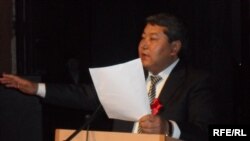
Almost two months later, the origins of the violence remain a mystery. But many point to the city's mayor, Melis Myrzakmatov, as a culprit. Appointed by former President Kurmanbek Bakiev, who was ousted on April 7 and has since settled in Belarus, Myrzakmatov retained his position and, apparently, the loyalty of the city's police as well as the military and internal security forces stationed in Osh. As Otunbaeva's government prepares to rebuild Osh and stabilize the country in the run-up to October's parliamentary elections, she now finds herself pitted against the man who rules Kyrgyzstan's second-largest city with an iron fist.
Since the riots, two of the mayor's former deputies came forth alleging that he had played a role. In an interview with RFE/RL's Bruce Pannier, former Osh Deputy Mayor Timur Kamchibekov alleged that his former boss was "interested that there would be in the south and in Osh in particular some sort of destabilization," and that the mayor "arranged sabotage against the new authorities, insubordination." Myrzakmatov has repeatedly insisted that his former aides are mentally disturbed. Visiting his office last week, I was subject to his brandishing medical records supposedly substantiating the diagnosis.
Allegations that Myrzakmatov is at least a passive, if not active, instigator of destabilization gathered new steam when United Nations High Commissioner for Human Rights Navi Pillay reported on July 20 that security forces under his control had disproportionately subjected ethnic Uzbeks to torture and arbitrary detainment. Last week, he told RFE/RL that this was "just another provocative statement."
Another front on which the mayor and Bishkek will clash is over the scheduled deployment of 52 unarmed police officers from the Organization for Security and Cooperation in Europe (OSCE) to observe law enforcement procedures in Osh. Bishkek agreed to the plan, which has been repeatedly urged by outside observers and should be welcomed by ethnic Uzbeks, countless numbers of whom complained to me last week of being at the receiving end of police mistreatment. Myrzakmatov has been at the forefront of protests against the measure. On July 26, several hundred Kyrgyz descended upon the municipal square and marched to the OSCE representative's building, where they burned an OSCE police officer in effigy.
Despite his brashness, the central government has been reluctant to take any action against Myrzakmatov. But on July 27, Otunbaeva issued her strongest criticism yet of the mayor, however vague. At a press conference following the conclusion of an international donors conference in Bishkek, I asked the president if she was aware of the continuing security sweeps in Osh that seem to target Uzbeks exclusively. According to their family members, many young Uzbek men are being held for ransom by local security forces. "You're right," she said. "There are some new trends -- that's what we are dealing with. We are looking carefully at each case."
More revealing was her answer when I asked if she had confidence in Myrzakmatov: "This is quite a controversial question."
In addition to local Uzbeks, the interim government may face pressure to deal with Myrzakmatov from a far more influential force: the international donor community. Several Uzbeks I interviewed in Osh last week noted the eerie resemblance between the mayor's long-standing plans for redeveloping the city -- which would require the tearing down of many pre-existing buildings -- and the targeted violence that disproportionately struck Uzbek neighborhoods. Myrzakmatov doesn't deny that he has ambitious plans to revitalize Osh, and told us last week that, instead of rebuilding the one-story stone-and-cement houses that belonged to displaced Uzbeks, he hopes to construct a series of high-rise apartments in which Kyrgyz and Uzbeks can live side by side.
Not only is this gambit of social engineering practically infeasible -- hardly any of the Kyrgyz or Uzbeks I spoke to in Osh last week have any interest in living alongside each other -- but it directly contradicts the resettlement plans agreed to on July 27 at the international donors conference. The rebuilding, which will be conducted under the auspices of the United Nations Refugee Agency, provides material support to displaced families and specifically mandates that they be allowed to reconstruct their homes exactly where they once stood. Should those who lost their homes wish to stay put and many families insist that they have no other choice they will foil the mayor's scheme. The plan was formed in conjunction with Kyrgyzstan's central government, and will be implemented soon.
Until recently, these clashes between the megalomaniacal Myrzakmatov and the central government have been unacknowledged. But now, with over $1 billion in international aid at stake, they are unavoidable.
In the immediate aftermath of the April 7 revolution, Otunbaeva repeatedly insisted that the central government had control over the entire country and that the military and internal security forces -- barring a handful of Bakiev partisans -- remained loyal to the new team in Bishkek. That sanguine claim was shown to be wanting as soon as violence descended upon Osh, when Otunbaeva conceded that her government had lost control over the south and appealed for foreign military intervention to calm the situation.
The first thing Otunbaeva can do to regain the trust of Osh's Uzbeks would be to remove Myrzakmatov from power. This will not be easy. He is a mercurial figure who has not shied away from threatening violence against those who would challenge him. The day after Bakiev fled Bishkek, fearful that the new government would demand his resignation, Myrzakmatov gathered a group of armed men to rally in support of his continued tenure. In the days after the June riots, he entertained foreign journalists at his city hall office with a pistol at his hip. When I visited Osh last week, one rumor had it that the reason why the central government has been so hesitant to stand up to Myrzakmatov is that he has rigged Osh's water-treatment plant with bombs, threatening to flood the city should the government do so much as try to lay a finger upon him.
So when she visits Osh on July 29, President Otunbaeva will have a lot on her hands. Never mind the grave humanitarian crisis that persists -- an estimated 75,000 people remain displaced and 37,500 are homeless. And never mind the mutual distrust that continues to exist between Uzbeks and Kyrgyz, a distrust that could easily boil over into more violence at the slightest provocation. No less daunting is that she will have to confront the man whom many see as being at the root of the problem: Melis Myrzakmatov.
James Kirchick is RFE/RL's writer-at-large. The views expressed in this commentary are the author's own and do not necessarily reflect those of RFE/RL
 The death toll in the southern Kyrgyz violence is well over 100, with many hundreds more injured and tens of thousands of people said to be fleeing in search of safe haven.
Almost two months later, the origins of the violence remain a mystery. But many point to the city's mayor, Melis Myrzakmatov, as a culprit. Appointed by former President Kurmanbek Bakiev, who was ousted on April 7 and has since settled in Belarus, Myrzakmatov retained his position and, apparently, the loyalty of the city's police as well as the military and internal security forces stationed in Osh. As Otunbaeva's government prepares to rebuild Osh and stabilize the country in the run-up to October's parliamentary elections, she now finds herself pitted against the man who rules Kyrgyzstan's second-largest city with an iron fist.
Since the riots, two of the mayor's former deputies came forth alleging that he had played a role. In an interview with RFE/RL's Bruce Pannier, former Osh Deputy Mayor Timur Kamchibekov alleged that his former boss was "interested that there would be in the south and in Osh in particular some sort of destabilization," and that the mayor "arranged sabotage against the new authorities, insubordination." Myrzakmatov has repeatedly insisted that his former aides are mentally disturbed. Visiting his office last week, I was subject to his brandishing medical records supposedly substantiating the diagnosis.
Allegations that Myrzakmatov is at least a passive, if not active, instigator of destabilization gathered new steam when United Nations High Commissioner for Human Rights Navi Pillay reported on July 20 that security forces under his control had disproportionately subjected ethnic Uzbeks to torture and arbitrary detainment. Last week, he told RFE/RL that this was "just another provocative statement."
Another front on which the mayor and Bishkek will clash is over the scheduled deployment of 52 unarmed police officers from the Organization for Security and Cooperation in Europe (OSCE) to observe law enforcement procedures in Osh. Bishkek agreed to the plan, which has been repeatedly urged by outside observers and should be welcomed by ethnic Uzbeks, countless numbers of whom complained to me last week of being at the receiving end of police mistreatment. Myrzakmatov has been at the forefront of protests against the measure. On July 26, several hundred Kyrgyz descended upon the municipal square and marched to the OSCE representative's building, where they burned an OSCE police officer in effigy.
Despite his brashness, the central government has been reluctant to take any action against Myrzakmatov. But on July 27, Otunbaeva issued her strongest criticism yet of the mayor, however vague. At a press conference following the conclusion of an international donors conference in Bishkek, I asked the president if she was aware of the continuing security sweeps in Osh that seem to target Uzbeks exclusively. According to their family members, many young Uzbek men are being held for ransom by local security forces. "You're right," she said. "There are some new trends -- that's what we are dealing with. We are looking carefully at each case."
More revealing was her answer when I asked if she had confidence in Myrzakmatov: "This is quite a controversial question."
In addition to local Uzbeks, the interim government may face pressure to deal with Myrzakmatov from a far more influential force: the international donor community. Several Uzbeks I interviewed in Osh last week noted the eerie resemblance between the mayor's long-standing plans for redeveloping the city -- which would require the tearing down of many pre-existing buildings -- and the targeted violence that disproportionately struck Uzbek neighborhoods. Myrzakmatov doesn't deny that he has ambitious plans to revitalize Osh, and told us last week that, instead of rebuilding the one-story stone-and-cement houses that belonged to displaced Uzbeks, he hopes to construct a series of high-rise apartments in which Kyrgyz and Uzbeks can live side by side.
Not only is this gambit of social engineering practically infeasible -- hardly any of the Kyrgyz or Uzbeks I spoke to in Osh last week have any interest in living alongside each other -- but it directly contradicts the resettlement plans agreed to on July 27 at the international donors conference. The rebuilding, which will be conducted under the auspices of the United Nations Refugee Agency, provides material support to displaced families and specifically mandates that they be allowed to reconstruct their homes exactly where they once stood. Should those who lost their homes wish to stay put and many families insist that they have no other choice they will foil the mayor's scheme. The plan was formed in conjunction with Kyrgyzstan's central government, and will be implemented soon.
Until recently, these clashes between the megalomaniacal Myrzakmatov and the central government have been unacknowledged. But now, with over $1 billion in international aid at stake, they are unavoidable.
In the immediate aftermath of the April 7 revolution, Otunbaeva repeatedly insisted that the central government had control over the entire country and that the military and internal security forces -- barring a handful of Bakiev partisans -- remained loyal to the new team in Bishkek. That sanguine claim was shown to be wanting as soon as violence descended upon Osh, when Otunbaeva conceded that her government had lost control over the south and appealed for foreign military intervention to calm the situation.
The first thing Otunbaeva can do to regain the trust of Osh's Uzbeks would be to remove Myrzakmatov from power. This will not be easy. He is a mercurial figure who has not shied away from threatening violence against those who would challenge him. The day after Bakiev fled Bishkek, fearful that the new government would demand his resignation, Myrzakmatov gathered a group of armed men to rally in support of his continued tenure. In the days after the June riots, he entertained foreign journalists at his city hall office with a pistol at his hip. When I visited Osh last week, one rumor had it that the reason why the central government has been so hesitant to stand up to Myrzakmatov is that he has rigged Osh's water-treatment plant with bombs, threatening to flood the city should the government do so much as try to lay a finger upon him.
So when she visits Osh on July 29, President Otunbaeva will have a lot on her hands. Never mind the grave humanitarian crisis that persists -- an estimated 75,000 people remain displaced and 37,500 are homeless. And never mind the mutual distrust that continues to exist between Uzbeks and Kyrgyz, a distrust that could easily boil over into more violence at the slightest provocation. No less daunting is that she will have to confront the man whom many see as being at the root of the problem: Melis Myrzakmatov.
James Kirchick is RFE/RL's writer-at-large. The views expressed in this commentary are the author's own and do not necessarily reflect those of RFE/RL
Photo Gallery Of Osh Unrest
