



The French woman behind the Eurovision desk was lovely but firm. "No," she kept saying, shaking her head. As I watched her silver earrings swing back and forth, my mind raced. How was I going to file radio stories without any sound?
I had come from Washington to Pittsburgh to cover the G-20 summit. I had successfully negotiated the press-credential application process, secured one of the few hotel rooms still available, fought my way to the convention center through bridges and city streets blocked by army and police vehicles, and finally emerged on the other side of the massive security perimeter.
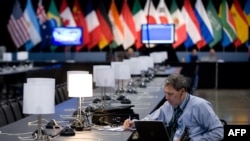
Once I'd settled in at my workspace in the Foreign Press Filing Center, though, I hit an obstacle. I couldn't plug my recorder into the soundboard that provides audio from briefings and press conferences at the summit.
Or, rather, I could plug it in after handing over $500 first.
It was explained to me by Emilie of Eurovision -- the media company that, along with AP -- had secured the rights to "sell" the summit's audio and video -- that her company was providing "copyrighted coverage" of the meetings and briefings, so it made perfect sense that they should charge for it. This business venture even had its own name: The Pittsburgh Pool Broadcast Service.
For me, a radio journalist, the charge would be $500 to access the audio feed. I received this information standing next to a journalist from a British media company, who swore audibly when he learned that a video feed would cost $1,500.
"I don't have approval for that," I said. "Neither do I," he said.
We asked if there was some other source that we could get the feed from, for free. Emilie shook her head. "What about the White House or State Department?" I asked -- figuring that as the host of the summit, the U.S. government might be making the material available to all comers.
"They're buying it from us," Emilie replied.
Downstairs in the press center, I shared this information with several of the other correspondents sitting nearby. Many said the practice of charging the press for audio and video feed at an event like this was unprecedented. Some asked out loud, "What am I doing here?"
This is a meeting of publicly elected officials who are making decisions that affect billions of people. I am an accredited member of the press who has come here at not-inconsiderable expense to write about what transpires.
But as U.S. Treasury Secretary Timothy Geithner briefed the White House traveling press pool one floor above me, I could only watch him on the giant TV screens summit organizers had set up. I could barely make out what he was saying.
The G-20 is made up of the leaders of the world's most powerful economies. Each time they meet, thousands of protesters gather who believe that this exclusive club makes decisions without considering the poor and less privileged among us.
I think I know how they feel.
-- Heather Maher
I had come from Washington to Pittsburgh to cover the G-20 summit. I had successfully negotiated the press-credential application process, secured one of the few hotel rooms still available, fought my way to the convention center through bridges and city streets blocked by army and police vehicles, and finally emerged on the other side of the massive security perimeter.
Once I'd settled in at my workspace in the Foreign Press Filing Center, though, I hit an obstacle. I couldn't plug my recorder into the soundboard that provides audio from briefings and press conferences at the summit.
Or, rather, I could plug it in after handing over $500 first.
It was explained to me by Emilie of Eurovision -- the media company that, along with AP -- had secured the rights to "sell" the summit's audio and video -- that her company was providing "copyrighted coverage" of the meetings and briefings, so it made perfect sense that they should charge for it. This business venture even had its own name: The Pittsburgh Pool Broadcast Service.
For me, a radio journalist, the charge would be $500 to access the audio feed. I received this information standing next to a journalist from a British media company, who swore audibly when he learned that a video feed would cost $1,500.
"I don't have approval for that," I said. "Neither do I," he said.
We asked if there was some other source that we could get the feed from, for free. Emilie shook her head. "What about the White House or State Department?" I asked -- figuring that as the host of the summit, the U.S. government might be making the material available to all comers.
"They're buying it from us," Emilie replied.
Downstairs in the press center, I shared this information with several of the other correspondents sitting nearby. Many said the practice of charging the press for audio and video feed at an event like this was unprecedented. Some asked out loud, "What am I doing here?"
This is a meeting of publicly elected officials who are making decisions that affect billions of people. I am an accredited member of the press who has come here at not-inconsiderable expense to write about what transpires.
But as U.S. Treasury Secretary Timothy Geithner briefed the White House traveling press pool one floor above me, I could only watch him on the giant TV screens summit organizers had set up. I could barely make out what he was saying.
The G-20 is made up of the leaders of the world's most powerful economies. Each time they meet, thousands of protesters gather who believe that this exclusive club makes decisions without considering the poor and less privileged among us.
I think I know how they feel.
-- Heather Maher