




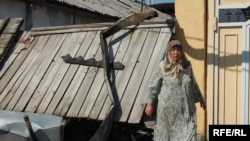
OSH -- Traffic jams are returning to the streets of Osh, restaurants are reopening, and, in some areas, people are rebuilding houses burned down just a few weeks ago. But in other neighborhoods, you can still smell smoke, water gushes from broken pipes, and many people live in tents, often in the courtyards of their former homes.
More than 300 people died in the violence between ethnic Kyrgyz and Uzbeks in June that destroyed hundreds of homes and businesses. The government says it will do everything necessary to rebuilt trust between the two communities. But more than a month on, there's little sign of reconciliation between the two main ethnic groups who inhabit this crippled city.
Instead, ongoing threats and allegations of abductions and torture are pushing the sides even further apart than they were in the immediate aftermath of the violence.
Seeing Is Not Believing
Most of the victims last month were ethnic Uzbeks. And it was mainly Uzbeks who fled the region -- hundreds of thousands of them, many across the border to refugee camps in Uzbekistan -- after many said they were attacked by Kyrgyz police and military units.
But state-controlled media largely blame Uzbeks for the violence. It's helping fuel tension that's keeping Uzbeks off the streets, making them virtual captives of their own neighborhoods, and spreading fear of Uzbeks among Kyrgyz.
A foreign observer of the recent events who refused to give his name, saying he fears for his safety, says he hasn't seen a single Uzbek interviewed on television.
He cites the case of an Uzbek woman who described watching incredulously on television as a Kyrgyz stranger stood outside her house, claiming it belonged to her and saying it had been destroyed by Uzbek marauders.
"[The ethnic Uzbek woman] said, 'We saw the television was showing our house and we got really excited, and then we saw a Kyrgyz woman standing outside [our] house and saying, "This is my house and 40 Uzbeks came and they burned it down" -- outside my house!'" the observer says. "So the fact is that well over 90 percent of the houses that were burned down were Uzbek and yet there's not been one interview with an Uzbek."
A Continuing Nightmare
Even as some rebuilding takes place, violence is continuing. Security forces are conducting routine sweeps of Uzbek neighborhoods, where residents say young men are being beaten and detained and held for ransom from relatives and friends.
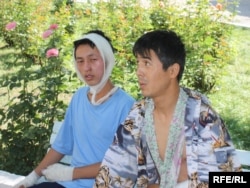 Two young men, one an ethnic Kyrgyz and the other an ethnic Uzbek, recover in an Osh hospital from injuries sustained in the ethnic violence in June.At the local headquarters of the National Security Service, Uzbeks inquire about the fate of their relatives. One woman has been coming here for the past five weeks to find out about her husband. An elderly man awaits news of his two sons, and a woman holding a child wants to know what's happened to her husband.
A short distance away, outside the provincial administration building, there's a crowd of ethnic Kyrgyz. It has set up tents and traditional felt-covered structures called yurts bearing photographs of missing relatives. The grieving people here say Uzbeks are holding those loved ones hostage, claims that have served as justification for the ongoing security sweeps of Uzbek neighborhoods.
There is no talk of reconciliation. In the center of Osh, a group of tough-looking young men blame Uzbeks for starting last month's violence. One of them accuses the authorities of doing nothing to prevent it.
"If the government won't do anything, the people will," he says. "We'll defend ourselves and our land."
Nowhere To Turn
In the Uzbek neighborhood of Sharq, Karim, who declines to give his last name, says many young Uzbeks are leaving for Russia. He says he's hoping a group of unarmed police from the Organization for Security and Cooperation in Europe (OSCE) will help restore order when it arrives in August.
"Maybe they'll help somehow," he says of the 50-plus "police advisory group." "We're counting on international organizations."
Down the road, in a small Kyrgyz community whose buildings have been burned down, Sheker Dihanova says she'd almost finished construction on her house before last month's violence. She says Uzbeks burned it down during the clashes.
"Nineteen families lived in this neighborhood," she says. "Six or seven of the houses were new, and out of them at least three are completely burned down. All I have left are the clothes on my back."
The government has promised to rebuild houses here, but residents are worried they'll have nowhere warm to live before winter sets in.
In the capital, Bishkek, the authorities say last month's violence was started by forces seeking to destabilize the interim government that took over after embattled President Kurmanbek Bakiev fled in April. They say parliamentary elections set for September or early October will form the basis of a new, democratic parliamentary system of rule that will bring stability to Kyrgyzstan.
But with tensions continuing to rise in the south amid little sign the government has any genuine control over local security forces, there are serious fears a new wave of violence could send the entire country into chaos.
More than 300 people died in the violence between ethnic Kyrgyz and Uzbeks in June that destroyed hundreds of homes and businesses. The government says it will do everything necessary to rebuilt trust between the two communities. But more than a month on, there's little sign of reconciliation between the two main ethnic groups who inhabit this crippled city.
Instead, ongoing threats and allegations of abductions and torture are pushing the sides even further apart than they were in the immediate aftermath of the violence.
Seeing Is Not Believing
Most of the victims last month were ethnic Uzbeks. And it was mainly Uzbeks who fled the region -- hundreds of thousands of them, many across the border to refugee camps in Uzbekistan -- after many said they were attacked by Kyrgyz police and military units.
But state-controlled media largely blame Uzbeks for the violence. It's helping fuel tension that's keeping Uzbeks off the streets, making them virtual captives of their own neighborhoods, and spreading fear of Uzbeks among Kyrgyz.
A foreign observer of the recent events who refused to give his name, saying he fears for his safety, says he hasn't seen a single Uzbek interviewed on television.
He cites the case of an Uzbek woman who described watching incredulously on television as a Kyrgyz stranger stood outside her house, claiming it belonged to her and saying it had been destroyed by Uzbek marauders.
"[The ethnic Uzbek woman] said, 'We saw the television was showing our house and we got really excited, and then we saw a Kyrgyz woman standing outside [our] house and saying, "This is my house and 40 Uzbeks came and they burned it down" -- outside my house!'" the observer says. "So the fact is that well over 90 percent of the houses that were burned down were Uzbek and yet there's not been one interview with an Uzbek."
A Continuing Nightmare
Even as some rebuilding takes place, violence is continuing. Security forces are conducting routine sweeps of Uzbek neighborhoods, where residents say young men are being beaten and detained and held for ransom from relatives and friends.

A short distance away, outside the provincial administration building, there's a crowd of ethnic Kyrgyz. It has set up tents and traditional felt-covered structures called yurts bearing photographs of missing relatives. The grieving people here say Uzbeks are holding those loved ones hostage, claims that have served as justification for the ongoing security sweeps of Uzbek neighborhoods.
There is no talk of reconciliation. In the center of Osh, a group of tough-looking young men blame Uzbeks for starting last month's violence. One of them accuses the authorities of doing nothing to prevent it.
"If the government won't do anything, the people will," he says. "We'll defend ourselves and our land."
Nowhere To Turn
In the Uzbek neighborhood of Sharq, Karim, who declines to give his last name, says many young Uzbeks are leaving for Russia. He says he's hoping a group of unarmed police from the Organization for Security and Cooperation in Europe (OSCE) will help restore order when it arrives in August.
"Maybe they'll help somehow," he says of the 50-plus "police advisory group." "We're counting on international organizations."
Down the road, in a small Kyrgyz community whose buildings have been burned down, Sheker Dihanova says she'd almost finished construction on her house before last month's violence. She says Uzbeks burned it down during the clashes.
"Nineteen families lived in this neighborhood," she says. "Six or seven of the houses were new, and out of them at least three are completely burned down. All I have left are the clothes on my back."
The government has promised to rebuild houses here, but residents are worried they'll have nowhere warm to live before winter sets in.
In the capital, Bishkek, the authorities say last month's violence was started by forces seeking to destabilize the interim government that took over after embattled President Kurmanbek Bakiev fled in April. They say parliamentary elections set for September or early October will form the basis of a new, democratic parliamentary system of rule that will bring stability to Kyrgyzstan.
But with tensions continuing to rise in the south amid little sign the government has any genuine control over local security forces, there are serious fears a new wave of violence could send the entire country into chaos.