





Vladimir Putin's provocative interview with "Kommersant," which hit the newsstands Monday, provided a fitting end to what has been a tumultuous August in Russia.
Putin taunted and belittled the opposition, which has found its voice and has shown a renewed confidence of late, saying they do little more than "say things around the corner from a public toilet and the whole world hears about it because all the television cameras will be there." Those who attend non-sanctioned demonstrations, he added, can expect to "be beaten upside the head with a truncheon."
It was vintage, trash-talking Putin, complete with the scatological "waste 'em in the outhouse" style rhetoric has become his trademark when he wants to play tough guy. The "Kommersant" interview was one of a series of media appearances Putin granted as he drove a vintage yellow Lada on a manly four-day road trip across Siberia.
Putin's stunt appeared designed to deflect media attention away from a series of victories for Kremlin opponents.
The most dramatic of these was President Dmitry Medvedev's decision to suspend the felling of Khimki forest, slated for destruction to make way for a new Moscow-St. Petersburg highway, pending further study. Environmentalists had been trying to save the forest for years. Mikhail Beketov, the editor of a Khimki newspaper who reported on the issue was severely beaten in 2008. Efforts to stop the felling crystallized with spirited protests this summer.
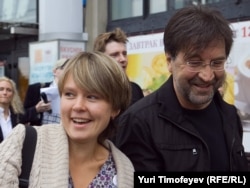 Chirikova and ShevchukMedvedev also decided to review the country's forest code, enacted by Putin in 2007, which ecologists say heavily favors the timber industry at the expense of protecting Russia's woodlands.
And finally, the decision not to retain the embattled Georgy Boos as governor of Kaliningrad met a key demand of the opposition in Russia's Western exclave, who had been agitating for his removal since January.
Medvedev's most recednt nods to opposition sentiment came just days after thousands gathered on Moscow's Pushkin Square for a demonstration in defense of Khimki forest.
They also reversed decisions made by Putin's himself, reviving the inevitable chatter about whether the ruling tandem is on the verge of splitting up.
But what is more interesting, and in the long run more consequential, than this palace intrigue and tandem tea-leaf reading is the exciting dynamic that is emerging in Russian society -- and the ruling elite's confused, and often confusing, reaction to it. A coalition is emerging around the idea that the way Russia has been run for the past decade has reached the point of diminishing returns, will no longer cut it, and needs to be changed.
In many ways, Russian civil society began to come of age in the crucible of this long hot August.
This was visible in the case of Yevgenia Chirikova, the previously apolitical mother of two who spearheaded the protests to save Khimki forest.
You could see it in the meteoric rise of Noize MC, an earnest and clever 25-year-old rapper who is making a name for himself by railing against police brutality and official impunity (and who comes across in interviews as wise and level-headed beyond his years).
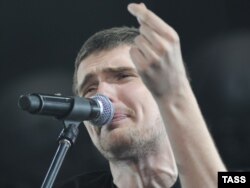 Noize MCA more mature Russian civil society is also exemplified by the thousands of volunteers like Dr. Liza who mobilized to help their fellow citizens during this month's relentless forest fires, as the authorities appeared hapless and clueless. Dr. Liza's very public dishing of the ruling United Russia party, which has sought to co-opt her for their own political purposes, encapsulated the emerging dynamic perfectly.
And a reinvigorated civil society was clear as day as rocker Yury Shevchuk emerged as the poet bard of the democratic opposition, railing against the regime at a concert, berating Putin at a televised meeting, and headlining last weekend's Pushkin Square protest rally.
All this does not yet constitute an August Revolution (my headline was intentionally over the top), but Russian society is clearly waking up from its long slumber and people appear more ready than at any time in recent memory to demand more from their rulers.
The question now is: How will the elite respond to the changed atmosphere? Will Medvedev's recent piecemeal concessions to public sentiment be the order of the day? Or will it be more of Putin's tough talk -- and police-state tactics? Or -- as is most likely -- will it be a little of both?
Despite its factionalism, the ruling elite's main priority is hanging on to power and preserving the essence of the current political status quo. The disagreements are over how best to achieve this end. The siloviki favor cracking down. The technocrats and 'civiliki' favor loosening things up. And as a result, the regime appears schizophrenic.
That schizophrenia was on display today when police broke up a protest rally in Moscow by the Strategy 31 movement, detaining opposition leader Boris Nemtsov and others.
In a recent interview with RFE/RL's Russian Service, opposition politician Vladimir Ryzhkov said the elite is experiencing "nervousness and fear of increasing social activism and protest sentiment," and trying desperately to get things back under its control.
"The authorities are alarmed by the fact that such a peripheral issue like a forest in the Moscow suburbs attracted over three thousand people to Pushkin Square," Ryzhkov said. "We cannot talk about a split in tandem. But it is correct to speak of the authorities' confusion and fear of a growing civil society and opposition sentiment."
As I have blogged here, the political situation in Russia increasingly resembles that of the early perestroika period. In a recent article in Slon.ru, political analyst Stanislav Belkovsky makes a similar argument.
"The ghost of Khimki forest that is haunting Russia is the harbinger of a new perestroika, a replay of the one that took place nearly a quarter century ago, " Belkovsky wrote.
"The inefficiency of the system, which was based on total corruption, is approaching a critical level. The government, meanwhile, is not ready to make any changes that are not purely formalistic in nature."
The summer is over and Russia has navigated another tumultous August. And the autumn political season is about to begin.
-- Brian Whitmore
Putin taunted and belittled the opposition, which has found its voice and has shown a renewed confidence of late, saying they do little more than "say things around the corner from a public toilet and the whole world hears about it because all the television cameras will be there." Those who attend non-sanctioned demonstrations, he added, can expect to "be beaten upside the head with a truncheon."
It was vintage, trash-talking Putin, complete with the scatological "waste 'em in the outhouse" style rhetoric has become his trademark when he wants to play tough guy. The "Kommersant" interview was one of a series of media appearances Putin granted as he drove a vintage yellow Lada on a manly four-day road trip across Siberia.
Putin's stunt appeared designed to deflect media attention away from a series of victories for Kremlin opponents.
The most dramatic of these was President Dmitry Medvedev's decision to suspend the felling of Khimki forest, slated for destruction to make way for a new Moscow-St. Petersburg highway, pending further study. Environmentalists had been trying to save the forest for years. Mikhail Beketov, the editor of a Khimki newspaper who reported on the issue was severely beaten in 2008. Efforts to stop the felling crystallized with spirited protests this summer.
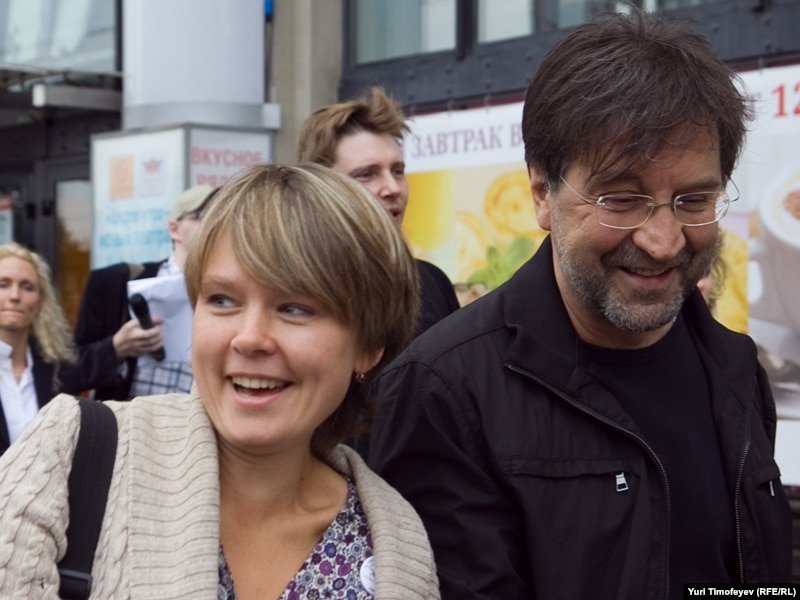
And finally, the decision not to retain the embattled Georgy Boos as governor of Kaliningrad met a key demand of the opposition in Russia's Western exclave, who had been agitating for his removal since January.
Medvedev's most recednt nods to opposition sentiment came just days after thousands gathered on Moscow's Pushkin Square for a demonstration in defense of Khimki forest.
They also reversed decisions made by Putin's himself, reviving the inevitable chatter about whether the ruling tandem is on the verge of splitting up.
But what is more interesting, and in the long run more consequential, than this palace intrigue and tandem tea-leaf reading is the exciting dynamic that is emerging in Russian society -- and the ruling elite's confused, and often confusing, reaction to it. A coalition is emerging around the idea that the way Russia has been run for the past decade has reached the point of diminishing returns, will no longer cut it, and needs to be changed.
In many ways, Russian civil society began to come of age in the crucible of this long hot August.
This was visible in the case of Yevgenia Chirikova, the previously apolitical mother of two who spearheaded the protests to save Khimki forest.
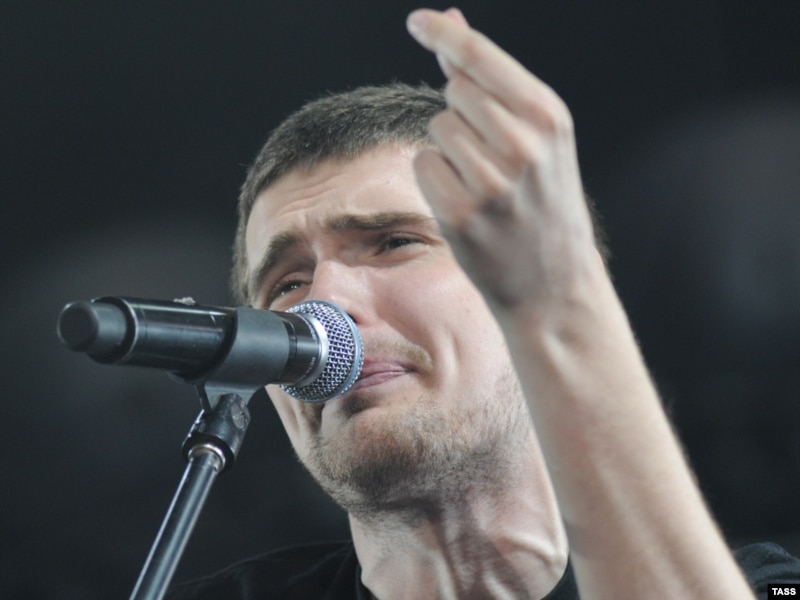
You could see it in the meteoric rise of Noize MC, an earnest and clever 25-year-old rapper who is making a name for himself by railing against police brutality and official impunity (and who comes across in interviews as wise and level-headed beyond his years).
And a reinvigorated civil society was clear as day as rocker Yury Shevchuk emerged as the poet bard of the democratic opposition, railing against the regime at a concert, berating Putin at a televised meeting, and headlining last weekend's Pushkin Square protest rally.
All this does not yet constitute an August Revolution (my headline was intentionally over the top), but Russian society is clearly waking up from its long slumber and people appear more ready than at any time in recent memory to demand more from their rulers.
The question now is: How will the elite respond to the changed atmosphere? Will Medvedev's recent piecemeal concessions to public sentiment be the order of the day? Or will it be more of Putin's tough talk -- and police-state tactics? Or -- as is most likely -- will it be a little of both?
Despite its factionalism, the ruling elite's main priority is hanging on to power and preserving the essence of the current political status quo. The disagreements are over how best to achieve this end. The siloviki favor cracking down. The technocrats and 'civiliki' favor loosening things up. And as a result, the regime appears schizophrenic.
That schizophrenia was on display today when police broke up a protest rally in Moscow by the Strategy 31 movement, detaining opposition leader Boris Nemtsov and others.
In a recent interview with RFE/RL's Russian Service, opposition politician Vladimir Ryzhkov said the elite is experiencing "nervousness and fear of increasing social activism and protest sentiment," and trying desperately to get things back under its control.
"The authorities are alarmed by the fact that such a peripheral issue like a forest in the Moscow suburbs attracted over three thousand people to Pushkin Square," Ryzhkov said. "We cannot talk about a split in tandem. But it is correct to speak of the authorities' confusion and fear of a growing civil society and opposition sentiment."
As I have blogged here, the political situation in Russia increasingly resembles that of the early perestroika period. In a recent article in Slon.ru, political analyst Stanislav Belkovsky makes a similar argument.
"The ghost of Khimki forest that is haunting Russia is the harbinger of a new perestroika, a replay of the one that took place nearly a quarter century ago, " Belkovsky wrote.
"The inefficiency of the system, which was based on total corruption, is approaching a critical level. The government, meanwhile, is not ready to make any changes that are not purely formalistic in nature."
The summer is over and Russia has navigated another tumultous August. And the autumn political season is about to begin.
-- Brian Whitmore