




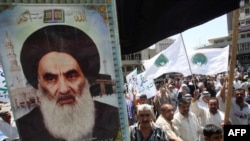
Recently, Grand Ayatollah Ali al-Sistani, Iraq's highest Shi'ite authority, urged voters to turn out for that country's March 7 parliamentary elections. He warned that that failure to do so would "allow some to achieve illegitimate goals."
To be sure, Sistani is no politician, though he is not apolitical, either. He doesn't issue political or legal orders. He doesn't direct Iraq's policies on ethnic issues, oil exploitation, foreign relations, political parties, media, courts, or security. He just gives advice from his home in Al-Najaf.
Still, many in Iraq's majority Shi'ite community follow him -- not because he is an official "supreme leader" like Iran's Ayatollah Ali Khamenei and not because the Iraqi government requires the people to either follow him or face punishment, as in Iran. They follow Sistani because Iraqi Shi'a respect him as a religious authority, an influential marja, or marja-i taqlid (source of emulation).
Although it is difficult for even Sunni Muslims -- let alone non-Muslims -- to understand it, in the Shi'ite confession it is extremely important to have and follow a marja. Marjas provide advice and even make decisions when you are in doubt on religious, social, and even political questions. Marjas are recognized and respected ayatollahs, usually grand ayatollahs, who are qualified and accepted by the public to make decisions within the framework of Islamic rules and traditions.
Imagine you are a Shi'ite Muslim facing a long intercontinental flight and you aren't sure how to arrange your prayers or ablutions. Or imagine there is a political event or dispute in your society, such as an election, and you are not sure how to act. You check the book of your marja, the risalah, and find the answers you need.
Every marja has his own risalah. For things that cannot be found in those books, you turn to the nearest representative of your marja, write a letter or e-mail or, more recently, raise the question on the website of your marja and receive your answer.
One of my late uncles, Ayatollah Abdollah Mojtehedi, used to tell me that a marja should have three qualities. First, he should be a deeply knowledgeable and experienced religious authority. Second, he should be "clean" from any personal or group interests in politics or business. And, third, he should be fair and moderate.
And, my uncle added, the decision to follow a marja is entirely a free and personal one. Nobody can impose on you an obligation to follow a particular cleric or force to renounce your chosen marja.
From Emulation To Dictation
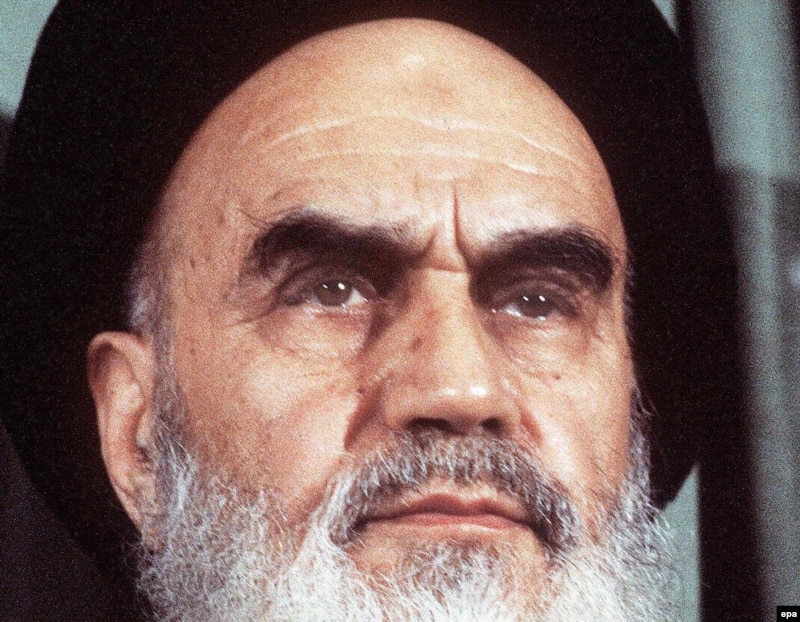
My uncle died before Iran's 1979 Islamic Revolution and didn't live to see what happened in its wake to the centuries-old concept of the marja in Iran. While still in exile in Paris, the founder of the Islamic republic, Ayatollah Ruhollah Khomeini, promised to become "just a spiritual leader" following his triumphant return to Iran. He would, he said, go back to the seminary in Qom as a cleric and just advise the people without ruling the country. In short, he promised to adopt the role that Sistani has been playing in the seminary of Al-Najaf for decades.
Before the revolution, Khomeini was more celebrated as a political fighter and challenger of the shah's regime than as a respected religious authority, a marja.
 Ayatollah Ruhollah Khomeini initially said he would be a simple "spiritual leader."Upon returning to Tehran, however, Khomeini became a "supreme leader," an "imam," which was an innovation that none of us understood then. He formulated the constitution, appointed the cabinet, changed the country's leadership at will, and started personally to pronounce the final word on everything from security issues and foreign policy to who should be punished or which political party or newspaper should be banned.
His successor, Ali Khamenei, also a fighter against the shah rather than a religious authority, was hastily "promoted" to the title ayatollah in order to become supreme leader. His elevation was the culmination of the system that was created in 1979, in which only one faction among the victors of the revolution usurped all the powers of the executive, legislature, and judiciary and began brutally to eliminate all opponents.
This new system was formulated with this statement: "Under the open sky, the only just position is that of the supreme leader." This simplistic ideology was pronounced by Ahmad Khatami, an ultraconservative member of the Assembly of Experts that elects or fires the supreme leader. Another member of the same body, Mohammad Taghi Mesbah Yazdi, reportedly issued a fatwa before last June's presidential election, saying that it is permissible to "change" or manipulate election results to prevent the victory of the enemies of the supreme leadership.
According to the official ideology, the supreme leader rules "on behalf and in absence of the Mahdi," the 12th Imam whom Shi'a believe went into hiding in the ninth century to return one day in order to restore global justice and peace. This concept, now the official policy of Iran, strictly bans any trace of opposition to the supreme leader and his will and allows the government to act ruthlessly against whomever they consider enemies of the system -- from leftists and democrats to former friends and dissident clerics and ayatollahs.
Both Khatami and Yazdi are clerics, as are most other members of the Assembly of Experts, the Guardians Council (charged with the interpretation of laws and the vetting of candidates in elections), and many members of the parliament and the cabinet of ministers. But very few of them are respected, fair, moderate religious authorities -- a marja -- clean of political or business interests.
Most of the influential and popular marjas, such as Grand Ayatollahs Mohammad Kazem Shariatmadari and Hossein Ali Montazeri, were put under house arrest or forced into passivity. Under the new system, more than 200,000 mullahs became receivers of government salaries and benefits -- and were therefore largely silenced. This was an unprecedented development in Iranian history, during which Shi'ite clerics were always dependent solely on voluntary religious donations.
No Longer Followed
The more the Islamic regime's leading clerics have distanced themselves from religion in order to cling to power, the more they have come to depend on the Islamic Revolutionary Guard Corps, the Basij militia, and the notorious "plainclothes militia" to maintain their positions by force. The five years of Mahmud Ahmadinejad's presidency have seen the further strengthening of the Revolutionary Guard and the gradual transition from religious authoritarianism to a military dictatorship with religious trappings.
The other day I asked a relative in Tehran who our current marja is. I knew that our larger family once followed Grand Ayatollahs Muhsin al-Hakim (in the 1960s), Mohammad Kazem Shariatmadari (1970s) and Abol-Qasim al-Khoei (1980s). But who have we followed since Khoei's death in 1982?
"Mr. Sistani," my relative answered. He said he believed most Iranian Shi'a recognize Sistani as their marja. "I have his risalah at home. He has representatives in most Iranian cities that you can consult with, or you can send his hawza, his seminary, an e-mail and get an answer."
"There are two major differences between Mr. Sistani's views and those of Khamenei," another source from Isfahan told me. "Sistani believes that Shi'ite clerics should stay out of active politics and remain as religious authorities," the source said. "He also thinks nobody can claim to be acting on behalf and in absence of the Hidden Imam. And you know well what the [supreme] leader believes."
Neither my relative in Tehran nor my source in Isfahan, both devout Shi'ite Muslims but still increasingly upset with the regime, have participated in the antigovernment demonstrations that have rocked the country since last June's election. I think the regime will be finished if people like them begin doing so.
With their aggressive policy of distancing themselves from the foundations of Shi'ite Islam and the intensifying oppression, Khamenei and his lieutenant, Ahmadinejad, are gradually ensuring the alienation of the majority of the Shi'ite faithful.
Abbas Djavadi is associate director of broadcasting at RFE/RL. The views expressed in this commentary are his own, and do not necessarily reflect those of RFE/RL
To be sure, Sistani is no politician, though he is not apolitical, either. He doesn't issue political or legal orders. He doesn't direct Iraq's policies on ethnic issues, oil exploitation, foreign relations, political parties, media, courts, or security. He just gives advice from his home in Al-Najaf.
Still, many in Iraq's majority Shi'ite community follow him -- not because he is an official "supreme leader" like Iran's Ayatollah Ali Khamenei and not because the Iraqi government requires the people to either follow him or face punishment, as in Iran. They follow Sistani because Iraqi Shi'a respect him as a religious authority, an influential marja, or marja-i taqlid (source of emulation).
Although it is difficult for even Sunni Muslims -- let alone non-Muslims -- to understand it, in the Shi'ite confession it is extremely important to have and follow a marja. Marjas provide advice and even make decisions when you are in doubt on religious, social, and even political questions. Marjas are recognized and respected ayatollahs, usually grand ayatollahs, who are qualified and accepted by the public to make decisions within the framework of Islamic rules and traditions.
Imagine you are a Shi'ite Muslim facing a long intercontinental flight and you aren't sure how to arrange your prayers or ablutions. Or imagine there is a political event or dispute in your society, such as an election, and you are not sure how to act. You check the book of your marja, the risalah, and find the answers you need.
Every marja has his own risalah. For things that cannot be found in those books, you turn to the nearest representative of your marja, write a letter or e-mail or, more recently, raise the question on the website of your marja and receive your answer.
One of my late uncles, Ayatollah Abdollah Mojtehedi, used to tell me that a marja should have three qualities. First, he should be a deeply knowledgeable and experienced religious authority. Second, he should be "clean" from any personal or group interests in politics or business. And, third, he should be fair and moderate.
And, my uncle added, the decision to follow a marja is entirely a free and personal one. Nobody can impose on you an obligation to follow a particular cleric or force to renounce your chosen marja.
From Emulation To Dictation
My uncle died before Iran's 1979 Islamic Revolution and didn't live to see what happened in its wake to the centuries-old concept of the marja in Iran. While still in exile in Paris, the founder of the Islamic republic, Ayatollah Ruhollah Khomeini, promised to become "just a spiritual leader" following his triumphant return to Iran. He would, he said, go back to the seminary in Qom as a cleric and just advise the people without ruling the country. In short, he promised to adopt the role that Sistani has been playing in the seminary of Al-Najaf for decades.
Before the revolution, Khomeini was more celebrated as a political fighter and challenger of the shah's regime than as a respected religious authority, a marja.
His successor, Ali Khamenei, also a fighter against the shah rather than a religious authority, was hastily "promoted" to the title ayatollah in order to become supreme leader. His elevation was the culmination of the system that was created in 1979, in which only one faction among the victors of the revolution usurped all the powers of the executive, legislature, and judiciary and began brutally to eliminate all opponents.
This new system was formulated with this statement: "Under the open sky, the only just position is that of the supreme leader." This simplistic ideology was pronounced by Ahmad Khatami, an ultraconservative member of the Assembly of Experts that elects or fires the supreme leader. Another member of the same body, Mohammad Taghi Mesbah Yazdi, reportedly issued a fatwa before last June's presidential election, saying that it is permissible to "change" or manipulate election results to prevent the victory of the enemies of the supreme leadership.
According to the official ideology, the supreme leader rules "on behalf and in absence of the Mahdi," the 12th Imam whom Shi'a believe went into hiding in the ninth century to return one day in order to restore global justice and peace. This concept, now the official policy of Iran, strictly bans any trace of opposition to the supreme leader and his will and allows the government to act ruthlessly against whomever they consider enemies of the system -- from leftists and democrats to former friends and dissident clerics and ayatollahs.
Both Khatami and Yazdi are clerics, as are most other members of the Assembly of Experts, the Guardians Council (charged with the interpretation of laws and the vetting of candidates in elections), and many members of the parliament and the cabinet of ministers. But very few of them are respected, fair, moderate religious authorities -- a marja -- clean of political or business interests.
Most of the influential and popular marjas, such as Grand Ayatollahs Mohammad Kazem Shariatmadari and Hossein Ali Montazeri, were put under house arrest or forced into passivity. Under the new system, more than 200,000 mullahs became receivers of government salaries and benefits -- and were therefore largely silenced. This was an unprecedented development in Iranian history, during which Shi'ite clerics were always dependent solely on voluntary religious donations.
No Longer Followed
The more the Islamic regime's leading clerics have distanced themselves from religion in order to cling to power, the more they have come to depend on the Islamic Revolutionary Guard Corps, the Basij militia, and the notorious "plainclothes militia" to maintain their positions by force. The five years of Mahmud Ahmadinejad's presidency have seen the further strengthening of the Revolutionary Guard and the gradual transition from religious authoritarianism to a military dictatorship with religious trappings.
The other day I asked a relative in Tehran who our current marja is. I knew that our larger family once followed Grand Ayatollahs Muhsin al-Hakim (in the 1960s), Mohammad Kazem Shariatmadari (1970s) and Abol-Qasim al-Khoei (1980s). But who have we followed since Khoei's death in 1982?
"Mr. Sistani," my relative answered. He said he believed most Iranian Shi'a recognize Sistani as their marja. "I have his risalah at home. He has representatives in most Iranian cities that you can consult with, or you can send his hawza, his seminary, an e-mail and get an answer."
"There are two major differences between Mr. Sistani's views and those of Khamenei," another source from Isfahan told me. "Sistani believes that Shi'ite clerics should stay out of active politics and remain as religious authorities," the source said. "He also thinks nobody can claim to be acting on behalf and in absence of the Hidden Imam. And you know well what the [supreme] leader believes."
Neither my relative in Tehran nor my source in Isfahan, both devout Shi'ite Muslims but still increasingly upset with the regime, have participated in the antigovernment demonstrations that have rocked the country since last June's election. I think the regime will be finished if people like them begin doing so.
With their aggressive policy of distancing themselves from the foundations of Shi'ite Islam and the intensifying oppression, Khamenei and his lieutenant, Ahmadinejad, are gradually ensuring the alienation of the majority of the Shi'ite faithful.
Abbas Djavadi is associate director of broadcasting at RFE/RL. The views expressed in this commentary are his own, and do not necessarily reflect those of RFE/RL