


Since the Dayton agreement ended the war in Bosnia in 1995, and nine years after the toppling of Serbian strongman Slobodan Milosevic, many believe the western Balkans have embarked on an irreversible path toward democratic reform and Euro-Atlantic integration. There is probably no danger that the Balkans will fall back into the horrendous conflicts we witnessed during the 1990s. However, there are unresolved issues that continue to remind us that the Balkans remain the "powder keg of Europe."
As U.S. Vice President Joe Biden admitted during his recent tour of the region, real integration among ethnic groups in the Balkans today could prove even more difficult than ending the wars in the former Yugoslavia was. There are a lot of unsettled scores, and once-warring nations still disagree over who should be held accountable for the conflicts.
The region has encountered a number of roadblocks to its progress. One of the most troubling issues is the dysfunctional nature of the Bosnian state and its tendency to drift toward division and renewed conflict. The Serb entity in Bosnia (Republika Srpska) has resisted the international community's efforts to strengthen Bosnia's federal institutions and, as former High International Representative in Bosnia Paddy Ashdown has pointed out, it undermines any sense of cohesion in the country.
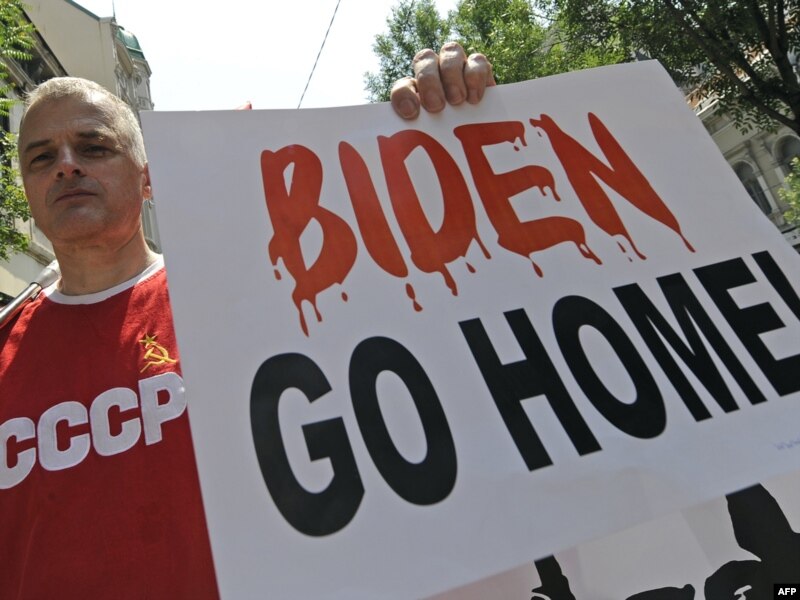
 Protests greeted U.S. Vice President Joe Biden in Belgrade in May.The most recent example is the October 1 decision by the Republika Srpska parliament to approve a proposal to suspend all Serbian participation in all state institutions unless the country's International Office of the High Representative (OHR) reverses a decision concerning the state electricity company. The leadership of Republika Srpska has again defied the European Union, apparently counting on its indecision and the inconsistency and ineffectiveness of its previous policies with regard to Bosnia.
Milorad Dodik, the recalcitrant and flamboyant prime minister of the Bosnian Serb entity, is seemingly convinced that the international community is prudent enough not to impose punitive measures, such as ousting high-ranking Serb politicians, as it did in the past, because doing so would backfire and make the Bosnian Serb electorate even more adamantly opposed to the very idea of keeping the Bosnian state together.
'If Kosovo Can, Why Can't We?'
Many Serbs in Bosnia are disenchanted. They argue that the West is applying double standards by preventing them from seceding from Bosnia while at the same time recognizing Kosovo's independence. "If Kosovo can, why can't we," they ask.
The Bosnian Serb leadership has even raised the possibility of outright secession to join Serbia. Such a scenario isn't likely in the foreseeable future, but the Bosnian Serb leadership has embarked on a policy of "creeping secession" from Bosnia. Indeed, in many respects, Bosnia does not exist in practice as a unified state. Republika Srpska is essentially more integrated with Serbia -- economically, culturally, and in other ways -- than with the rest of Bosnia.
Serbia, for its part, under the disguise of the special relations with the Bosnian Serb entity envisaged by the Dayton agreement, uses every available lever to strengthen those ties. That "creeping annexation" resembles closely the policy Russia pursued with regard to the breakaway Georgian regions South Ossetia and Abkhazia before it formally recognized their independence, and seems to be an attempt by Belgrade to retaliate for the loss of Kosovo.
Strong and undiminished national sentiments certainly constitute the biggest obstacle to long-term stability and prosperity in the western Balkans. The Kosovo issue is another stumbling block. Although it has been recognized so far by 62 states, including the majority of the Balkan region, and has been admitted into the International Monetary Fund and the World Bank, Kosovo is still a far cry from being fully integrated into the international community and becoming a sustainable state. With veto-wielding United Nations Security Council members Russia and China both opposed to Kosovo's independence, Kosovo probably can't count on becoming a member of the UN anytime soon.
Internally, Kosovo has failed so far to implement reforms aimed at creating a viable state, and consequently still has the reputation of an unsavory region plagued by organized crime, abject poverty, and fragile institutions.
Pulling Kosovo Apart
At the same time, the remaining few tens of thousands Serbs living in enclaves are adamantly opposed to the very idea of Kosovo being independent. They refuse to integrate into Kosovo's institutions, fearing that to do so would formalize their perceived status as second-class citizens. The failure of Kosovo's institutions to create a genuinely multiethnic society reinforces that fear. In addition, Kosovo's government has failed to create favorable conditions for the return of Serbian refugees. UN Secretary-General Ban Ki-moon recently noted that the number of returnees to Kosovo is disappointingly small (only 137 since the start of this year).
Meanwhile, Serbs in the northern part of Kosovo have established parallel local government structures exerting full control over that region with support from Belgrade, thereby preventing the authorities in Pristina from exercising sovereignty over Kosovo's entire territory.
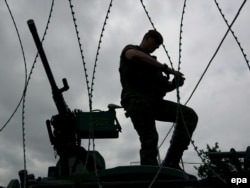 NATO troops on station in Kosovo in April.Serbia has pursued a diplomatic strategy of countering Kosovo's independence at every turn, including seeking an advisory opinion from the UN's International Court of Justice. Therefore, the situation is deadlocked. On the one hand, Kosovo's independence was probably inevitable given the atrocities committed by Serbian forces in the 1990s, as well as Belgrade's failure to create conditions that would have convinced Albanians to perceive Serbia as their genuine homeland.
However, Kosovo's independence has not yet contributed to regional stability as the West originally hoped it would.
On the other hand, Kosovo is definitely lost for Serbia, and a growing number of Serbs have even come to regard Kosovo as an "albatross around Serbia's neck." Therefore, the real motive behind Serbia's strategy is probably not to regain full control over Kosovo, but to keep at least a notional link with it or simply to win some concessions.
For that reason, northern Kosovo is a very important bargaining chip for the Serbian authorities as a "last line of defense" of Serbian national interests. That strategy aims to preserve control over northern Kosovo for as long as it takes for the West and the Albanians to realize that is not realistic for Pristina to take control of that region which, therefore, would inevitably join Serbia. The experience of the Balkan wars of the 1990s suggests that in almost every case where an ethnic group or entity succeeded in imposing its control over a certain territory, even when it committed atrocities in the process, the international community ultimately accepted the outcome as a fait accompli.
In any case, it means that northern Kosovo will remain for the foreseeable future a frozen conflict with no prospect of moving on.
Another option is that Serbia would accept the reintegration of northern Kosovo into Kosovo in exchange for the independence of the Serbian entity of Bosnia. Even some experts and politicians outside Serbia, including former U.S. Ambassador to Belgrade and Zagreb William Montgomery, write off as an illusion Western hopes of establishing fully functioning multiethnic societies in Bosnia and Kosovo without changing the present borders.
It's not entirely realistic to try to persuade the Bosnian Serbs to cede a significant number of the rights and privileges given them under the Dayton Agreement to the central government. In Kosovo, the reality is that most of the Serbs have already left and will not be coming back, as Montgomery has pointed out.
Redrawing Borders?
However, redrawing already disputed Balkan borders is fraught with risk. The secession of the Serb entity from Bosnia could spark a war that Islamic extremists from all around the world might be drawn to. If northern Kosovo was to be ceded to Serbia, it wouldn't go unanswered by authorities in Pristina and Albanian extremists. It would trigger a violent chain reaction, with the leaders of the Albanian community in southern Serbia arguing that that if northern Kosovo joins Serbia, then Serbia's Presevo Valley, which is mostly populated by Albanians, should become part of Kosovo. There could be more attacks like the recent assault on Serbian police officers in the Presevo Valley. Albanians in Macedonia, who agreed on a federal solution following the civil war in 2001, could opt out of that commitment if Kosovo's borders change.
A solution should therefore be sought in the wider context of European integration. However, the persistent Western strategy of trying to induce Serbia to come to terms with its past has not worked so far. The Balkans all but vanished from the U.S. agenda after September 11, 2001, leaving the region to the European Union. Brussels tries to attract the Balkan countries with the prospect of EU membership, but instead of pushing for reforms that would bring the region closer to the bloc, the EU has barely managed to preserve the disappointing status quo.
In such circumstances, leaving Serbia and the Serbs too long to brood over their feelings of defeat could fuel national resentment and a sense of self pity, with unforeseen consequences. This does not, of course, mean that the European Union and the United States should appease Serbia by agreeing to a redrawing of the map while ignoring Belgrade's failure to fulfill international commitments, such as the capture of war crimes suspect Ratko Mladic.
 The international high representative to Bosnia, Valentin Inzko, has some tough choices to make.However, some kind of incentive is needed to improve Serbia's negative perceptions of the West. The EU may be plagued with its own problems, including enlargement fatigue, but imposing numerous conditions on Serbia (such as the protracted refusal by the Netherlands to ratify the country's Association and Stabilization Agreement) while offering only a few sweeteners, like visa liberalization, may prove counterproductive. It could dampen enthusiasm for EU integration among the Serbian electorate and push even the moderate, pro-European government of Serbian President Boris Tadic closer toward Russia.
Given the tensions resulting from still-unsettled accounts in combination with the detrimental effects of the global economic crisis, keeping Serbia and other west Balkan countries at arm's length for too long may backfire, because resurgent extreme nationalists could fill the void and plunge the whole region into a new cycle of violence. Then the price the international community would have to pay to restore peace and stability would be much higher.
Dragan Stavljanin is a broadcaster with RFE/RL's Balkans Service. An earlier version of this article was published in an International Affairs Forum Special Report by the Washington based Center for International Relations. The views expressed in this commentary are the author's own, and do not necessarily reflect those of RFE/RL.
As U.S. Vice President Joe Biden admitted during his recent tour of the region, real integration among ethnic groups in the Balkans today could prove even more difficult than ending the wars in the former Yugoslavia was. There are a lot of unsettled scores, and once-warring nations still disagree over who should be held accountable for the conflicts.
The region has encountered a number of roadblocks to its progress. One of the most troubling issues is the dysfunctional nature of the Bosnian state and its tendency to drift toward division and renewed conflict. The Serb entity in Bosnia (Republika Srpska) has resisted the international community's efforts to strengthen Bosnia's federal institutions and, as former High International Representative in Bosnia Paddy Ashdown has pointed out, it undermines any sense of cohesion in the country.
Milorad Dodik, the recalcitrant and flamboyant prime minister of the Bosnian Serb entity, is seemingly convinced that the international community is prudent enough not to impose punitive measures, such as ousting high-ranking Serb politicians, as it did in the past, because doing so would backfire and make the Bosnian Serb electorate even more adamantly opposed to the very idea of keeping the Bosnian state together.
'If Kosovo Can, Why Can't We?'
Many Serbs in Bosnia are disenchanted. They argue that the West is applying double standards by preventing them from seceding from Bosnia while at the same time recognizing Kosovo's independence. "If Kosovo can, why can't we," they ask.
The Bosnian Serb leadership has even raised the possibility of outright secession to join Serbia. Such a scenario isn't likely in the foreseeable future, but the Bosnian Serb leadership has embarked on a policy of "creeping secession" from Bosnia. Indeed, in many respects, Bosnia does not exist in practice as a unified state. Republika Srpska is essentially more integrated with Serbia -- economically, culturally, and in other ways -- than with the rest of Bosnia.
Northern Kosovo is a very important bargaining chip for the Serbian authorities as a "last line of defense" of Serbian national interests.

Strong and undiminished national sentiments certainly constitute the biggest obstacle to long-term stability and prosperity in the western Balkans. The Kosovo issue is another stumbling block. Although it has been recognized so far by 62 states, including the majority of the Balkan region, and has been admitted into the International Monetary Fund and the World Bank, Kosovo is still a far cry from being fully integrated into the international community and becoming a sustainable state. With veto-wielding United Nations Security Council members Russia and China both opposed to Kosovo's independence, Kosovo probably can't count on becoming a member of the UN anytime soon.
Internally, Kosovo has failed so far to implement reforms aimed at creating a viable state, and consequently still has the reputation of an unsavory region plagued by organized crime, abject poverty, and fragile institutions.
Pulling Kosovo Apart
At the same time, the remaining few tens of thousands Serbs living in enclaves are adamantly opposed to the very idea of Kosovo being independent. They refuse to integrate into Kosovo's institutions, fearing that to do so would formalize their perceived status as second-class citizens. The failure of Kosovo's institutions to create a genuinely multiethnic society reinforces that fear. In addition, Kosovo's government has failed to create favorable conditions for the return of Serbian refugees. UN Secretary-General Ban Ki-moon recently noted that the number of returnees to Kosovo is disappointingly small (only 137 since the start of this year).
Meanwhile, Serbs in the northern part of Kosovo have established parallel local government structures exerting full control over that region with support from Belgrade, thereby preventing the authorities in Pristina from exercising sovereignty over Kosovo's entire territory.

However, Kosovo's independence has not yet contributed to regional stability as the West originally hoped it would.
On the other hand, Kosovo is definitely lost for Serbia, and a growing number of Serbs have even come to regard Kosovo as an "albatross around Serbia's neck." Therefore, the real motive behind Serbia's strategy is probably not to regain full control over Kosovo, but to keep at least a notional link with it or simply to win some concessions.
For that reason, northern Kosovo is a very important bargaining chip for the Serbian authorities as a "last line of defense" of Serbian national interests. That strategy aims to preserve control over northern Kosovo for as long as it takes for the West and the Albanians to realize that is not realistic for Pristina to take control of that region which, therefore, would inevitably join Serbia. The experience of the Balkan wars of the 1990s suggests that in almost every case where an ethnic group or entity succeeded in imposing its control over a certain territory, even when it committed atrocities in the process, the international community ultimately accepted the outcome as a fait accompli.
In any case, it means that northern Kosovo will remain for the foreseeable future a frozen conflict with no prospect of moving on.
Another option is that Serbia would accept the reintegration of northern Kosovo into Kosovo in exchange for the independence of the Serbian entity of Bosnia. Even some experts and politicians outside Serbia, including former U.S. Ambassador to Belgrade and Zagreb William Montgomery, write off as an illusion Western hopes of establishing fully functioning multiethnic societies in Bosnia and Kosovo without changing the present borders.
It's not entirely realistic to try to persuade the Bosnian Serbs to cede a significant number of the rights and privileges given them under the Dayton Agreement to the central government. In Kosovo, the reality is that most of the Serbs have already left and will not be coming back, as Montgomery has pointed out.
Redrawing Borders?
However, redrawing already disputed Balkan borders is fraught with risk. The secession of the Serb entity from Bosnia could spark a war that Islamic extremists from all around the world might be drawn to. If northern Kosovo was to be ceded to Serbia, it wouldn't go unanswered by authorities in Pristina and Albanian extremists. It would trigger a violent chain reaction, with the leaders of the Albanian community in southern Serbia arguing that that if northern Kosovo joins Serbia, then Serbia's Presevo Valley, which is mostly populated by Albanians, should become part of Kosovo. There could be more attacks like the recent assault on Serbian police officers in the Presevo Valley. Albanians in Macedonia, who agreed on a federal solution following the civil war in 2001, could opt out of that commitment if Kosovo's borders change.
A solution should therefore be sought in the wider context of European integration. However, the persistent Western strategy of trying to induce Serbia to come to terms with its past has not worked so far. The Balkans all but vanished from the U.S. agenda after September 11, 2001, leaving the region to the European Union. Brussels tries to attract the Balkan countries with the prospect of EU membership, but instead of pushing for reforms that would bring the region closer to the bloc, the EU has barely managed to preserve the disappointing status quo.
In such circumstances, leaving Serbia and the Serbs too long to brood over their feelings of defeat could fuel national resentment and a sense of self pity, with unforeseen consequences. This does not, of course, mean that the European Union and the United States should appease Serbia by agreeing to a redrawing of the map while ignoring Belgrade's failure to fulfill international commitments, such as the capture of war crimes suspect Ratko Mladic.

Given the tensions resulting from still-unsettled accounts in combination with the detrimental effects of the global economic crisis, keeping Serbia and other west Balkan countries at arm's length for too long may backfire, because resurgent extreme nationalists could fill the void and plunge the whole region into a new cycle of violence. Then the price the international community would have to pay to restore peace and stability would be much higher.
Dragan Stavljanin is a broadcaster with RFE/RL's Balkans Service. An earlier version of this article was published in an International Affairs Forum Special Report by the Washington based Center for International Relations. The views expressed in this commentary are the author's own, and do not necessarily reflect those of RFE/RL.