





In the political turmoil and public outrage arising from the disputed presidential election in Iran, alleged victor Mahmud Ahmadinejad and his political ally, Supreme Leader Ayatollah Ali Khamenei have both repeatedly appealed to the opposition to remain within the law.
Although much has been written about the legitimacy of the election itself, the integral dispute over "legality" remains largely unaddressed. Yet the law permeates every aspect of the current crisis, including the legitimacy of Khamenei's postelection decisions, the lawfulness of the opposition protests and the resulting violent response, and, crucially, whether the authorities' calls to dispute the result through "legal channels" are merely a publicity ploy.
Is Supreme Leader On Right Side Of The Law?
With each passing day of the ongoing crisis, international news coverage focuses increasingly on Khamenei's influence as his position shifts unequivocally toward Ahmadinejad. While the supreme leader is granted extensive discretion by law, according to Article 5 of the Iranian Constitution this power is contingent on the leader being "a just and pious person, who is fully aware of the circumstances of his age, courageous, resourceful, and possessed of administrative ability."
Should the supreme leader be perceived to no longer conform to these standards, the Assembly of Experts -- an elected body headed by Ahmadinejad's opponent, former President Ali Akbar Hashemi Rafsanjani -- has the power under Article 111 to remove him from office.
Iranians themselves and international media alike have expressed considerable dissatisfaction over Khamenei's unwavering support for the "president-elect" in the face of the widespread protests and international skepticism. However, the case can also be made that such vocal support while the election process is formally ongoing (with the Guardians Council still considering candidates' objections) is itself a breach of the supreme leader's constitutional obligation to be "just."
 Is a "legal challenge" of the vote's validity a waste of the opposition's time?Just hours after the preliminary announcement of Ahmadinejad's overwhelming victory, Khamenei had conveyed his congratulations to the winning candidate, thereby putting his weighty seal of approval on the controversial outcome of the ballot. Yet this endorsement occurred prior to the conclusion of the elections, which is marked by the Guardians Council's official endorsement of the results, as required by Article 99 of the constitution.
Khamenei's affirmation of victory for a candidate whose total votes were still unconfirmed and certain to be widely disputed is difficult to reconcile with the obligation to be "just." Indeed, it suggests a desire to preempt any opposition objections by throwing the weight of the supreme leader's office behind the incumbent. As impartiality is an integral element of "just" conduct by a decision-maker, Khamenei 's calls to observe due legal process ring hollow in the face of his personal violations of his constitutional obligations.
Legal Protests Or 'Terrorist' Actions?
There is abundant photographic documentation of the violent reprisals against protesters. The government summarily brands "illegal" any gathering critical of the election outcome, while at the same time granting permission for demonstrations by Ahmadinejad supporters.
Given that the term "illegal" can have such grievous consequences, it is imperative to consider whether its use is justified in view of the right of expression granted to citizens under Article 27 of the constitution, which reads, "public gatherings and marches may be freely held, provided arms are not carried, and that they are not detrimental to the fundamental principles of Islam." The only participants in the protests who appear to carry and freely use "arms" are the police and Basij forces.
On June 19, the supreme leader in his Friday Prayer sermon confirmed that all presidential candidates were products of the Islamic Revolution, and not out to overthrow it; consequently, it is difficult to argue that the protesters' actions are "detrimental to fundamental principles of Islam."
As neither constitutional qualification has been met, the government's designation of the protests as "illegal," even when they simply involve silent mourning for those killed earlier, appears to be without any legal basis. Instead, the government falls back on the argument that the protesters did not obtain (despite applying on several occasions) a "permit" for the demonstrations, while such permission has been freely granted for marches in support of Ahmadinejad.
The ability of the authorities to deny the legality of marches that appear consistent with the constitutional guarantees calls into question the legitimacy of the "permit" system, which is not embodied in the constitution. The authority that grants such permits, the Interior Ministry, is a part of the executive branch, with the minister being an appointee of the president and dependant on Ahmadinejad's continued approval.
In these circumstances, the potential for abuse of power and unauthorized influence is obvious, suggesting that the permit regime is not reconcilable with the principles of the constitution. With the legal system so firmly weighted against those who oppose the present leadership, the label of "legality" when applied to protests has lost any meaning.
The issue of legality in this context is reciprocal. In responding to genuinely illegal gatherings, the law imposes a requirement of proportionality on the use of force: armed resistance can be countered with armed force, but an unarmed protester should under no circumstances be shot dead. As there is no evidence whatsoever that the protesters had firearms, opening fire on them appears inconsistent with the law.
Yet, there has been no indication that the judiciary or Prosecutor's Office has acted on its legal responsibility to prosecute or condemn such actions. Instead, their efforts have focused on the detention of hundreds of people connected with the protests.
Arrests are permitted by Article 32 of the constitution only insofar as the authorities abide by appropriate procedure, including communication of the charges within 24 hours. With the majority of the recent detainees being held at unknown locations by unknown forces, the observance of this law appears unlikely.
Are 'Legal Avenues' A Dead End?
The government has responded to allegations of fraud by urging the protesters to abide by "legal means" of challenging the result. The thousands of protesters are unconvinced by the pro forma availability of any legal venues, noting that the composition of the Guardians Council does not suggest impartiality. The council is composed of 12 members, six jurists and six clerics, with the latter being appointed by the supreme leader outright and the former selected by the head of the judiciary, who in turn is appointed by the supreme leader.
While the council does have the power to overturn the election results, its political orientation stemming from its composition does not incline its members toward objective consideration of the evidence. Such evidence is required to overturn the election, with the burden of proof being on candidate Mir Hossein Musavi; members of the Guardians Council have already objected that no such evidence has been presented.
Yet, with any available records and ballots in the possession of the Interior Ministry, cooperation on the part of a pro-Ahmadinejad authority in collecting such evidence is highly unlikely. Given that at least half the Guardians Council members owe their positions to the supreme leader, who in turn is openly allied with the incumbent, and that one of the jurist members is also justice minister, Musavi's low expectations of a just and fair legal appeal process are justified.
The law should act as a sober and objective force to temper the passion and idealism of the political upheaval in Iran, but it has failed to do so. The constitution, which was designed specifically to hold the Islamic republic together by providing a legal framework of rights and mechanisms, has not been enforced in resolving the present conflict, with the government unjustifiably curtailing the constitutionally guaranteed rights of free speech and assembly.
On a more fundamental level, the conflict reveals the inadequacy of the constitution in resolving disputes arising from elections, with insufficient separation of powers undermining public confidence in any decision made by the Guardians Council. This inherent flaw creates permanent potential for abuse.
No matter how the dispute over the 2009 election is resolved, the conflict is likely to be repeated unless an independent, accountable, and transparent authority, rather than the partisan Guardians Council, is tasked with ensuring that future elections are fair.
Mohammad Hedayati-Kakhki is a former Iranian barrister and currently a research associate in the Center for Iranian Studies and special adviser to the Center for Criminal Law and Criminal Justice at Durham University. The views expressed in this commentary are the author's own and do not necessarily reflect those of RFE/RL


Although much has been written about the legitimacy of the election itself, the integral dispute over "legality" remains largely unaddressed. Yet the law permeates every aspect of the current crisis, including the legitimacy of Khamenei's postelection decisions, the lawfulness of the opposition protests and the resulting violent response, and, crucially, whether the authorities' calls to dispute the result through "legal channels" are merely a publicity ploy.
Is Supreme Leader On Right Side Of The Law?
With each passing day of the ongoing crisis, international news coverage focuses increasingly on Khamenei's influence as his position shifts unequivocally toward Ahmadinejad. While the supreme leader is granted extensive discretion by law, according to Article 5 of the Iranian Constitution this power is contingent on the leader being "a just and pious person, who is fully aware of the circumstances of his age, courageous, resourceful, and possessed of administrative ability."
Should the supreme leader be perceived to no longer conform to these standards, the Assembly of Experts -- an elected body headed by Ahmadinejad's opponent, former President Ali Akbar Hashemi Rafsanjani -- has the power under Article 111 to remove him from office.
Iranians themselves and international media alike have expressed considerable dissatisfaction over Khamenei's unwavering support for the "president-elect" in the face of the widespread protests and international skepticism. However, the case can also be made that such vocal support while the election process is formally ongoing (with the Guardians Council still considering candidates' objections) is itself a breach of the supreme leader's constitutional obligation to be "just."
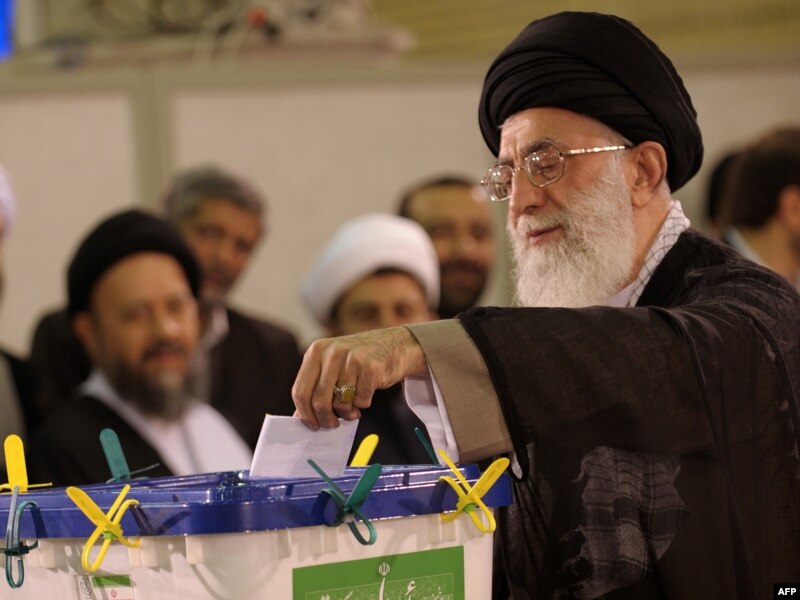
Khamenei's affirmation of victory for a candidate whose total votes were still unconfirmed and certain to be widely disputed is difficult to reconcile with the obligation to be "just." Indeed, it suggests a desire to preempt any opposition objections by throwing the weight of the supreme leader's office behind the incumbent. As impartiality is an integral element of "just" conduct by a decision-maker, Khamenei 's calls to observe due legal process ring hollow in the face of his personal violations of his constitutional obligations.
Legal Protests Or 'Terrorist' Actions?
There is abundant photographic documentation of the violent reprisals against protesters. The government summarily brands "illegal" any gathering critical of the election outcome, while at the same time granting permission for demonstrations by Ahmadinejad supporters.
Given that the term "illegal" can have such grievous consequences, it is imperative to consider whether its use is justified in view of the right of expression granted to citizens under Article 27 of the constitution, which reads, "public gatherings and marches may be freely held, provided arms are not carried, and that they are not detrimental to the fundamental principles of Islam." The only participants in the protests who appear to carry and freely use "arms" are the police and Basij forces.
On June 19, the supreme leader in his Friday Prayer sermon confirmed that all presidential candidates were products of the Islamic Revolution, and not out to overthrow it; consequently, it is difficult to argue that the protesters' actions are "detrimental to fundamental principles of Islam."
As neither constitutional qualification has been met, the government's designation of the protests as "illegal," even when they simply involve silent mourning for those killed earlier, appears to be without any legal basis. Instead, the government falls back on the argument that the protesters did not obtain (despite applying on several occasions) a "permit" for the demonstrations, while such permission has been freely granted for marches in support of Ahmadinejad.
The ability of the authorities to deny the legality of marches that appear consistent with the constitutional guarantees calls into question the legitimacy of the "permit" system, which is not embodied in the constitution. The authority that grants such permits, the Interior Ministry, is a part of the executive branch, with the minister being an appointee of the president and dependant on Ahmadinejad's continued approval.
In these circumstances, the potential for abuse of power and unauthorized influence is obvious, suggesting that the permit regime is not reconcilable with the principles of the constitution. With the legal system so firmly weighted against those who oppose the present leadership, the label of "legality" when applied to protests has lost any meaning.
The issue of legality in this context is reciprocal. In responding to genuinely illegal gatherings, the law imposes a requirement of proportionality on the use of force: armed resistance can be countered with armed force, but an unarmed protester should under no circumstances be shot dead. As there is no evidence whatsoever that the protesters had firearms, opening fire on them appears inconsistent with the law.
Yet, there has been no indication that the judiciary or Prosecutor's Office has acted on its legal responsibility to prosecute or condemn such actions. Instead, their efforts have focused on the detention of hundreds of people connected with the protests.
Arrests are permitted by Article 32 of the constitution only insofar as the authorities abide by appropriate procedure, including communication of the charges within 24 hours. With the majority of the recent detainees being held at unknown locations by unknown forces, the observance of this law appears unlikely.
Are 'Legal Avenues' A Dead End?
The government has responded to allegations of fraud by urging the protesters to abide by "legal means" of challenging the result. The thousands of protesters are unconvinced by the pro forma availability of any legal venues, noting that the composition of the Guardians Council does not suggest impartiality. The council is composed of 12 members, six jurists and six clerics, with the latter being appointed by the supreme leader outright and the former selected by the head of the judiciary, who in turn is appointed by the supreme leader.
While the council does have the power to overturn the election results, its political orientation stemming from its composition does not incline its members toward objective consideration of the evidence. Such evidence is required to overturn the election, with the burden of proof being on candidate Mir Hossein Musavi; members of the Guardians Council have already objected that no such evidence has been presented.
Yet, with any available records and ballots in the possession of the Interior Ministry, cooperation on the part of a pro-Ahmadinejad authority in collecting such evidence is highly unlikely. Given that at least half the Guardians Council members owe their positions to the supreme leader, who in turn is openly allied with the incumbent, and that one of the jurist members is also justice minister, Musavi's low expectations of a just and fair legal appeal process are justified.
The law should act as a sober and objective force to temper the passion and idealism of the political upheaval in Iran, but it has failed to do so. The constitution, which was designed specifically to hold the Islamic republic together by providing a legal framework of rights and mechanisms, has not been enforced in resolving the present conflict, with the government unjustifiably curtailing the constitutionally guaranteed rights of free speech and assembly.
On a more fundamental level, the conflict reveals the inadequacy of the constitution in resolving disputes arising from elections, with insufficient separation of powers undermining public confidence in any decision made by the Guardians Council. This inherent flaw creates permanent potential for abuse.
No matter how the dispute over the 2009 election is resolved, the conflict is likely to be repeated unless an independent, accountable, and transparent authority, rather than the partisan Guardians Council, is tasked with ensuring that future elections are fair.
Mohammad Hedayati-Kakhki is a former Iranian barrister and currently a research associate in the Center for Iranian Studies and special adviser to the Center for Criminal Law and Criminal Justice at Durham University. The views expressed in this commentary are the author's own and do not necessarily reflect those of RFE/RL
Iran Election Special
Iran Election Special
RFE/RL's Full Coverage
Following the disputed reelection of Iranian President Mahmud Ahmadinejad, supporters of Mir Hossein Musavi have taken to the streets to protest. Click here for news, blogs, and analysis of the presidential election and aftermath.Iran Election Diary
Iran Election Diary