




Across a great swath of Eurasia, from the Balkans to Russia to Afghanistan, the middle class and the people who might have become a middle class have trouble making ends meet and little voice in how their countries are governed. Why is the middle class in this region so weak, and what is needed to strengthen it? We look at the questions in a three-part series, beginning with what it means to be “middle class.”
In Western countries, the middle class is regarded as the powerful backbone of democratic and prosperous societies.
In the United States, for example, the middle class is widely estimated to account for about 60 percent of the population. Its members are professionals of all kinds, from teachers to police officers to business managers. They pay billions of dollars in taxes, vote in large numbers, and thus play a major role in choosing who governs the country and how.
But across a much of Eurasia, from the Balkans to Russia to Afghanistan, the position of the middle class is very tenuous. There, the middle class -- or what could become the middle class -- is extraordinarily fragile.
One reason for the fragility is that in many of these countries, a new middle class is still emerging from the chaos that followed the collapse of a previously stable order.
Post-Soviet Authoritarianism
In the former Soviet Union, there was the overturning of communism. Out of the ashes, a small but highly visible new commercial class has arisen that has an income level comparable to the Western middle class. But its social values, and view of government, are its own.
"They usually don't endorse the values of democracy and liberalism. They support the social, political, and economic order that has been formed over the past decade in Russia," says Boris Dubin, a sociologist at Russia's independent Levada polling center.
"It's an authoritarian order in which the authorities are not separated from property and in which the top leaders are also the top proprietors."
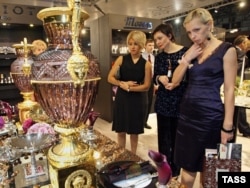 For many, the middle class is made up of those with enough money for luxury spending.Dubin says this class makes up 4 to 5 percent of the population and is the current regime's staunchest supporter. He adds that "as a rule, it consists of young people living in large cities."
The values of this commercially successful class contrast sharply with those of the group that many observers once thought would become Russia's new middle class: the Soviet-era intelligentsia.
That group -- composed of intellectuals, artists, and many nongovernmental professionals -- had an independent and often dissident attitude toward the communist apparatchiks who monopolized political power.
But the intelligentsia proved too independent-minded to compete in post-Soviet Russia's top-down economy. Instead, its members have been eclipsed by the entrepreneurs who rose by exploiting their contacts with the government.
Brain Drain
In other countries, a strong middle class does not exist today for quite different reasons.
In Iran, there was the 1979 Islamic Revolution. In the wake of the revolution some 2-3 million people, most of them educated professionals, fled Iran to start new lives in Europe, North America, and the Persian Gulf states.
And in the Balkans, Afghanistan, and Iraq, there was, or is, war. Again, millions have fled or been displaced. At the high point of unrest in Iraq, 40 percent of the country's middle class was reportedly outside the country.
As a result of these dramatic upheavals, a strong potential engine for democracy and prosperity is stalled across much of Eurasia. And the West, which is used to promoting civil society by working with the middle class, finds it lacks regional partners.
The consequences are visible. Autocrats remain in power largely unchallenged by any civic-based opposition parties. There is a widening gap between the wealthy ruling elite and the poor majority.
Middle-Class Values
But if in Russia the stage today is dominated by politically loyal entrepreneurs and elsewhere the middle class is in retreat, the middle class dream remains strong among ordinary people.
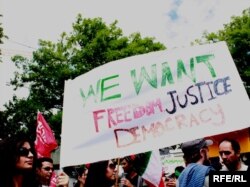 People who identify themselves as middle class largely support democracy.From taxi drivers to professionals to small businessmen, many people whose income puts them between rich and poor seek to become part of a stable middle class. And many of the values they espouse are surprisingly like those of their Western counterparts.
A Pew Research Center poll commissioned by "The Economist" magazine last year found that across the developing world, people who identify themselves as middle class largely support democracy.
In Ukraine, for example, 65 percent of middle-class respondents rate honest elections with at least two parties as "very important."
By contrast, poorer people in Ukraine gave less importance to democracy. Just 53 percent of those respondents called the same goal "very important."
In Russia, the number of middle-class respondents rating free elections as very important was lower, at 51 percent. But that is still noticeably higher than the just 37 percent of lower-income Russian respondents who answered similarly.
Who Is Middle Class?
The Pew study, which included 13 countries, defined middle class as people who earn more than $ 4,286. That is the threshold for the middle class set by the IBRD/World Bank in 2007.
But in many societies, people who earn far less than that will define themselves as middle class.
In Russia, for example, people use a qualitative definition: You are middle class when you have enough to make ends meet plus a little extra to save or spend on pleasure.
"For me middle class means a steadily above-average income, property, a car, that kind of a minimum kit," says entrepreneur Denis Molotkov from the Western Siberian city of Tomsk.
But there are other definitions, too.
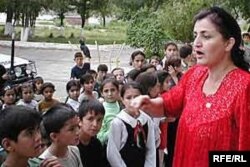 Though teachers in Tajikistan may barely eke out a living, they still consider themselves middle class.Many people define themselves as middle class if their work involves intellectual, rather than physical, labor -- even if they make less money than do laborers. Teachers are one example.
In Tajikistan, professors are among the poorest-paid professionals, so much so that many use their summers to seek better-paying jobs on construction sites in neighboring Russia.
But when the school year resumes, they return to the teaching jobs that give them their sense of middle-class status.
"I needed money to live and to complete something at school [work], I mean transport fees and so on. That's why I traveled to Moscow for seasonal work, says one Tajik teacher.
"Money we receive in Moscow is much more than we receive in Tajikistan. With this money we can arrange out life expenses. Our aim is to make some savings and return to school."
Part of the sense of middle-class status that he and other lowly paid teachers across the region share is a conviction that they are helping to influence the future of their country.
Still, if many people today across this part of Eurasia see themselves as middle class -- either based upon an income or educational level that is higher than that of the poor -- together they have yet to become significant politically.
RFE/RL's Russian and Tajik services contributed to this report
In Western countries, the middle class is regarded as the powerful backbone of democratic and prosperous societies.
In the United States, for example, the middle class is widely estimated to account for about 60 percent of the population. Its members are professionals of all kinds, from teachers to police officers to business managers. They pay billions of dollars in taxes, vote in large numbers, and thus play a major role in choosing who governs the country and how.
But across a much of Eurasia, from the Balkans to Russia to Afghanistan, the position of the middle class is very tenuous. There, the middle class -- or what could become the middle class -- is extraordinarily fragile.
One reason for the fragility is that in many of these countries, a new middle class is still emerging from the chaos that followed the collapse of a previously stable order.
Post-Soviet Authoritarianism
In the former Soviet Union, there was the overturning of communism. Out of the ashes, a small but highly visible new commercial class has arisen that has an income level comparable to the Western middle class. But its social values, and view of government, are its own.
"They usually don't endorse the values of democracy and liberalism. They support the social, political, and economic order that has been formed over the past decade in Russia," says Boris Dubin, a sociologist at Russia's independent Levada polling center.
"It's an authoritarian order in which the authorities are not separated from property and in which the top leaders are also the top proprietors."
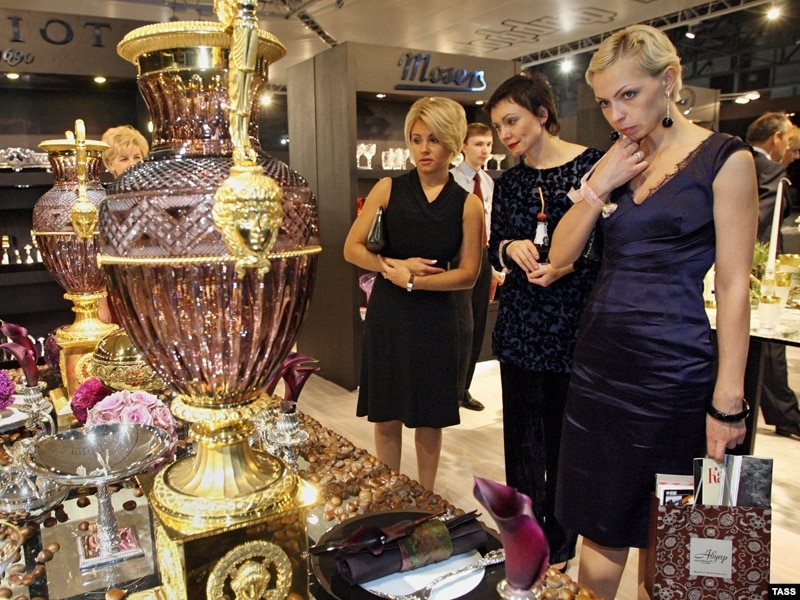
The values of this commercially successful class contrast sharply with those of the group that many observers once thought would become Russia's new middle class: the Soviet-era intelligentsia.
That group -- composed of intellectuals, artists, and many nongovernmental professionals -- had an independent and often dissident attitude toward the communist apparatchiks who monopolized political power.
But the intelligentsia proved too independent-minded to compete in post-Soviet Russia's top-down economy. Instead, its members have been eclipsed by the entrepreneurs who rose by exploiting their contacts with the government.
Brain Drain
In other countries, a strong middle class does not exist today for quite different reasons.
In Iran, there was the 1979 Islamic Revolution. In the wake of the revolution some 2-3 million people, most of them educated professionals, fled Iran to start new lives in Europe, North America, and the Persian Gulf states.
And in the Balkans, Afghanistan, and Iraq, there was, or is, war. Again, millions have fled or been displaced. At the high point of unrest in Iraq, 40 percent of the country's middle class was reportedly outside the country.
As a result of these dramatic upheavals, a strong potential engine for democracy and prosperity is stalled across much of Eurasia. And the West, which is used to promoting civil society by working with the middle class, finds it lacks regional partners.
The consequences are visible. Autocrats remain in power largely unchallenged by any civic-based opposition parties. There is a widening gap between the wealthy ruling elite and the poor majority.
Middle-Class Values
But if in Russia the stage today is dominated by politically loyal entrepreneurs and elsewhere the middle class is in retreat, the middle class dream remains strong among ordinary people.

A Pew Research Center poll commissioned by "The Economist" magazine last year found that across the developing world, people who identify themselves as middle class largely support democracy.
In Ukraine, for example, 65 percent of middle-class respondents rate honest elections with at least two parties as "very important."
By contrast, poorer people in Ukraine gave less importance to democracy. Just 53 percent of those respondents called the same goal "very important."
In Russia, the number of middle-class respondents rating free elections as very important was lower, at 51 percent. But that is still noticeably higher than the just 37 percent of lower-income Russian respondents who answered similarly.
Who Is Middle Class?
The Pew study, which included 13 countries, defined middle class as people who earn more than $ 4,286. That is the threshold for the middle class set by the IBRD/World Bank in 2007.
But in many societies, people who earn far less than that will define themselves as middle class.
In Russia, for example, people use a qualitative definition: You are middle class when you have enough to make ends meet plus a little extra to save or spend on pleasure.
"For me middle class means a steadily above-average income, property, a car, that kind of a minimum kit," says entrepreneur Denis Molotkov from the Western Siberian city of Tomsk.
But there are other definitions, too.

In Tajikistan, professors are among the poorest-paid professionals, so much so that many use their summers to seek better-paying jobs on construction sites in neighboring Russia.
But when the school year resumes, they return to the teaching jobs that give them their sense of middle-class status.
"I needed money to live and to complete something at school [work], I mean transport fees and so on. That's why I traveled to Moscow for seasonal work, says one Tajik teacher.
"Money we receive in Moscow is much more than we receive in Tajikistan. With this money we can arrange out life expenses. Our aim is to make some savings and return to school."
Part of the sense of middle-class status that he and other lowly paid teachers across the region share is a conviction that they are helping to influence the future of their country.
Still, if many people today across this part of Eurasia see themselves as middle class -- either based upon an income or educational level that is higher than that of the poor -- together they have yet to become significant politically.
RFE/RL's Russian and Tajik services contributed to this report