




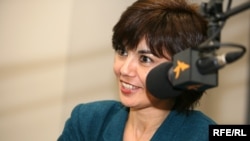
The telephone lines are cut, journalists are harassed, and the candidates won't speak to you. For independent journalists, covering Turkmenistan's parliamentary elections on December 14 is far from easy. We asked the director of RFE/RL's Turkmen Service, Oguljamal Yazliyeva, about the challenges she and her colleagues face.
"Despite the Turkmen government's promises of democratization, people who hold diverging opinions or criticize the authorities are still subject to pressure.
"The authorities are restricting the work of our correspondents and contributors by cutting off their telephones and monitoring their every move.
"International calls to and from our correspondents provided by the private MTS GSM operator, and the state-owned Turkmen Telecom, have been blocked.
"MTS GSM in Ashgabat told us that there are no technical problems and recommended that we call the customer-service department. But whenever we call, the number is constantly busy. Some engineers at MTS GSM told us that there were some "comments" on RFE/RL correspondents' profiles in their database.
"Osman Halliyev, our correspondent in the Lebap Province, says that all his international calls have been barred. He has complained to the authorities, but they haven't done anything.
"Halliyev also says that in recent days his home and movements have been under constant surveillance by the local secret police. His only contact with us is through e-mail.
"But even communication through the Internet is difficult. Although Internet connections at home are becoming more common in the cities, it's still a problem for our correspondents living in distant rural areas. There aren't many Internet cafes, and we assume they're all monitored by the authorities.
"And it's hard to do a story when members of parliament and officials never speak to us. But that doesn't mean we'll stop trying to speak to them.
"We've always had these types of problems with the authorities, but since we upped our election coverage in recent weeks it's got worse.
"It's difficult to know what to do. There's not very much we can do, except try to report the news, give context, and keep our correspondents safe.
"It helps when organizations, like Reporters Without Borders, call on the authorities to loosen up their grip on media, but for now, even though Turkmenistan is supposed to be on the path to democracy, not very much has changed."
"Despite the Turkmen government's promises of democratization, people who hold diverging opinions or criticize the authorities are still subject to pressure.
"The authorities are restricting the work of our correspondents and contributors by cutting off their telephones and monitoring their every move.
"International calls to and from our correspondents provided by the private MTS GSM operator, and the state-owned Turkmen Telecom, have been blocked.
"MTS GSM in Ashgabat told us that there are no technical problems and recommended that we call the customer-service department. But whenever we call, the number is constantly busy. Some engineers at MTS GSM told us that there were some "comments" on RFE/RL correspondents' profiles in their database.
"Osman Halliyev, our correspondent in the Lebap Province, says that all his international calls have been barred. He has complained to the authorities, but they haven't done anything.
"Halliyev also says that in recent days his home and movements have been under constant surveillance by the local secret police. His only contact with us is through e-mail.
"But even communication through the Internet is difficult. Although Internet connections at home are becoming more common in the cities, it's still a problem for our correspondents living in distant rural areas. There aren't many Internet cafes, and we assume they're all monitored by the authorities.
"And it's hard to do a story when members of parliament and officials never speak to us. But that doesn't mean we'll stop trying to speak to them.
"We've always had these types of problems with the authorities, but since we upped our election coverage in recent weeks it's got worse.
"It's difficult to know what to do. There's not very much we can do, except try to report the news, give context, and keep our correspondents safe.
"It helps when organizations, like Reporters Without Borders, call on the authorities to loosen up their grip on media, but for now, even though Turkmenistan is supposed to be on the path to democracy, not very much has changed."