





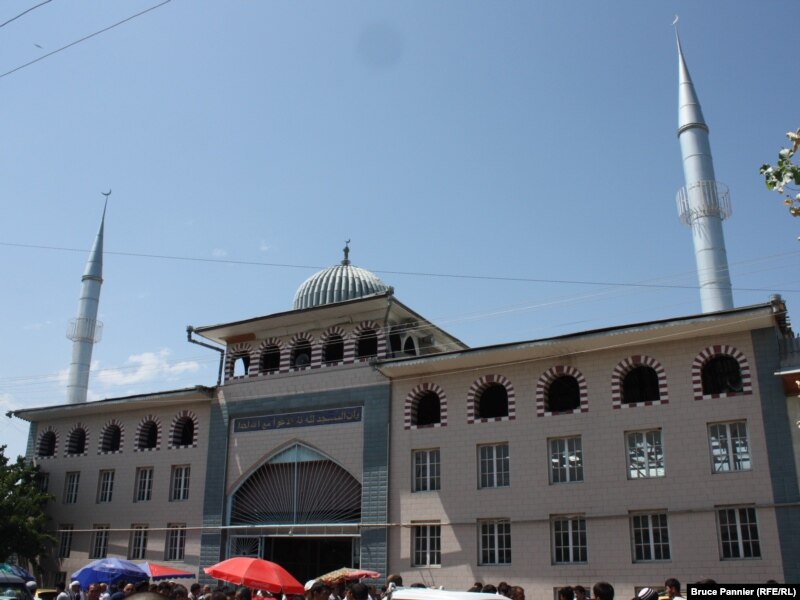
KARA-SUU, southern Kyrgyzstan -- Six weeks after ethnic violence between Kyrgyz and minority Uzbeks engulfed southern Kyrgyzstan, people are gathering for Friday prayers at the Imam Sharahshi Mosque. The white, three-story building sits near a canal that marks the border with Uzbekistan.
Imam Rashod qori Kamalov tells the roughly 2,000 Uzbeks here not to think of themselves as Uzbeks and others as Kyrgyz. “We're Muslims first,” he says. "Islam compels us to be brothers."
It's a tough sell. Most of the victims of the violence that killed at least 316 people last month were Uzbek. It was mainly Uzbeks who fled the region -- tens of thousands of them, across the border to refugee camps in Uzbekistan, with hundreds of thousands displaced internally -- after ethnic clashes.
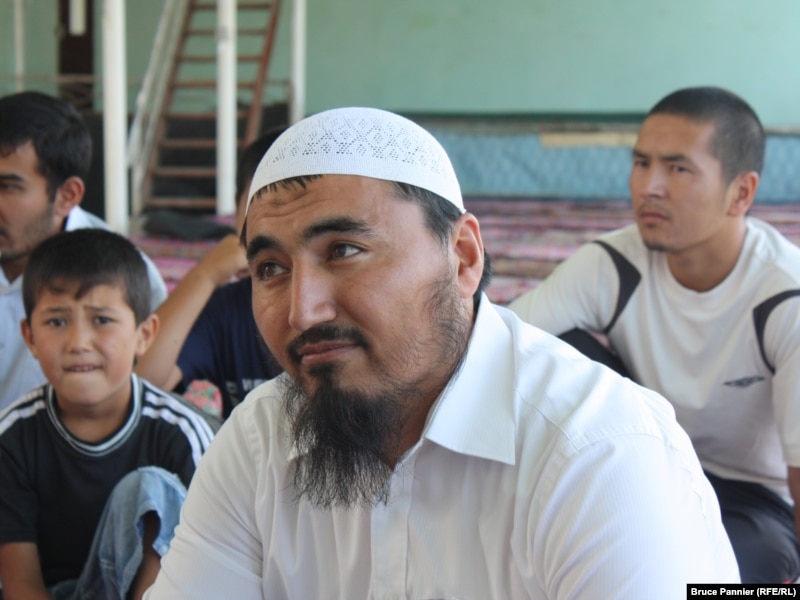
 Imam Rashod qori KamalovAs Kamalov speaks, several Uzbek border guards armed with automatic weapons appear on the other side of the canal to listen.
Officials accuse banned Islamic groups of taking part in the violence. Melis Myrzakmatov, the mayor of Osh, the city at the epicenter of the violence, says "bearded men yelling 'Allahu Akbar'” were seen among crowds of Uzbek attackers.
But after his sermon, Kamalov says there has been no evidence so far to back the claims, which he says are dangerous and are fueling deeper antagonisms.
“These statements they make in Bishkek and down here in the south about the involvement of the faithful in the events in Osh are an insult to Muslims,” Kamalov says.
'Muslims Would Never Do Such A Thing'
Last month's violence didn't spread to Kara-Suu, although many of the Uzbeks who fled their houses in Osh, 30 kilometers away, temporarily took refuge in the area.
Some of those attending today's service appear nervous. But Kamalov says neither he nor the members of his mosque, all ethnic Uzbeks, are casting blame for what happened last month. He says he wants the authorities to uncover what caused the violence.
“Only justice and honesty can bring reconciliation," Kamalov says. "If we take the position of only one side, defending either the Uzbeks or the Kyrgyz, it would only end in conflict with the eternal law of Allah.”
President Rosa Otunbaeva has promised a thorough investigation by a government committee she says will include international experts. But few believe the authorities will dispel the growing myths and conspiracy theories surrounding the events.
One of the groups the government blames for the violence is Hizb-ut Tahrir, a banned Islamic group that advocates the creation of an Islamic caliphate in Central Asia through peaceful means. One member, who refuses to give his name, echoes the opinions of others, saying the government has produced no evidence to connect his group to last month's events.
"Have you ever heard of a member of Hizb-ut Tahrir or [other groups including] the Islamic Movement of Uzbekistan or the Islamic Jihad Union raping women, or looting and burning?" he asks. "No, you haven't. There are no facts to support this because Muslims would never do such a thing."
He says that although Uzbeks are upset about the accusations against them, it hasn't affected Hizb-ut Tahrir's recruitment drive. "We're always signing up new members," he says. "The accusations don’t make much difference either way."
Tough To Reconcile?
Others agree that the government's accusations are baseless. At Kara-Suu's outdoor market, a woman selling clothes who gives only her first name, Ainura, casts doubt on the notion of radical Islamic groups being involved in last month's violence. "Maybe," she says, "but I don’t really believe it."
 The mosque in Kara-Suu, near Kyrgyzstan's border with UzbekistanA man grilling kebabs named Ibadulla, who also declines to give his last name, says he doesn't understand why the government is blaming Islamic groups. "Do they have any proof?" he asks.
Kyrgyzstan's government has promised to do everything it takes to reconcile Uzbeks and Kyrgyz, but human rights groups say tensions remain close to boiling amid numerous reports of ongoing intimidation and violence against ethnic Uzbeks.
Earlier this week, the United Nations human rights chief said she had information that local security forces were detaining Uzbeks and committing atrocities, including tearing out fingernails and inflicting cigarette burns and beatings.
The Organization for Security and Cooperation in Europe (OSCE) has now approved plans to send 52 unarmed police officers to southern Kyrgyzstan, where thousands of houses and shops remain in ruins.
Imam Rashod qori Kamalov tells the roughly 2,000 Uzbeks here not to think of themselves as Uzbeks and others as Kyrgyz. “We're Muslims first,” he says. "Islam compels us to be brothers."
It's a tough sell. Most of the victims of the violence that killed at least 316 people last month were Uzbek. It was mainly Uzbeks who fled the region -- tens of thousands of them, across the border to refugee camps in Uzbekistan, with hundreds of thousands displaced internally -- after ethnic clashes.
Officials accuse banned Islamic groups of taking part in the violence. Melis Myrzakmatov, the mayor of Osh, the city at the epicenter of the violence, says "bearded men yelling 'Allahu Akbar'” were seen among crowds of Uzbek attackers.
But after his sermon, Kamalov says there has been no evidence so far to back the claims, which he says are dangerous and are fueling deeper antagonisms.
“These statements they make in Bishkek and down here in the south about the involvement of the faithful in the events in Osh are an insult to Muslims,” Kamalov says.
'Muslims Would Never Do Such A Thing'
Last month's violence didn't spread to Kara-Suu, although many of the Uzbeks who fled their houses in Osh, 30 kilometers away, temporarily took refuge in the area.
Some of those attending today's service appear nervous. But Kamalov says neither he nor the members of his mosque, all ethnic Uzbeks, are casting blame for what happened last month. He says he wants the authorities to uncover what caused the violence.
“Only justice and honesty can bring reconciliation," Kamalov says. "If we take the position of only one side, defending either the Uzbeks or the Kyrgyz, it would only end in conflict with the eternal law of Allah.”
President Rosa Otunbaeva has promised a thorough investigation by a government committee she says will include international experts. But few believe the authorities will dispel the growing myths and conspiracy theories surrounding the events.
One of the groups the government blames for the violence is Hizb-ut Tahrir, a banned Islamic group that advocates the creation of an Islamic caliphate in Central Asia through peaceful means. One member, who refuses to give his name, echoes the opinions of others, saying the government has produced no evidence to connect his group to last month's events.
"Have you ever heard of a member of Hizb-ut Tahrir or [other groups including] the Islamic Movement of Uzbekistan or the Islamic Jihad Union raping women, or looting and burning?" he asks. "No, you haven't. There are no facts to support this because Muslims would never do such a thing."
He says that although Uzbeks are upset about the accusations against them, it hasn't affected Hizb-ut Tahrir's recruitment drive. "We're always signing up new members," he says. "The accusations don’t make much difference either way."
Tough To Reconcile?
Others agree that the government's accusations are baseless. At Kara-Suu's outdoor market, a woman selling clothes who gives only her first name, Ainura, casts doubt on the notion of radical Islamic groups being involved in last month's violence. "Maybe," she says, "but I don’t really believe it."
Kyrgyzstan's government has promised to do everything it takes to reconcile Uzbeks and Kyrgyz, but human rights groups say tensions remain close to boiling amid numerous reports of ongoing intimidation and violence against ethnic Uzbeks.
Earlier this week, the United Nations human rights chief said she had information that local security forces were detaining Uzbeks and committing atrocities, including tearing out fingernails and inflicting cigarette burns and beatings.
The Organization for Security and Cooperation in Europe (OSCE) has now approved plans to send 52 unarmed police officers to southern Kyrgyzstan, where thousands of houses and shops remain in ruins.