




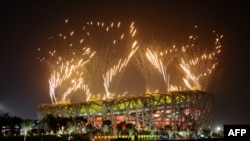
The 1989 fall of the Berlin Wall helped transform global geopolitics by triggering the end of the Cold War and the collapse of the Soviet Union. But it also set in motion events that significantly raised Asia’s profile in international relations.
The ensuing events transformed Europe’s political and military landscape, but no continent benefited more than Asia, as has been epitomized by its dramatic economic rise -- the speed and scale of which have no parallel in world history.
An important post-1989 effect was the shift from the primacy of military power to a greater role for economic power in shaping global geopolitics. That helped promote not only an economic boom in Asia, but also led to an eastward movement of global power and influence.
 At a time when tectonic global power shifts are challenging strategic stability, Asia has become the world’s main creditor and economic locomotive. With the world’s fastest-growing markets, fastest-rising military expenditures, and most-volatile hot spots, a resurgent Asia today holds the key to the future global order.
Global power shifts, as symbolized by Asia’s ascent, are now being triggered not by military triumphs or geopolitical realignments, but by a factor unique to our contemporary world -- rapid economic growth. Such growth was also witnessed during the Industrial Revolution and after World War II. But in the post-Cold War period, rapid economic growth by itself has contributed to qualitatively altering global power equations. It has played a unique role in instigating contemporary power shifts.
Another defining event in 1989 was the Tiananmen Square massacre of prodemocracy protesters in Beijing. But for the end of the Cold War, the West would not have let China off the hook for those killings.
New Strategic Partnerships
The Cold War’s end, however, facilitated the West’s adoption of a pragmatic approach, under which it shunned trade sanctions and helped integrate China into global institutions through the liberalizing influence of foreign investment and trade. Had the United States and its allies pursued the opposite approach centered on punitive sanctions, as have been applied against Cuba and Burma, for example, the result would have been a less-prosperous, less-open, and potentially destabilizing China.
China’s phenomenal economic success -- illustrated by its emergence with the world's biggest trade surplus, largest foreign-currency reserves, and greatest steel production -- owes a lot to the West’s decision not to sustain trade sanctions after Tiananmen Square. Having vaulted past Germany to become the world’s biggest exporter, China now is set to displace Japan as the world's No. 2 economy.
Meanwhile, India’s rise as a new economic giant also is linked to post-1989 events. As the Eastern bloc began to unravel, India had to wean itself from barter trade with the Soviet Union and its communist allies in Eastern Europe and start paying for imports in hard cash. That rapidly depleted its modest foreign-exchange reserves, triggering a severe financial crisis in 1991. That financial crisis, in turn, compelled India to embark on radical economic reforms that laid the foundations for its economic rise.
Geopolitically, the Soviet Union’s sudden collapse was a strategic boon to Asia, eliminating a menacing empire and opening the way for China rapidly to pursue its interests globally. Russia’s decline in the 1990s became China’s gain.
For India, the end of the Cold War triggered a foreign-policy crisis by eliminating the country’s most reliable partner, the Soviet Union. But, as with its 1991 financial crisis, India was able to emerge with a revamped foreign policy -- one that abandoned the country’s quixotic traditions and embraced greater realism and pragmatism.
Post-Cold War India began pursuing mutually beneficial strategic partnerships with other key players in Asia and the wider world. The new “global strategic partnership” with the United States -- a defining feature of this decade -- was made possible by the post-1989 shifts in Indian policy thinking.
Failed States, Slow Progress
Of course, not all post-1989 developments were positive. For example, the phenomenon of failing states, which has affected Asian security the most, is a direct consequence of the Cold War’s end. When the Cold War raged, one bloc or the other propped up weak states. But, with the Soviet Union’s disappearance, Washington abandoned that game.
As a result, dysfunctional or failing states suddenly emerged in the 1990s, constituting a threat to regional and international security by becoming home to transnational pirates (Somalia) or transnational terrorists (Pakistan and Afghanistan), or by their defiance of global norms (North Korea and Iran). Asia has suffered more casualties from the rise of international terrorism than any other region.
Moreover, two decades after the Berlin Wall fell, the spread of democracy has stalled. Between 1988 and 1990, as the Cold War was winding down, prodemocracy protests erupted far from Eastern Europe, overturning dictatorships in countries as different as Indonesia, South Korea, Taiwan, and Chile. After the Soviet disintegration, even Russia emerged as a credible candidate for democratic reform.
But while the overthrow of totalitarian or autocratic regimes shifted the global balance of power in favor of the forces of democracy, not all the prodemocracy movements succeeded. And the subsequent “color revolutions” in places like Ukraine only instilled greater caution among the surviving authoritarian regimes, prompting them to implement measures to counter foreign-inspired democratization initiatives.
Aside from a clear retreat of democracy in Russia, China -- now the world’s oldest and largest autocracy -- is demonstrating that when authoritarianism is deeply entrenched, a marketplace of goods and services can stymie the marketplace of political ideas. A new model, authoritarian capitalism (now well-established in Asian countries as different as Singapore, Malaysia, and Kazakhstan) has emerged as the leading challenger to the international spread of democratic values.
Brahma Chellaney is professor of strategic studies at the independent, privately funded Center for Policy Research in New Delhi and the author of "Asian Juggernaut: The Rise Of China, India, And Japan." The views expressed in this commentary are the author's own and do not necessarily reflect those of RFE/RL
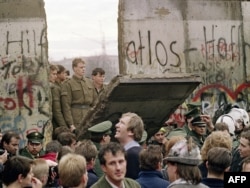
The ensuing events transformed Europe’s political and military landscape, but no continent benefited more than Asia, as has been epitomized by its dramatic economic rise -- the speed and scale of which have no parallel in world history.
An important post-1989 effect was the shift from the primacy of military power to a greater role for economic power in shaping global geopolitics. That helped promote not only an economic boom in Asia, but also led to an eastward movement of global power and influence.
Global power shifts, as symbolized by Asia’s ascent, are now being triggered not by military triumphs or geopolitical realignments, but by a factor unique to our contemporary world -- rapid economic growth. Such growth was also witnessed during the Industrial Revolution and after World War II. But in the post-Cold War period, rapid economic growth by itself has contributed to qualitatively altering global power equations. It has played a unique role in instigating contemporary power shifts.
Another defining event in 1989 was the Tiananmen Square massacre of prodemocracy protesters in Beijing. But for the end of the Cold War, the West would not have let China off the hook for those killings.
New Strategic Partnerships
The Cold War’s end, however, facilitated the West’s adoption of a pragmatic approach, under which it shunned trade sanctions and helped integrate China into global institutions through the liberalizing influence of foreign investment and trade. Had the United States and its allies pursued the opposite approach centered on punitive sanctions, as have been applied against Cuba and Burma, for example, the result would have been a less-prosperous, less-open, and potentially destabilizing China.
China’s phenomenal economic success -- illustrated by its emergence with the world's biggest trade surplus, largest foreign-currency reserves, and greatest steel production -- owes a lot to the West’s decision not to sustain trade sanctions after Tiananmen Square. Having vaulted past Germany to become the world’s biggest exporter, China now is set to displace Japan as the world's No. 2 economy.
Meanwhile, India’s rise as a new economic giant also is linked to post-1989 events. As the Eastern bloc began to unravel, India had to wean itself from barter trade with the Soviet Union and its communist allies in Eastern Europe and start paying for imports in hard cash. That rapidly depleted its modest foreign-exchange reserves, triggering a severe financial crisis in 1991. That financial crisis, in turn, compelled India to embark on radical economic reforms that laid the foundations for its economic rise.
Geopolitically, the Soviet Union’s sudden collapse was a strategic boon to Asia, eliminating a menacing empire and opening the way for China rapidly to pursue its interests globally. Russia’s decline in the 1990s became China’s gain.
For India, the end of the Cold War triggered a foreign-policy crisis by eliminating the country’s most reliable partner, the Soviet Union. But, as with its 1991 financial crisis, India was able to emerge with a revamped foreign policy -- one that abandoned the country’s quixotic traditions and embraced greater realism and pragmatism.
Post-Cold War India began pursuing mutually beneficial strategic partnerships with other key players in Asia and the wider world. The new “global strategic partnership” with the United States -- a defining feature of this decade -- was made possible by the post-1989 shifts in Indian policy thinking.
Failed States, Slow Progress
Of course, not all post-1989 developments were positive. For example, the phenomenon of failing states, which has affected Asian security the most, is a direct consequence of the Cold War’s end. When the Cold War raged, one bloc or the other propped up weak states. But, with the Soviet Union’s disappearance, Washington abandoned that game.
As a result, dysfunctional or failing states suddenly emerged in the 1990s, constituting a threat to regional and international security by becoming home to transnational pirates (Somalia) or transnational terrorists (Pakistan and Afghanistan), or by their defiance of global norms (North Korea and Iran). Asia has suffered more casualties from the rise of international terrorism than any other region.
Moreover, two decades after the Berlin Wall fell, the spread of democracy has stalled. Between 1988 and 1990, as the Cold War was winding down, prodemocracy protests erupted far from Eastern Europe, overturning dictatorships in countries as different as Indonesia, South Korea, Taiwan, and Chile. After the Soviet disintegration, even Russia emerged as a credible candidate for democratic reform.
But while the overthrow of totalitarian or autocratic regimes shifted the global balance of power in favor of the forces of democracy, not all the prodemocracy movements succeeded. And the subsequent “color revolutions” in places like Ukraine only instilled greater caution among the surviving authoritarian regimes, prompting them to implement measures to counter foreign-inspired democratization initiatives.
Aside from a clear retreat of democracy in Russia, China -- now the world’s oldest and largest autocracy -- is demonstrating that when authoritarianism is deeply entrenched, a marketplace of goods and services can stymie the marketplace of political ideas. A new model, authoritarian capitalism (now well-established in Asian countries as different as Singapore, Malaysia, and Kazakhstan) has emerged as the leading challenger to the international spread of democratic values.
Brahma Chellaney is professor of strategic studies at the independent, privately funded Center for Policy Research in New Delhi and the author of "Asian Juggernaut: The Rise Of China, India, And Japan." The views expressed in this commentary are the author's own and do not necessarily reflect those of RFE/RL
Revolutions Of '89
When The Wall Came Down