




Kyrgyzstan's President Roza Otunbaeva paid a visit to the northern city of Tokmok on August 26. Tokmok is not far from the capital, Bishkek. It is an ethnically mixed city. Kyrgyz live there, of course, but also Dungans, Uyghurs, Uzbeks, and others.
In Tokmok, Otunbaeva took the opportunity to speak about a topic that has been taboo for most of this summer -- nationality. "In Kyrgyzstan the titular nation is the Kyrgyz people," she said, "their task is to unite all others."
Otunbaeva emphasized the point, adding, "One has to learn to protect representatives of other ethnic groups living in the county."
Since the clashes in the south in June between ethnic Kyrgyz and Uzbeks, officials throughout Kyrgyzstan have been careful when talking about the victims of the violence to avoid any mention of a specific group.
The same was true in May when there was fighting in Jalal-Abad between Uzbeks and Kyrgyz. Reports gave the number of dead and wounded in both June and May, but did not say how many were Kyrgyz and how many were Uzbek.
That was probably a good decision. But for the process of reconciliation to take hold, it's necessary to speak about how "Kyrgyz" and "Uzbeks" can find common ground.
The state is still apprehensive about bringing the issue up. But there is one place where there has been lots of talks about "Kyrgyz" and "Uzbeks" and what they have in common -- the mosque.
Strangely, some immediately tried to blame Islamic forces for having played some part in the June violence in Osh and Jalal-Abad. I didn't see any evidence of that when I was there in June and again in July. What I heard was the opposite.
At the Al-Buhari Mosque in Osh four days after the violence ended, the imam urged people not to give in to provocations, telling them that if they did "you do the work of Satan."
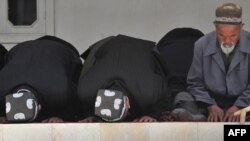
The imam reminded the small group attending daily prayers that day (there were so many people when I was there in April that the crowd of faithful spilled outside the building onto the side of the street) that Kyrgyz and Uzbeks are both Muslim and that matters more than ethnicity.
A month later, I was at the Imam Sharahshi Mosque in Kara-Suu, which borders Uzbekistan. The population of the town is overwhelmingly Uzbek and the worshippers inside the mosque that day were all Uzbeks. One might expect the imam there would feel freer to criticize and blame the Kyrgyz for the violence.
Not one such word ever left his mouth during the sermon. As was true at the Imam Al-Buhari Mosque in June, the imam in Kara-Suu called on the faithful to cast aside their ideas about ethnicity and remember Kyrgyz and Uzbeks are Muslims.
Strange now to think that for years many have worried about Central Asia, part of the former atheist Soviet Union, suddenly reverting not only to traditional Islamic ways but embracing some radical Islamic ideas along the way. Considering the region's geographic location, such a scenario would have great repercussions in China, Russia, down into the Asian subcontinent and the Middle East.
It could still happen I suppose.
But with subject of ethnicity or nationality practically taboo among state officials at this sensitive time I came away thinking that the Islamic leaders are the best hope for healing the deep wounds both communities in Kyrgyzstan just suffered. They talk about what happened and offer a reason and a place for the two groups to meet.
-- Bruce Pannier
In Tokmok, Otunbaeva took the opportunity to speak about a topic that has been taboo for most of this summer -- nationality. "In Kyrgyzstan the titular nation is the Kyrgyz people," she said, "their task is to unite all others."
Otunbaeva emphasized the point, adding, "One has to learn to protect representatives of other ethnic groups living in the county."
Since the clashes in the south in June between ethnic Kyrgyz and Uzbeks, officials throughout Kyrgyzstan have been careful when talking about the victims of the violence to avoid any mention of a specific group.
The same was true in May when there was fighting in Jalal-Abad between Uzbeks and Kyrgyz. Reports gave the number of dead and wounded in both June and May, but did not say how many were Kyrgyz and how many were Uzbek.
That was probably a good decision. But for the process of reconciliation to take hold, it's necessary to speak about how "Kyrgyz" and "Uzbeks" can find common ground.
The state is still apprehensive about bringing the issue up. But there is one place where there has been lots of talks about "Kyrgyz" and "Uzbeks" and what they have in common -- the mosque.
Strangely, some immediately tried to blame Islamic forces for having played some part in the June violence in Osh and Jalal-Abad. I didn't see any evidence of that when I was there in June and again in July. What I heard was the opposite.
At the Al-Buhari Mosque in Osh four days after the violence ended, the imam urged people not to give in to provocations, telling them that if they did "you do the work of Satan."
The imam reminded the small group attending daily prayers that day (there were so many people when I was there in April that the crowd of faithful spilled outside the building onto the side of the street) that Kyrgyz and Uzbeks are both Muslim and that matters more than ethnicity.
A month later, I was at the Imam Sharahshi Mosque in Kara-Suu, which borders Uzbekistan. The population of the town is overwhelmingly Uzbek and the worshippers inside the mosque that day were all Uzbeks. One might expect the imam there would feel freer to criticize and blame the Kyrgyz for the violence.
Not one such word ever left his mouth during the sermon. As was true at the Imam Al-Buhari Mosque in June, the imam in Kara-Suu called on the faithful to cast aside their ideas about ethnicity and remember Kyrgyz and Uzbeks are Muslims.
Strange now to think that for years many have worried about Central Asia, part of the former atheist Soviet Union, suddenly reverting not only to traditional Islamic ways but embracing some radical Islamic ideas along the way. Considering the region's geographic location, such a scenario would have great repercussions in China, Russia, down into the Asian subcontinent and the Middle East.
It could still happen I suppose.
But with subject of ethnicity or nationality practically taboo among state officials at this sensitive time I came away thinking that the Islamic leaders are the best hope for healing the deep wounds both communities in Kyrgyzstan just suffered. They talk about what happened and offer a reason and a place for the two groups to meet.
-- Bruce Pannier