





One Turkish-operated ship was bound for Abkhazia carrying a supply of fuel. Another vessel was departing for Turkey with a cargo of scrap metal. Both were seized by Georgia's coast guard last week for violating a ban on trade with its breakaway territory.
The incidents, which sparked howls of protest from Sukhumi, illustrate the ambiguous legal gray zone Abkhazia finds itself in one year after winning coveted recognition of its independence by Russia.
It was just weeks after fighting a bitter five-day war with Georgia last summer that Russia shocked the world by recognizing the separatist regions of Abkhazia and South Ossetia as independent states. Moscow's move infuriated Tbilisi and sparked jubilation in Tskhinvali and Sukhumi. That joy grew muted, however, when no other country -- save Nicaragua -- followed suit.
Today the two provinces find themselves in an uneasy limbo -- unrecognized by nearly the whole world, de jure part of Georgia, de facto out of Tbilisi's control, and in reality sliding deeper and deeper into Russia's grip.
And analysts say this uneasy stalemate is likely to continue for the foreseeable future.
"It can last as long as Cyprus, it can last as long as Taiwan. I don't see these territories returning to Georgia with any great ease, and the more they are separate from Georgia, the more they are going to grow apart," says Stephen Jones, a professor of International Relations at Mount Holyoke College and the author of several books on Georgia.
"I don't see any resolution in the midterm or even the long term."
Tightening Moscow's Grip
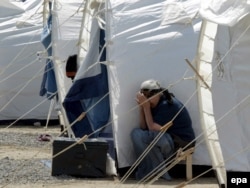 Despite pressure from the West, Georgians expelled from Abkhazia and South Ossetia appear unlikely to return soon.There is a deep undercurrent of anti-Georgian sentiment in both regions, fueled by memories of last year's war and the civil wars of the early 1990s, and aggravated by hostile rhetoric in the state-controlled Russian media. Analysts say their return to Tbilisi's control is highly unlikely, if not completely out of the question.
Likewise, the international community's policy of nonrecognition of Abkhazia and South Ossetia, staunchly backed by the United States and the European Union, is unlikely to change in the near term.
Nor is it necessarily clear that Russia craves widespread international recognition. The longer this ambiguous status quo persists, analysts say, the more Moscow can consolidate its control over the territories.
"The war didn't change everything, but it did change some things. And one of the things that it changed is that these territories are, in real ways, much more part of Russia than they were a year ago," says Lincoln Mitchell, a professor of international politics at Columbia University and author of the book "Uncertain Democracy: U.S. Foreign Policy and Georgia's Rose Revolution."
"To leave it and just do nothing kind of facilitates Russian possession of them."
Russia has indeed been tightening its grip. Officially, Moscow says it has 7,600 troops in Abkhazia and South Ossetia combined, although independent military analysts say the true figure is closer to 10,000.
Moscow has also announced plans to build a naval base in Abkhazia's port of Ochamchire, close to the cease-fire line separating Abkhazia from Georgia proper. Other bases are planned in Gudauta in Abkhazia and in Akhalgori in South Ossetia.
Abkhaz leader Sergei Bagapsh has also agreed to grant Russia control over Abkhazia's borders, airport, and railway system.
And during a visit to Abkhazia on August 12, Russian Prime Minister Vladimir Putin pledged 15 billion rubles (about $460 million) from Moscow to beef up Abkhazia's defenses -- including the construction of Russian bases and securing Abkhazia's de facto border with Georgia.
Russia has also strengthened its hold by paying pensions in Abkhazia and South Ossetia and by issuing passports to residents of the territories.
A Pyrrhic Victory?
To mark the first anniversary of Russia's recognition on August 26, Russian and South Ossetian officials plan to unveil a new housing settlement on the outskirts of Tskhinvali. The settlement, called the Moscow District, was built on what was previously a Georgian village until its residents were driven out during last summer's war.
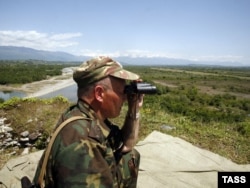 Russian border guards continue to patrol the Abkhaz and South Ossetian borders with Georgia.Mitchell points out, however, that while Moscow may appear to be the winner in the short term, Russia's gains in the South Caucasus also came with great diplomatic costs -- particularly in its "near abroad," where it was counting on a greater show of unity.
"You can't say '[Russia's] recognition of Abkhazia and South Ossetia...' without, one breath later, saying, '...which is not shared by any other state except for Nicaragua.' That is clearly a diplomatic defeat for Russia. It reveals a Russia that is more isolated than Russia would want to let on," Mitchell says.
"Can you imagine making a decision to recognize a state and then look around and see that nobody is behind you? Russia really does look bad because of that."
Mitchell adds that Moscow's inability to cajole usually pliant former Soviet states like Belarus to recognize the breakaway regions exposes Russia's ambitions to reassert its control over the former Soviet space as hollow.
"We are supposed to be scared of Russia reuniting the USSR," Mitchell says.
"Well, if Tajikistan and Belarus can't even recognize Abkhazia and South Ossetia, then the ability of Russia to do that -- and the fear we should have of that -- perhaps isn't as great as people in Moscow would like us to think."
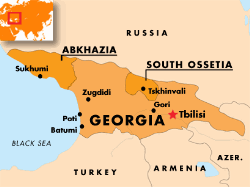 Copying Kosovo
Abkhazia and South Ossetia, meanwhile, have taken dramatically different approaches to their independence.
Officials in Abkhazia, which aspires to use its Black Sea coast to attract tourists, say they take their purported statehood seriously and are determined not to become a de facto Russian colony. Impoverished and landlocked South Ossetia, on the other hand, has made it clear that its long-term goal is eventual unification with Russia's North Ossetia region.
Russia has long pointed to Kosovo's February 2008 declaration of independence from Serbia -- in the face of strenuous objections from Belgrade and Moscow -- to justify its recognition of Abkhazia and South Ossetia.
Jones, however, rejects the comparison with Kosovo, which has thus far been recognized by 62 countries.
"There was a long international presence in Kosovo where they were attempting to build a democratic state and put in place measures that would protect ethnic minorities in Kosovo, namely the Serbs," Jones says.
"In the case of [Abkhazia and] South Ossetia, of course, the ethnic minority, in this case Georgians, were not protected at all, they were expelled. Without that international presence...and the attempts to create a democratic state...it doesn't look like Kosovo at all. It looks more like an annexation."
RFE/RL's Georgian Service contributed to this report
The incidents, which sparked howls of protest from Sukhumi, illustrate the ambiguous legal gray zone Abkhazia finds itself in one year after winning coveted recognition of its independence by Russia.
It was just weeks after fighting a bitter five-day war with Georgia last summer that Russia shocked the world by recognizing the separatist regions of Abkhazia and South Ossetia as independent states. Moscow's move infuriated Tbilisi and sparked jubilation in Tskhinvali and Sukhumi. That joy grew muted, however, when no other country -- save Nicaragua -- followed suit.
Today the two provinces find themselves in an uneasy limbo -- unrecognized by nearly the whole world, de jure part of Georgia, de facto out of Tbilisi's control, and in reality sliding deeper and deeper into Russia's grip.
And analysts say this uneasy stalemate is likely to continue for the foreseeable future.
"It can last as long as Cyprus, it can last as long as Taiwan. I don't see these territories returning to Georgia with any great ease, and the more they are separate from Georgia, the more they are going to grow apart," says Stephen Jones, a professor of International Relations at Mount Holyoke College and the author of several books on Georgia.
"I don't see any resolution in the midterm or even the long term."
Tightening Moscow's Grip

Likewise, the international community's policy of nonrecognition of Abkhazia and South Ossetia, staunchly backed by the United States and the European Union, is unlikely to change in the near term.
Nor is it necessarily clear that Russia craves widespread international recognition. The longer this ambiguous status quo persists, analysts say, the more Moscow can consolidate its control over the territories.
"The war didn't change everything, but it did change some things. And one of the things that it changed is that these territories are, in real ways, much more part of Russia than they were a year ago," says Lincoln Mitchell, a professor of international politics at Columbia University and author of the book "Uncertain Democracy: U.S. Foreign Policy and Georgia's Rose Revolution."
"To leave it and just do nothing kind of facilitates Russian possession of them."
Russia has indeed been tightening its grip. Officially, Moscow says it has 7,600 troops in Abkhazia and South Ossetia combined, although independent military analysts say the true figure is closer to 10,000.
Moscow has also announced plans to build a naval base in Abkhazia's port of Ochamchire, close to the cease-fire line separating Abkhazia from Georgia proper. Other bases are planned in Gudauta in Abkhazia and in Akhalgori in South Ossetia.
Abkhaz leader Sergei Bagapsh has also agreed to grant Russia control over Abkhazia's borders, airport, and railway system.
And during a visit to Abkhazia on August 12, Russian Prime Minister Vladimir Putin pledged 15 billion rubles (about $460 million) from Moscow to beef up Abkhazia's defenses -- including the construction of Russian bases and securing Abkhazia's de facto border with Georgia.
Russia has also strengthened its hold by paying pensions in Abkhazia and South Ossetia and by issuing passports to residents of the territories.
A Pyrrhic Victory?
To mark the first anniversary of Russia's recognition on August 26, Russian and South Ossetian officials plan to unveil a new housing settlement on the outskirts of Tskhinvali. The settlement, called the Moscow District, was built on what was previously a Georgian village until its residents were driven out during last summer's war.
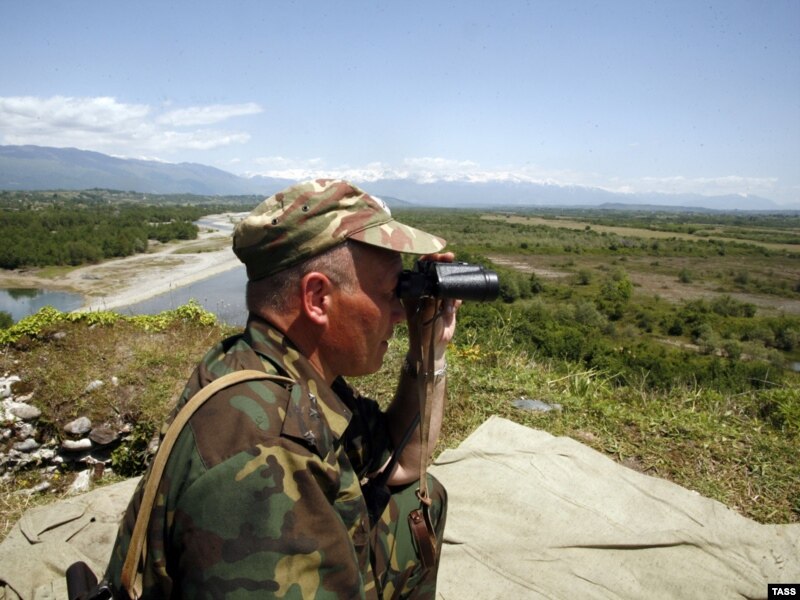
"You can't say '[Russia's] recognition of Abkhazia and South Ossetia...' without, one breath later, saying, '...which is not shared by any other state except for Nicaragua.' That is clearly a diplomatic defeat for Russia. It reveals a Russia that is more isolated than Russia would want to let on," Mitchell says.
"Can you imagine making a decision to recognize a state and then look around and see that nobody is behind you? Russia really does look bad because of that."
Mitchell adds that Moscow's inability to cajole usually pliant former Soviet states like Belarus to recognize the breakaway regions exposes Russia's ambitions to reassert its control over the former Soviet space as hollow.
"We are supposed to be scared of Russia reuniting the USSR," Mitchell says.
"Well, if Tajikistan and Belarus can't even recognize Abkhazia and South Ossetia, then the ability of Russia to do that -- and the fear we should have of that -- perhaps isn't as great as people in Moscow would like us to think."
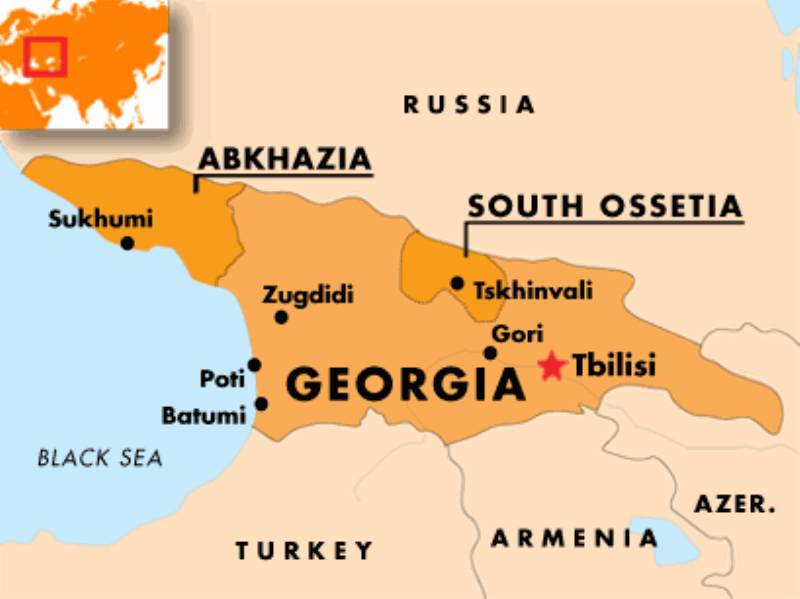
Abkhazia and South Ossetia, meanwhile, have taken dramatically different approaches to their independence.
Officials in Abkhazia, which aspires to use its Black Sea coast to attract tourists, say they take their purported statehood seriously and are determined not to become a de facto Russian colony. Impoverished and landlocked South Ossetia, on the other hand, has made it clear that its long-term goal is eventual unification with Russia's North Ossetia region.
Russia has long pointed to Kosovo's February 2008 declaration of independence from Serbia -- in the face of strenuous objections from Belgrade and Moscow -- to justify its recognition of Abkhazia and South Ossetia.
Jones, however, rejects the comparison with Kosovo, which has thus far been recognized by 62 countries.
"There was a long international presence in Kosovo where they were attempting to build a democratic state and put in place measures that would protect ethnic minorities in Kosovo, namely the Serbs," Jones says.
"In the case of [Abkhazia and] South Ossetia, of course, the ethnic minority, in this case Georgians, were not protected at all, they were expelled. Without that international presence...and the attempts to create a democratic state...it doesn't look like Kosovo at all. It looks more like an annexation."
RFE/RL's Georgian Service contributed to this report