


"The deviant current" is a new term that has entered the Iranian state political glossary. It is used to refer to the entourage of Iranian President Mahmud Ahmadinejad, particularly his aide Esfandiari Rahim Mashaei, who is accused of promoting an Iranian doctrine instead of an Islamic one and being a threat to the clerical political system.
The term has been used by hard-line clerics, including Ayatollah Ahmad Jannati, websites and newspapers, especially the ultra-hard-line "Kayhan," which is said to often represent the views of Iran's Supreme Leader Ali Khamenei.
In the past 30 years, Iranian officials have used different labels to belittle critics, opposition members and those who are not in line with official views and principles. For example, intellectuals have been labeled as "spies," "freemasons," and "mercenaries with a pen".
Throughout the years, the labels and political terms have changed, or they've been used in different contexts and new terms have replaced those that used to be prevalent.
Here are some other terms you need to know to understand comments by Iranian officials and the country's media.
The "sedition" or the "green sedition" is used to refer to the Green opposition movement. "Seditionists" are opposition members.
Right after the disputed reelection of Ahmadinejad in 2009, officials would refer to the unrest that followed as the "Velvet Coup" apparently to counter the opposition's claim that Ahmadinejad's reelection was the result of a "coup" by the Revolutionary Guard.
Later, however, the "Velvet Coup" was replaced by the "sedition." Some officials have warned that another edition might be on the way.
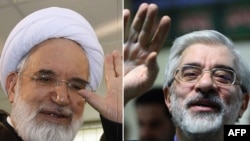
The "leaders of the sedition" is usually a reference to those spearheading the opposition movement -- former Prime Minister Mir Hossein Musavi and former parliament speaker Mehdi Karrubi, who are reportedly under house arrest. But, depending on the political situation and also who is using the term, it could also include two former presidents: Mohammad Khatami and Akbar Hashemi Rafsanjani.
"Soft War" is another term that is prevalent in Iran's official vocabulary. It has a very broad scope and -- according to Iranian officials -- anything ranging from Persian-language satellite broadcasts from outside Iran to new fashion trends that are popular with youths or even Spiderman is considered to be part of the "soft war" waged against the Islamic republic.
Just a few years ago, "cultural invasion" was the term that was used by officials to describe similar issues. For example, women who did not cover their hair completely were described as victims of the cultural invasion by Western countries or Iran's enemies. Nowadays, they’re likely to be labelled victims of the soft war.
"West-struck" is another term that has been used to describe a wide spectrum of individuals, ranging from intellectuals to men who wear ties and young people who have trendy hairstyles.
"Islamic awakening" is used in Iran to describe the Arab uprisings and revolutions.
Since Syria is Iran's main ally in the region, however, the events happening there are different according to the Iranian establishment. Iran says foreign countries, including Israel, are behind the unrest in that country.
"Enemy" or "enemies" is a word very often used by Ayatollah Khamenei and other officials. It can mean the United States, Israel, sometimes Britain or all Western countries in general.
Israel is usually referred to as "the Zionist regime" or the "regime that has occupied Qods [Jerusalem]."
"Hypocrites" is used for the Mujahedin Khalq Organization (MKO), which both Iran and the United States consider a terrorist organization.
And if you come across "Radio CIA" while reading Iranian conservative newspapers or websites, it's a reference to RFE/RL’s Persian service, Radio Farda.
-- Golnaz Esfandiari
The term has been used by hard-line clerics, including Ayatollah Ahmad Jannati, websites and newspapers, especially the ultra-hard-line "Kayhan," which is said to often represent the views of Iran's Supreme Leader Ali Khamenei.
In the past 30 years, Iranian officials have used different labels to belittle critics, opposition members and those who are not in line with official views and principles. For example, intellectuals have been labeled as "spies," "freemasons," and "mercenaries with a pen".
Throughout the years, the labels and political terms have changed, or they've been used in different contexts and new terms have replaced those that used to be prevalent.
Here are some other terms you need to know to understand comments by Iranian officials and the country's media.
The "sedition" or the "green sedition" is used to refer to the Green opposition movement. "Seditionists" are opposition members.
Right after the disputed reelection of Ahmadinejad in 2009, officials would refer to the unrest that followed as the "Velvet Coup" apparently to counter the opposition's claim that Ahmadinejad's reelection was the result of a "coup" by the Revolutionary Guard.
Later, however, the "Velvet Coup" was replaced by the "sedition." Some officials have warned that another edition might be on the way.
The "leaders of the sedition" is usually a reference to those spearheading the opposition movement -- former Prime Minister Mir Hossein Musavi and former parliament speaker Mehdi Karrubi, who are reportedly under house arrest. But, depending on the political situation and also who is using the term, it could also include two former presidents: Mohammad Khatami and Akbar Hashemi Rafsanjani.
"Soft War" is another term that is prevalent in Iran's official vocabulary. It has a very broad scope and -- according to Iranian officials -- anything ranging from Persian-language satellite broadcasts from outside Iran to new fashion trends that are popular with youths or even Spiderman is considered to be part of the "soft war" waged against the Islamic republic.
Just a few years ago, "cultural invasion" was the term that was used by officials to describe similar issues. For example, women who did not cover their hair completely were described as victims of the cultural invasion by Western countries or Iran's enemies. Nowadays, they’re likely to be labelled victims of the soft war.
"West-struck" is another term that has been used to describe a wide spectrum of individuals, ranging from intellectuals to men who wear ties and young people who have trendy hairstyles.
"Islamic awakening" is used in Iran to describe the Arab uprisings and revolutions.
Since Syria is Iran's main ally in the region, however, the events happening there are different according to the Iranian establishment. Iran says foreign countries, including Israel, are behind the unrest in that country.
"Enemy" or "enemies" is a word very often used by Ayatollah Khamenei and other officials. It can mean the United States, Israel, sometimes Britain or all Western countries in general.
Israel is usually referred to as "the Zionist regime" or the "regime that has occupied Qods [Jerusalem]."
"Hypocrites" is used for the Mujahedin Khalq Organization (MKO), which both Iran and the United States consider a terrorist organization.
And if you come across "Radio CIA" while reading Iranian conservative newspapers or websites, it's a reference to RFE/RL’s Persian service, Radio Farda.
-- Golnaz Esfandiari