




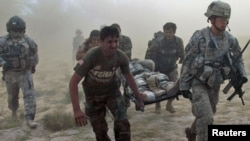
Perhaps Afghanistan was never meant to become a centralized country with a civil society based on democratic norms.
Indeed, the American attempt since October 2001 to create such a version of the place, at the cost of more than 1,600 lives and $444 billion according to the Congressional Research Service, has proven inconclusive.
But simply abandoning the nation-building effort altogether is fraught with danger. What the U.S. must do instead is change its course.
Rather than continuing to try to force Afghanistan into a Western mould, U.S. policymakers should focus on reconstructing those aspects of Afghan society that once functioned well.
Such an approach may buck the current push for withdrawal, but it is the only way to achieve genuine long-term security and stability.
On June 22, U.S. President Barack Obama outlined the timetable for American disengagement from Afghanistan, saying that by 2014 "this process of transition will be complete, and the Afghan people will be responsible for their own security.”
The president is responding to the fact that most Americans have a hostile attitude to involvement in Afghanistan, as tracked by polls from CNN (63 percent in December 2010) and the Pew Research Center (56 percent in June 2011).
President Obama’s words acknowledge that Washington’s policies will now concentrate on seeking a negotiated settlement between warring factions rather than pursing armed victory over the militants.
Shades Of Vietnam
Yet retreating from the field will doom Washington’s attempts to shape a positive political outcome for its post-9/11 intervention in Afghanistan.
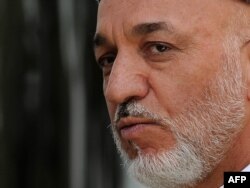 A complete U.S. pullout could end up forcing Afghan President Hamid Karzai to abandon the country as well.
Even if the Obama and Karzai administrations reach a deal with the Taliban, it is unlikely that peace will break out. An analogy to the final phase of America’s large-scale foreign adventure in Vietnam presents itself.
The Paris Peace Accords reached in October 1972 fell apart in the years that followed. In the end, after Americans grew weary of their 19-year war in Southeast Asia and pulled out, the U.S.-allied South Vietnamese government fell to Hanoi’s soldiers in April 1975.
Like the North Vietnamese during the 1970s, Mullah Omar and his forces seem to be biding their time while inflicting a costly toll upon the U.S. through asymmetrical warfare.
President Obama’s speech will make them even more confident and less fearful while leaving ordinary Afghans little option but to accede to the militants’ demands.
President Hamid Karzai will find local support harder to gain and may very well be forced to leave Kabul with the last U.S. soldiers in a chaotic scene that could resemble the fall of Saigon.
Fleeting Claims Of Progress
Yes, the Afghan security forces have grown by over 100,000 troops, as President Obama noted. Nonetheless, every day brings new reminders that Afghanistan’s fledgling government, bureaucracy, army, and law enforcement units remain ineffective and corrupt. Claims of progress against the Taliban invariably prove fleeting, too.
Washington, in short, has so far failed to create a functioning nation in Afghanistan or to stop the spread of militancy from its failed state.
Those goals will never come to fruition if the U.S. leaves too soon.
The elimination of Osama bin Laden and other Al-Qaeda leaders may give Americans satisfaction but does not excise the threat of terrorism from Afghanistan. The only guarantee for that is the creation of a genuinely stable society there.
If Afghanistan’s problems are resolved, then instability in Pakistan will ebb as well, for it is tied directly to events across the border. So the security benefits will reverberate around the Indian subcontinent, in particular, and the world in general.
Decades Of Violence And Turmoil
Nine years may seem like a long time to wait for positive change. But this is a brief moment in historical terms. Afghanistan endured four decades of violence and turmoil even before the U.S. invaded the country in 2001.
First, Mohammad Sardar Daoud Khan’s coup in 1973 led to widespread political repression.
Next, the Saur Revolution of 1978 attempted to impose a Marxist-Leninist state by breaking up traditional tribal and religious networks.
The Soviet Red Army invaded in December 1979 to bolster its communist client in Kabul.
That 10-year occupation caused about two million deaths, while another six million people fled the country. The sociopolitical ties that had held Afghan society together were shredded.
 A rapid U.S. withdrawal may encourage Mullah Omar and his ilk to re-emerge with a vengeance.
Even the Russian withdrawal did not calm matters. Instead it paved the way for a civil war between factions of freedom fighters. In September 1996, the extremist Taliban set up their Islamic Emirate and began dismantling civil society’s last remnants.
A rapid U.S. withdrawal may encourage Mullah Omar and his ilk to re-emerge with a vengeance.
Even the Russian withdrawal did not calm matters. Instead it paved the way for a civil war between factions of freedom fighters. In September 1996, the extremist Taliban set up their Islamic Emirate and began dismantling civil society’s last remnants.
After the U.S.-led coalition ousted Mullah Omar and his Taliban fighters from Kabul and installed the new government of Hamid Karzai in late 2001, it did not take long for the seemingly defeated militants and their Al-Qaeda cronies to muster the resources for a renewal of civil war.
When the Karzai government failed to demonstrate that it was capable of providing leadership, security, and prosperity, the diverse ethnic and linguistic groups who inhabit Afghanistan began to succumb to separatism based on tribal lines.
As the Coalition’s provincial reconstruction teams soon learned through their experience in the field, much of Afghanistan consists of small-scale societies that are sometimes distinct to individual valleys.
For this reason, the Obama administration may not be successful in its current quest to “responsibly end these wars” if it moves too fast.
Plans for the departure of U.S. and international troops from Afghanistan must take into full account the need for local governance, stability, and sustainability. Otherwise, rapid withdrawal from Afghanistan is likely to prove a temporary measure that may one day have to be reversed when worsening conflict there eventually rebounds on the Americans and Europeans.
Yes, U.S. patience has worn thin, and the long and hard route to success now boasts little political appeal. It is entirely understandable that the Americans and their allies have tired of the casualties and the stubborn opposition.
U.S. Should Adjust, Not Abandon, Afghan Mission
But that emotional response clouds prudent decision-making. The U.S. also bears responsibility for the mess that Afghanistan is in. Washington armed the mujahedin and supported the spread of Islamism to counter communism, then installed the current government when groups there turned against the West.
Claiming victory and walking away because a few high-value terrorists have been killed will benefit only those who seek to turn Afghanistan back into a militant safe haven.
A pullout in just 30 months is too hasty a departure from a country lacking effective nonpartisan institutions, struggling to find a shared national identity, and under attack by radical ideologues.
Without the U.S. presence, the Taliban will return to power with a vengeance against all who oppose them at home and abroad. Yet even with continued American involvement Afghanistan cannot develop into a unified functional country unless reconstruction efforts focus on local concerns, aspirations, and traditions of governance.
The United States should adjust its effort in Afghanistan, not abandon it, by learning from people and events on the ground. That is the sole way to help make Afghan society viable again. Only then will the tide of war truly recede, militancy subside, and lasting peace arise.
Jamsheed K. Choksy is professor of Central Eurasian, International, and Islamic studies and former director of the Middle Eastern Studies Program at Indiana University. Carol E. B. Choksy is an adjunct lecturer in Strategic Intelligence and Information Management at Indiana University and CEO of IRAD Strategic Consulting, Inc.
The views expressed in this commentary are the authors’ own and do not necessarily reflect those of RFE/RL
Indeed, the American attempt since October 2001 to create such a version of the place, at the cost of more than 1,600 lives and $444 billion according to the Congressional Research Service, has proven inconclusive.
But simply abandoning the nation-building effort altogether is fraught with danger. What the U.S. must do instead is change its course.
Rather than continuing to try to force Afghanistan into a Western mould, U.S. policymakers should focus on reconstructing those aspects of Afghan society that once functioned well.
Such an approach may buck the current push for withdrawal, but it is the only way to achieve genuine long-term security and stability.
On June 22, U.S. President Barack Obama outlined the timetable for American disengagement from Afghanistan, saying that by 2014 "this process of transition will be complete, and the Afghan people will be responsible for their own security.”
The president is responding to the fact that most Americans have a hostile attitude to involvement in Afghanistan, as tracked by polls from CNN (63 percent in December 2010) and the Pew Research Center (56 percent in June 2011).
President Obama’s words acknowledge that Washington’s policies will now concentrate on seeking a negotiated settlement between warring factions rather than pursing armed victory over the militants.
Shades Of Vietnam
Yet retreating from the field will doom Washington’s attempts to shape a positive political outcome for its post-9/11 intervention in Afghanistan.

Even if the Obama and Karzai administrations reach a deal with the Taliban, it is unlikely that peace will break out. An analogy to the final phase of America’s large-scale foreign adventure in Vietnam presents itself.
The Paris Peace Accords reached in October 1972 fell apart in the years that followed. In the end, after Americans grew weary of their 19-year war in Southeast Asia and pulled out, the U.S.-allied South Vietnamese government fell to Hanoi’s soldiers in April 1975.
Like the North Vietnamese during the 1970s, Mullah Omar and his forces seem to be biding their time while inflicting a costly toll upon the U.S. through asymmetrical warfare.
President Obama’s speech will make them even more confident and less fearful while leaving ordinary Afghans little option but to accede to the militants’ demands.
President Hamid Karzai will find local support harder to gain and may very well be forced to leave Kabul with the last U.S. soldiers in a chaotic scene that could resemble the fall of Saigon.
Fleeting Claims Of Progress
Yes, the Afghan security forces have grown by over 100,000 troops, as President Obama noted. Nonetheless, every day brings new reminders that Afghanistan’s fledgling government, bureaucracy, army, and law enforcement units remain ineffective and corrupt. Claims of progress against the Taliban invariably prove fleeting, too.
Washington, in short, has so far failed to create a functioning nation in Afghanistan or to stop the spread of militancy from its failed state.
Those goals will never come to fruition if the U.S. leaves too soon.
The elimination of Osama bin Laden and other Al-Qaeda leaders may give Americans satisfaction but does not excise the threat of terrorism from Afghanistan. The only guarantee for that is the creation of a genuinely stable society there.
If Afghanistan’s problems are resolved, then instability in Pakistan will ebb as well, for it is tied directly to events across the border. So the security benefits will reverberate around the Indian subcontinent, in particular, and the world in general.
Decades Of Violence And Turmoil
Nine years may seem like a long time to wait for positive change. But this is a brief moment in historical terms. Afghanistan endured four decades of violence and turmoil even before the U.S. invaded the country in 2001.
First, Mohammad Sardar Daoud Khan’s coup in 1973 led to widespread political repression.
Next, the Saur Revolution of 1978 attempted to impose a Marxist-Leninist state by breaking up traditional tribal and religious networks.
The Soviet Red Army invaded in December 1979 to bolster its communist client in Kabul.
That 10-year occupation caused about two million deaths, while another six million people fled the country. The sociopolitical ties that had held Afghan society together were shredded.
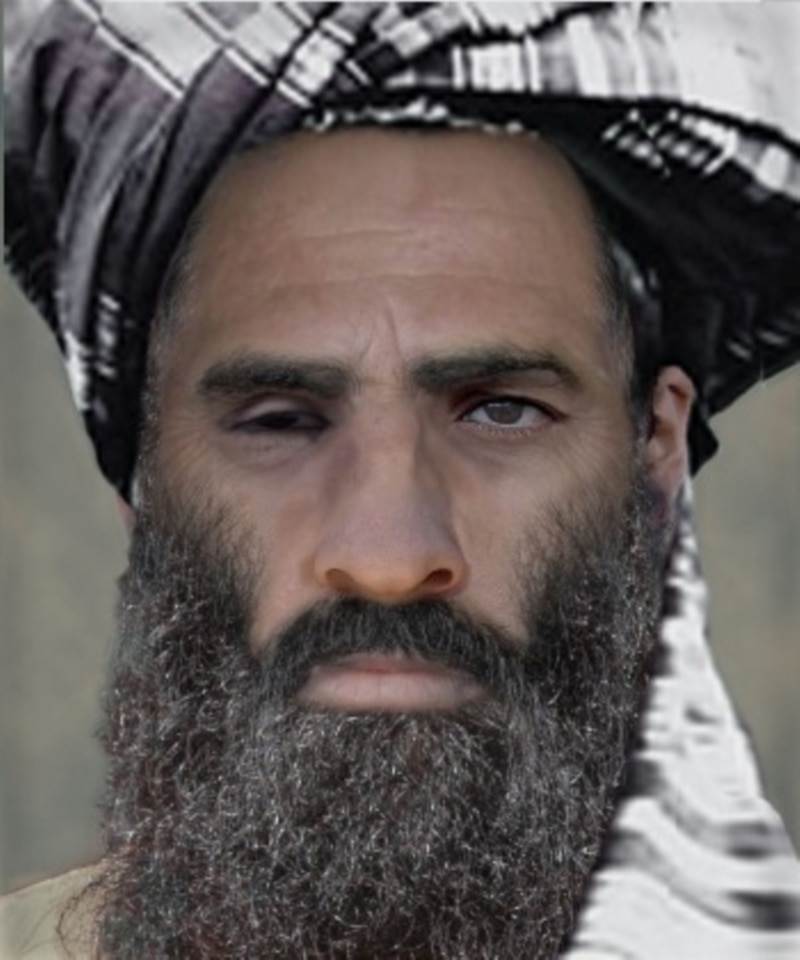
After the U.S.-led coalition ousted Mullah Omar and his Taliban fighters from Kabul and installed the new government of Hamid Karzai in late 2001, it did not take long for the seemingly defeated militants and their Al-Qaeda cronies to muster the resources for a renewal of civil war.
When the Karzai government failed to demonstrate that it was capable of providing leadership, security, and prosperity, the diverse ethnic and linguistic groups who inhabit Afghanistan began to succumb to separatism based on tribal lines.
As the Coalition’s provincial reconstruction teams soon learned through their experience in the field, much of Afghanistan consists of small-scale societies that are sometimes distinct to individual valleys.
For this reason, the Obama administration may not be successful in its current quest to “responsibly end these wars” if it moves too fast.
Plans for the departure of U.S. and international troops from Afghanistan must take into full account the need for local governance, stability, and sustainability. Otherwise, rapid withdrawal from Afghanistan is likely to prove a temporary measure that may one day have to be reversed when worsening conflict there eventually rebounds on the Americans and Europeans.
Yes, U.S. patience has worn thin, and the long and hard route to success now boasts little political appeal. It is entirely understandable that the Americans and their allies have tired of the casualties and the stubborn opposition.
U.S. Should Adjust, Not Abandon, Afghan Mission
But that emotional response clouds prudent decision-making. The U.S. also bears responsibility for the mess that Afghanistan is in. Washington armed the mujahedin and supported the spread of Islamism to counter communism, then installed the current government when groups there turned against the West.
Claiming victory and walking away because a few high-value terrorists have been killed will benefit only those who seek to turn Afghanistan back into a militant safe haven.
A pullout in just 30 months is too hasty a departure from a country lacking effective nonpartisan institutions, struggling to find a shared national identity, and under attack by radical ideologues.
Without the U.S. presence, the Taliban will return to power with a vengeance against all who oppose them at home and abroad. Yet even with continued American involvement Afghanistan cannot develop into a unified functional country unless reconstruction efforts focus on local concerns, aspirations, and traditions of governance.
The United States should adjust its effort in Afghanistan, not abandon it, by learning from people and events on the ground. That is the sole way to help make Afghan society viable again. Only then will the tide of war truly recede, militancy subside, and lasting peace arise.
Jamsheed K. Choksy is professor of Central Eurasian, International, and Islamic studies and former director of the Middle Eastern Studies Program at Indiana University. Carol E. B. Choksy is an adjunct lecturer in Strategic Intelligence and Information Management at Indiana University and CEO of IRAD Strategic Consulting, Inc.
The views expressed in this commentary are the authors’ own and do not necessarily reflect those of RFE/RL