



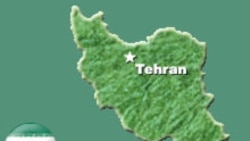
There are conflicting reports on the number of casualties and the reason for the clashes. Regardless of the specifics in this case, all the country's minorities -- Arabs, Azeris, Baluchis, Kurds, or Turkmen -- have grievances that relate to the regime's policies. If allowed to fester, ethnic problems could have serious repercussions for the regime.
"One person was shot during the unrest but not by our personnel," a provincial police official, Islamic Revolution Guards Corps Colonel Hassan Assad Masjedi, said on 16 April, according to ISNA. "In the past few days, 137 people have been arrested for causing unrest in Ahvaz, and eight people have been injured."
Al-Arabiyah television reported on 16 April that three Arabs were killed.
An anonymous "informed source" cited by Baztab website said "tens" of people were killed and injured.
The unrest apparently was caused by outside agitators. On 15 April, Al-Jazeera quoted the irredentist Democratic Popular Movement for the Arab People of Ahvaz (al-Harakah al-Dimuqratiyah al-Sha'biyah li al-Sha'b al-Arabi al-Ahwazi), which demanded an end to what it called the Iranian "occupation" of Khuzestan. The movement accused the Iranian government of wanting to forcibly relocate the province's Arabs to other parts of the country.
The Baztab website accused Al-Arabiyah and Al-Jazeera of trying to inflame the situation by broadcasting this information. An anonymous provincial official quoted by Baztab attributed the unrest to the appearance on former Vice President Mohammad Ali Abtahi's website of a letter that detailed governmental restrictions on the Arab minority (for a translation of the "letter," go to http://www.ahwaz.org.uk/images/ahwaz-khuzestan.pdf).
The provincial governor-general, Gholamreza Shariati, also said on 15 April that the unrest is connected with the forged letter attributed to Abtahi, the Iranian Labor News Agency (ILNA) reported.
Government spokesman Abdullah Ramezanzadeh said on 16 April that the alleged letter is a forgery, the Islamic Republic News Agency (IRNA) reported. President Hojatoleslam Mohammad Khatami assigned investigation of the case to Ministry of Intelligence and Security and the Supreme National Security Council, his spokesman added.
Abtahi himself denied writing the letter, IRNA reported. "Anyone who reads the letter will realize that such a decision, even if confirmed by the supreme leader or the Supreme National Security Council or the president, cannot be implemented in Iran," Abtahi wrote on his website. "I have never had the prerogative to order a change of demographic composition."
The Democratic Popular Movement for the Arab People of Ahvaz, which allegedly contributed to the 15 April unrest, is not the only Arab irredentist organization. The Ahwaz Arab Renaissance Party issued a notice on the AlBasrah.net website (http://www.albasrah.net) in early April that it blew up an oil pipeline from Ahvaz to Tehran. It claimed that this is part of its strategy to stop the Iranian government's oppression of Ahvaz's residents. Another irredentist group is the Ahwaz-Arabistan Online Network (http://www.al-ahwaz.com).
There are approximately 2.07 million ethnic Arabs in Iran (3 percent of the total population of 69 million). The irredentist groups allude to historical grievances, and they bemoan inadequate attention to their culture and language by state media. From an economic perspective, they claim they face discrimination in getting jobs, and they say that although much of Iran's oil wealth comes from Khuzestan Province, an inordinate share of that wealth goes to Tehran and other parts of the country.
Aside from the historical grievances, which are particular to the Arabs in the southwest, these problems are not theirs alone. Baluchis in the southeast complain about forced relocations, underdevelopment and unemployment, inadequate schools, and a lack of Sunni mosques. Kurds in the northwest complain about underdevelopment and the fact that their young people must travel to major cities in other parts of the country to look for work. Azeris complain that their Turkic language is abused by state broadcast media. All of these groups complain of job discrimination, and they complain that not enough of their co-ethnics have high-level jobs in the government.
Unemployment and underemployment are problems all Iranians, not just minorities, are contending with. Officially, unemployment is in the 11-13 percent range, and unofficially, it is in the 25 percent range. And the underdevelopment that groups in the periphery complain about is the direct result of a poorly managed economy that depends on oil revenues to stay afloat.
As the recent unrest in Ahvaz shows, it is unwise to dismiss minority grievances out of hand. The regime can crush dissent when it is localized and relatively small. But if sporadic incidents of ethnic unrest occurred across the country simultaneously, or if such incidents coincided with labor troubles and student demonstrations, then the regime would have its hands full. As recent campaign stops by presidential candidates show, politicians recognize the impact of the ethnic factor.
"One person was shot during the unrest but not by our personnel," a provincial police official, Islamic Revolution Guards Corps Colonel Hassan Assad Masjedi, said on 16 April, according to ISNA. "In the past few days, 137 people have been arrested for causing unrest in Ahvaz, and eight people have been injured."
Al-Arabiyah television reported on 16 April that three Arabs were killed.
An anonymous "informed source" cited by Baztab website said "tens" of people were killed and injured.
The unrest apparently was caused by outside agitators. On 15 April, Al-Jazeera quoted the irredentist Democratic Popular Movement for the Arab People of Ahvaz (al-Harakah al-Dimuqratiyah al-Sha'biyah li al-Sha'b al-Arabi al-Ahwazi), which demanded an end to what it called the Iranian "occupation" of Khuzestan. The movement accused the Iranian government of wanting to forcibly relocate the province's Arabs to other parts of the country.
The Baztab website accused Al-Arabiyah and Al-Jazeera of trying to inflame the situation by broadcasting this information. An anonymous provincial official quoted by Baztab attributed the unrest to the appearance on former Vice President Mohammad Ali Abtahi's website of a letter that detailed governmental restrictions on the Arab minority (for a translation of the "letter," go to http://www.ahwaz.org.uk/images/ahwaz-khuzestan.pdf).
The provincial governor-general, Gholamreza Shariati, also said on 15 April that the unrest is connected with the forged letter attributed to Abtahi, the Iranian Labor News Agency (ILNA) reported.
Government spokesman Abdullah Ramezanzadeh said on 16 April that the alleged letter is a forgery, the Islamic Republic News Agency (IRNA) reported. President Hojatoleslam Mohammad Khatami assigned investigation of the case to Ministry of Intelligence and Security and the Supreme National Security Council, his spokesman added.
Abtahi himself denied writing the letter, IRNA reported. "Anyone who reads the letter will realize that such a decision, even if confirmed by the supreme leader or the Supreme National Security Council or the president, cannot be implemented in Iran," Abtahi wrote on his website. "I have never had the prerogative to order a change of demographic composition."
The irredentist groups allude to historical grievances, and they bemoan inadequate attention to their culture and language by state media.
The Democratic Popular Movement for the Arab People of Ahvaz, which allegedly contributed to the 15 April unrest, is not the only Arab irredentist organization. The Ahwaz Arab Renaissance Party issued a notice on the AlBasrah.net website (http://www.albasrah.net) in early April that it blew up an oil pipeline from Ahvaz to Tehran. It claimed that this is part of its strategy to stop the Iranian government's oppression of Ahvaz's residents. Another irredentist group is the Ahwaz-Arabistan Online Network (http://www.al-ahwaz.com).
There are approximately 2.07 million ethnic Arabs in Iran (3 percent of the total population of 69 million). The irredentist groups allude to historical grievances, and they bemoan inadequate attention to their culture and language by state media. From an economic perspective, they claim they face discrimination in getting jobs, and they say that although much of Iran's oil wealth comes from Khuzestan Province, an inordinate share of that wealth goes to Tehran and other parts of the country.
Aside from the historical grievances, which are particular to the Arabs in the southwest, these problems are not theirs alone. Baluchis in the southeast complain about forced relocations, underdevelopment and unemployment, inadequate schools, and a lack of Sunni mosques. Kurds in the northwest complain about underdevelopment and the fact that their young people must travel to major cities in other parts of the country to look for work. Azeris complain that their Turkic language is abused by state broadcast media. All of these groups complain of job discrimination, and they complain that not enough of their co-ethnics have high-level jobs in the government.
Unemployment and underemployment are problems all Iranians, not just minorities, are contending with. Officially, unemployment is in the 11-13 percent range, and unofficially, it is in the 25 percent range. And the underdevelopment that groups in the periphery complain about is the direct result of a poorly managed economy that depends on oil revenues to stay afloat.
As the recent unrest in Ahvaz shows, it is unwise to dismiss minority grievances out of hand. The regime can crush dissent when it is localized and relatively small. But if sporadic incidents of ethnic unrest occurred across the country simultaneously, or if such incidents coincided with labor troubles and student demonstrations, then the regime would have its hands full. As recent campaign stops by presidential candidates show, politicians recognize the impact of the ethnic factor.