




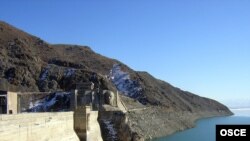
In a report released on August 22, the Chicago-based Power and Interest News Report (PINR) says regional countries have failed to implement an effective water-management mechanism in the years since the breakup of the Soviet Union. PINR says that, combined with other problems, this failure has the potential "to tip the region into conflict."
The group cites in particular the lack of an agreement on the legal status of the Caspian Sea among its five littoral states (Kazakhstan, Turkmenistan, Iran, Russia, and Azerbaijan).
It also notes that more than 90 percent of Central Asia's water resources are concentrated in Kyrgyzstan and Tajikistan, while Kazakhstan and Uzbekistan are the region's main water consumers.
PINR says other potential sources of tension include border disputes, competition over energy reserves, instability tied to rising poverty, authoritarianism, and religious extremism.
An Increasingly Thirsty World
 An Iraqi boy drinks from a waste-water reservoir near Baghdad (epa file photo)
A MATTER OF LIFE AND DEATH. Disputes about access to water are increasingly coming to the center of global attention, especially in China, India, and Central Asia. Writing about the 1967 Six Day War in his 2001 memoirs, Israeli Prime Minister Ariel Sharon said that "while border disputes between Syria and ourselves were of great significance, the matter of water diversion was a stark issue of life and death." (more)
RELATED ARTICLES
Tibetan Water Plans Raise Concerns
Environmentalists Say China Misusing Cross-Border Rivers
China's Economic Boom Strains Environment
Nature Waits For Cross-Border Sanctuaries To Catch On
Overused Rivers Struggle To Reach The Sea
UN Water Report Takes A Hard Look At Central Asia
Irrigation, Pollution Threaten Central Asian Lakes

THE COMPLETE STORY: Click on the icon to view a dedicated webpage bringing together all of RFE/RL's coverage of Kazakhstan, Kyrgyzstan, Tajikistan, Turkmenistan, and Uzbekistan.