



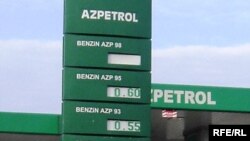
It's not hard to see why many Azerbaijanis are angry about the price hikes. The price of gasoline has gone up overnight by 50 percent. Diesel has risen by 25 percent.
Residents of the oil-producing country now pay on average between $0.64 and $0.68 for a liter of gasoline. By comparison, Americans only pay $0.62.
On the streets of the capital, Baku, the anger was palpable.
"I disapprove of this decision," one man said. "We already live under such difficult conditions, but now they're raising prices. How long will it continue? We can't take it anymore. They have created a situation where people keep quiet and can't say anything, because they've scared everybody."
"I don't like this," a woman agreed. "These people are capable of starving people. Now, we are barely surviving, we are not living. Only God knows what kind of life people have."
Wages Fall Behind Prices
"When the government raises prices, they say that they are trying to bring prices up to an international level, but they are forgetting that salaries should also be brought up to an international level," a second man said.
And that is where the problem lies: wages. Azerbaijan has some of the lowest average monthly salaries and pensions in the region. On average, they are lower than those in the United States by a factor of 50 to 100.
But the government has said that the price increases will "help develop Azerbaijan's economy."
Speaking to RFE/RL's Azerbaijan Service, government spokesman Oktay Haqverdiyev defended the initiative.
"This is not an economic issue, but a political issue for the government or state to resolve," he said. "In order to prevent goods moving cheaply out of Azerbaijan, the government has revised the prices."
The World Bank has repeatedly urged the Azerbaijani government to raise domestic oil prices. The head of the World Bank mission in Baku, Viktor Kramarenko, said in June last year that reducing subsidies on oil products would enable the government to increase social spending.
And European Bank for Reconstruction and Development President Jean Lemierre said in April 2006 that the government should raise electricity tariffs gradually in order to free up funds for modernization and maintenance.
Rises To Hit Poor Hardest?
That's unlikely to reassure most Azerbaijanis, who fear that the move will result in higher prices for everyday goods. Experts have warned that the price rises will affect the country's construction, agricultural, and industrial sectors.

Will Azerbaijanis take to the streets? (AFP file photo)
The consequences may already be visible. In Baku on January 9, many minibuses, usually full of passengers, stopped work, saying higher costs have made their work unprofitable.
Three daily newspapers have already increased their prices by 50 percent, their editors saying the rise was unavoidable because of higher energy costs.
Taking Anger To The Streets
Whether the public anger will translate into popular protests -- a rarity in Azerbaijan -- is unclear.
The opposition Azadliq bloc has called for the government to resign, due to what it calls its "incompetent policy." The bloc has also announced it is planning protests, but has not specified when or where they will take place.
The opposition Azerbaijan Popular Front Party has said the price increases are intended to "destroy the Azerbaijani people."
And there are signs that the government is already trying to quell public opposition to the move. The operators of two opposition websites that criticized the government's policy have said their sites have been blocked in Azerbaijan.
(RFE/RL's Azerbaijan Service contributed to this report.)
RFE/RL In Azeri

Visit RFE/RL's Azeri-language website, featuring news, analysis, features, streaming audio, and more in Azeri, courtesy of RFE/RL's Azerbaijani Service.