


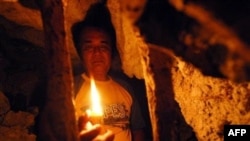
After banning extravagant weddings and funerals and prohibiting students from driving "expensive" cars and using mobile phones earlier this year, Tajik authorities have now turned their attention to the occult. In mid-December, the Tajik parliament introduced a bill to ban witchcraft and fortune-telling.
The move has sparked criticism, with many Tajiks saying that politicians should be tackling more serious issues, such as rampant unemployment and a severe energy shortage that has left many parts of the country without electricity for much of the day.
Askar, a 32-year-old resident of the city of Sughd, told RFE/RL that most Tajik households get just six hours of electricity during the cold winter days. He said witchcraft and fortune-telling are not anywhere near his list of everyday problems in a country where employment is believed to be between 25 and 30 percent, and where nearly one-third of the population lives in poverty.
"Key issues such as economic reforms, human rights, development of civil society, and freedom of political movements have almost never been discussed," said Shokirjon Hakimov, a politician and professor at Tajik International University in Dushanbe. "The discussion of [witchcraft] in the parliament proves once again that they try to divert people's minds to petty and minor issues."
Popular Pastime
Some experts say the authorities might require those engaged in fortune-telling to get registered officially and pay taxes. According to the legislation, "those engaging in sorcery and fortune-telling will be fined between 30 and 40 times the minimum monthly wage," or about $200.
Parliamentarian Mahmad Rahimov told RFE/RL's Tajik Service that there are some 5,000 people in Tajikistan who practice witchcraft or fortune-telling. Tajik authorities and state-run media have expressed their concern that such activities are becoming increasingly popular in the country, and that many people who have health problems or other troubles are approaching sorcerers instead of seeking professional help.
State-run television reports that there are long lines of people waiting to see sorcerers, who charge a significant amount of money for their services.
Ironically, one well-known fortune-teller in the capital, Dushanbe, claims that most of her "clients" are people who work for government agencies. "They come to me to boost their career opportunities or find a cure to their health issues," the fortune-teller, known as Maisara, explained. "All of them, including people from the National Security Committee, the Interior Ministry, and other ministries come here to seek treatment."
Too Conspicuous
The authorities describe the attempt to ban such practices as a part of an antipoverty campaign started earlier this year. In May, President Emomali Rahmon criticized lavish weddings, funerals, and other extravagant private functions. Rahmon said some wealthier Tajiks have established a new tradition of expensive weddings and funerals by throwing huge parties that continue for several days.
Their poorer neighbors often save for years or spend many months working as migrant laborers in Russia to be able to match such celebrations. Others borrow money and go into considerable debt.
Shortly after President Rahmon's speech, strict limits were put on such parties, including the number of guests and cars that could be present at such a festivity. Many party givers were fined for breaking the rule, although some Dushanbe residents complain that the new restrictions have created a new source of bribes for police and other officials.
Rahmon has also barred students from driving luxurious cars and using mobile phones inside school buildings, saying such practices are an unnecessary display of wealth. He also outlawed high-school graduation parties, calling them a waste of money.
Some people have welcomed these measures, saying they relieve the burden of holding expensive parties that they can't afford.
But others question whether witchcraft and fortune-telling -- which have survived repression over the centuries, including the burning of witches in Europe and elsewhere -- can be stopped by a presidential decree or new law.
(RFE/RL's Tajik Service correspondent Kayumars Ato contributed to this report)
RFE/RL Central Asia Report

SUBSCRIBE For regular news and analysis on all five Central Asian countries by e-mail, subscribe to "RFE/RL Central Asia Report."