

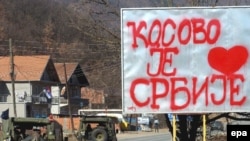
Slobodan Samardzic, who is Serbia's minister for Kosovo and an ally of outgoing Prime Minister Vojislav Kostunica, said in Kosovska Mitrovica on May 25 that local government councils and administrative bodies should be set up there within 15 days after Serbia's Election Commission confirms the results of the May 11 election.
RFE/RL's South Slavic and Albanian Languages Service reported that is not clear when those results will be announced, or if local Serbian leaders are willing to form their own local coalitions before a new national governing coalition is announced in Belgrade. Many local Serbian politicians appear to be in no hurry to form municipal governing bodies and seem prepared to await the outcome of the protracted coalition negotiations at the national level.
The UN Mission in Kosovo (UNMIK), which is the UN's civilian administration in Kosovo, said repeatedly before the May 11 vote that it would "neither support nor hinder" Belgrade's organizing Serbian parliamentary elections in Kosovo, as was its position regarding previous Serbian legislative votes. UNMIK stressed, however, that it viewed Serbia's attempt at managing the local ballot there as yet another move toward partitioning Kosovo along ethnic lines, which the UN, European Union, the United States, and independent Kosovo's government firmly oppose. UNMIK officials argued that local elections run by the Belgrade authorities would be "in violation of UN Security Council Resolution 1244...and will have no legal validity."
Joachim Ruecker, who heads the UNMIK, told RFE/RL recently that the May 11 local vote remains illegal in UNMIK's view. He added that the mandate of local governments in five mainly Serbian municipalities will run out on June 18, and that it is unclear what will follow. Ruecker appointed those bodies after Kosovo's November 2007 local elections, which most Serbs boycotted.
If tensions mount between UNMIK and nationalist Serbian politicians, it would not be for the first time. In early March, officials from Belgrade and local Serbian railway workers announced that Serbia was "retaking control" from Kosovar Railways (HK) of a 50-kilometer stretch of railway north of Zvecan after a hiatus of nine years.
Since then, UNMIK claims that it has retaken control of the railways in northern Kosovo, while the Serbian authorities say that they themselves are reconstructing the line. RFE/RL noted that the railways, like the courthouses and customs offices in northern Kosovo, are simply not functioning.
In at least two incidents, Serbs resorted to violence against UNMIK officials in the north. On February 19, organized mobs destroyed UNMIK customs posts on the frontier with Serbia in an act that Samardzic later called "unfortunate but legitimate." Ruecker subsequently reminded the minister that Resolution 1244 places UNMIK and NATO-led KFOR peacekeepers "in charge of the whole territory of Kosovo." Belgrade often cites that document as a basis for its continuing legal claims to Kosovo.
On March 14, apparently organized Serbian crowds took control of a UN-run courthouse in northern Mitrovica, which Ukrainian UNMIK police subsequently recaptured with the loss of the life of one of their men. It was ultimately left to KFOR to restore order in the town and send the message that violence would not be tolerated. Larry Rossin, who is the deputy chief of UNMIK, said on March 17 that the rioters flagrantly violated the terms of Resolution 1244.
Fate Of The Enclaves
But not all Serbian politicians in Kosovo are willing to follow Belgrade's nationalist policies or provoke UNMIK. Serbian leaders north of the Ibar River generally take their cue from the Serbian capital, but only about 40 percent of Kosovo's 5 percent Serbian minority lives in the north; the remaining 60 percent live in scattered enclaves. The "Frankfurter Allgemeine Zeitung" noted on May 28 that Serbs living in the enclaves reject independence for Kosovo but accept that they must carry out "pragmatic cooperation" with their ethnic-Albanian neighbors and the Kosovar authorities on the ground.
On March 25, veteran Kosovar Serb political leader Oliver Ivanovic, who is an ally of Serbian President Boris Tadic, accused Kostunica's Democratic Party of Serbia (DSS) of "playing politics" with the fate of Kosova's widely scattered Serbs by proposing what amounts to partition. Ivanovic argued that "in the north it's easy to play the big Serb and score cheap points, but it will cost the Serbs of central Kosovo dearly. The feeling of being abandoned would be intolerable for them, and would inevitably increase the migration of Serbs from Kosovo."
He recently told RFE/RL that local governments should be set up only in agreement with UNMIK, because "constant fighting" between local Serbs and the UN body will harm only the Serbs.
Rada Trajkovic, who is another established Kosovo Serb political figure, agrees that Belgrade's policies do not help local Serbs. The Frankfurt daily quoted her as saying that, in her view as a Serb from Kosovo, "nobody has damaged the [Serbian] state and Serbian people as much as Kostunica and Samardzic."

RFE/RL's South Slavic and Albanian Languages Service reported that is not clear when those results will be announced, or if local Serbian leaders are willing to form their own local coalitions before a new national governing coalition is announced in Belgrade. Many local Serbian politicians appear to be in no hurry to form municipal governing bodies and seem prepared to await the outcome of the protracted coalition negotiations at the national level.
The UN Mission in Kosovo (UNMIK), which is the UN's civilian administration in Kosovo, said repeatedly before the May 11 vote that it would "neither support nor hinder" Belgrade's organizing Serbian parliamentary elections in Kosovo, as was its position regarding previous Serbian legislative votes. UNMIK stressed, however, that it viewed Serbia's attempt at managing the local ballot there as yet another move toward partitioning Kosovo along ethnic lines, which the UN, European Union, the United States, and independent Kosovo's government firmly oppose. UNMIK officials argued that local elections run by the Belgrade authorities would be "in violation of UN Security Council Resolution 1244...and will have no legal validity."
Joachim Ruecker, who heads the UNMIK, told RFE/RL recently that the May 11 local vote remains illegal in UNMIK's view. He added that the mandate of local governments in five mainly Serbian municipalities will run out on June 18, and that it is unclear what will follow. Ruecker appointed those bodies after Kosovo's November 2007 local elections, which most Serbs boycotted.
If tensions mount between UNMIK and nationalist Serbian politicians, it would not be for the first time. In early March, officials from Belgrade and local Serbian railway workers announced that Serbia was "retaking control" from Kosovar Railways (HK) of a 50-kilometer stretch of railway north of Zvecan after a hiatus of nine years.
Since then, UNMIK claims that it has retaken control of the railways in northern Kosovo, while the Serbian authorities say that they themselves are reconstructing the line. RFE/RL noted that the railways, like the courthouses and customs offices in northern Kosovo, are simply not functioning.
In at least two incidents, Serbs resorted to violence against UNMIK officials in the north. On February 19, organized mobs destroyed UNMIK customs posts on the frontier with Serbia in an act that Samardzic later called "unfortunate but legitimate." Ruecker subsequently reminded the minister that Resolution 1244 places UNMIK and NATO-led KFOR peacekeepers "in charge of the whole territory of Kosovo." Belgrade often cites that document as a basis for its continuing legal claims to Kosovo.
On March 14, apparently organized Serbian crowds took control of a UN-run courthouse in northern Mitrovica, which Ukrainian UNMIK police subsequently recaptured with the loss of the life of one of their men. It was ultimately left to KFOR to restore order in the town and send the message that violence would not be tolerated. Larry Rossin, who is the deputy chief of UNMIK, said on March 17 that the rioters flagrantly violated the terms of Resolution 1244.
Fate Of The Enclaves
But not all Serbian politicians in Kosovo are willing to follow Belgrade's nationalist policies or provoke UNMIK. Serbian leaders north of the Ibar River generally take their cue from the Serbian capital, but only about 40 percent of Kosovo's 5 percent Serbian minority lives in the north; the remaining 60 percent live in scattered enclaves. The "Frankfurter Allgemeine Zeitung" noted on May 28 that Serbs living in the enclaves reject independence for Kosovo but accept that they must carry out "pragmatic cooperation" with their ethnic-Albanian neighbors and the Kosovar authorities on the ground.
On March 25, veteran Kosovar Serb political leader Oliver Ivanovic, who is an ally of Serbian President Boris Tadic, accused Kostunica's Democratic Party of Serbia (DSS) of "playing politics" with the fate of Kosova's widely scattered Serbs by proposing what amounts to partition. Ivanovic argued that "in the north it's easy to play the big Serb and score cheap points, but it will cost the Serbs of central Kosovo dearly. The feeling of being abandoned would be intolerable for them, and would inevitably increase the migration of Serbs from Kosovo."
He recently told RFE/RL that local governments should be set up only in agreement with UNMIK, because "constant fighting" between local Serbs and the UN body will harm only the Serbs.
Rada Trajkovic, who is another established Kosovo Serb political figure, agrees that Belgrade's policies do not help local Serbs. The Frankfurt daily quoted her as saying that, in her view as a Serb from Kosovo, "nobody has damaged the [Serbian] state and Serbian people as much as Kostunica and Samardzic."
RFE/RL Balkan Report
RFE/RL Balkan Report