





In the wake of a bombing in Moscow's Domodedovo Airport that left 40 dead last month, and following a spate of attacks by Russian nationalists on Caucasians and immigrants from Central Asia, President Dmitry Medvedev convened a State Council session in Bashkortostan's capital, Ufa, to discuss multiculturalism.
Medvedev said the meeting was "devoted to the discussion of measures to strengthen multinational accord in our country. The reasons and motivation for this topic, to the consideration of this matter, I think, are well understood by everyone. This is simply a sign that not everything is working properly."
Three days before Medvedev's February 11 appearance in the city, Russian security forces arrested four alleged Islamist extremists in Bashkortostan and charged them with possession of extremist literature and bomb-making materials.
 Despite the continuing violence across Russia's North Caucasus and evidence that it could be spreading to the rest of the country, Medvedev was sanguine about Moscow's policies and warned participants at the gathering not to be overly emotional.
"We understand that in our country, like in no other -- and I emphasize, like in no other -- there has been unique experience in the coexistence and development of various ethnicities and cultures," Medvedev said, "which mutually enriched one another and helped one another in the most difficult, most dramatic periods of their development, including during the war [World War II]."
At the same meeting, however, Medvedev stressed the importance of everyone in Russia speaking Russian and of fostering a unitary culture to unite the country.
Bashkir Hunger Strikers
The inconsistency in Medvedev's rhetoric -- and between his rhetoric and actions -- reflects a deep-seated contradiction in Moscow's policy toward ethnic minorities. Russia's official status as a multicultural federation has been undermined by a decade of centralizing policies carried out by Medvedev and his predecessor, current Prime Minister Vladimir Putin.
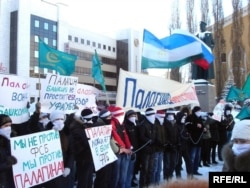 Bashkir activists protest in front of the FSB bulding in Ufa on February 18.And while attention has been focused on the violent ethnic strife in the North Caucasus region, Bashkortostan has also been simmering.
Activists from the Bashkir Youth Union (BYI) launched a hunger strike on March 3 to protest alleged "police pressure" on Bashkir nationalists and to demand the release of arrested former BYI leader Artur Idelbayev and Bashkir activist Ayrat Dilmukhametov, who face fraud and extremism charges.
Within a week, about 150 other hunger strikers had joined the protest. Organizers temporarily halted the strike on March 13, following the direct intervention of Bashkortostan's President Rustam Khamitov.
On March 23, however, the activists announced their demands had still not been met and that they planned to resume their hunger strike in April, following a series of demonstrations aimed at attracting support. Acting BYI head Florid Bagayev told RFE/RL the first demonstration would come on March 25.
Bagayev said that at the March 25 rally in Ufa, "we are going to demand the government and security services stay away from ethnic and Muslim leaders. The persecution against them is ongoing."
Bagayev alleged that Bashkir schools and newspapers had been visited by the security forces, who accused them of accessing extremist websites.
No Independent Institutions
The BYI claims it is defending Bashkir language and culture, arguing that Bashkir educational establishments have been restricted and Bashkir-language broadcasts on state media in the republic have been slashed virtually to nothing.
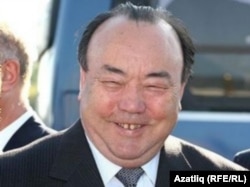 Ex-President Murtaza Rakhimov did Bashkir nationalists few favors in the end.However, the group, and the semi-official Bashkir Congress, are tied to Bashkortostan's former President Murtaza Rakhimov, the corrupt and authoritarian head of the republic from 1993 until he was maneuvered out of office by Moscow in July 2010.
During his years in office, Bashkir nationalists enjoyed strong support. But Rakhimov's crony-based regime did nothing to establish a healthy civil society or accountable government.
As a result, Bashkir activists now must choose between either being co-opted by Kremlin-connected pseudo-NGOs or risk being persecuted under Russia's wide-ranging antiextremism legislation. When Medvedev was in Ufa, he met with representatives of state-sanctioned civil society groups, but did not speak with any representatives of the most ardent Bashkir nationalist circles, such as the BYI.
Mekhti Sharifov, a legal specialist for the Institute of State and Law of the Russian Academy of Sciences, wrote in a long analysis published this week that Moscow over the last decade has attempted to transform Russia into a unitary state with a strictly vertical power structure. This means there are no "institutional instruments" for regional authorities and local civic groups to participate in local decision making.
The New Russian Empire
Opposition politician Vladimir Ryzhkov agrees with this analysis. "The very ideology that Putin is installing is imperial. It is in itself destructive for the country," Ryzhkov says. "De facto, he is an imperialist and de facto he is building a new Russia on this bureaucratic-police vertical as an empire. He views, for example, Tatarstan, Bashkortostan, and Yakutia as provinces of an empire."
In 2004, purportedly as a reaction to the horrific terrorist incident at a school in Beslan, North Ossetia, where hundreds of children were killed, Putin eliminated the direct election of the heads of federation subjects. He instituted a system under which they are appointed by the Kremlin and approved by local legislatures.
As a result, governors and republic heads take their cues from Moscow and often have little legitimacy in the regions they rule. Bashkortostan's new president, Khamitov, is a typical example.
To confuse matters more, it is also unclear to what extent an executive-branch head like Khamitov controls the executive-branch structures in his region. Khamitov's inability to deliver on his agreement with the hunger-striking students and the continued actions of police and local Federal Security Service (FSB) units in the republic seem to indicate his weakness.
Ryzhkov says this is also part of Putin's policy of undermining the country's formal federalist system. He says Putin "is installing there de facto appointed governors. He is de facto removing the power structures from under any influence of local societies. The new law on the police strengthens this vertical even more. That is -- the police are controlled from outside, the FSB is controlled from outside, the tax authorities from the outside, the prosecutor's office, the prisons, and the governor are all controlled from Moscow."
Ryzhkov and analysts like the Academy of Science's Sharifov have real doubts as to whether Russia's Moscow-centered unitary state has room for institutions of local self-expression. As long as activists like the Bashkir students have no credible avenues for airing their grievances, demonstrations, hunger strikes, and even more radical actions will continue.
RFE/RL's Tatar-Bashkir and Russian services contributed to this report
Medvedev said the meeting was "devoted to the discussion of measures to strengthen multinational accord in our country. The reasons and motivation for this topic, to the consideration of this matter, I think, are well understood by everyone. This is simply a sign that not everything is working properly."
Three days before Medvedev's February 11 appearance in the city, Russian security forces arrested four alleged Islamist extremists in Bashkortostan and charged them with possession of extremist literature and bomb-making materials.
"We understand that in our country, like in no other -- and I emphasize, like in no other -- there has been unique experience in the coexistence and development of various ethnicities and cultures," Medvedev said, "which mutually enriched one another and helped one another in the most difficult, most dramatic periods of their development, including during the war [World War II]."
At the same meeting, however, Medvedev stressed the importance of everyone in Russia speaking Russian and of fostering a unitary culture to unite the country.
Bashkir Hunger Strikers
The inconsistency in Medvedev's rhetoric -- and between his rhetoric and actions -- reflects a deep-seated contradiction in Moscow's policy toward ethnic minorities. Russia's official status as a multicultural federation has been undermined by a decade of centralizing policies carried out by Medvedev and his predecessor, current Prime Minister Vladimir Putin.
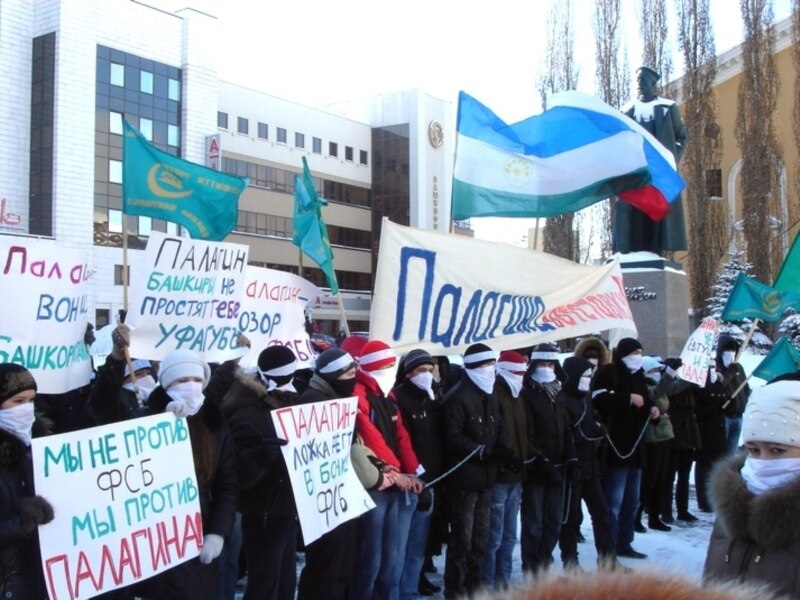
Activists from the Bashkir Youth Union (BYI) launched a hunger strike on March 3 to protest alleged "police pressure" on Bashkir nationalists and to demand the release of arrested former BYI leader Artur Idelbayev and Bashkir activist Ayrat Dilmukhametov, who face fraud and extremism charges.
Within a week, about 150 other hunger strikers had joined the protest. Organizers temporarily halted the strike on March 13, following the direct intervention of Bashkortostan's President Rustam Khamitov.
On March 23, however, the activists announced their demands had still not been met and that they planned to resume their hunger strike in April, following a series of demonstrations aimed at attracting support. Acting BYI head Florid Bagayev told RFE/RL the first demonstration would come on March 25.
Bagayev said that at the March 25 rally in Ufa, "we are going to demand the government and security services stay away from ethnic and Muslim leaders. The persecution against them is ongoing."
Bagayev alleged that Bashkir schools and newspapers had been visited by the security forces, who accused them of accessing extremist websites.
No Independent Institutions
The BYI claims it is defending Bashkir language and culture, arguing that Bashkir educational establishments have been restricted and Bashkir-language broadcasts on state media in the republic have been slashed virtually to nothing.
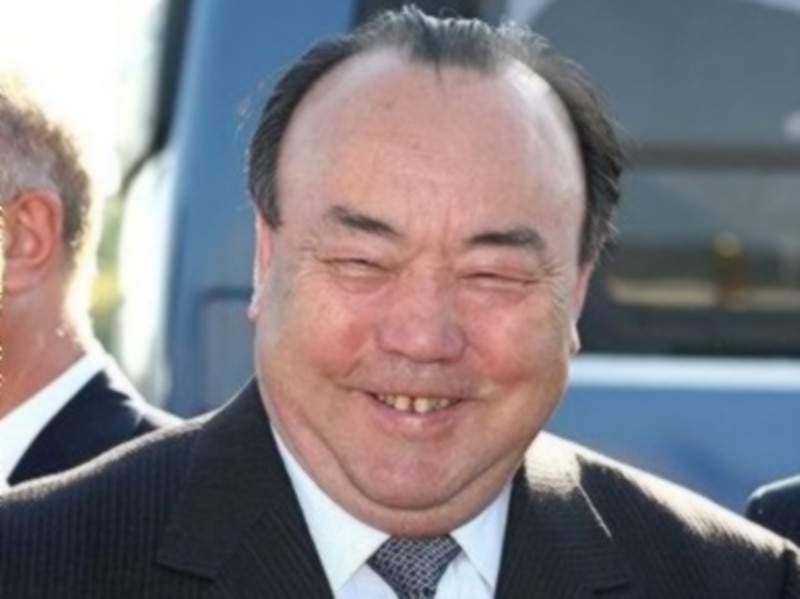
During his years in office, Bashkir nationalists enjoyed strong support. But Rakhimov's crony-based regime did nothing to establish a healthy civil society or accountable government.
As a result, Bashkir activists now must choose between either being co-opted by Kremlin-connected pseudo-NGOs or risk being persecuted under Russia's wide-ranging antiextremism legislation. When Medvedev was in Ufa, he met with representatives of state-sanctioned civil society groups, but did not speak with any representatives of the most ardent Bashkir nationalist circles, such as the BYI.
Mekhti Sharifov, a legal specialist for the Institute of State and Law of the Russian Academy of Sciences, wrote in a long analysis published this week that Moscow over the last decade has attempted to transform Russia into a unitary state with a strictly vertical power structure. This means there are no "institutional instruments" for regional authorities and local civic groups to participate in local decision making.
The New Russian Empire
Opposition politician Vladimir Ryzhkov agrees with this analysis. "The very ideology that Putin is installing is imperial. It is in itself destructive for the country," Ryzhkov says. "De facto, he is an imperialist and de facto he is building a new Russia on this bureaucratic-police vertical as an empire. He views, for example, Tatarstan, Bashkortostan, and Yakutia as provinces of an empire."
In 2004, purportedly as a reaction to the horrific terrorist incident at a school in Beslan, North Ossetia, where hundreds of children were killed, Putin eliminated the direct election of the heads of federation subjects. He instituted a system under which they are appointed by the Kremlin and approved by local legislatures.
As a result, governors and republic heads take their cues from Moscow and often have little legitimacy in the regions they rule. Bashkortostan's new president, Khamitov, is a typical example.
To confuse matters more, it is also unclear to what extent an executive-branch head like Khamitov controls the executive-branch structures in his region. Khamitov's inability to deliver on his agreement with the hunger-striking students and the continued actions of police and local Federal Security Service (FSB) units in the republic seem to indicate his weakness.
Ryzhkov says this is also part of Putin's policy of undermining the country's formal federalist system. He says Putin "is installing there de facto appointed governors. He is de facto removing the power structures from under any influence of local societies. The new law on the police strengthens this vertical even more. That is -- the police are controlled from outside, the FSB is controlled from outside, the tax authorities from the outside, the prosecutor's office, the prisons, and the governor are all controlled from Moscow."
Ryzhkov and analysts like the Academy of Science's Sharifov have real doubts as to whether Russia's Moscow-centered unitary state has room for institutions of local self-expression. As long as activists like the Bashkir students have no credible avenues for airing their grievances, demonstrations, hunger strikes, and even more radical actions will continue.
RFE/RL's Tatar-Bashkir and Russian services contributed to this report