





A quarter of a century ago, 14-year-old Natalia Churikova was frolicking on the streets of Kyiv the day after the Chornobyl disaster, unaware that every breath of fresh spring air she inhaled contained harmful radiation. The sun was out, she says, the sky was blue, "it was a perfect day."
Things were great until a phone call came later that evening that left her stepfather looking "very worried," says Churikova, who now works as a broadcaster for RFE/RL's Ukrainian Service.
Her father, she recalls, hung up the phone and looked at his daughter.
"He said, 'Look, we all need to take a shower,''' Churikova says. "I said: 'Why? I want to go to bed. I'm tired. I'm too tired to go to shower.' He said, 'Look, you do need to take a shower because there was some kind of an explosion at a nuclear plant not far from Kyiv, and you need to take some kind of precaution.'"
Churikova says that this was "first time I heard the name of Chornobyl, and it was the first time I heard about radiation."
The deadly accident at the Chornobyl nuclear power plant on April 26, 1986, released huge amounts of dangerous radiation into the air, contaminating millions and leading to the relocation of more than 300,000 people.
Thousands of children were born with birth defects or complications such as genetic cardiac disease, with scientists expecting that thousands more could still die from radiation-induced cancer.
Kremlin Kept Quiet
The Chornobyl site is now surrounded by a 30-kilometer exclusion zone where people are forbidden to live. United Nations Secretary-General Ban Ki-moon visited the affected area on April 20 to mark the event's upcoming anniversary, which comes in the wake of the nuclear catastrophe at Japan's Fukushima Daiichi plant.
 At the Chornobyl site, UN chief Ban Ki-moon called for "full transparency" from governments during such disasters.
Describing his visit as an "extremely moving experience," Ban also pushed for new international standards that would hold countries accountable for nuclear safety, calling on governments to implement better information sharing and stressing the need for "full transparency."
Transparency was not on the agenda in Soviet-era Ukraine when the Chornobyl disaster struck. Information was kept to a minimum as the Soviet government in Moscow appeared more concerned with protecting its reputation than protecting its citizens. In the crucial early days after the explosion, the authorities did their utmost to cover up the immensity of the disaster.
Churikova's family knew about the incident more quickly than many Ukrainians, thanks to her father's ties to the military. At the same time, the lack of information led to an atmosphere of intense paranoia in Kyiv, which is located just 100 kilometers south of Chornobyl.
For the latest news on an event that happened so close to home, Churikova says everyone relied on foreign media -- collectively referred to as "the voices" in Soviet Ukraine.
One day, while listening to foreign radio broadcasts in the hopes of learning more about what happened, the inquisitive 14-year-old heard an announcement that high levels of radiation had been detected in Sweden.
"Then I thought, 'Oh gosh, I didn't wash my hair in vain if they have radiation somewhere in Sweden -- that's very far from Kyiv,'" she says.
'Nothing To Worry About'
Basically, the authorities "tried to show the world that everything was normal," Churikova says, adding that they even "organized a cycling championship in Kyiv" in which people were expected to take their bicycles out and spend time outside. But she says people were already trying to escape the city.
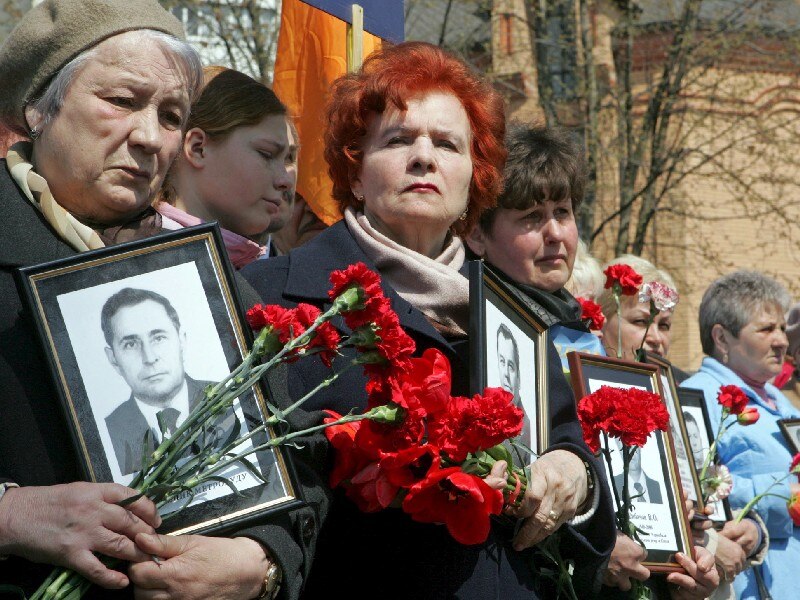
 Widows of Chornobyl victims attend a memorial ceremony in Kyiv in 2007.
The government appears to have spared no effort in convincing citizens to stay. Churikova says the 6-year-old grandson of Ukraine's then-Communist Party leader, Volodymyr Shcherbitskiy, was paraded around the capital as part of the annual May Day festivities in an effort to calm panic-stricken parents.
Meanwhile, rumors circulated about the best ways to offset the contamination. Churikova's grandmother would slip iodine into her food in one popular treatment that turned out to be largely ineffective.
People would believe almost anything. They were "drinking red wine," she says, "believing that it was cleaning the system because they have heard that Soviet submarine sailors, they were given red wine as part of their daily diet to clean the system from the radiation."
"But some people," she adds with a laugh, "took it further and they just decided that any alcohol will do the job."
The authorities, for their part, joined the rumor mill by airing TV segments with "so-called experts," Churikova says, who would appear on screen "and with a straight face explain that small doses of radiation were beneficial for rats' health."
Churikova says the reasoning went that "it could be beneficial for human health, too."
However, the charade convinced no one. Fear abounded in Kyiv and a new word, "radiophobia" was being used to describe the panic setting in.
"I've heard stories of people sending [off] their children," Churikova says, "packing them away into trains with notes that [said], 'Here is the name of my kid, take care of him.'"
Churikova went to Crimea on Ukraine's Black Sea coast. She later left Ukraine to study in Tashkent, Uzbekistan.
Chornobyl's Children
The children who were in Chornobyl at the time of the accident, meanwhile, were the subject of an international campaign aimed at providing them with world-class medical treatment abroad -- something that worried the Soviet authorities, who were then fearful of foreign influences.
The Chernobyl Children International project, an Irish-led initiative, which was eventually brought under the wing of the United Nations, ultimately provided 21,000 children with some form of medical treatment.
Churikova herself accompanied a group of them to Australia. She says this encounter with the non-Soviet world produced "a whole generation" of young people who were less easily persuaded by the Soviet narrative.
But at the time, Churikova wasn't thinking about the geopolitical ramifications of the disaster. She was more concerned about losing one of her favorite T-shirts because of the radiation, explaining that as soon as they arrived after traveling to a city far from Chornobyl they were taken to a medical facility for testing.
The clothes they arrived in had to be destroyed because they had accumulated too much radiation, she says, recalling, "I had a beautiful blue T-shirt, acrylic T-shirt, which I had to say goodbye to."
Beloved personal belongings were just the beginning. In the end, the victims of Chornobyl had to part with much more, as some saw the disaster take their very lives.
RFE/RL's Ukrainian Service, as well as correspondents Grant Podelco and Pavel Butorin, contributed to this report
Things were great until a phone call came later that evening that left her stepfather looking "very worried," says Churikova, who now works as a broadcaster for RFE/RL's Ukrainian Service.
Her father, she recalls, hung up the phone and looked at his daughter.
"He said, 'Look, we all need to take a shower,''' Churikova says. "I said: 'Why? I want to go to bed. I'm tired. I'm too tired to go to shower.' He said, 'Look, you do need to take a shower because there was some kind of an explosion at a nuclear plant not far from Kyiv, and you need to take some kind of precaution.'"
Churikova says that this was "first time I heard the name of Chornobyl, and it was the first time I heard about radiation."
The deadly accident at the Chornobyl nuclear power plant on April 26, 1986, released huge amounts of dangerous radiation into the air, contaminating millions and leading to the relocation of more than 300,000 people.
Thousands of children were born with birth defects or complications such as genetic cardiac disease, with scientists expecting that thousands more could still die from radiation-induced cancer.
Kremlin Kept Quiet
The Chornobyl site is now surrounded by a 30-kilometer exclusion zone where people are forbidden to live. United Nations Secretary-General Ban Ki-moon visited the affected area on April 20 to mark the event's upcoming anniversary, which comes in the wake of the nuclear catastrophe at Japan's Fukushima Daiichi plant.
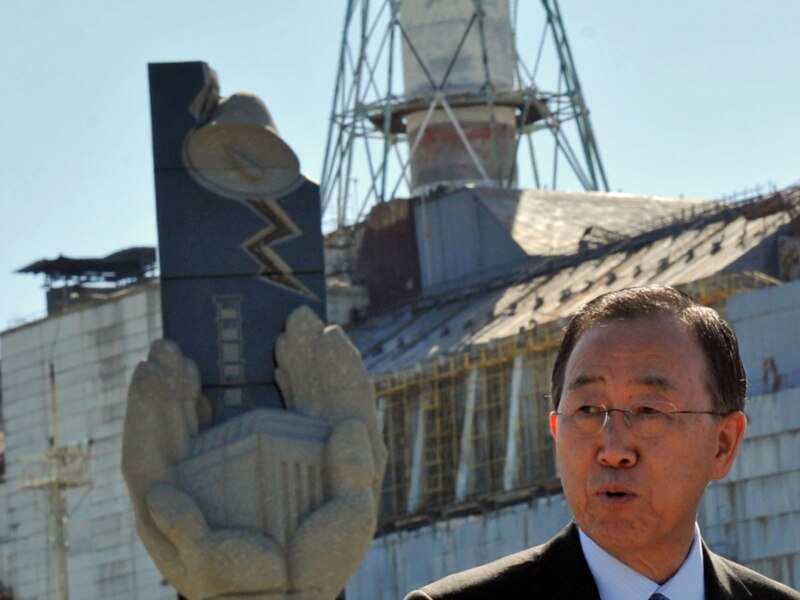
Describing his visit as an "extremely moving experience," Ban also pushed for new international standards that would hold countries accountable for nuclear safety, calling on governments to implement better information sharing and stressing the need for "full transparency."
Transparency was not on the agenda in Soviet-era Ukraine when the Chornobyl disaster struck. Information was kept to a minimum as the Soviet government in Moscow appeared more concerned with protecting its reputation than protecting its citizens. In the crucial early days after the explosion, the authorities did their utmost to cover up the immensity of the disaster.
Churikova's family knew about the incident more quickly than many Ukrainians, thanks to her father's ties to the military. At the same time, the lack of information led to an atmosphere of intense paranoia in Kyiv, which is located just 100 kilometers south of Chornobyl.
For the latest news on an event that happened so close to home, Churikova says everyone relied on foreign media -- collectively referred to as "the voices" in Soviet Ukraine.
One day, while listening to foreign radio broadcasts in the hopes of learning more about what happened, the inquisitive 14-year-old heard an announcement that high levels of radiation had been detected in Sweden.
"Then I thought, 'Oh gosh, I didn't wash my hair in vain if they have radiation somewhere in Sweden -- that's very far from Kyiv,'" she says.
'Nothing To Worry About'
Basically, the authorities "tried to show the world that everything was normal," Churikova says, adding that they even "organized a cycling championship in Kyiv" in which people were expected to take their bicycles out and spend time outside. But she says people were already trying to escape the city.
The government appears to have spared no effort in convincing citizens to stay. Churikova says the 6-year-old grandson of Ukraine's then-Communist Party leader, Volodymyr Shcherbitskiy, was paraded around the capital as part of the annual May Day festivities in an effort to calm panic-stricken parents.
Meanwhile, rumors circulated about the best ways to offset the contamination. Churikova's grandmother would slip iodine into her food in one popular treatment that turned out to be largely ineffective.
People would believe almost anything. They were "drinking red wine," she says, "believing that it was cleaning the system because they have heard that Soviet submarine sailors, they were given red wine as part of their daily diet to clean the system from the radiation."
"But some people," she adds with a laugh, "took it further and they just decided that any alcohol will do the job."
The authorities, for their part, joined the rumor mill by airing TV segments with "so-called experts," Churikova says, who would appear on screen "and with a straight face explain that small doses of radiation were beneficial for rats' health."
Churikova says the reasoning went that "it could be beneficial for human health, too."
However, the charade convinced no one. Fear abounded in Kyiv and a new word, "radiophobia" was being used to describe the panic setting in.
"I've heard stories of people sending [off] their children," Churikova says, "packing them away into trains with notes that [said], 'Here is the name of my kid, take care of him.'"
Churikova went to Crimea on Ukraine's Black Sea coast. She later left Ukraine to study in Tashkent, Uzbekistan.
Chornobyl's Children
The children who were in Chornobyl at the time of the accident, meanwhile, were the subject of an international campaign aimed at providing them with world-class medical treatment abroad -- something that worried the Soviet authorities, who were then fearful of foreign influences.
The Chernobyl Children International project, an Irish-led initiative, which was eventually brought under the wing of the United Nations, ultimately provided 21,000 children with some form of medical treatment.
Churikova herself accompanied a group of them to Australia. She says this encounter with the non-Soviet world produced "a whole generation" of young people who were less easily persuaded by the Soviet narrative.
But at the time, Churikova wasn't thinking about the geopolitical ramifications of the disaster. She was more concerned about losing one of her favorite T-shirts because of the radiation, explaining that as soon as they arrived after traveling to a city far from Chornobyl they were taken to a medical facility for testing.
The clothes they arrived in had to be destroyed because they had accumulated too much radiation, she says, recalling, "I had a beautiful blue T-shirt, acrylic T-shirt, which I had to say goodbye to."
Beloved personal belongings were just the beginning. In the end, the victims of Chornobyl had to part with much more, as some saw the disaster take their very lives.
RFE/RL's Ukrainian Service, as well as correspondents Grant Podelco and Pavel Butorin, contributed to this report