


"Dawn rolling over, the clouds bring the rain. It's time to start over, time to join hands." These were the first lines of the theme song for Kosovo's campaign last year to reach out to the world. The lyrics give a good idea of the country's continuing challenges.
On February 17, Kosovo celebrates the third anniversary of its independence. Despite the unending debate about Kosovo's unilateral secession from Serbia, the country is gradually consolidating its statehood. The political, social, and economic difficulties are still enormous; International ties are thin, but growing.
Recent months have been intense for Kosovo. In September 2010, President Fatmir Sejdiu resigned after the Constitutional Court ruled he had breached the constitution by staying on as a party leader while in office. In October 2010, the coalition partner Democratic League of Kosovo (LDK) withdrew from government with the Democratic Party of Kosovo (PDK). In November 2010, parliament passed a vote of no confidence.
Shortly after that, Kosovo held its first parliamentary elections since declaring independence. The results confirmed a simple majority for the PDK, which is about to form a new government with various smaller parties. The events were a serious test for the young democracy.
Organ Trafficking, Organized Crime, Corruption
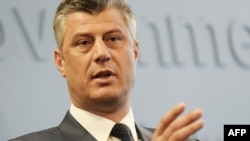
Kosovo is struggling with its image in the news these days. Prime Minister Hashim Thaci has recently been linked to a variety of heinous crimes, including war crimes, in a report by the Council of Europe. The EU Rule of Law Mission to Kosovo, EULEX, will open preliminary investigations if evidence is provided.
Such allegations have tarnished the government's legitimacy in the past. A Swiss newspaper argued that Kosovo's "founding myth" of a just war is at stake. Though individual politicians are put in the spotlight, the entire country's image abroad is once more shattered.
These reports undermine the country's positive achievements. As the European Union Progress Report 2010 highlights, the Kosovar parliament has made progress on institution-building. Kosovo has made significant steps forward regarding decentralization. The government has launched judicial reforms. The turnout of ethnic-Serb voters increased in the last elections, a sign of improved integration. Kosovo even made "The New York Times" list of desirable travel destinations for 2011.
International Limbo
Nonetheless, Kosovo remains in international limbo. Only 75 out of 192 states have recognized the new state. Though the International Court of Justice ruled that Kosovo's declaration of independence was not illegal under international law, about two thirds of the international community is reluctant to establish formal contacts. Most recently, Oman, Guinea Bissau, and Qatar established diplomatic relations.
The EU is divided: Greece, Romania, Spain, Cyprus, and Slovakia rejected a joint EU decision on Kosovo's status. Africa, South America, the Middle East, and Asia simply do not have Kosovo on their radar.
Legally, there is no fixed number of recognitions at which a country becomes internationally accepted. For UN membership, the Security Council must agree. Admission, however, is difficult at the moment because Russia or China would likely use their veto power. Russian UN envoy Vitaly Churkin has already made clear that Moscow will not allow the cancelation of UN Resolution 1244, which confirms Serbia's territorial integrity. At the same time, however, Russia has recognized the independence of Georgia's breakaway regions Abkhazia and South Ossetia.
'Male, Unmarried, Under 30? Good Luck'
Further recognitions are crucial for Kosovo's development. In a report by the Soros Foundation, Kosovo was listed as one of the most isolated countries in the world. Kosovo is behind even Afghanistan on the issue of visa liberalization. Afghani passport holders can cross 22 borders without restrictions, while Kosovars can only travel to five countries visa-free: Turkey, Albania, Montenegro, Macedonia, and Haiti. "Male, unmarried, under 30? Good luck," can be often heard among the lines in front of the consulates in Pristina.
Education and job opportunities outside Kosovo are an impossible dream. Options are limited for young Kosovars facing an unemployment rate of 40-45 percent, perhaps the highest in Europe.
Kosovo businesses also suffer. Domestic commerce documents are simply not recognized overseas due to the lack of diplomatic relations. Insurance rates for Kosovo are still among the most expensive in the world. Although Kosovo imports goods and services worth around $200 million from neighboring countries such as Serbia and Bosnia-Herzegovina, it is impossible for Kosovo to reciprocate exports. The reason is not a shortage of capacities, but the lack of recognition.
The Economic Initiative for Kosova (ECIKS) announced that trade of "Made in Kosova" products has increased slightly. The renewal of the EU preferential trade agreement, meanwhile, failed. Goods from Kosovo brought into the market of the European Union will be subject to extra tariffs.
No Telephone Code
And the list goes on. Kosovo cannot receive its own web IP address, inhibiting online purchasing, Internet banking, and national cybersecurity. The country has no international postal or telephone code. Mobile phone calls are channeled through Slovenia or Monaco at considerable expense. The lifting of air-traffic restrictions is expected to be addressed in the next talks between Belgrade and Pristina.
Kosovo athletes cannot even join international sports associations. Taiwan is a member of the International Olympic Committee (IOC), yet it is recognized by only 23 states. The world judo junior champion, a Kosovar, will most probably need to emigrate to compete in the 2012 London Olympics.
The Balkans are changing. The region is no longer what was in Yugoslav times. Whereas the role of the predominantly Serbian-populated north of Kosovo might give some leverage in negotiations, Belgrade is aware that the independence of Kosovo is irreversible.
Statistically, eight countries sent recognition letters in 2010. The year before, that figure was 11. By comparison, more UN members recognize the Palestinian state.
Countries indifferent to Kosovo's independence have not been approached persistently enough. Kosovo has established 20 embassies, but not one of them is in Africa, South America, or Southeast Asia. A strategy that still bears potential is the "Big Brothers-Big Sisters" principle: Ankara and Riyadh could be reactivated as catalysts to lobby for Kosovo in the Middle East; Lima and San Jose for Latin America; Japan and South Korea for Southeast Asia.
"The sun slowly rising, shining on earth. The sky's open-minded today." The last stanza of Kosovo's nation-branding ad sounds euphemistic. Bringing Kosovo fully onto the international map will require intensified efforts from both inside and outside Kosovo.
Martin Waehlisch is a senior researcher at the Center for Peace Mediation/Institute for Conflict Management at the European University Viadrina and the Humboldt-Viadrina School of Governance. Behar Xharra is the Empedocle Maffia fellow at the Center for International Conflict Resolution, Columbia University. The views expressed in this commentary are the authors' own and do not necessarily reflect those of RFE/RL or any other institutions
On February 17, Kosovo celebrates the third anniversary of its independence. Despite the unending debate about Kosovo's unilateral secession from Serbia, the country is gradually consolidating its statehood. The political, social, and economic difficulties are still enormous; International ties are thin, but growing.
Recent months have been intense for Kosovo. In September 2010, President Fatmir Sejdiu resigned after the Constitutional Court ruled he had breached the constitution by staying on as a party leader while in office. In October 2010, the coalition partner Democratic League of Kosovo (LDK) withdrew from government with the Democratic Party of Kosovo (PDK). In November 2010, parliament passed a vote of no confidence.
Shortly after that, Kosovo held its first parliamentary elections since declaring independence. The results confirmed a simple majority for the PDK, which is about to form a new government with various smaller parties. The events were a serious test for the young democracy.
Organ Trafficking, Organized Crime, Corruption
Kosovo is struggling with its image in the news these days. Prime Minister Hashim Thaci has recently been linked to a variety of heinous crimes, including war crimes, in a report by the Council of Europe. The EU Rule of Law Mission to Kosovo, EULEX, will open preliminary investigations if evidence is provided.
Such allegations have tarnished the government's legitimacy in the past. A Swiss newspaper argued that Kosovo's "founding myth" of a just war is at stake. Though individual politicians are put in the spotlight, the entire country's image abroad is once more shattered.
These reports undermine the country's positive achievements. As the European Union Progress Report 2010 highlights, the Kosovar parliament has made progress on institution-building. Kosovo has made significant steps forward regarding decentralization. The government has launched judicial reforms. The turnout of ethnic-Serb voters increased in the last elections, a sign of improved integration. Kosovo even made "The New York Times" list of desirable travel destinations for 2011.
International Limbo
Nonetheless, Kosovo remains in international limbo. Only 75 out of 192 states have recognized the new state. Though the International Court of Justice ruled that Kosovo's declaration of independence was not illegal under international law, about two thirds of the international community is reluctant to establish formal contacts. Most recently, Oman, Guinea Bissau, and Qatar established diplomatic relations.
The EU is divided: Greece, Romania, Spain, Cyprus, and Slovakia rejected a joint EU decision on Kosovo's status. Africa, South America, the Middle East, and Asia simply do not have Kosovo on their radar.
Legally, there is no fixed number of recognitions at which a country becomes internationally accepted. For UN membership, the Security Council must agree. Admission, however, is difficult at the moment because Russia or China would likely use their veto power. Russian UN envoy Vitaly Churkin has already made clear that Moscow will not allow the cancelation of UN Resolution 1244, which confirms Serbia's territorial integrity. At the same time, however, Russia has recognized the independence of Georgia's breakaway regions Abkhazia and South Ossetia.
'Male, Unmarried, Under 30? Good Luck'
Further recognitions are crucial for Kosovo's development. In a report by the Soros Foundation, Kosovo was listed as one of the most isolated countries in the world. Kosovo is behind even Afghanistan on the issue of visa liberalization. Afghani passport holders can cross 22 borders without restrictions, while Kosovars can only travel to five countries visa-free: Turkey, Albania, Montenegro, Macedonia, and Haiti. "Male, unmarried, under 30? Good luck," can be often heard among the lines in front of the consulates in Pristina.
Education and job opportunities outside Kosovo are an impossible dream. Options are limited for young Kosovars facing an unemployment rate of 40-45 percent, perhaps the highest in Europe.
Kosovo businesses also suffer. Domestic commerce documents are simply not recognized overseas due to the lack of diplomatic relations. Insurance rates for Kosovo are still among the most expensive in the world. Although Kosovo imports goods and services worth around $200 million from neighboring countries such as Serbia and Bosnia-Herzegovina, it is impossible for Kosovo to reciprocate exports. The reason is not a shortage of capacities, but the lack of recognition.
The Economic Initiative for Kosova (ECIKS) announced that trade of "Made in Kosova" products has increased slightly. The renewal of the EU preferential trade agreement, meanwhile, failed. Goods from Kosovo brought into the market of the European Union will be subject to extra tariffs.
No Telephone Code
And the list goes on. Kosovo cannot receive its own web IP address, inhibiting online purchasing, Internet banking, and national cybersecurity. The country has no international postal or telephone code. Mobile phone calls are channeled through Slovenia or Monaco at considerable expense. The lifting of air-traffic restrictions is expected to be addressed in the next talks between Belgrade and Pristina.
Kosovo athletes cannot even join international sports associations. Taiwan is a member of the International Olympic Committee (IOC), yet it is recognized by only 23 states. The world judo junior champion, a Kosovar, will most probably need to emigrate to compete in the 2012 London Olympics.
The Balkans are changing. The region is no longer what was in Yugoslav times. Whereas the role of the predominantly Serbian-populated north of Kosovo might give some leverage in negotiations, Belgrade is aware that the independence of Kosovo is irreversible.
Statistically, eight countries sent recognition letters in 2010. The year before, that figure was 11. By comparison, more UN members recognize the Palestinian state.
Countries indifferent to Kosovo's independence have not been approached persistently enough. Kosovo has established 20 embassies, but not one of them is in Africa, South America, or Southeast Asia. A strategy that still bears potential is the "Big Brothers-Big Sisters" principle: Ankara and Riyadh could be reactivated as catalysts to lobby for Kosovo in the Middle East; Lima and San Jose for Latin America; Japan and South Korea for Southeast Asia.
"The sun slowly rising, shining on earth. The sky's open-minded today." The last stanza of Kosovo's nation-branding ad sounds euphemistic. Bringing Kosovo fully onto the international map will require intensified efforts from both inside and outside Kosovo.
Martin Waehlisch is a senior researcher at the Center for Peace Mediation/Institute for Conflict Management at the European University Viadrina and the Humboldt-Viadrina School of Governance. Behar Xharra is the Empedocle Maffia fellow at the Center for International Conflict Resolution, Columbia University. The views expressed in this commentary are the authors' own and do not necessarily reflect those of RFE/RL or any other institutions