



"If you think you are leading and no one is following you, then you are only taking a walk," cautions an old Afghan proverb. Afghan politicians across the spectrum continued treading the path of corruption during September's parliamentary polls, which began with the Independent Elections Commission's (IEC) closure of more than 1,000 polling stations and ended with the same electoral body voiding more than 20 percent of the ballots and disqualifying 21 elected officials.
Sadly, fraud and a host of other problems in post-Taliban Afghanistan's political processes have come to be expected by the international community and the Afghan political elite. While a great number of failed candidates and their supporters have launched protests, little is discussed of the fact that a combination of factors have resulted in a dramatic reduction in the representation of ethnic Pashtuns.
For better or worse, the Pashtuns, who form the largest ethnic group in this vast country, have for centuries held a majority stake in the power structures. Manipulation of the ethnic power balance -- more succinctly, the marginalization of the Pashtuns -- can potentially carry calamitous consequences, as it is mainly in the so-called Pashtun belt that the insurgency is actively seeking recruits.
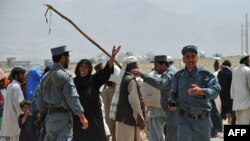
Numerous Pashtun politicians have stepped up to express their alarm and condemn what they believe was the IEC's arbitrary closure of polling stations in predominately Pashtun-inhabited areas, the "unconstitutional" cancellation of more than 20 percent of the ballots, and the "unjust" disqualification of dozens of candidates.
Under Article 57 of the Afghan Election Law, the IEC can quarantine suspected ballot boxes and can only open and verify the votes in the presence of representatives from among the candidates. Instead, the commission unilaterally cancelled 1.3 million ballots. On the basis of this allegedly deliberate oversight, Afghan legal experts claim that the final results have been rendered illegal and illegitimate.
Ironically, the United Nations and EU representatives in Kabul were among the first to approve the parliamentary results and called it a success for Afghan democracy. An even greater irony lies in the fact that the final results are being contested by the government, rather than the opposition. Afghan President Hamid Karzai now finds himself in an awkward position. Though he has managed to insert many of his candidates in the new parliament, he faces the wrath of his fellow Pashtuns and the realization that the opposition has gotten a dangerously high number of their people in as well.
Karzai-appointed Attorney General Mohammad Ishaq Aleko has made noise about the illegitimacy of the polls, claiming that the outcome was "bought and sold" by powerful, well-connected Afghans who keep their money in Dubai.
IEC head Fazl Ahmad Manawi, who had reportedly refused to withhold the final results despite repeated requests from the president's office, predictably dismissed these accusations. Manawi, an ethnic Tajik from Panjsher -- and a follower of former presidential contender Abdullah Abdullah -- was appointed to the post as part of a larger deal made following last summer's presidential elections.
The 2009 electoral fiasco ended with promises and compromises reached between the incumbent and his challenger, notably the replacement of the president's trusted IEC chief, Azizullah Ludin, by the then seemingly harmless Manawi. The agreement also entailed a stronger role for the Election Complaints Commission (ECC), and the appointment of Ahmad Zia Rifat, a member of Abdullah's Movement for Change and Hope, as official spokesman and one of five commissioners.
Although it remains to be proven, Manawi's IEC has been accused in certain quarters of politically motivated closure of polling stations in Pashtun districts under the pretext of "insecurity." Additionally, the Rifat-led ECC has been accused of unlawfully invalidating tens of thousands of votes cast for Pashtun candidates or for those who were not endorsed by Abdullah's movement.
The petty shortsightedness of both sides has thus brought the Afghan nation to heightened ethnic tensions and further fragmentation.
Roots Of The Problem
But let us backtrack a little. Karzai's myopia began as early as 2003, when the then-almost-post-conflict country was deciding on which electoral system to adopt. He insisted on a peculiar version of the Single Non-Transferable Vote (SNTV), which, simply put, stipulates that candidates cannot represent parties. Moreover, in the absence of reliable censuses and a definitive demarcation of district boundaries, arbitrary seat allocations were given to provinces, instead of districts or electoral constituencies. Both features have contributed to facilitating fraud and rendering outcomes unpredictable.
A case in point is Ghazni Province, which was allocated 11 representatives who have all turned out to be ethnic Hazaras in this round of elections, since polling centers in nine Pashtun districts were deemed "insecure" by the IEC and never opened. Only three votes were found from ballot boxes in the entire Pashtun district of Andar. As a result, Ghazni will most probably be lost to the insurgency, and the rest of the Pashtun-belt will likely share a similar destiny.
Another example is Baghlan Province, where the ECC disqualified ballots cast at 172 polling stations (out of a total of 566), mostly in the "insecure" Pashtun districts. The move significantly affected the list of election winners in Baghlan -- only one Pashtun was elected to parliament from this province.
Karzai believed this electoral system would work in his favor, preventing political parties from posing a serious challenge to him. But, he underestimated three crucial factors.
First, the Hazaras, who for centuries have endured being at the bottom of the ethnic food chain, have now emerged as a magnificently organized political mass. Though small in numbers and suffering from a degree of internal discord, they have showcased their mastery in careful calculations for fielding candidates and exploiting every single vote.
Second, the Tajiks within Abdullah's movement used the same loopholes and methods that the president established for his own benefit. As per their claim, the Movement for Change and Hope has succeeded in sending close to 130 deputies to the House of Representatives, turning their loss in the presidential election of 2009 into a spectacular recovery.
Third, and in stark contrast, the Pashtuns have failed to form a united political front, motivate their constituency, or produce credible leaders who could intelligently articulate their political platform. Being traditionally weak in political organization , the Pashtun cause has not been aided by Afghanistan's blundering president, who has deliberately tried to keep Pashtun leaders of the unarmed opposition in close check and methodically weaken them by creating divisions among prominent and emerging Pashtun leaders, in a clumsy bid to maintain his own position.
The international community has footed the $147 million cost of this political charade. Beyond words of reproach or condemnation, world leaders now seem to have nothing more to offer the long-suffering Afghan nation, as if it is enough that they bought them an election and now are entitled to disengage at will from Afghanistan's nation-building process. The US-led NATO states know full well that the Afghan people will ultimately pay a greater price as the country degenerates into ethnic strife. Instead of turning a blind eye to obviously Machiavellian tactics and in some cases, even encouraging ethnic fragmentation, the international community could step in to play a role in restoring faith in the democratic processes.
Pashtuns are not known to react quickly, but when they do, their reaction comes in the manner of Noah's flood. Note the rise of the Taliban in 1994, which in great part was a reaction to Pashtuns being pushed to the corner and a result of the world abandoning an ethnically fragmented Afghanistan to its neighbors.
The world's disengagement will once again turn Afghanistan into the "no man's land" that the early leaders of Al-Qaeda made their headquarters in the mid-1990s. Unless the world is prepared to deal with the deluge that will follow, it must seriously ponder the consequences of disengaging from Afghanistan's nation-building process. The United States, its Western allies, and Afghan politicians must choose if they truly want to lead or merely stroll down the road to perdition.
Helena Malikyar is an expert on Afghan state-building. Tanya Goudsouzian is a journalist who has covered Afghanistan since 2001. The views expressed in this commentary are the authors' own, and do not necessarily reflect those of RFE/RL.
Sadly, fraud and a host of other problems in post-Taliban Afghanistan's political processes have come to be expected by the international community and the Afghan political elite. While a great number of failed candidates and their supporters have launched protests, little is discussed of the fact that a combination of factors have resulted in a dramatic reduction in the representation of ethnic Pashtuns.
For better or worse, the Pashtuns, who form the largest ethnic group in this vast country, have for centuries held a majority stake in the power structures. Manipulation of the ethnic power balance -- more succinctly, the marginalization of the Pashtuns -- can potentially carry calamitous consequences, as it is mainly in the so-called Pashtun belt that the insurgency is actively seeking recruits.
Numerous Pashtun politicians have stepped up to express their alarm and condemn what they believe was the IEC's arbitrary closure of polling stations in predominately Pashtun-inhabited areas, the "unconstitutional" cancellation of more than 20 percent of the ballots, and the "unjust" disqualification of dozens of candidates.
Under Article 57 of the Afghan Election Law, the IEC can quarantine suspected ballot boxes and can only open and verify the votes in the presence of representatives from among the candidates. Instead, the commission unilaterally cancelled 1.3 million ballots. On the basis of this allegedly deliberate oversight, Afghan legal experts claim that the final results have been rendered illegal and illegitimate.
Ironically, the United Nations and EU representatives in Kabul were among the first to approve the parliamentary results and called it a success for Afghan democracy. An even greater irony lies in the fact that the final results are being contested by the government, rather than the opposition. Afghan President Hamid Karzai now finds himself in an awkward position. Though he has managed to insert many of his candidates in the new parliament, he faces the wrath of his fellow Pashtuns and the realization that the opposition has gotten a dangerously high number of their people in as well.
Karzai-appointed Attorney General Mohammad Ishaq Aleko has made noise about the illegitimacy of the polls, claiming that the outcome was "bought and sold" by powerful, well-connected Afghans who keep their money in Dubai.
IEC head Fazl Ahmad Manawi, who had reportedly refused to withhold the final results despite repeated requests from the president's office, predictably dismissed these accusations. Manawi, an ethnic Tajik from Panjsher -- and a follower of former presidential contender Abdullah Abdullah -- was appointed to the post as part of a larger deal made following last summer's presidential elections.
The 2009 electoral fiasco ended with promises and compromises reached between the incumbent and his challenger, notably the replacement of the president's trusted IEC chief, Azizullah Ludin, by the then seemingly harmless Manawi. The agreement also entailed a stronger role for the Election Complaints Commission (ECC), and the appointment of Ahmad Zia Rifat, a member of Abdullah's Movement for Change and Hope, as official spokesman and one of five commissioners.
Although it remains to be proven, Manawi's IEC has been accused in certain quarters of politically motivated closure of polling stations in Pashtun districts under the pretext of "insecurity." Additionally, the Rifat-led ECC has been accused of unlawfully invalidating tens of thousands of votes cast for Pashtun candidates or for those who were not endorsed by Abdullah's movement.
The petty shortsightedness of both sides has thus brought the Afghan nation to heightened ethnic tensions and further fragmentation.
Roots Of The Problem
But let us backtrack a little. Karzai's myopia began as early as 2003, when the then-almost-post-conflict country was deciding on which electoral system to adopt. He insisted on a peculiar version of the Single Non-Transferable Vote (SNTV), which, simply put, stipulates that candidates cannot represent parties. Moreover, in the absence of reliable censuses and a definitive demarcation of district boundaries, arbitrary seat allocations were given to provinces, instead of districts or electoral constituencies. Both features have contributed to facilitating fraud and rendering outcomes unpredictable.
A case in point is Ghazni Province, which was allocated 11 representatives who have all turned out to be ethnic Hazaras in this round of elections, since polling centers in nine Pashtun districts were deemed "insecure" by the IEC and never opened. Only three votes were found from ballot boxes in the entire Pashtun district of Andar. As a result, Ghazni will most probably be lost to the insurgency, and the rest of the Pashtun-belt will likely share a similar destiny.
Another example is Baghlan Province, where the ECC disqualified ballots cast at 172 polling stations (out of a total of 566), mostly in the "insecure" Pashtun districts. The move significantly affected the list of election winners in Baghlan -- only one Pashtun was elected to parliament from this province.
Karzai believed this electoral system would work in his favor, preventing political parties from posing a serious challenge to him. But, he underestimated three crucial factors.
First, the Hazaras, who for centuries have endured being at the bottom of the ethnic food chain, have now emerged as a magnificently organized political mass. Though small in numbers and suffering from a degree of internal discord, they have showcased their mastery in careful calculations for fielding candidates and exploiting every single vote.
Second, the Tajiks within Abdullah's movement used the same loopholes and methods that the president established for his own benefit. As per their claim, the Movement for Change and Hope has succeeded in sending close to 130 deputies to the House of Representatives, turning their loss in the presidential election of 2009 into a spectacular recovery.
Third, and in stark contrast, the Pashtuns have failed to form a united political front, motivate their constituency, or produce credible leaders who could intelligently articulate their political platform. Being traditionally weak in political organization , the Pashtun cause has not been aided by Afghanistan's blundering president, who has deliberately tried to keep Pashtun leaders of the unarmed opposition in close check and methodically weaken them by creating divisions among prominent and emerging Pashtun leaders, in a clumsy bid to maintain his own position.
The international community has footed the $147 million cost of this political charade. Beyond words of reproach or condemnation, world leaders now seem to have nothing more to offer the long-suffering Afghan nation, as if it is enough that they bought them an election and now are entitled to disengage at will from Afghanistan's nation-building process. The US-led NATO states know full well that the Afghan people will ultimately pay a greater price as the country degenerates into ethnic strife. Instead of turning a blind eye to obviously Machiavellian tactics and in some cases, even encouraging ethnic fragmentation, the international community could step in to play a role in restoring faith in the democratic processes.
Pashtuns are not known to react quickly, but when they do, their reaction comes in the manner of Noah's flood. Note the rise of the Taliban in 1994, which in great part was a reaction to Pashtuns being pushed to the corner and a result of the world abandoning an ethnically fragmented Afghanistan to its neighbors.
The world's disengagement will once again turn Afghanistan into the "no man's land" that the early leaders of Al-Qaeda made their headquarters in the mid-1990s. Unless the world is prepared to deal with the deluge that will follow, it must seriously ponder the consequences of disengaging from Afghanistan's nation-building process. The United States, its Western allies, and Afghan politicians must choose if they truly want to lead or merely stroll down the road to perdition.
Helena Malikyar is an expert on Afghan state-building. Tanya Goudsouzian is a journalist who has covered Afghanistan since 2001. The views expressed in this commentary are the authors' own, and do not necessarily reflect those of RFE/RL.