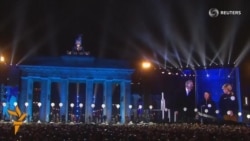
Celebrations marking 25 years since the fall of the Berlin Wall have culminated with fireworks, songs, and the release of thousands of glowing white balloons into the night sky.
The fanfare followed three days of emotional ceremonies during which throngs of Berliners and visitors remembered November 9, 1989, the day the wall that divided Cold War Europe and trapped millions of Germans in the communist east was breached.
German Chancellor Angela Merkel said the fall of the wall still sends a message of hope to oppressed people around the world.
"It's a message of encouragement to tear down other walls, walls of dictatorship, violence, ideologies and enmity," she said.
The Berlin State Orchestra played Beethoven's "Ode to Joy" as nearly 7,000 illuminated balloons floated up from a 15-kilometer stretch of the despised barrier's path.
Earlier, British singer Peter Gabriel sang a shortened version of David Bowie's wall anthem "Heroes," sharing the stage with former dissidents and rock bands from eastern and western Germany.
The anniversary took place at a time of deep tension between Russia and the West over the conflict in eastern Ukraine, where Kyiv and NATO accuse Moscow of lending military support to pro-Russian separatists trying to carve out new borders in Europe.
Former Soviet leader Mikhail Gorbachev, who warned on November 8 that a new Cold War was taking shape, said "now is not the time for recriminations. Let us work hard to restore confidence."
Merkel, who grew up in East Germany when it was a Soviet satellite, mourned the deaths of compatriots killed trying to make it over the wall and suggested that its fall was a triumph of right over wrong.
"The fall of the Berlin Wall showed us that dreams can come true -- and that nothing has to stay the way it is, no matter how high the hurdles might seem to be," she said.
"It showed that we have the power to shape our destiny and make things better. That is the message of the fall of the wall," Merkel added.
She said, "It is directed at us in Germany, but also at others in Europe and the world, especially to the people in Ukraine, in Syria, Iraq, and other regions where human rights are threatened or violated."
Pope Francis, speaking on November 9 during his weekly Sunday prayer at St. Peter's Square in the Vatican, said the Berlin Wall was "a symbol of the ideological division of Europe and the whole world."
"Where there is a wall, there is a closing of the heart. We need bridges, not walls," he said.
PHOTO GALLERY: Berlin 1961 -- When The Wall Went Up
When The Wall Went Up: Berlin 1961
1/10East German troops were prominently deployed following the division of East and West Berlin on August 13, 1961.
Germany is marking the 60th anniversary of the start of construction on the Berlin Wall, which split the nation into two rival political systems and became a symbol of the Cold War that stood for 28 years. (Originally published November 6, 2014)
Show moreShow less
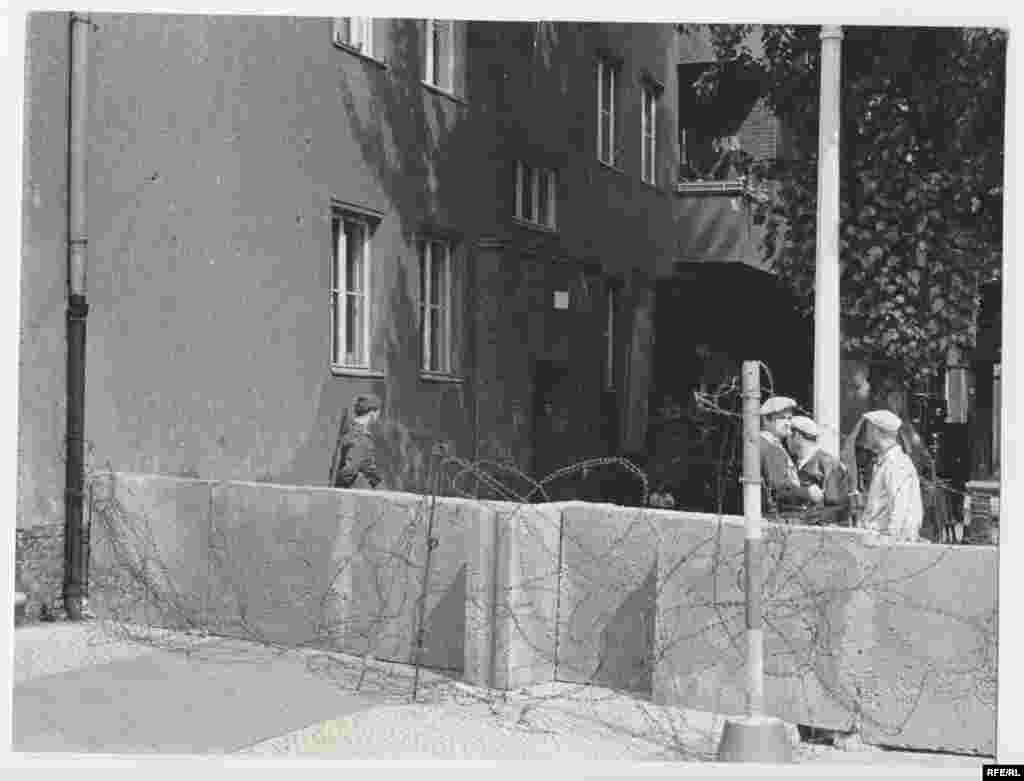
2/10East German police patrol a temporary, prefabricated section of the Berlin Wall.
After midnight on August 13, East German troops began erecting what Communist East German leader Walter Ulbricht called an "anti-fascist protection barrier." Two months earlier, on June 15, he had declared: "Nobody intends to build a wall."
Germany is marking the 60th anniversary of the start of construction on the Berlin Wall, which split the nation into two rival political systems and became a symbol of the Cold War that stood for 28 years. (Originally published November 6, 2014)
Show moreShow less
3/10A section of the temporary wall snaking through Berlin.
In the first week of the division of Berlin, East German authorities erected a barbed-wire fence, laid concertina wire, and mounted heavily armed patrols. The construction of the real wall would begin in the next week or so.
Germany is marking the 60th anniversary of the start of construction on the Berlin Wall, which split the nation into two rival political systems and became a symbol of the Cold War that stood for 28 years. (Originally published November 6, 2014)
Show moreShow less
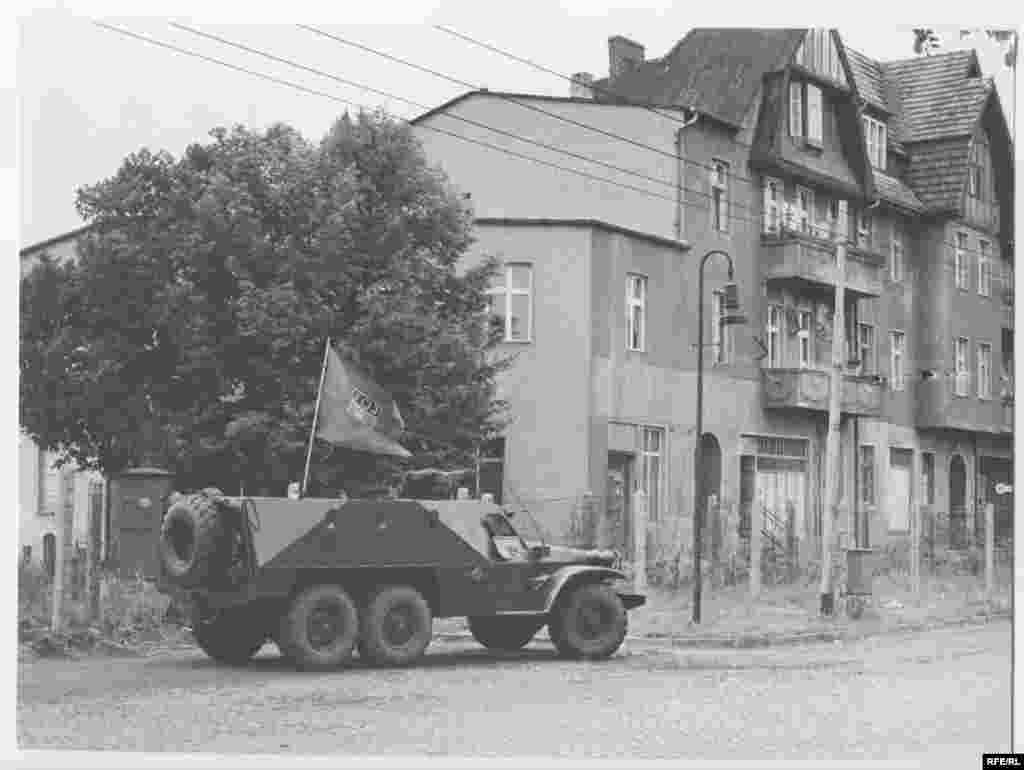
4/10An East German armored car patrols the zonal border between East and West Berlin in mid-August 1961.
Germany is marking the 60th anniversary of the start of construction on the Berlin Wall, which split the nation into two rival political systems and became a symbol of the Cold War that stood for 28 years. (Originally published November 6, 2014)
Show moreShow less
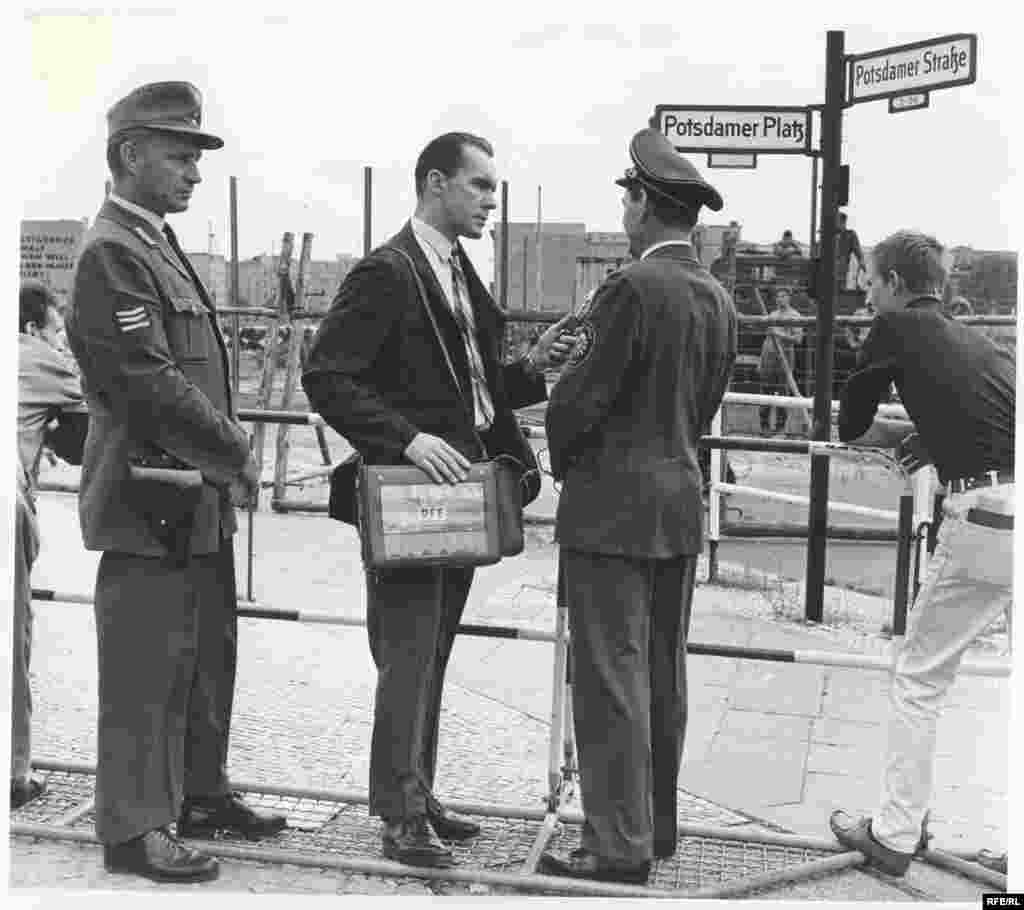
5/10William Marsh, Berlin bureau chief of Radio Free Europe, interviews a police official at Potsdamer Platz.
In the background, East German workers are erecting the permanent wall that bisected Potsdamer Platz and rendered the square a desolate wasteland.
Germany is marking the 60th anniversary of the start of construction on the Berlin Wall, which split the nation into two rival political systems and became a symbol of the Cold War that stood for 28 years. (Originally published November 6, 2014)
Show moreShow less
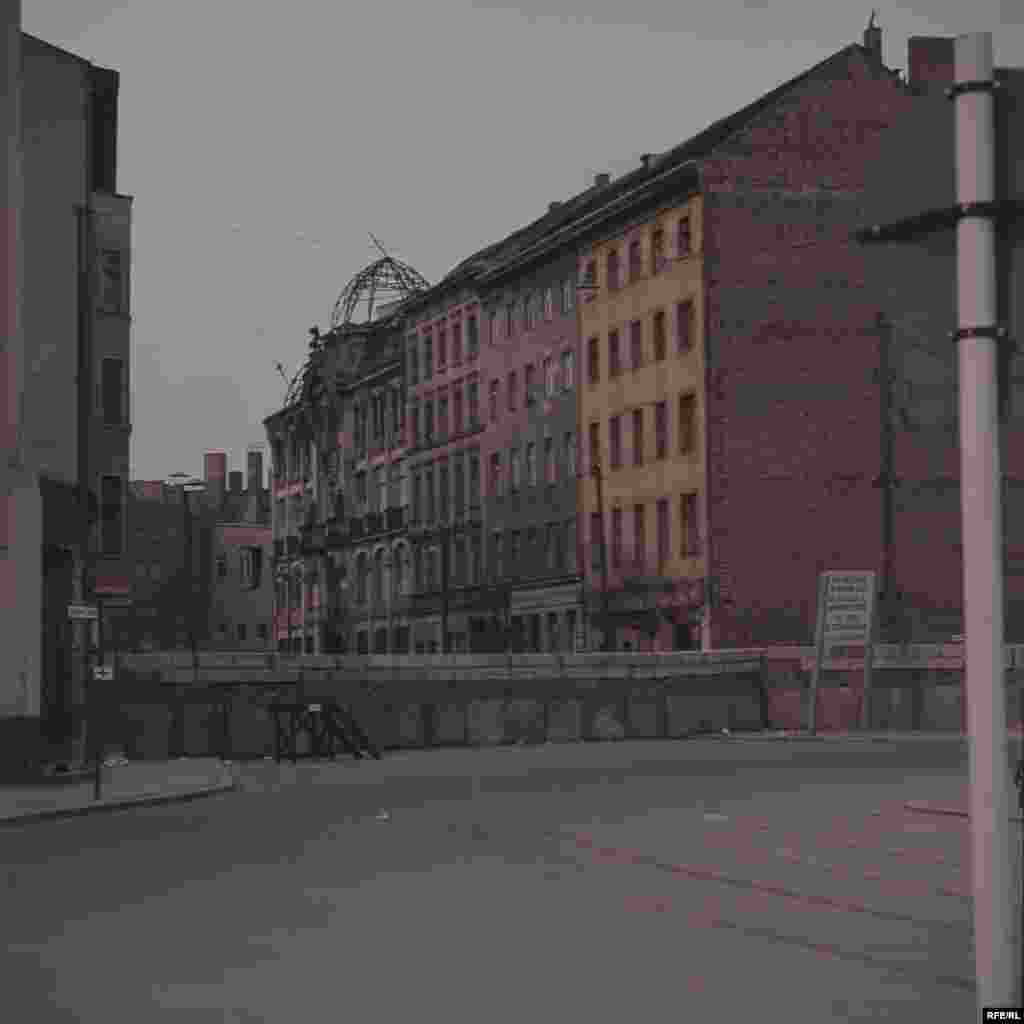
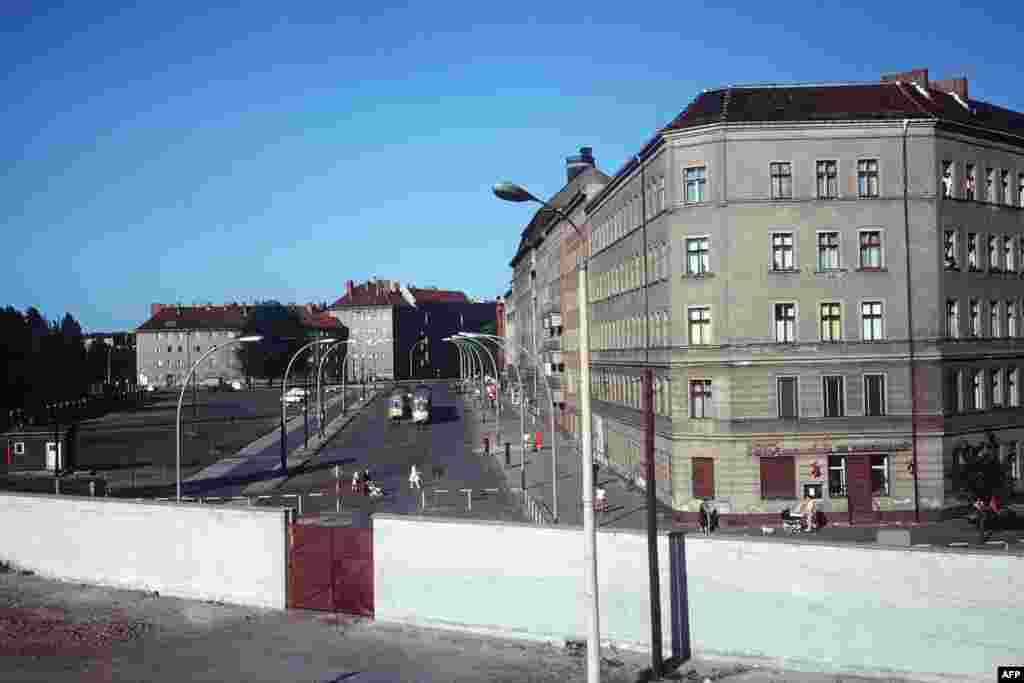
6/10View of the newly constructed Berlin Wall, looking from West to East.
On August 19, 1961, the wall claimed its first life as a man fell to his death trying to climb down from his top-floor apartment in East Berlin's Bernauerstrasse to the pavement below in West Berlin.
Germany is marking the 60th anniversary of the start of construction on the Berlin Wall, which split the nation into two rival political systems and became a symbol of the Cold War that stood for 28 years. (Originally published November 6, 2014)
Show moreShow less
7/10View of the newly constructed Berlin Wall, looking from West to East.
On August 24, 1961, 24-year-old Guenter Litfin was shot dead as he swam across the River Spree. The incident is generally accepted as the date of the first killing of a would-be escapee by border guards after the wall went up.
Germany is marking the 60th anniversary of the start of construction on the Berlin Wall, which split the nation into two rival political systems and became a symbol of the Cold War that stood for 28 years. (Originally published November 6, 2014)
Show moreShow less
8/10On August 17, 1962, 18-year-old Peter Fechter bled to death in the no-man's land between East and West Berlin after being shot trying to escape. Western cameramen recorded the scene for nearly an hour before guards took away his body.
Germany is marking the 60th anniversary of the start of construction on the Berlin Wall, which split the nation into two rival political systems and became a symbol of the Cold War that stood for 28 years. (Originally published November 6, 2014)
Show moreShow less
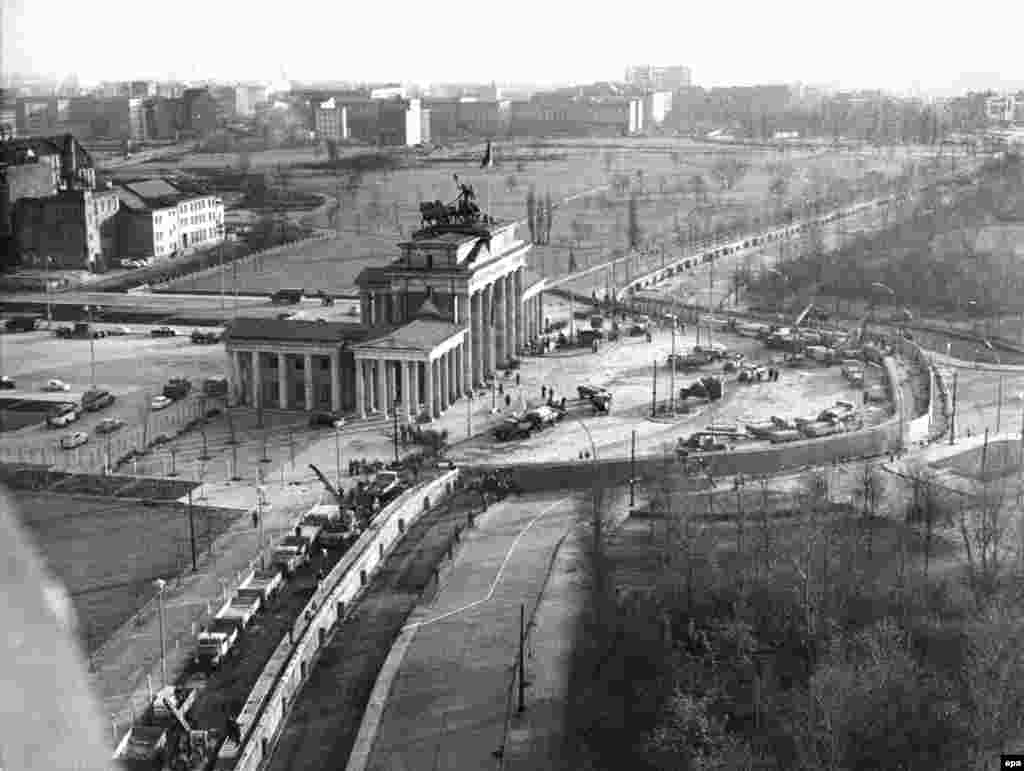
9/10The wall with the Brandenburg Gate in the background.
On June 12, 1987, near this site, U.S. President Ronald Reagan famously demanded of Soviet leader Mikhail Gorbachev: "Mr. Gorbachev, tear down this wall."
Germany is marking the 60th anniversary of the start of construction on the Berlin Wall, which split the nation into two rival political systems and became a symbol of the Cold War that stood for 28 years. (Originally published November 6, 2014)
Show moreShow less
10/10Looking through the Brandenburg Gate from West to East Berlin in 1961.
Germany is marking the 60th anniversary of the start of construction on the Berlin Wall, which split the nation into two rival political systems and became a symbol of the Cold War that stood for 28 years. (Originally published November 6, 2014)
Show moreShow less
Previous slide
Next slide
Built in 1961 to stop East Germans fleeing to the West, the Berlin Wall was the starkest embodiment of the Iron Curtain that divided Europe before the collapse of communism.
It began as a brick wall but was developed into a fortified, heavily guarded 155-kilometer barrier.
At least 138 people were killed trying to escape to West Berlin, before it was breached as communist governments across Eastern Europe collapsed in the face of popular uprisings.
"The day of joy over the fall of the Berlin wall is also a day of remembrance for its victims," Merkel said.
WATCH: When The Berlin Wall Tumbled In 1989 (natural sound)
Merkel also noted that November 9, 1938, was also the date of Kristallnacht, a state-sponsored spree of destruction of Jewish property under Adolf Hitler.
It was "a day of shame and disgrace," she said, adding "that's why I not only feel joy but also historic responsibility."
Commemorations in Berlin mixed memories of the jubilation unleashed by the fall of the wall with concern about new tensions between Russia and the West.
Relations are badly strained by Russia's annexation of Crimea and a conflict between government forces and pro-Russian separatists that has killed more than 4,000 people in eastern Ukraine since April.
PHOTO GALLERY: The RIse And Fall Of The Berlin Wall
The Rise And Fall Of The Berlin Wall
1/15Workers added to the barrier at Bernauer Strasse in Berlin in August 1961 after the border was sealed on the 13th.
On November 9, 2019, the world will mark the 30th anniversary of the fall of the Berlin Wall. The barrier between the eastern and western sectors of the German city began going up in 1961. On August 13 of that year, East German troops positioned themselves by the Brandenburg Gate and started sealing off the West-controlled part of Berlin.
Show moreShow less
2/15Construction work on the Berlin Wall at the Brandenburg Gate. The photo was taken on November 20, 1961.
On November 9, 2019, the world will mark the 30th anniversary of the fall of the Berlin Wall. The barrier between the eastern and western sectors of the German city began going up in 1961. On August 13 of that year, East German troops positioned themselves by the Brandenburg Gate and started sealing off the West-controlled part of Berlin.
Show moreShow less
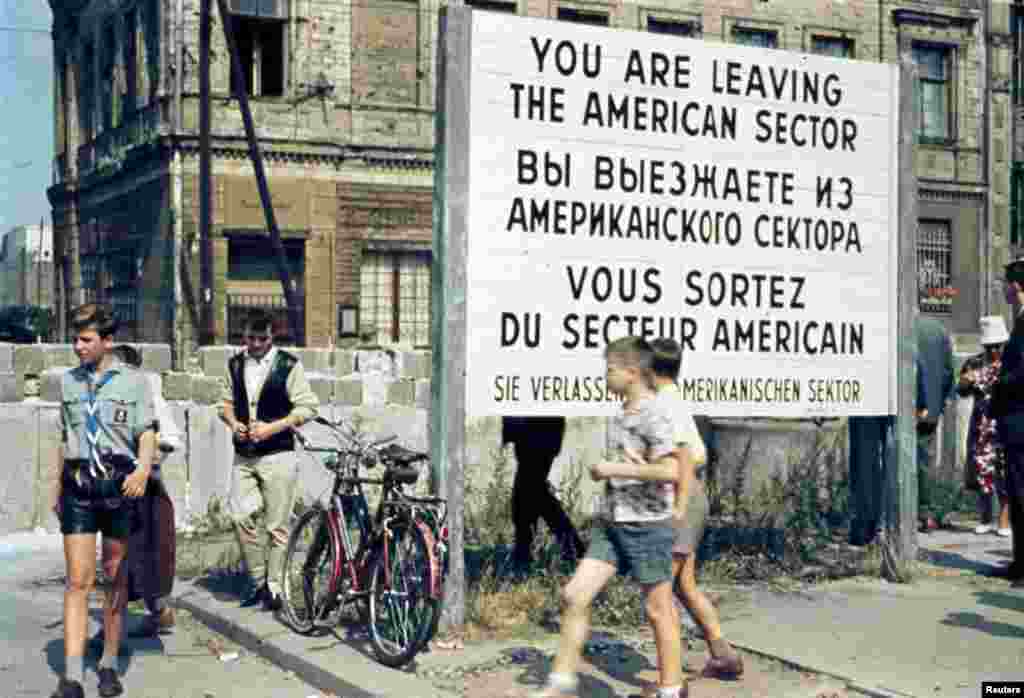
3/15West Berliners walk in front of the Berlin Wall at the American sector's "Checkpoint Charlie" in Berlin, July, 1963.
On November 9, 2019, the world will mark the 30th anniversary of the fall of the Berlin Wall. The barrier between the eastern and western sectors of the German city began going up in 1961. On August 13 of that year, East German troops positioned themselves by the Brandenburg Gate and started sealing off the West-controlled part of Berlin.
Show moreShow less
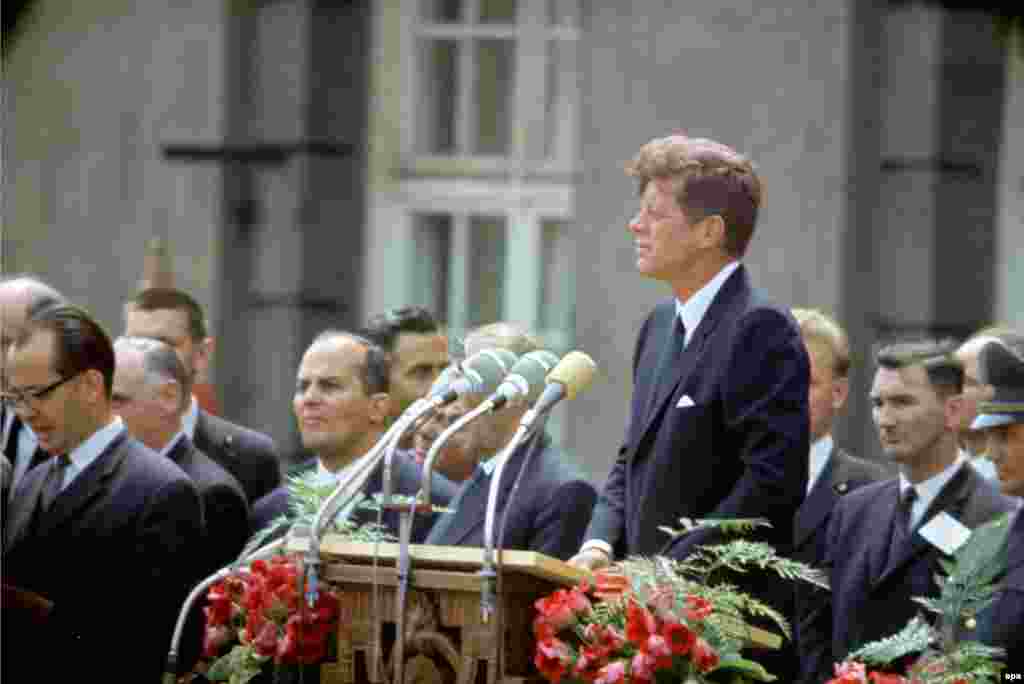
4/15U.S. President John F. Kennedy during his famous "Ich bin ein Berliner" (I am a Berliner) speechin front of the Schoeneberg town hall in Berlin, June 26, 1963.
On November 9, 2019, the world will mark the 30th anniversary of the fall of the Berlin Wall. The barrier between the eastern and western sectors of the German city began going up in 1961. On August 13 of that year, East German troops positioned themselves by the Brandenburg Gate and started sealing off the West-controlled part of Berlin.
Show moreShow less
5/15The Brandenburg Gate is seen through a barbed wire fence in June 1968.
On November 9, 2019, the world will mark the 30th anniversary of the fall of the Berlin Wall. The barrier between the eastern and western sectors of the German city began going up in 1961. On August 13 of that year, East German troops positioned themselves by the Brandenburg Gate and started sealing off the West-controlled part of Berlin.
Show moreShow less
6/15Picture taken in June 1968 of the famous "Checkpoint Charlie" crossing point, marking the border between East and West Berlin.
On November 9, 2019, the world will mark the 30th anniversary of the fall of the Berlin Wall. The barrier between the eastern and western sectors of the German city began going up in 1961. On August 13 of that year, East German troops positioned themselves by the Brandenburg Gate and started sealing off the West-controlled part of Berlin.
Show moreShow less
7/15A photograph of the Berlin Wall with East Berlin behind, taken in June 1968.
On November 9, 2019, the world will mark the 30th anniversary of the fall of the Berlin Wall. The barrier between the eastern and western sectors of the German city began going up in 1961. On August 13 of that year, East German troops positioned themselves by the Brandenburg Gate and started sealing off the West-controlled part of Berlin.
Show moreShow less
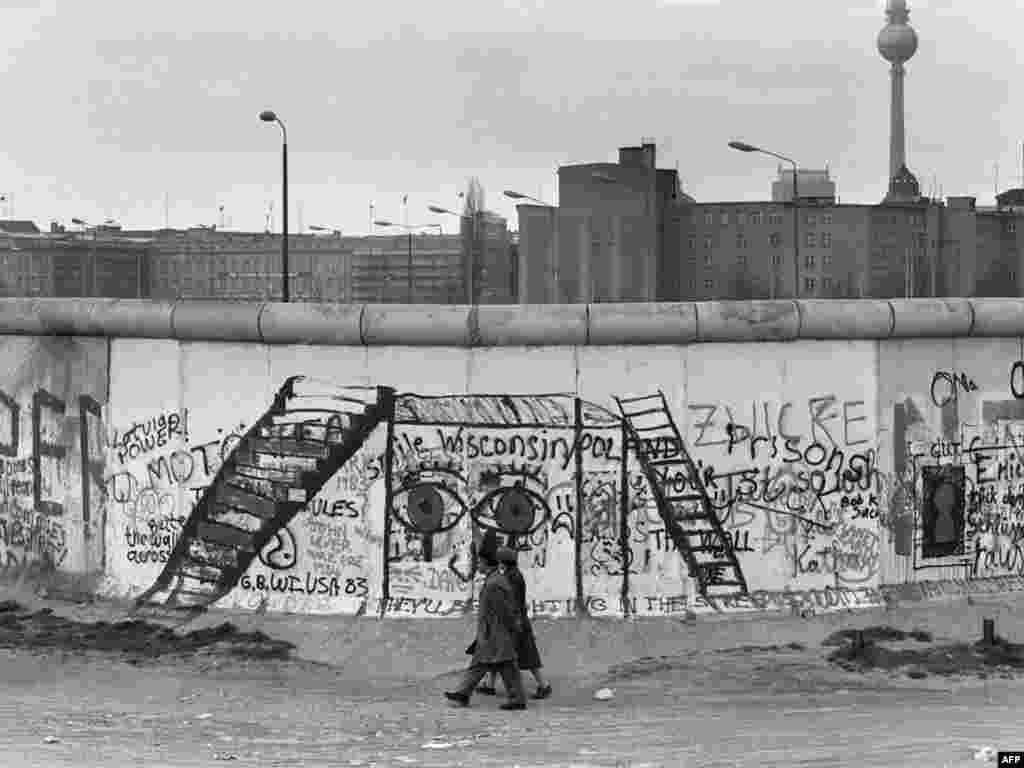
8/15The western side of the wall became a popular canvas for artists from all around the world. The heavily-guarded eastern side remained blank. Photo taken on April 29, 1984.
On November 9, 2019, the world will mark the 30th anniversary of the fall of the Berlin Wall. The barrier between the eastern and western sectors of the German city began going up in 1961. On August 13 of that year, East German troops positioned themselves by the Brandenburg Gate and started sealing off the West-controlled part of Berlin.
Show moreShow less
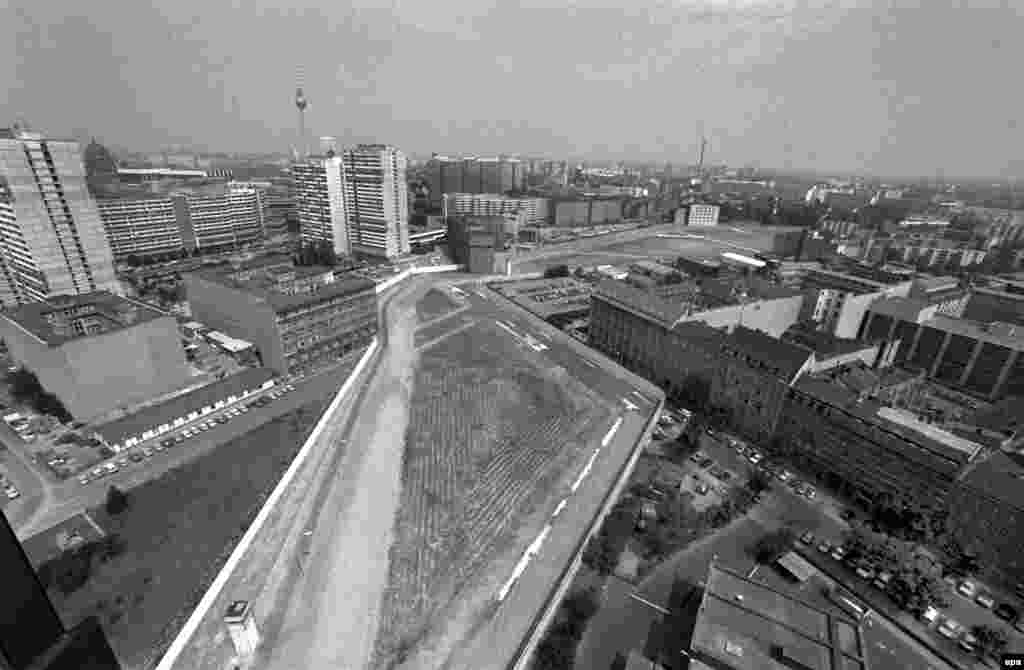
9/15A photograph from July 18, 1986, shows a view of divided Berlin near "Checkpoint Charlie."
On November 9, 2019, the world will mark the 30th anniversary of the fall of the Berlin Wall. The barrier between the eastern and western sectors of the German city began going up in 1961. On August 13 of that year, East German troops positioned themselves by the Brandenburg Gate and started sealing off the West-controlled part of Berlin.
Show moreShow less
10/15Berliners take a hammer and chisel to a section of the Berlin Wall in front of the Brandenburg Gate after the opening of the East German border was announced on November 9, 1989.
On November 9, 2019, the world will mark the 30th anniversary of the fall of the Berlin Wall. The barrier between the eastern and western sectors of the German city began going up in 1961. On August 13 of that year, East German troops positioned themselves by the Brandenburg Gate and started sealing off the West-controlled part of Berlin.
Show moreShow less
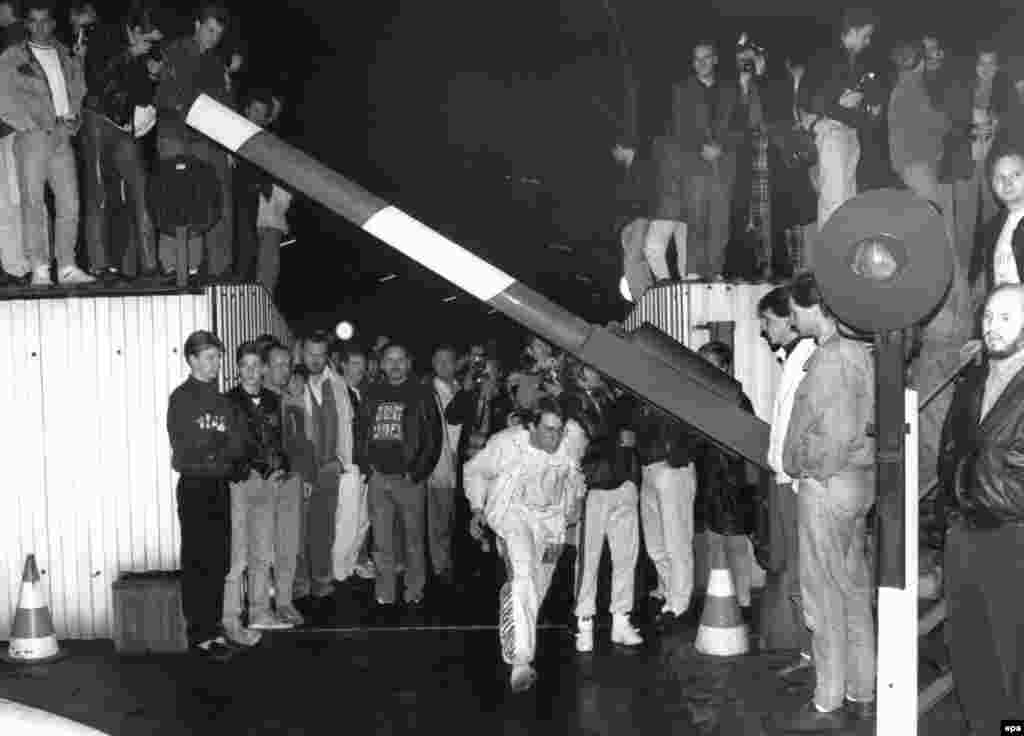
11/15A lifted border gate as seen from the eastern side of the Berlin Wall on November 9, 1989.
On November 9, 2019, the world will mark the 30th anniversary of the fall of the Berlin Wall. The barrier between the eastern and western sectors of the German city began going up in 1961. On August 13 of that year, East German troops positioned themselves by the Brandenburg Gate and started sealing off the West-controlled part of Berlin.
Show moreShow less
12/15Citizens from East and West Berlin embrace on November 10, 1989.
On November 9, 2019, the world will mark the 30th anniversary of the fall of the Berlin Wall. The barrier between the eastern and western sectors of the German city began going up in 1961. On August 13 of that year, East German troops positioned themselves by the Brandenburg Gate and started sealing off the West-controlled part of Berlin.
Show moreShow less
13/15East German Trabants make their way down Bavaria's A9 motorway near the former border checkpoint at Rudolphstein on November 11, 1989.
On November 9, 2019, the world will mark the 30th anniversary of the fall of the Berlin Wall. The barrier between the eastern and western sectors of the German city began going up in 1961. On August 13 of that year, East German troops positioned themselves by the Brandenburg Gate and started sealing off the West-controlled part of Berlin.
Show moreShow less
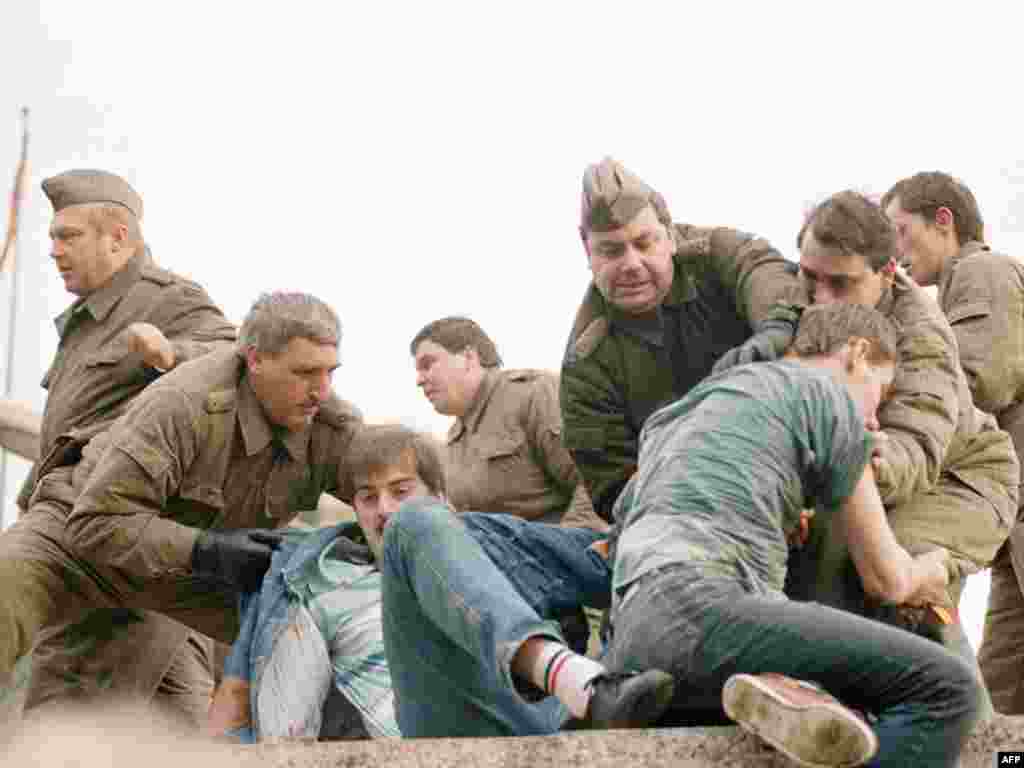
14/15East German authorities grapple with civilians atop the Berlin Wall near the Potsdamer Platz on November 11, 1989.
On November 9, 2019, the world will mark the 30th anniversary of the fall of the Berlin Wall. The barrier between the eastern and western sectors of the German city began going up in 1961. On August 13 of that year, East German troops positioned themselves by the Brandenburg Gate and started sealing off the West-controlled part of Berlin.
Show moreShow less
15/15An East German bulldozer and crane knock down the Berlin Wall at Potsdamer Platz to make way for a new border crossing on November 12, 1989.
On November 9, 2019, the world will mark the 30th anniversary of the fall of the Berlin Wall. The barrier between the eastern and western sectors of the German city began going up in 1961. On August 13 of that year, East German troops positioned themselves by the Brandenburg Gate and started sealing off the West-controlled part of Berlin.
Show moreShow less
Previous slide
Next slide
Gorbachev, whose political and economic reforms hastened the unraveling of Moscow's control over Eastern Europe and the collapse of the Soviet Union itself, warned in Berlin on November 8 that "the world is on the brink of a new Cold War."
Gorbachev accused the West, and particularly the United States, of giving in to "triumphalism" after the collapse of the communist bloc.
Western governments blame Russia and its president, Vladimir Putin -- a KGB officer in East Germany during the Cold War -- for the tension that is flaring now.
They accuse Russia of illegally annexing Crimea and supporting separatists who have declared two "people's republics" on land they control in eastern Ukraine.
RFE/RL journalists report the news in 24 languages in 18 countries where a free press is banned by the government or not fully established. We provide what many people cannot get locally: uncensored news, responsible discussion, and open debate.