A historical photograph by Sergei Mikhailovich Prokudin-Gorsky of 19th-century Russian settlers
Where did Russia's stereotypes of the Caucasus come from?
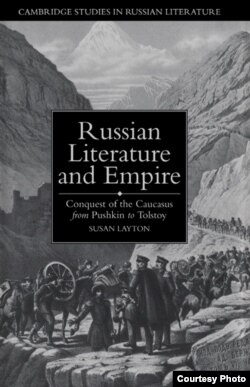
Susan Layton's book "Russian Literature and Empire: Conquest of the Caucasus from Pushkin to Tolstoy" provides part of the answer. The book has been described by critics as the first text "to provide a synthesizing study of Russian writing about the Caucasus during the 19th-century age of empire-building." The book explores Russia's long and complicated literary and political engagement with the Caucasus. How did Russian writers imagine and portray the Caucasus? To what extent did literature underwrite empire-building? How was Russia's own identity formed vis-à-vis its imperial expansion?
These are just some of the issues that Layton discussed in an extensive conversation with Salome Asatiani of RFE/RL's Georgian Service.
RFE/RL: What role did the conquest of the Caucasus -- and its subsequent representation as Russia's own "Orient" or "Literary Caucasus," as you call it in your book -- play in Russia's own identity formation?
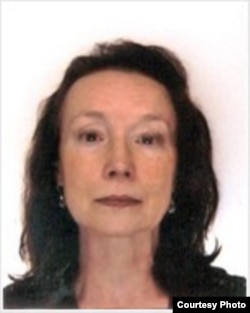
Author Susan Layton
Susan Layton: Russian national consciousness began developing in the 18th century, on contact with foreign non-national entities. From the time of Peter the Great, Western Europe played the central role as a clarifier of "Russian-ness." But the Asian borderlands of the Russian Empire also contributed to this formation of Russian national, as well as imperial consciousness. As of the 18th century, ethnographic expeditions to the Caucasus, Crimea, Siberia, and so on produced huge compilations of data that had limited readerships but all the same exemplified a growing imperial consciousness. The Russian elite was beginning to form a mental map of the multinational empire, as this vast and colorful conglomerate of many peoples, cultures, types of terrain. And on this Russian mental map the Caucasus came to assume a special prominence as a version of "the Orient."
Susan Layton’s book "Russian Literature and Empire: Conquest of the Caucasus from Pushkin to Tolstoy"
How did this happen? I think the answer lies essentially in the fact that the military conquest of the Caucasus -- which began in earnest around 1818, under General [Aleksey] Yermolov -- coincided with the rise of Russian Romanticism, a cultural phenomenon that imitated West European fascination with the Islamic East. One may mention such influential classics as [Wolfgang Amadeus] Mozart's "Abduction from the Sergalio," the so-called Oriental Tales of [Lord George Gordon] Byron. Furthermore, in addition to this historical coincidence between the military conquest and the rise of Romanticism, as of the early 19th century the processes of empire-building brought more Russians into the Caucasus than ever before. They came as civil servants, travelers, exiles, soldiers. So given these new contacts, the Russians -- aware of the Western Orientalism and the European Imperial manner in Asia -- readily perceived the Caucasus as their own Orient, so to speak. And they made it a major point of reference against which to clarify their own national identity.
RFE/RL: In order to illuminate parallels between the Russian and the European experiences of empire-building, you draw on Edward Said's path-breaking, yet contested book, "Orientalism." Said writes of a system of representation, created by Western novelists, poets, travelers, and academics, which depicted images and stereotypes of the "Orient." Said writes that "the oriental is irrational, depraved [fallen], childlike, 'different'; thus the European is rational, virtuous, mature, 'normal.'" According to Said, this manner of representation was used to justify colonization even before it actually took place. Was the Russian Orientalism toward the Caucasus different from the Western one? If so, in what ways?
Layton: We can find similarities, certainly. But, in my view, the Russian Orientalism did differ greatly from the model Said proposed. By imagining the Caucasus as an "Orient," Russians, no doubt, were bolstering their claim to be European. But, at the same time, Russia could not isolate the Orient as its "other" as easily as the Western Europeans could do. Because Asia, after all, comprised an organic part of Russian space and history. Asia was both "self" and "other" for Russia.
RFE/RL: As one historian wrote, "Britain had an empire, but Russia was an empire." Is there a difference in the way the empires themselves were organized?
Layton: Indeed. It's Russian status as this multinational, continental Empire that makes a huge difference. Russia has this hybrid, semi-Asian identity. And this found expression in the romanticizing of the North Caucasus peoples, on the part of [Aleksandr] Pushkin, [Aleksandr] Bestuzhev-Marlinsky, [Mikhail] Lermontov. Russia's cultural heterogeneity predisposed romantics to enhancing Asia some way or another, instead of identifying exclusively and consistently with the Western civilization -- to which, they knew, their country did not wholly belong. So it's a much more complicated and ambivalent enterprise. I would just add that this whole problem of comparing Russian Orientalism to Said's paradigm has been receiving increasing scholarly attention. A very recent major contribution is a book called "Russian Orientalism: Asia in the Russian Mind from Peter the Great to the Emigration" by historian David Schimmelpenninck van der Oye. It is a lovely book.
RFE/RL: As you noted, the concept of Europe has played a very important role in the formation of Russia's identity. Some thinkers state that "Europe" is the main "other" in relation to which the idea of Russia was defined -- when Russians spoke of Europe, they also spoke of themselves. This was particularly pertinent with regard to the tensions between the Slavophiles -- the romantic nationalists who opposed the European way of development -- and the Europe-oriented liberal perspectives. These tensions crystallized in the late 1840s and, to a degree, continue to this day. This "othering," however, was a two-way street; Eastern Europe -- and Russia with it -- was consistently Orientalized by Western thinkers of the late 18th century. Or semi-Orientalized, as historian Larry Wolff famously called it in his influential book, "Inventing Eastern Europe: The Map of Civilization on the Mind of the Enlightenment." In his words, this was simultaneously "Europe but not Europe," a location that was to mediate between Europe and the Orient. So, then, to what extent did this troubled relationship with the concept of Europe figure in the Russian texts about the conquered Caucasus?
Layton: I think it is absolutely central. And you are certainly right to bring up Wolff, as the main clarifier of this whole issue. This tradition of Orientalizing Russia does indeed resonate in the Russian construction of the Caucasus. The real heart of the matter was captured in a famous statement that [Fyodor] Dostoyevsky made at the very end of his life, apropos the conquest of Central Asia. He said: "In Europe we were hangers-on and slaves, but in Asia we shall be the masters. In Europe we were Tatars, but in Asia we too are Europeans. Our civilizing mission in Asia will bribe our spirit and drive us thither." In other words, to build an Empire in Asia was a European sort of project that shored up Russians' self-perceptions as "Europeans." This is a dynamic that confirms to what historians Peter Holquist and Alexander Martin have called the "dialectics of empire" -- the interpenetration between the way Russians treated and imagined the "East" and their problematic relationship with the "West." It is absolutely central.
Dostoyevsky said at the very end of his life, apropos the conquest of Central Asia, that: 'In Europe we were hangers-on and slaves, but in Asia we shall be the masters.'
RFE/RL: In your book, you take four primary authors who produced the "literary Caucasus." The trajectory starts from Aleksandr Pushkin's poem "The Prisoner of the Caucasus" in 1822 and ends with Lev Tolstoy's "Hadji Murat," written between 1896 and 1904 and first published in Russia in 1912, heavily censored. In between these two, there were Aleksandr Bestuzhev-Marlinsky and Mikhail Lermontov in the 1830s and 1940s. Which of these authors, would you say, were instrumental in rationalizing and/or justifying the Russian imperial rule? And which were most critical of it?
Layton: I think the question is very hard to answer, maybe impossible. Because context changes the way authors are read. All three of the great romantics are highly ambivalent. You can find, on the one hand, a valorization of North Caucasian man as a fighter for freedom, incarnation of martial virtues -- all kinds of things that the Russians like to associate with themselves. In addition, you find hints -- especially in Lermontov -- of the ferocity, bestiality of the conquest. In Lermontov's poem "Ismail Bay" the Russian army is referred to "hishni zver," a predatory animal. The Russians are shown destroying a village, murdering babies and so on.
So you can find -- and, I think, especially in Lermontov -- a great duality of treatment and of the war, and you can extract various kinds of scenarios and values. For example, in the 1990s, when unrest in the Caucasus was developing, Chechens tore down a statue of Lermontov in Grozny, focusing on an image in one of his poems, which is that of a "zloy Chechen" -- this wicked Chechen lurking around the bank. So in this context -- the post-Soviet context -- Lermontov was seized upon as a very imperialist writer. And yet that is quite a distorted reading.
I would argue, as a matter of fact, that out of the three great romantics, Lermontov was the one who cast the most doubt on the moral legitimacy of the military conquest. Of course, Tolstoy's "Hadji Murat" alone plainly denounced the Caucasian war as a genocidal aggression. But, in my view, motives of Romantic literature -- including the Russian soldiers as murderers of babies -- were vital antecedents for the antiimperialist position that Tolstoy articulated in old age.
RFE/RL: Religious differences play a very potent role in the Orientalist discourse. Islam, in particular -- due to its historical perception as a threat to Western Europe -- was turned "into the very epitome of an outsider against which the whole of European civilization from the Middle Ages on was founded," to quote Said once again. In the Russian context, how did the Orientalization of the Caucasus develop in relation to its escalating war against the Muslims of the Caucasus? What was the dominant mode of representing Muslims and the Islamic cultures of the North Caucasus?
Layton: That is a very interesting question. There was an intriguing divergence between the ways Russians imagined peoples of the North Caucasus and Georgians. The dominant romantic Russian image of the North Caucasus mountaineer was a "noble Savage" type. Incorporating martial virtues -- bravery, love of freedom, characteristics that Russians tended to attribute to their own national manly profiles.
RFE/RL: Parallels of this "noble Savage," of course, can be found in the Western literature, primarily with Byron.
Layton: Absolutely. And associated with mountaineers. The way Byron treats Albania in "Childe Harold's Pilgrimage" is very much to the point indeed. But as initially modeled in Pushkin's "Kavkazski Plennik," the mountaineers, or "gortsy," were not strongly marked as a Muslim people. References to Islam are, in fact, very marginal. What dominates instead is an Alpine ambiance. There is this little Circassian village, nestled amidst these splendid mountains. And such images soon -- in the 1820s -- prompted Russians to perceive the Caucasian mountains as their own Alps -- the "Kavkazskie Alpi." In addition, Pushkin's poem features the Circassian "narod" -- people -- returning to their village in the evening after working in their fields all day. This is a marginal but significant detail, I think, that suggests that these people have a kind of agricultural base, they are not just bandits. And especially to this use of the word "narod" -- this image gives Pushkin's Circassians a certain resemblance to peasants.
"The Caucasus has fallen at the foot of the Russian throne," wrote a Russian journalist in 1823. The war seemed to be over. When, in fact, it was merely a lull.
In this connection, it is also important to remember that when Pushkin wrote "Kavkazskii Plennik," he shared a pervasive Russian belief that General Yermolov had already succeeded in subjugating the North Caucasus. "The Caucasus has fallen at the foot of the Russian throne" -- wrote a Russian journalist in 1823. The war seemed to be over. When, in fact, it was merely a lull. The jihad against the Russians erupted -- in Chechnya, in Daghestan -- in the late 1820s, under the leadership of the first Caucasian imam, Ghazi Muhhamad. And this resistance movement would continue, as you know, to the reign of Imam Shamil, who surrendered to Russia only in 1859. Now, in the context of the jihad -- and the escalation of Russian military assault -- we find a proliferation of literary images of the "gortsi" as ferocious, bestial Muslims. The Islamic element becomes pronounced. And, similarly, the landscape, too, was Orientalized to a certain extent in writing of the 1830s. The mountains, for example, became "Aulous mountains" instead of "the Alps."
These processes of Orientalization -- much in the mould that Said talks about -- occurred mainly in works of writers now long forgotten. Authors that my book calls "little orientalizers." It is true, that many references to Islamic culture, the North Caucasus and Azerbaijan appear in writings of Bestuzhev-Marlinsky, Lermontov and the soldier-poet Aleksandr Polezhaev. However, their stories are more complicated and ambivalent than those works produced by the obscure writers, the ephemeral, little orientalizers. And the big complicating factor is that Bestuzhev-Marlinsky, Lermontov, Polezhaev represent the wars as morally disturbing, even sickening enterprise. And this is a theme that I think resonates in late 19th-century Russian perceptions of the Caucasian conquest as a harmful, useless escapade of ambitious generals.
RFE/RL: Now if I could ask you specifically about Georgia. I think you arrive at fascinating findings in your book. You describe this very peculiar mode of representation, quite different from how the Northern Caucasus was being depicted in the texts. Most importantly, you claim that Georgia was consistently Orientalized and its European traits were systematically overlooked. Could you tell us a bit more about this? And also, if you could specify, to what extent did the Russian writers misrepresent Georgia? At that time, the influence of Turkish and Persian cultures was very big. In a way, Georgia was an easy "target" to be Orientalized -- many historians are still convinced that it was Russia who played a key role in Georgia's Europeanization. So, then, just how European was Georgia at the time of the Russian imperial expansion? How much did the Russian authors have to gloss over?
Layton: Yes. The comparison is indeed striking. As you put it in your question, Georgia was in a sense an easy target to Orientalize, because of the ways of influence from Persia and Turkey. They left a considerable impact. But the big point, I think, is that Russians engaged in selective perception of Georgia's history and culture. They glossed over the ancient Christian foundations and very, very notably emasculated Georgia. All in a manner that legitimized Russian takeover of the country.
The Oriental attributes that entered into the fashioning of the North Caucasian peoples clustered around armed resistance to the empire -- resistance on the part of these very formidable warriors. On the other hand, Russians represented Georgia as this lush, sensual, indolent Orient, frequently symbolized as a woman -- a woman who yearns for union with Russia. And then, to complete the imperialist myth, Georgian men were stereotyped as lazy, impotent, timid, often drunkards, rushed and hot-tempered, but always ineffectual.
RFE/RL: As epitomized in the famous phrase by Lermontov, about the "timid Georgians" who fled the battlefield, for example?
Layton: Yes, exactly. One of his relatives at the time, by the way, said -- Lermontov was in the army, he knows Georgians were not timid, why did he write that? But it is all a part of a myth.
RFE/RL: So what happened? Why do we have these virile figures in the North Caucasus -- Ammalat Bek, Hadji-Murat, Shamil himself -- and no strong male protagonist in the texts about Georgia?
Layton: Well, it is a question that may be impossible to answer. The wonderful historian Mark Raeff once told me that the best history is produced when you explore the question of "how," not "why." [To ask] "why" can often just lead to a lot of speculation. What we can do for sure is just observe how something happens and then maybe make some guesses about what may have been behind it. In the case of Russia, the Russian myths about Georgia are clearly out to legitimize an imperial conquest. And I think there is something about the very smallness of the country, compared to the vast size of the Russian Empire, that appealed to a sort of machismo.
What remains so intriguing -- one would like to know why, have an explanation for – is this junction between the dominant themes of Russian representation and the complex realities of Georgian culture and Georgian interaction with Russians. It is not merely that Georgia adopted Christianity six centuries before Russia did. There is also the fact that after the Russian annexation of Georgia -- which begins in 1801 -- many Georgians served as officers in the Tsarist army, they fought in the Napoleonic wars, in campaigns against Chechens and so forth. In addition, there was this network of professional and personal relations between Russians and Georgians. [Aleksandr] Griboyedov's father-in-law, Prince Aleksandr Chavchavadze, for example, became famous for his hospitality and [the] gathering of cultivated literary men from Russia and Georgia to share their interests. And of course, literary, cultural contacts between Russians and Georgians continued to flourish into the Soviet period. And yet the positive features of Christian manhood, manifestations of affinity between Russian and Georgian men tended to be repressed in Russian writing, in favor of this cultural mythology that underwrote imperial Russian domination of Georgia.
RFE/RE: Which texts in particular are you referring to here?
The writings of Russians not only repressed Christianity, but they also repressed the brutality of Russian subjugation of Georgia and Georgian resistance to Russian rule.
Layton: "The Demon" of Lermontov is a good example, where we have this image of the timid Georgian men. Another part of this process that, I think, maybe is even more vivid is that the writings of Russians not only repressed Christianity, but they also repressed the brutality of Russian subjugation of Georgia and Georgian resistance to Russian rule. Most notoriously, in 1803 the deposed Georgian queen, Mariam, stabbed to death the tsarist general, who had come to her quarters with orders to deport her. This is a spectacular act that Russian documents of the time describe as bestial, unbelievably ferocious for a woman to have committed. And this murder, I believe, leaves its traces in Russian literature's figures of dangerous Georgian women. Lermontov in his poem has the image of the depraved Queen Tamara; Pushkin's Zarema, in the "Fountain of Bakhchisaray" is a murderer; there is a Medea-like figure in a fragment by Griboedov, called "Georgian Night." In short, these violent women also help underwrite empire-building by suggesting that strong men are needed to keep them under control. And Georgian men, we remember, are weaklings.
RFE/RL: There is a seeming contradiction here -- in political terms, Georgia's annexation by Russia was largely justified as a defense of Christianity and European cultural values against Islam. And still, Georgia's Christian heritage is ignored in the Russian literary texts.
Layton: Yes, I think it is a very good point. But mythmaking tends to be good at resolving contradictions that seem to be irresolvable. I think the symbolism of femininity probably goes a long way to explaining this. On the one hand, you have the idea of Russia as protector, and the emphasis on being co-religionist. But there is also at least subliminal Russian awareness that, even though you have the bond of Christianity, every class or society in Georgia, at one time or another, revolted against Russian rule. So the conquer is really not wanted. And this gets incarnated in these violent women. So you have a sense that there is both the need for protection, but also danger -- at bottom, a woman who can turn into sort of a hellhound. Both sides of the issue get resolved in the figure of the dominant Russian -- the Russian bridegroom, and so on.






Dostoyevsky said at the very end of his life, apropos the conquest of Central Asia, that: 'In Europe we were hangers-on and slaves, but in Asia we shall be the masters.'
