



Accessibility links

Breaking News

Militants 'Blow Up’ Palmyra Ancient Tower Tombs

A year ago, all was quiet at Palmyra. This picture, from March 14, 2014, shows locals with bicycles at the ancient oasis city.
1/9 A year ago, all was quiet at Palmyra. This picture, from March 14, 2014, shows locals with bicycles at the ancient oasis city.
Syrian authorities say Islamic State militants have advanced to within 2 kilometers of Palmyra, an ancient city with outstanding architectural heritage dating from the first century. The militants have caused significant damage to similar sites they have overrun in Iraq, posting videos of themselves destroying antiquities. UNESCO includes Palmyra on its list of World Heritage sites, describing it as one of the most important cultural centers of the ancient world -- a crossroads for local, Persian, Greek and Roman influences.
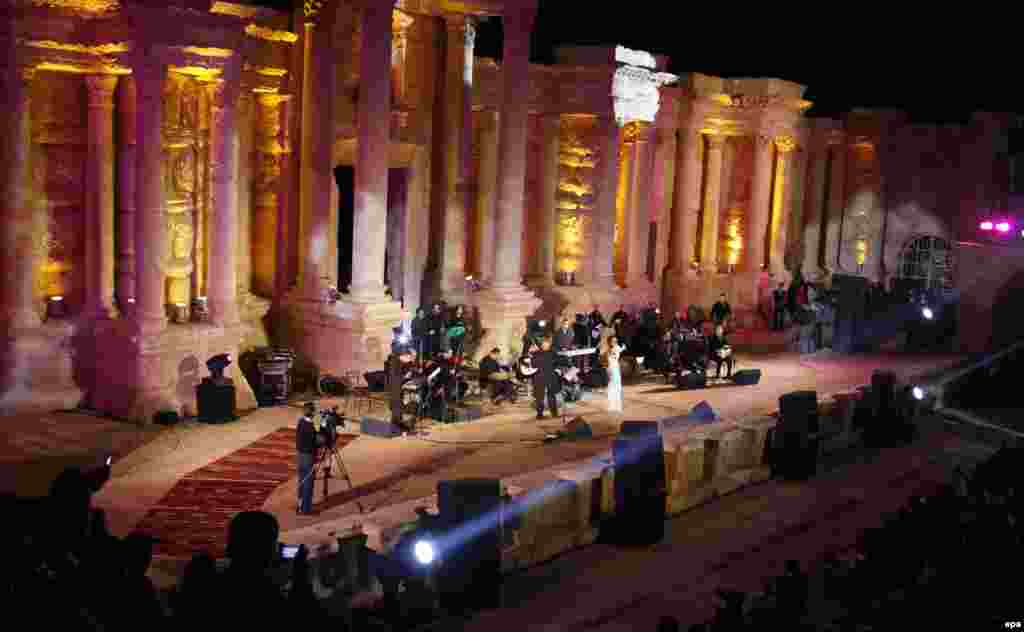
The remains of the Roman theatre date back to the 2nd century. Until recently, it was host to the annual Palmyra Festival.
2/9 The remains of the Roman theatre date back to the 2nd century. Until recently, it was host to the annual Palmyra Festival.
Syrian authorities say Islamic State militants have advanced to within 2 kilometers of Palmyra, an ancient city with outstanding architectural heritage dating from the first century. The militants have caused significant damage to similar sites they have overrun in Iraq, posting videos of themselves destroying antiquities. UNESCO includes Palmyra on its list of World Heritage sites, describing it as one of the most important cultural centers of the ancient world -- a crossroads for local, Persian, Greek and Roman influences.
Lebanese singer Najwa Karam performs at the opening ceremony of the Palmyra Festival in 2010.
3/9 Lebanese singer Najwa Karam performs at the opening ceremony of the Palmyra Festival in 2010.
Syrian authorities say Islamic State militants have advanced to within 2 kilometers of Palmyra, an ancient city with outstanding architectural heritage dating from the first century. The militants have caused significant damage to similar sites they have overrun in Iraq, posting videos of themselves destroying antiquities. UNESCO includes Palmyra on its list of World Heritage sites, describing it as one of the most important cultural centers of the ancient world -- a crossroads for local, Persian, Greek and Roman influences.
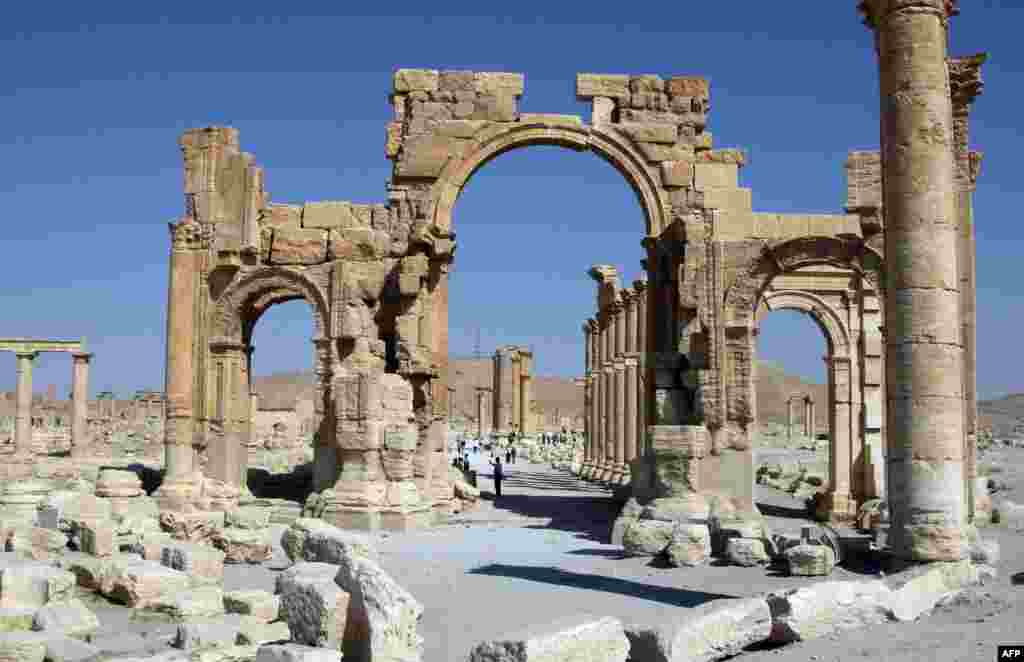
More Roman ruins. Palmyra became increasingly prosperous after the Romans took control at the beginning of the 1st century.
4/9 More Roman ruins. Palmyra became increasingly prosperous after the Romans took control at the beginning of the 1st century.
Syrian authorities say Islamic State militants have advanced to within 2 kilometers of Palmyra, an ancient city with outstanding architectural heritage dating from the first century. The militants have caused significant damage to similar sites they have overrun in Iraq, posting videos of themselves destroying antiquities. UNESCO includes Palmyra on its list of World Heritage sites, describing it as one of the most important cultural centers of the ancient world -- a crossroads for local, Persian, Greek and Roman influences.
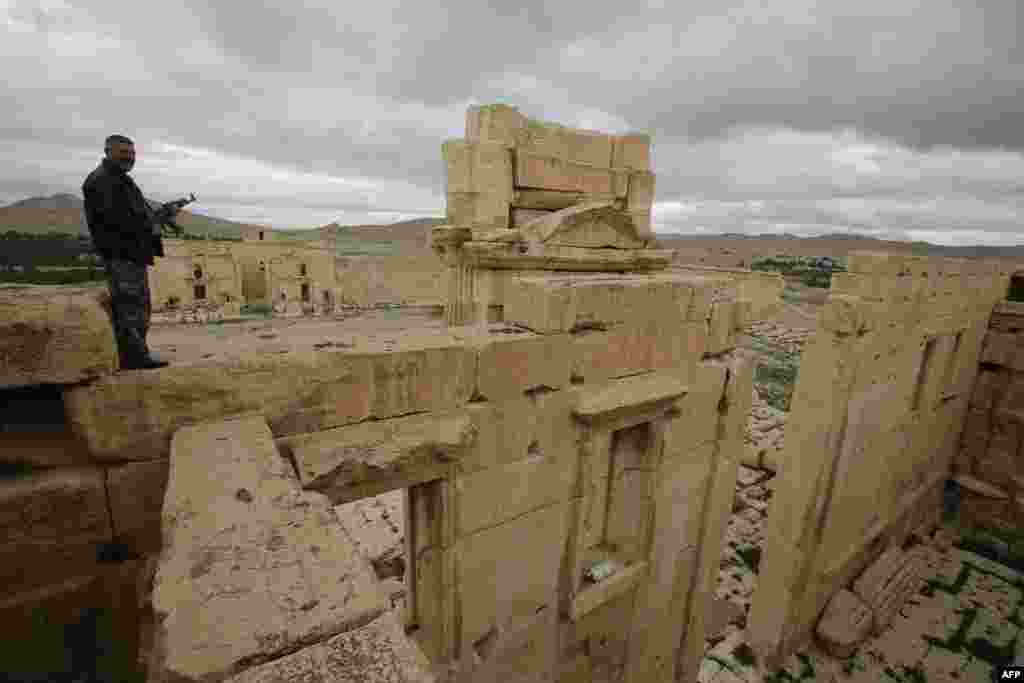
March 2014 - A Syrian policeman stands on the sanctury of Baal, one of three pagan gods worshipped in Palmyra in the 1st century.
5/9 March 2014 - A Syrian policeman stands on the sanctury of Baal, one of three pagan gods worshipped in Palmyra in the 1st century.
Syrian authorities say Islamic State militants have advanced to within 2 kilometers of Palmyra, an ancient city with outstanding architectural heritage dating from the first century. The militants have caused significant damage to similar sites they have overrun in Iraq, posting videos of themselves destroying antiquities. UNESCO includes Palmyra on its list of World Heritage sites, describing it as one of the most important cultural centers of the ancient world -- a crossroads for local, Persian, Greek and Roman influences.
Palmyra is believed to have been founded by King Solomon.
6/9 Palmyra is believed to have been founded by King Solomon.
Syrian authorities say Islamic State militants have advanced to within 2 kilometers of Palmyra, an ancient city with outstanding architectural heritage dating from the first century. The militants have caused significant damage to similar sites they have overrun in Iraq, posting videos of themselves destroying antiquities. UNESCO includes Palmyra on its list of World Heritage sites, describing it as one of the most important cultural centers of the ancient world -- a crossroads for local, Persian, Greek and Roman influences.
A 2nd century limestone relief excavated in 2008 from a cemetery in Palmyra. Shapes of 13 men and women, all from the same family, are engraved on it.
7/9 A 2nd century limestone relief excavated in 2008 from a cemetery in Palmyra. Shapes of 13 men and women, all from the same family, are engraved on it.
Syrian authorities say Islamic State militants have advanced to within 2 kilometers of Palmyra, an ancient city with outstanding architectural heritage dating from the first century. The militants have caused significant damage to similar sites they have overrun in Iraq, posting videos of themselves destroying antiquities. UNESCO includes Palmyra on its list of World Heritage sites, describing it as one of the most important cultural centers of the ancient world -- a crossroads for local, Persian, Greek and Roman influences.
From the same dig - the scene depicts two Palmyrian merchants and a child standing next to a camel.
8/9 From the same dig - the scene depicts two Palmyrian merchants and a child standing next to a camel.
Syrian authorities say Islamic State militants have advanced to within 2 kilometers of Palmyra, an ancient city with outstanding architectural heritage dating from the first century. The militants have caused significant damage to similar sites they have overrun in Iraq, posting videos of themselves destroying antiquities. UNESCO includes Palmyra on its list of World Heritage sites, describing it as one of the most important cultural centers of the ancient world -- a crossroads for local, Persian, Greek and Roman influences.
The sun sets behind ruined columns at Palmyra, November 2010.
9/9 The sun sets behind ruined columns at Palmyra, November 2010.
Syrian authorities say Islamic State militants have advanced to within 2 kilometers of Palmyra, an ancient city with outstanding architectural heritage dating from the first century. The militants have caused significant damage to similar sites they have overrun in Iraq, posting videos of themselves destroying antiquities. UNESCO includes Palmyra on its list of World Heritage sites, describing it as one of the most important cultural centers of the ancient world -- a crossroads for local, Persian, Greek and Roman influences.
Previous slide
Next slide

Syria's antiquities chief says Islamic State (IS) militants have blown up three ancient funerary towers in the central city of Palmyra.

Maamoun Abdelkarim said on September 4 that the tombs, built between the years 44 and 103 AD, were destroyed 10 days earlier.

He said they were Palmyra's "best preserved and most beautiful" tower tombs.

They included the Tower of Elahbel, which Abdelkarim said was four storeys high and had an underground floor.

IS militants, who seized Palmyra in May, have also destroyed two ancient temples at the UNESCO World Heritage site -- Baal Shamin and the Temple of Bel -- in the last few weeks.

INFOGRAPHIC: Tracking Palmyra's Destruction

The IS group had previously destroyed ancient monuments as well as Christian and Muslim holy sites in areas under its control.

Based on reporting by AFP and Reuters
XS
SM
MD
LG