British Prime Minister David Cameron (left) meets Arctic Convoy veterans during a special medal presentation ceremony on Downing Street on March 19.
Some unsung heroes from World War II finally got the recognition they deserved this week when they received a newly created award from British Prime Minister David Cameron.
Around 40 British veterans were presented with the freshly minted Arctic Star medal during a special ceremony at 10 Downing Street on March 19.
Cameron described the award to the veterans as acknowledgement of the role they had played in "the most important struggle of the last 100 years" by risking their lives as part of convoys carrying vital supplies on perilous Arctic sea routes to the Soviet Union.
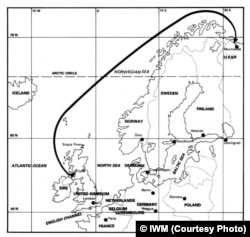
Between 1941 and 1945, 78 Arctic convoys brought more than 4 million tons of provisions and munitions to the U.S.S.R. These deliveries played a crucial role in the Soviet war effort.
More than 1,400 merchant ships and naval vessels participated in the convoys to the ports in Arctic Russia, which Winston Churchill once described as “the worst journey in the world.”
The Arctic convoys ran the gauntlet of German blockades to bring supplies to the Russian ports of Murmansk (pictured) and Arkhangelsk.
Besides braving frozen seas and harsh weather conditions, the sailors also had to contend with attacks from German dive bombers and U-boat torpedoes.
Sailing was particularly dangerous in the summer months when the perpetual daylight of the Arctic Circle meant that the ships could never take advantage of traveling under cover of darkness. This was particularly true in the case of the disastrous PQ17 convoy, which lost 24 out of 35 ships in July 1942.
Altogether, more than 100 convoy ships had perished by the time the war ended and more than 3,000 lives were lost.
Campaigners had been pushing since the 1990s for the efforts of the convoy sailors to be formally recognized, and Britain’s ruling Tory party had pledged in opposition to introduce a special medal when in government, but it is only now that the Arctic Star has finally become a reality.
Ninety-two-year-old Commander Eddie Grenfell said he “was pleased but not delighted” to have belatedly received an award for his contribution to Britain’s war effort.
"As soon as David Cameron came to power, I reminded him of the promise. Only now has he got around to doing it,” he told "The Daily Mail." “In the meantime, God knows how many of my Arctic convoy chums have died waiting. All because we were waiting for these bloody politicians who have never heard a shot in their lives to make up their minds.”
PHOTO GALLERY: Allied Arctic convoys to Russia during World War II
Allied Arctic Convoys Of World War II
1/12An "Arms For Russia" propaganda poster from World War II
During World War II, between 1941 and 1945, 78 Allied Arctic convoys brought more than 4 million tons of provisions and munitions to the U.S.S.R. These deliveries played a crucial role in the Soviet war effort. More than 1,400 merchant ships and naval vessels participated in the convoys to the ports of Arkhangelsk and Murmansk in Arctic Russia, which Winston Churchill once described as “the worst journey in the world.” Besides braving frozen seas and harsh weather conditions, the sailors also had to contend with attacks from German dive bombers and U-boat torpedoes. Altogether, more than 100 convoy ships had perished by the time the war ended and more than 3,000 lives were lost. (13 PHOTOS)
Show moreShow less
2/12Escorts and merchant ships at the Icelandic port of Hvalfjord before setting sail for Russia in July 1942.
During World War II, between 1941 and 1945, 78 Allied Arctic convoys brought more than 4 million tons of provisions and munitions to the U.S.S.R. These deliveries played a crucial role in the Soviet war effort. More than 1,400 merchant ships and naval vessels participated in the convoys to the ports of Arkhangelsk and Murmansk in Arctic Russia, which Winston Churchill once described as “the worst journey in the world.” Besides braving frozen seas and harsh weather conditions, the sailors also had to contend with attacks from German dive bombers and U-boat torpedoes. Altogether, more than 100 convoy ships had perished by the time the war ended and more than 3,000 lives were lost. (13 PHOTOS)
Show moreShow less
3/12A motorboat from the "HMS Trumpeter" is assisted through ice by a Russian naval tug upon the British ship's arrival at Kola Inlet near Murmansk.
During World War II, between 1941 and 1945, 78 Allied Arctic convoys brought more than 4 million tons of provisions and munitions to the U.S.S.R. These deliveries played a crucial role in the Soviet war effort. More than 1,400 merchant ships and naval vessels participated in the convoys to the ports of Arkhangelsk and Murmansk in Arctic Russia, which Winston Churchill once described as “the worst journey in the world.” Besides braving frozen seas and harsh weather conditions, the sailors also had to contend with attacks from German dive bombers and U-boat torpedoes. Altogether, more than 100 convoy ships had perished by the time the war ended and more than 3,000 lives were lost. (13 PHOTOS)
Show moreShow less
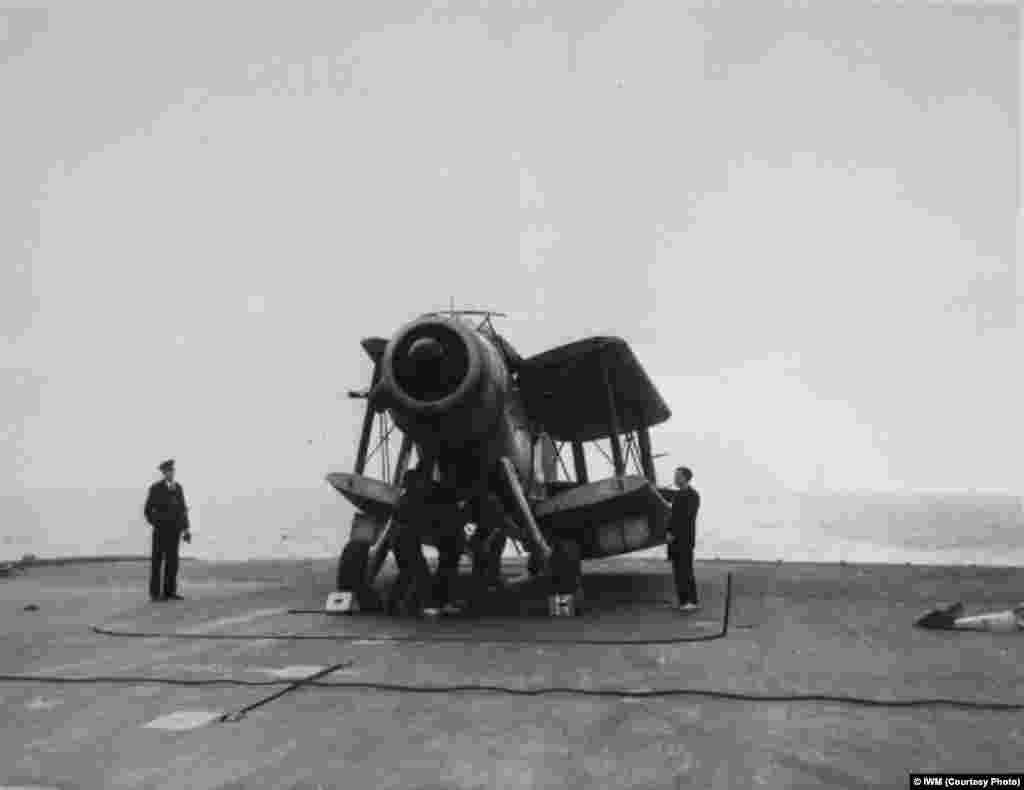
4/12A Fairey Albacore airplane with wings folded warms up before taking off on a three-hour patrol to protect a combined British and American convoy to Russia.
During World War II, between 1941 and 1945, 78 Allied Arctic convoys brought more than 4 million tons of provisions and munitions to the U.S.S.R. These deliveries played a crucial role in the Soviet war effort. More than 1,400 merchant ships and naval vessels participated in the convoys to the ports of Arkhangelsk and Murmansk in Arctic Russia, which Winston Churchill once described as “the worst journey in the world.” Besides braving frozen seas and harsh weather conditions, the sailors also had to contend with attacks from German dive bombers and U-boat torpedoes. Altogether, more than 100 convoy ships had perished by the time the war ended and more than 3,000 lives were lost. (13 PHOTOS)
Show moreShow less
5/12The view from the bridge of the Royal Navy cruiser "HMS Sheffield" as she battles heavy seas while escorting a convoy to Russia in February 1943.
During World War II, between 1941 and 1945, 78 Allied Arctic convoys brought more than 4 million tons of provisions and munitions to the U.S.S.R. These deliveries played a crucial role in the Soviet war effort. More than 1,400 merchant ships and naval vessels participated in the convoys to the ports of Arkhangelsk and Murmansk in Arctic Russia, which Winston Churchill once described as “the worst journey in the world.” Besides braving frozen seas and harsh weather conditions, the sailors also had to contend with attacks from German dive bombers and U-boat torpedoes. Altogether, more than 100 convoy ships had perished by the time the war ended and more than 3,000 lives were lost. (13 PHOTOS)
Show moreShow less
6/12The destroyer "HMS Opportune" in rough Arctic seas while accompanying a convoy near Russia.
During World War II, between 1941 and 1945, 78 Allied Arctic convoys brought more than 4 million tons of provisions and munitions to the U.S.S.R. These deliveries played a crucial role in the Soviet war effort. More than 1,400 merchant ships and naval vessels participated in the convoys to the ports of Arkhangelsk and Murmansk in Arctic Russia, which Winston Churchill once described as “the worst journey in the world.” Besides braving frozen seas and harsh weather conditions, the sailors also had to contend with attacks from German dive bombers and U-boat torpedoes. Altogether, more than 100 convoy ships had perished by the time the war ended and more than 3,000 lives were lost. (13 PHOTOS)
Show moreShow less
7/12Able Seaman Thomas B. Day standing on the ice-encrusted deck of the "HMS Belfast" in November 1943.
During World War II, between 1941 and 1945, 78 Allied Arctic convoys brought more than 4 million tons of provisions and munitions to the U.S.S.R. These deliveries played a crucial role in the Soviet war effort. More than 1,400 merchant ships and naval vessels participated in the convoys to the ports of Arkhangelsk and Murmansk in Arctic Russia, which Winston Churchill once described as “the worst journey in the world.” Besides braving frozen seas and harsh weather conditions, the sailors also had to contend with attacks from German dive bombers and U-boat torpedoes. Altogether, more than 100 convoy ships had perished by the time the war ended and more than 3,000 lives were lost. (13 PHOTOS)
Show moreShow less
8/12A motorboat from the "HMS Trumpeter" works its way through ice after the carrier's arrival at Kola Inlet.
During World War II, between 1941 and 1945, 78 Allied Arctic convoys brought more than 4 million tons of provisions and munitions to the U.S.S.R. These deliveries played a crucial role in the Soviet war effort. More than 1,400 merchant ships and naval vessels participated in the convoys to the ports of Arkhangelsk and Murmansk in Arctic Russia, which Winston Churchill once described as “the worst journey in the world.” Besides braving frozen seas and harsh weather conditions, the sailors also had to contend with attacks from German dive bombers and U-boat torpedoes. Altogether, more than 100 convoy ships had perished by the time the war ended and more than 3,000 lives were lost. (13 PHOTOS)
Show moreShow less
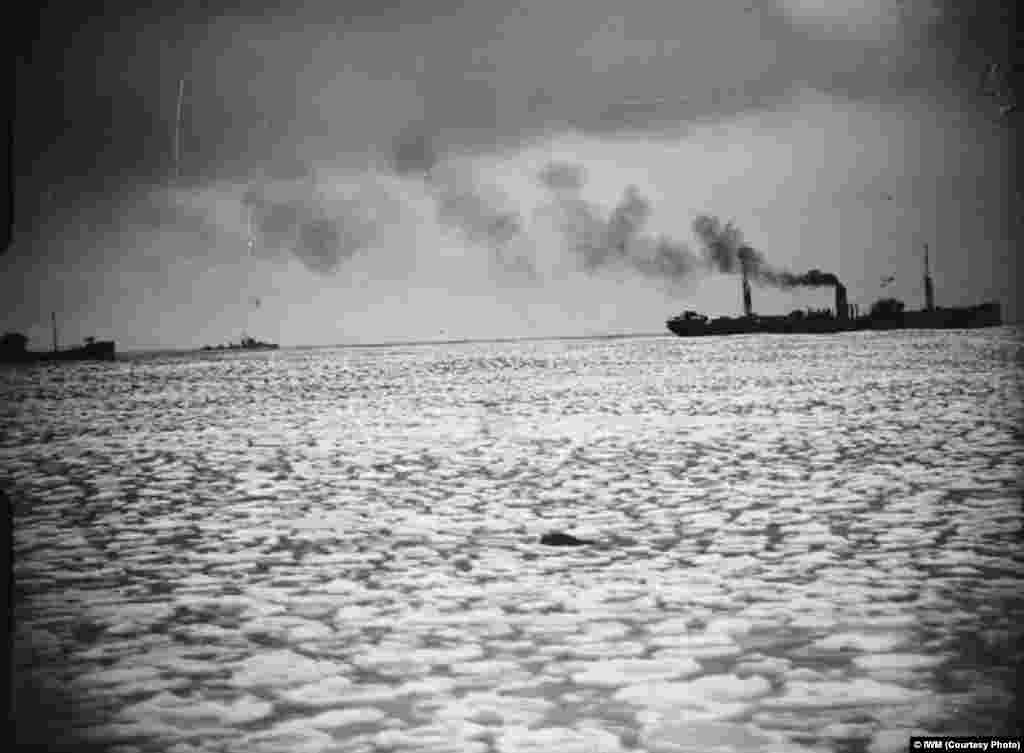
9/12A convoy of merchant ships passes through pack ice en route to Russia in 1943. An escort destroyer can be seen in the background.
During World War II, between 1941 and 1945, 78 Allied Arctic convoys brought more than 4 million tons of provisions and munitions to the U.S.S.R. These deliveries played a crucial role in the Soviet war effort. More than 1,400 merchant ships and naval vessels participated in the convoys to the ports of Arkhangelsk and Murmansk in Arctic Russia, which Winston Churchill once described as “the worst journey in the world.” Besides braving frozen seas and harsh weather conditions, the sailors also had to contend with attacks from German dive bombers and U-boat torpedoes. Altogether, more than 100 convoy ships had perished by the time the war ended and more than 3,000 lives were lost. (13 PHOTOS)
Show moreShow less
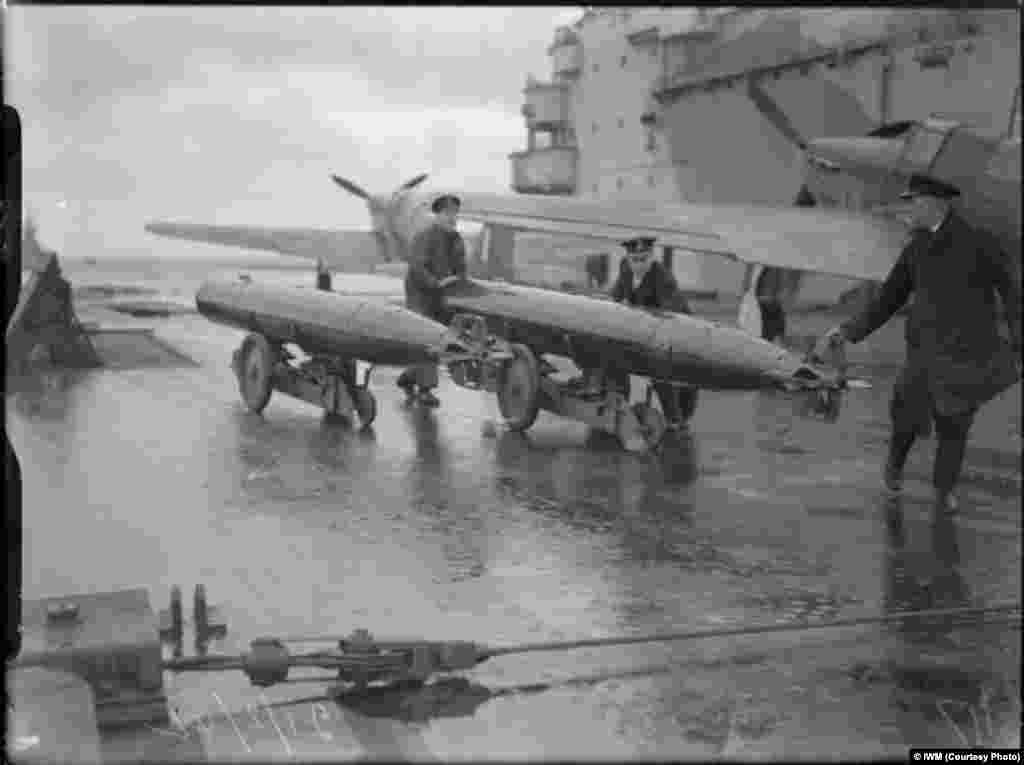
10/12Crew members of the "HMS Victorious" move torpedoes while taking part in an operation to cover a Russian convoy.
During World War II, between 1941 and 1945, 78 Allied Arctic convoys brought more than 4 million tons of provisions and munitions to the U.S.S.R. These deliveries played a crucial role in the Soviet war effort. More than 1,400 merchant ships and naval vessels participated in the convoys to the ports of Arkhangelsk and Murmansk in Arctic Russia, which Winston Churchill once described as “the worst journey in the world.” Besides braving frozen seas and harsh weather conditions, the sailors also had to contend with attacks from German dive bombers and U-boat torpedoes. Altogether, more than 100 convoy ships had perished by the time the war ended and more than 3,000 lives were lost. (13 PHOTOS)
Show moreShow less
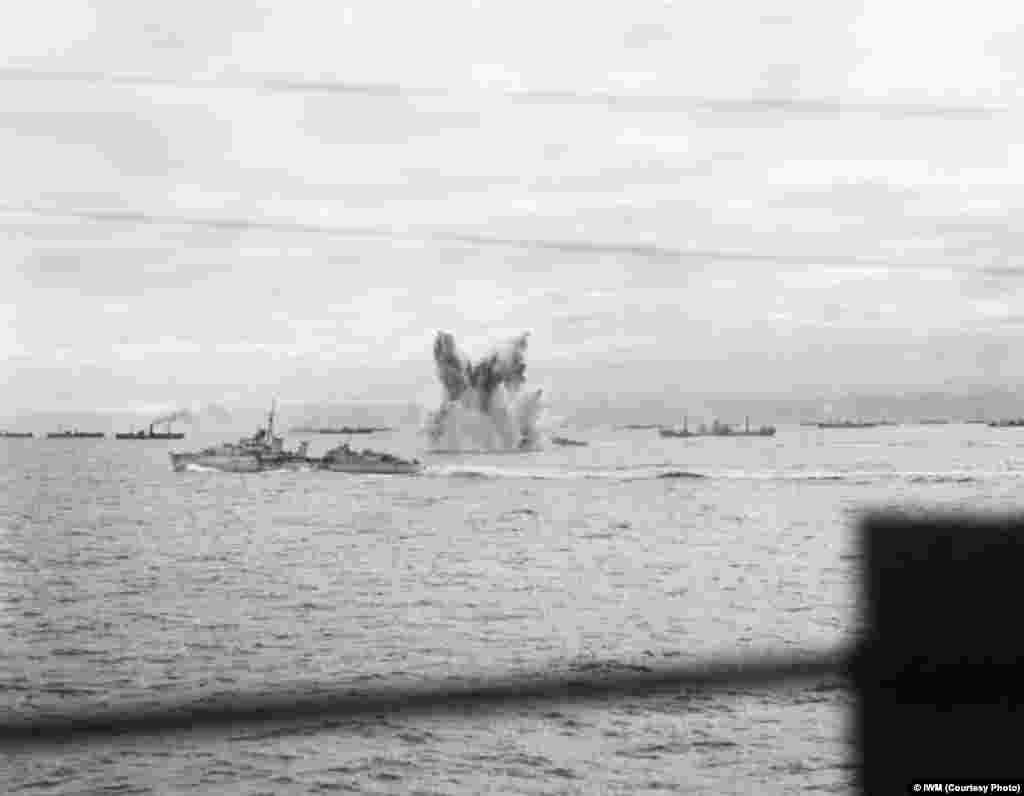
11/12An underwater detonation erupts next to the "HMS Ashanti" in September 1942.
During World War II, between 1941 and 1945, 78 Allied Arctic convoys brought more than 4 million tons of provisions and munitions to the U.S.S.R. These deliveries played a crucial role in the Soviet war effort. More than 1,400 merchant ships and naval vessels participated in the convoys to the ports of Arkhangelsk and Murmansk in Arctic Russia, which Winston Churchill once described as “the worst journey in the world.” Besides braving frozen seas and harsh weather conditions, the sailors also had to contend with attacks from German dive bombers and U-boat torpedoes. Altogether, more than 100 convoy ships had perished by the time the war ended and more than 3,000 lives were lost. (13 PHOTOS)
Show moreShow less
12/12Ice forms on a signal projector on the cruiser "HMS Sheffield" on an Arctic convoy to Russia.
During World War II, between 1941 and 1945, 78 Allied Arctic convoys brought more than 4 million tons of provisions and munitions to the U.S.S.R. These deliveries played a crucial role in the Soviet war effort. More than 1,400 merchant ships and naval vessels participated in the convoys to the ports of Arkhangelsk and Murmansk in Arctic Russia, which Winston Churchill once described as “the worst journey in the world.” Besides braving frozen seas and harsh weather conditions, the sailors also had to contend with attacks from German dive bombers and U-boat torpedoes. Altogether, more than 100 convoy ships had perished by the time the war ended and more than 3,000 lives were lost. (13 PHOTOS)