



Accessibility links

Breaking News

Russian Laws Pressuring NGOs To Close

Updated
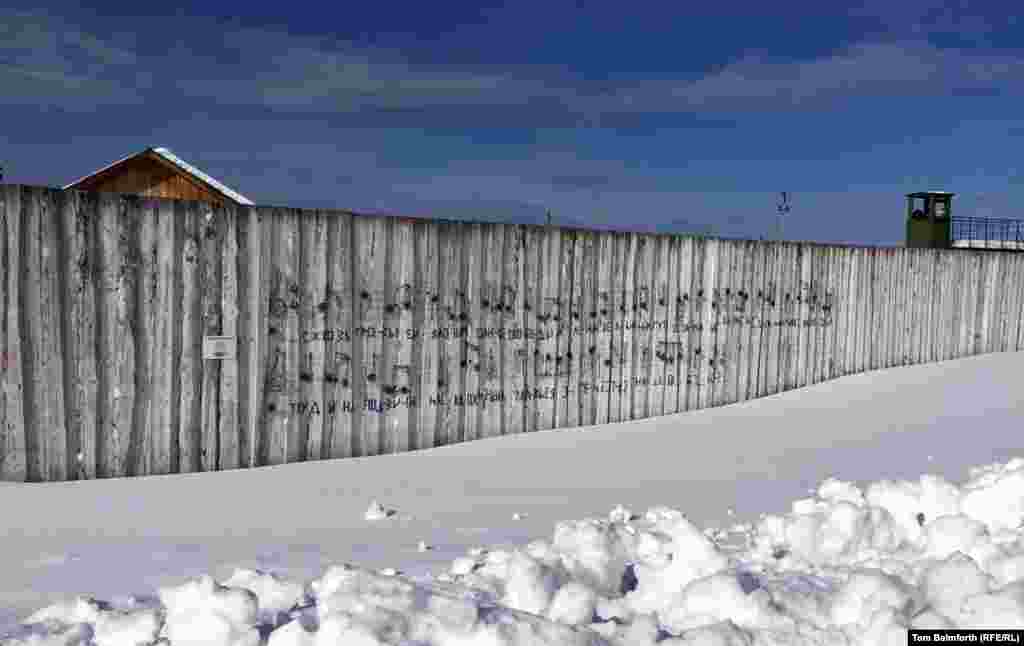
A stanza of the Soviet hymn from the late Stalin period is written on the wall facing museum visitors as they enter from the prison guard headquarters.
1/13 A stanza of the Soviet hymn from the late Stalin period is written on the wall facing museum visitors as they enter from the prison guard headquarters.
Visitors to the Perm-36 museum in the Urals can stroll through a well-preserved prison camp of the Gulag system established by Soviet leader Josef Stalin. But despite the authenticity of the site, the museum's new curators are downplaying the camp's role in the repressions of the Stalin era. (Photos by Tom Balmforth, RFE/RL)
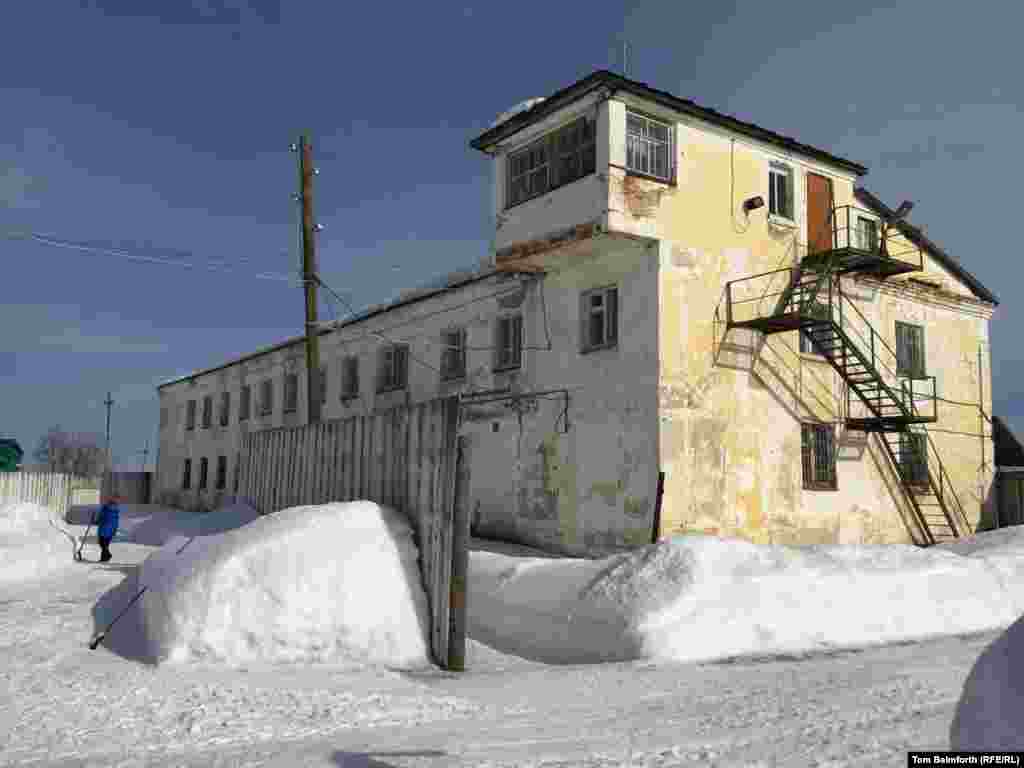
The prison guards' headquarters at the entrance to the camp
2/13 The prison guards' headquarters at the entrance to the camp
Visitors to the Perm-36 museum in the Urals can stroll through a well-preserved prison camp of the Gulag system established by Soviet leader Josef Stalin. But despite the authenticity of the site, the museum's new curators are downplaying the camp's role in the repressions of the Stalin era. (Photos by Tom Balmforth, RFE/RL)
The “strict regime” zone of the prison camp
3/13 The “strict regime” zone of the prison camp
Visitors to the Perm-36 museum in the Urals can stroll through a well-preserved prison camp of the Gulag system established by Soviet leader Josef Stalin. But despite the authenticity of the site, the museum's new curators are downplaying the camp's role in the repressions of the Stalin era. (Photos by Tom Balmforth, RFE/RL)
This detention unit, built in 1969, effectively served as a prison within the camp.
4/13 This detention unit, built in 1969, effectively served as a prison within the camp.
Visitors to the Perm-36 museum in the Urals can stroll through a well-preserved prison camp of the Gulag system established by Soviet leader Josef Stalin. But despite the authenticity of the site, the museum's new curators are downplaying the camp's role in the repressions of the Stalin era. (Photos by Tom Balmforth, RFE/RL)
A watchtower overlooks the “special regime” zone.
5/13 A watchtower overlooks the “special regime” zone.
Visitors to the Perm-36 museum in the Urals can stroll through a well-preserved prison camp of the Gulag system established by Soviet leader Josef Stalin. But despite the authenticity of the site, the museum's new curators are downplaying the camp's role in the repressions of the Stalin era. (Photos by Tom Balmforth, RFE/RL)
Anatoly Terentiev worked as a guard at Perm-36 from 1972-75. He says that the museum should not exist at all, and that the historians who used to run it represent a “fifth column.”
6/13 Anatoly Terentiev worked as a guard at Perm-36 from 1972-75. He says that the museum should not exist at all, and that the historians who used to run it represent a “fifth column.”
Visitors to the Perm-36 museum in the Urals can stroll through a well-preserved prison camp of the Gulag system established by Soviet leader Josef Stalin. But despite the authenticity of the site, the museum's new curators are downplaying the camp's role in the repressions of the Stalin era. (Photos by Tom Balmforth, RFE/RL)
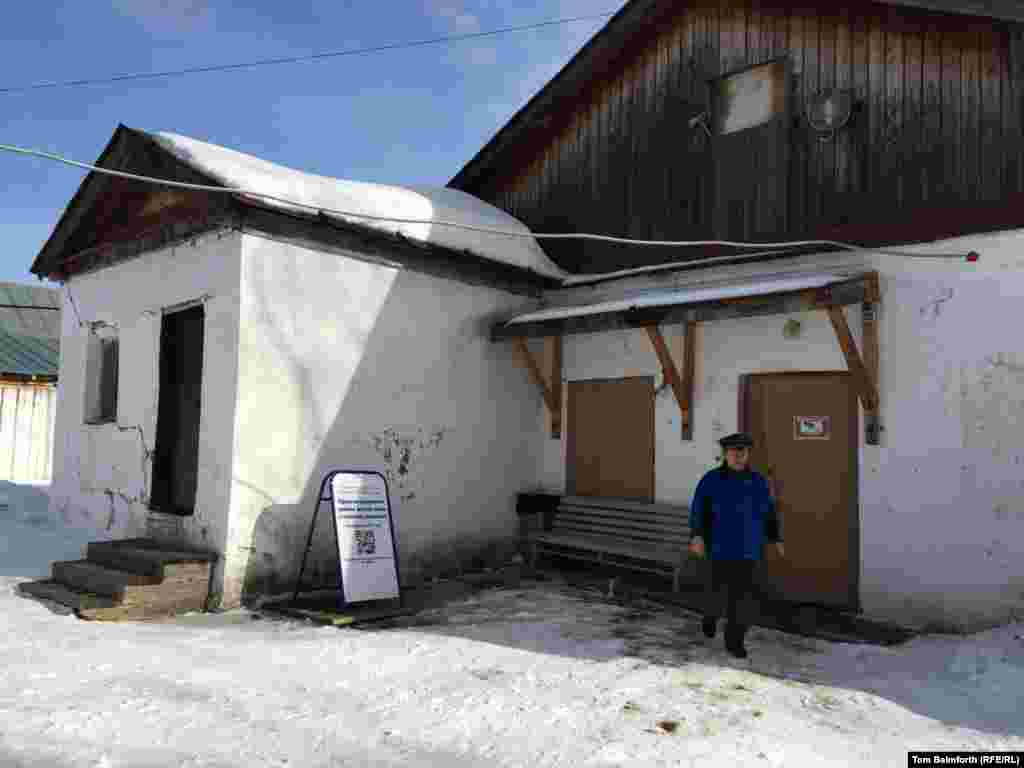
A museum worker exits a barracks block built in 1946 under Joseph Stalin.
7/13 A museum worker exits a barracks block built in 1946 under Joseph Stalin.
Visitors to the Perm-36 museum in the Urals can stroll through a well-preserved prison camp of the Gulag system established by Soviet leader Josef Stalin. But despite the authenticity of the site, the museum's new curators are downplaying the camp's role in the repressions of the Stalin era. (Photos by Tom Balmforth, RFE/RL)
A walkway through the “strict regime” zone lined by silver birch trees. Laborers in the camps were predominantly tasked with logging.
8/13 A walkway through the “strict regime” zone lined by silver birch trees. Laborers in the camps were predominantly tasked with logging.
Visitors to the Perm-36 museum in the Urals can stroll through a well-preserved prison camp of the Gulag system established by Soviet leader Josef Stalin. But despite the authenticity of the site, the museum's new curators are downplaying the camp's role in the repressions of the Stalin era. (Photos by Tom Balmforth, RFE/RL)
A worker shovels coal in the furnace room. According to the new museum’s director, this is where Soviet dissident and veteran rights activist Sergei Kovalyov worked when he served at Perm-36.
9/13 A worker shovels coal in the furnace room. According to the new museum’s director, this is where Soviet dissident and veteran rights activist Sergei Kovalyov worked when he served at Perm-36.
Visitors to the Perm-36 museum in the Urals can stroll through a well-preserved prison camp of the Gulag system established by Soviet leader Josef Stalin. But despite the authenticity of the site, the museum's new curators are downplaying the camp's role in the repressions of the Stalin era. (Photos by Tom Balmforth, RFE/RL)
Although the museum focuses predominantly on the architecture of Perm-36, it also displays a harrowing exhibit on the Soviet repressions. Suspended from the ceiling is a portrait of Stalin. The exhibit is titled “Gulag: History, Work, Life.”
10/13 Although the museum focuses predominantly on the architecture of Perm-36, it also displays a harrowing exhibit on the Soviet repressions. Suspended from the ceiling is a portrait of Stalin. The exhibit is titled “Gulag: History, Work, Life.”
Visitors to the Perm-36 museum in the Urals can stroll through a well-preserved prison camp of the Gulag system established by Soviet leader Josef Stalin. But despite the authenticity of the site, the museum's new curators are downplaying the camp's role in the repressions of the Stalin era. (Photos by Tom Balmforth, RFE/RL)
Viktor Shmyrov, a local historian who founded the museum at Perm-36, announced the liquidation of his organization in March, effectively conceding defeat in a drawn-out battle to stay involved in the museum's management.
11/13 Viktor Shmyrov, a local historian who founded the museum at Perm-36, announced the liquidation of his organization in March, effectively conceding defeat in a drawn-out battle to stay involved in the museum's management.
Visitors to the Perm-36 museum in the Urals can stroll through a well-preserved prison camp of the Gulag system established by Soviet leader Josef Stalin. But despite the authenticity of the site, the museum's new curators are downplaying the camp's role in the repressions of the Stalin era. (Photos by Tom Balmforth, RFE/RL)
Perm-36 is one of three camps known as the “Perm Triangle.”
12/13 Perm-36 is one of three camps known as the “Perm Triangle.”
Visitors to the Perm-36 museum in the Urals can stroll through a well-preserved prison camp of the Gulag system established by Soviet leader Josef Stalin. But despite the authenticity of the site, the museum's new curators are downplaying the camp's role in the repressions of the Stalin era. (Photos by Tom Balmforth, RFE/RL)
The Perm branch of the Communist Party has posted roadside billboards across the region with the rhyming couplet: “The winds of history have picked up speed. Our Urals workers revere Stalin!”
13/13 The Perm branch of the Communist Party has posted roadside billboards across the region with the rhyming couplet: “The winds of history have picked up speed. Our Urals workers revere Stalin!”
Visitors to the Perm-36 museum in the Urals can stroll through a well-preserved prison camp of the Gulag system established by Soviet leader Josef Stalin. But despite the authenticity of the site, the museum's new curators are downplaying the camp's role in the repressions of the Stalin era. (Photos by Tom Balmforth, RFE/RL)
Previous slide
Next slide

Russia's crackdown on nongovernmental groups that receiving funding from abroad is forcing groups to shut down or abandon their work in the country.

The U.S.-based MacArthur Foundation announced on July 22 that it was stopping its work in Russia, saying laws restricting foreign organizations had made it "impossible" to continue.

Meanwhile, a Russian court in Siberia on July 22 fined Perm-36, a nongovernment group that previously managed the only gulag museum in Russia, for failing register as a "foreign agent" under a strict Russian law.

The law requires any NGO that receives funding from abroad and engages in political activity to formally register as a "foreign agent."

These changes "make it clear that the Russian government regards MacArthur's continued presence as unwelcome," the foundation said in a statement.

The MacArthur foundation has provided more than $170 million in grants since 1992 to Russian groups in fields such as higher education and human rights.

Perm-36, meanwhile, was fined 300,000 rubles (about $5,250). The Prikamye district court also fined Tatyana Kursina, the group's former director, 100,000 rubles (about $1,750).

The group created the Museum of Political Repressions in 1992 near Perm on land that formerly had been a gulag prison camp known as Perm-36.

In March, Perm-36 announced it had started the dissolution process after regional officials seized control of the museum.

The Justice Ministry ruled in April that Perm-36 was considered a "foreign agent" because it had received funds from abroad.

On July 21, Russia's Justice Ministry issued warnings to 12 NGOs that the Kremlin has deemed "foreign agents," saying the groups face "administrative liability measures" – fines severe enough to shut down almost any Russian NGO.

A ministry statement on July 21 said all nongovernmental organizations receiving funds from abroad must indicate on all printed or distributed materials that the group "performs functions as a foreign agent."

It said the warnings were issued to the Memorial human right center, Memorial's information center, the Sakharov Center For Human Rights, Transparency International's Russian research center, the Committee Against Torture, and the Civil Assistance charity for refugees and internally displaced persons.

It said warnings were also issued to the Siberian Press Development Institute, the Bellona-Murmansk environmental group, the Maximum support center for discrimination victims, the Resource Human Rights Center, and the St. Petersburg-based Civil Control rights group.

Earlier in July, Russia's upper house of parliament asked the authorities to scrutinize the operations of 12 foreign organizations, including the MacArthur Foundation, with a view to possibly declaring them "undesirable foreign agents" and shutting them down.

Russia has been widely criticized for its crackdown on civil society since street protests broke out in Moscow against Vladimir Putin's 2012 election to a third presidential term after a gap of four years.

With reporting by TASS, Interfax, AFP, and Reuters
  • 16x9 Image

    RFE/RL

    RFE/RL journalists report the news in 24 languages in 18 countries where a free press is banned by the government or not fully established. We provide what many people cannot get locally: uncensored news, responsible discussion, and open debate.

This item is part of
XS
SM
MD
LG