




In February, Muscovite Svyat Kozlov felt ill and lost consciousness. Taken by ambulance to a top cardiovascular clinic, he soon stopped breathing.
"I was clinically dead," he says. "But I had a super-professional team of doctors. Thanks to them, I'm still alive today."
Kozlov, who suffered a double heart attack, may appear to be stating the obvious by claiming he was incredibly lucky. But he means it in more ways than one.
"Moscow and other big cities are oases of happiness where it's possible to get medical help," he says. "But outside the city limits, people don’t have the same rights."
Two decades after the Soviet collapse, Russia's constitution still guarantees free medical care for everyone. But many Russians say their country is actually segregated between a lucky few who can afford good medical care in private clinics and the vast majority who are left with almost no safety net -- or are forced to make side payments to doctors to get care.
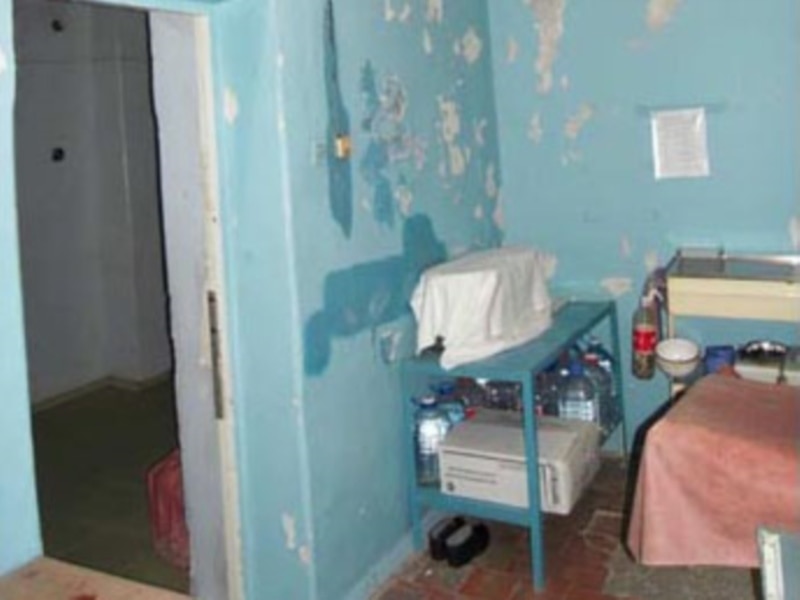
In many regions, crumbling hospitals rely on Soviet-era equipment. Even in Moscow, many hospitals don’t even have air conditioners to stave off the summer heat.
Natalia (who did not want to give her last name) is a nurse at a top state ophthalmology institute. She maintains that in most cases there are two levels of care: free and paid-for.
"The free procedures are ones patients don’t need," she says. "Anything that concerns life-threatening conditions costs a fee."
A Looming Demographic Catastrophe
That's a serious issue in a country that's one of the planet's least healthy, ranking number one in the world in smoking and fourth in per capita alcohol consumption.
The average life expectancy for men is 59 and the population continues to drop despite solemn government promises to stop the decline.
In part of its bid to stave off a looming demographic catastrophe, the government says starting this year, it's spending more than $15 billion on modernizing health care.
At Moscow's Sklifosovsky Institute, the city's top emergency-care hospital, phones ring as nurses chat in a reception area.
The institute's director, Anzor Khubtia, praises President Dmitry Medvedev for spending "very big money" that's enabled him to buy the latest equipment.
"Any Russian citizen can get care wherever he wants," he says. "If someone from Magadan [in the Far East] wants treatment in Moscow, he can come to any clinic here."
Patchwork Reforms
But others disagree. Aleksandr Saversky, head of the Patients' Rights Protection League, claims that access to health care is increasingly divided.
"Some wealthy Russians only get medical care abroad," he says, "while many pensioners and handicapped people wait in long lines for care they have to beg for."
Most working people who can afford it, he says, end up paying for their own private care anyway.
 Many of Russia's crumbling health-care facilities still rely on outdated, Soviet-era equipment.
Saversky argues that, although the government has done much to publicize reform, major health-care projects have had no visible effect.
"Everyone agrees there's been an increase in funding," he says. "There's enough money for health care, but even still, people say there's been no improvement whatsoever."
Instead of addressing systemic problems by developing a unified health-care concept, Saversky believes patchwork reforms have introduced new contradictions.
Although patients now have the right to treatment anywhere in the country, he says, the government has failed to overhaul the old system of keeping doctors to care for residents of specific districts.
Another reform requires Russians to buy medical insurance, contradicting the constitutional right to free care.
Far from improving, Saversky says, the quality of health care has declined since the 1970s, when he says it was ranked 22nd in the world for quality and accessibility of services.
Now the World Health Organization (WHO) ranks Russia's medical care 130th in the world.
Russians are increasingly unhappy about the situation. In a recent survey by the independent Levada polling agency, almost 60 percent of respondents said they were dissatisfied with their medical care.
Endemic Corruption
The Levada Center's Marina Krassilnikova indicates that most believe nothing is improving in Russian health care, while a growing number says it's actually getting worse.
"What's most upsetting is that two-thirds of the population are certain they wouldn't receive good medical care if it were needed," she says.
More than half of respondents say they avoid seeing a doctor to treat illness. Krassilnikova says that probably means the country's health is even worse than official statistics show.
Under the circumstances, Russians say, the best way to get decent treatment is to "know someone." Or pay.
Quietly paying doctors on the side for care they're supposed to provide free is a legacy of the Soviet system of "blat," slang for using connections and payments to obtain otherwise unobtainable services.
Krassilnikova thinks corruption inside the health-care system means government funding isn’t getting to the nurses and doctors who need it, perpetuating the old practice of payments in the form of "presents" that patients give doctors and other medical staff for care.
"Many Russians don’t actually see it as corruption," she says. "They see it as a voluntary and morally justified form of gratitude for services."
A House Of Cards
Nurse Natalia says corruption is seriously affecting quality of care even in private clinics, which she claims employ unqualified staff, including those who received medical degrees by paying for them. "Most clinics are geared toward one thing," she says, "and that's earning money. State bureaucrats earn good money. All the rest of us real people earn very little. That's what's making the corruption grow."
Paradoxically, despite their overwhelming unhappiness with the health-care system, Krassilnikova believes a large majority of people is wedded to the idea of free medical care. That includes wealthy Russians who prefer to have the option of simply paying more for services if they want to.
"People just aren’t ready to give up the right to free medical care under any circumstance," she says, "even though they know they can't exercise it."
Lack of popular support for overhauling health care doesn’t provide much hope for change anytime soon. With no real reform in sight, Saversky says, contradictions in the current system will probably continue building "until the whole system collapses like a house of cards."
"I was clinically dead," he says. "But I had a super-professional team of doctors. Thanks to them, I'm still alive today."
Kozlov, who suffered a double heart attack, may appear to be stating the obvious by claiming he was incredibly lucky. But he means it in more ways than one.
"Moscow and other big cities are oases of happiness where it's possible to get medical help," he says. "But outside the city limits, people don’t have the same rights."
Two decades after the Soviet collapse, Russia's constitution still guarantees free medical care for everyone. But many Russians say their country is actually segregated between a lucky few who can afford good medical care in private clinics and the vast majority who are left with almost no safety net -- or are forced to make side payments to doctors to get care.
In many regions, crumbling hospitals rely on Soviet-era equipment. Even in Moscow, many hospitals don’t even have air conditioners to stave off the summer heat.
Natalia (who did not want to give her last name) is a nurse at a top state ophthalmology institute. She maintains that in most cases there are two levels of care: free and paid-for.
"The free procedures are ones patients don’t need," she says. "Anything that concerns life-threatening conditions costs a fee."
A Looming Demographic Catastrophe
That's a serious issue in a country that's one of the planet's least healthy, ranking number one in the world in smoking and fourth in per capita alcohol consumption.
The average life expectancy for men is 59 and the population continues to drop despite solemn government promises to stop the decline.
In part of its bid to stave off a looming demographic catastrophe, the government says starting this year, it's spending more than $15 billion on modernizing health care.
At Moscow's Sklifosovsky Institute, the city's top emergency-care hospital, phones ring as nurses chat in a reception area.
The institute's director, Anzor Khubtia, praises President Dmitry Medvedev for spending "very big money" that's enabled him to buy the latest equipment.
"Any Russian citizen can get care wherever he wants," he says. "If someone from Magadan [in the Far East] wants treatment in Moscow, he can come to any clinic here."
Patchwork Reforms
But others disagree. Aleksandr Saversky, head of the Patients' Rights Protection League, claims that access to health care is increasingly divided.
"Some wealthy Russians only get medical care abroad," he says, "while many pensioners and handicapped people wait in long lines for care they have to beg for."
Most working people who can afford it, he says, end up paying for their own private care anyway.
Saversky argues that, although the government has done much to publicize reform, major health-care projects have had no visible effect.
"Everyone agrees there's been an increase in funding," he says. "There's enough money for health care, but even still, people say there's been no improvement whatsoever."
Instead of addressing systemic problems by developing a unified health-care concept, Saversky believes patchwork reforms have introduced new contradictions.
Although patients now have the right to treatment anywhere in the country, he says, the government has failed to overhaul the old system of keeping doctors to care for residents of specific districts.
Another reform requires Russians to buy medical insurance, contradicting the constitutional right to free care.
Far from improving, Saversky says, the quality of health care has declined since the 1970s, when he says it was ranked 22nd in the world for quality and accessibility of services.
Now the World Health Organization (WHO) ranks Russia's medical care 130th in the world.
Russians are increasingly unhappy about the situation. In a recent survey by the independent Levada polling agency, almost 60 percent of respondents said they were dissatisfied with their medical care.
Endemic Corruption
The Levada Center's Marina Krassilnikova indicates that most believe nothing is improving in Russian health care, while a growing number says it's actually getting worse.
"What's most upsetting is that two-thirds of the population are certain they wouldn't receive good medical care if it were needed," she says.


Under the circumstances, Russians say, the best way to get decent treatment is to "know someone." Or pay.
Quietly paying doctors on the side for care they're supposed to provide free is a legacy of the Soviet system of "blat," slang for using connections and payments to obtain otherwise unobtainable services.
Krassilnikova thinks corruption inside the health-care system means government funding isn’t getting to the nurses and doctors who need it, perpetuating the old practice of payments in the form of "presents" that patients give doctors and other medical staff for care.
"Many Russians don’t actually see it as corruption," she says. "They see it as a voluntary and morally justified form of gratitude for services."
A House Of Cards
Nurse Natalia says corruption is seriously affecting quality of care even in private clinics, which she claims employ unqualified staff, including those who received medical degrees by paying for them. "Most clinics are geared toward one thing," she says, "and that's earning money. State bureaucrats earn good money. All the rest of us real people earn very little. That's what's making the corruption grow."
Paradoxically, despite their overwhelming unhappiness with the health-care system, Krassilnikova believes a large majority of people is wedded to the idea of free medical care. That includes wealthy Russians who prefer to have the option of simply paying more for services if they want to.
"People just aren’t ready to give up the right to free medical care under any circumstance," she says, "even though they know they can't exercise it."
Lack of popular support for overhauling health care doesn’t provide much hope for change anytime soon. With no real reform in sight, Saversky says, contradictions in the current system will probably continue building "until the whole system collapses like a house of cards."

