




![The Russian government wants to find out what the country's youth "are listening to, what they are reading, [and] what they are watching."](https://gdb.rferl.org/2a866e34-76bf-4b8b-93eb-7016120378a8_w250_r1_s.jpg)
MOSCOW -- Russian Interior Minister Rashid Nurgaliyev has called for limits to be imposed on the Internet to prevent young people from being influenced by "extremism" on the web.
The remarks fueled fears among bloggers, journalists, and rights activists that Russia may seek to adopt China-style restrictions on the Internet, which is now used by 53 million Russians.
Speaking in the city of Khabarovsk in Russia's Far East on August 2, Nurgaliyev warned that young people are no longer united by "the love songs of old" and that they are prone to the malicious sway of an estimated 7,500 extremist websites operating on Russian territory:
"Particularly serious attention on this question must be devoted to the youth," he said. "Young people are more subject to outside exposure and influence, and it is their hands that carry out the boldest and most cynical crimes. We must protect our youth from this."
Nurgaliyev later said that "the time has long been ripe to carry out monitoring in the country to find out what they are listening to, what they are reading, [and] what they are watching."
 Russian Interior Minister Rashid Nurgaliyev
Social-networking sites are often considered the last refuge for people seeking to freely exchange ideas free from censorship or sanction. Online media and blogs are also widely seen as the last bastion of independent opinion in a country dominated by tightly controlled state-run media.
Russian Interior Minister Rashid Nurgaliyev
Social-networking sites are often considered the last refuge for people seeking to freely exchange ideas free from censorship or sanction. Online media and blogs are also widely seen as the last bastion of independent opinion in a country dominated by tightly controlled state-run media.
One blogger responded to the minister's statements with the question: "Are the thought police coming to Russia?"
Nurgaliyev was not specific about what kind of controls he believes are needed. But he is, nevertheless, the highest-ranking official to call for restrictions on the Internet.
'Combating Extremism'
The interior minister's comments appear to contradict previous remarks in support of Internet freedom by tech-savvy President Dmitry Medvedev, who has his own blog on LiveJournal, Russia’s most popular blogging platform.
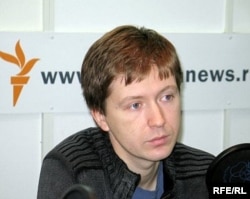 Security services expert Andrei Soldatov
Andrei Soldatov, an expert on Russia's security services and head of the Agentura think tank, says Nurgaliyev's comments partially reflect a desire by law enforcement bodies to stave off unrest ahead of elections to the State Duma in December and for the presidency in March 2012.
Security services expert Andrei Soldatov
Andrei Soldatov, an expert on Russia's security services and head of the Agentura think tank, says Nurgaliyev's comments partially reflect a desire by law enforcement bodies to stave off unrest ahead of elections to the State Duma in December and for the presidency in March 2012.
But Soldatov adds that the Interior Ministry is also eager to win additional budget money to expand the online portion of a four-year-old campaign to combat extremism, which allows it to take "preventive measures" against those who may pose a threat.
"If we are talking about preventive measures, then we need to understand what people or person might in the future commit a crime, write something or publish something," he says. "For that you need to monitor what is going on the Internet."
Soldatov said the ministry would like to deploy "special, so-called antiextremism" profiling systems such as one currently under construction by Roskomnadzor, an agency in the Ministry of Communications, that will monitor online media and new media in Russia.
The measures have Russia's blogging community duly concerned.
'An Amusing Fight That Has No Meaning'
Aleksandr Morozov, a prominent blogger and commentator, says that far-right nationalism as a threat has become an increasingly important -- and useful -- tool for the authorities to use in the run-up to elections.
"When Nurgaliyev said that there are 7,500 extremist sites, it means that they are planning the next high-profile strike against some neo-Nazi or fascism-preaching websites," he says. "This applies to Russian nationalist as well as any other nationalists on the territory of the Russian Federation. I think this is all a political campaign that will continue until the December elections."
Commentators argue, however, that Russia's antiextremism legislation is deeply flawed and can be used against virtually anybody whose views the authorities find threatening or distasteful.
"In order to fight extremism, there needs to be a thought-out definition of what constitutes extremism, which today is lacking," Anton Nossik, another prominent Russian blogger and commentator, told RFE/RL's Russian Service.
"If we just take a look at the list of extremist materials on the Justice Ministry site, then you find authors who died two or three hundred years ago. You can find YouTube clips and audio files the contents of which are unknown to anyone.
"The struggle against extremism is an amusing fight that has no meaning. This is something that the Interior Ministry wastes time, money and administrative resources on.”
Medvedev ordered the founding of an Interministerial Commission against Extremism at the end of last month in the wake of the domestic terrorist attack in Norway on July 22.
Nurgaliyev, a 54-year-old former KGB officer who has served as interior minister for more than seven years, heads the commission.
His remarks come only days after LiveJournal, Russia's most popular blog platform, was subjected to a sustained and powerful cyberattack for the second time this year. The denial-of-service attack, which overloads and disables sites by inundating them with requests from other computers, took the 12-year-old blogging platform intermittently offline for five days last week.
The last major attack on the platform in March initially targeted the blog of Aleksei Navalny, the widely known corruption whistle-blower who blogs his findings -- prompting suspicions of possible Kremlin involvement.
Morozov downplayed state sponsorship of the attacks on LiveJournal, arguing that other platforms such as Vkontakte, the Russian equivalent of Facebook, would be more worthwhile targets.
Soldatov was more guarded and said he had no evidence, although he added it was possible that pro-Kremlin "patriotic" hackers might have carried out the attacks.
RFE/RL’s Russian Service contributed to this report
The remarks fueled fears among bloggers, journalists, and rights activists that Russia may seek to adopt China-style restrictions on the Internet, which is now used by 53 million Russians.
Speaking in the city of Khabarovsk in Russia's Far East on August 2, Nurgaliyev warned that young people are no longer united by "the love songs of old" and that they are prone to the malicious sway of an estimated 7,500 extremist websites operating on Russian territory:
"Particularly serious attention on this question must be devoted to the youth," he said. "Young people are more subject to outside exposure and influence, and it is their hands that carry out the boldest and most cynical crimes. We must protect our youth from this."
Nurgaliyev later said that "the time has long been ripe to carry out monitoring in the country to find out what they are listening to, what they are reading, [and] what they are watching."

One blogger responded to the minister's statements with the question: "Are the thought police coming to Russia?"
Nurgaliyev was not specific about what kind of controls he believes are needed. But he is, nevertheless, the highest-ranking official to call for restrictions on the Internet.
'Combating Extremism'
The interior minister's comments appear to contradict previous remarks in support of Internet freedom by tech-savvy President Dmitry Medvedev, who has his own blog on LiveJournal, Russia’s most popular blogging platform.

But Soldatov adds that the Interior Ministry is also eager to win additional budget money to expand the online portion of a four-year-old campaign to combat extremism, which allows it to take "preventive measures" against those who may pose a threat.
"If we are talking about preventive measures, then we need to understand what people or person might in the future commit a crime, write something or publish something," he says. "For that you need to monitor what is going on the Internet."
Soldatov said the ministry would like to deploy "special, so-called antiextremism" profiling systems such as one currently under construction by Roskomnadzor, an agency in the Ministry of Communications, that will monitor online media and new media in Russia.
The measures have Russia's blogging community duly concerned.
'An Amusing Fight That Has No Meaning'
Aleksandr Morozov, a prominent blogger and commentator, says that far-right nationalism as a threat has become an increasingly important -- and useful -- tool for the authorities to use in the run-up to elections.
"When Nurgaliyev said that there are 7,500 extremist sites, it means that they are planning the next high-profile strike against some neo-Nazi or fascism-preaching websites," he says. "This applies to Russian nationalist as well as any other nationalists on the territory of the Russian Federation. I think this is all a political campaign that will continue until the December elections."
Commentators argue, however, that Russia's antiextremism legislation is deeply flawed and can be used against virtually anybody whose views the authorities find threatening or distasteful.
"In order to fight extremism, there needs to be a thought-out definition of what constitutes extremism, which today is lacking," Anton Nossik, another prominent Russian blogger and commentator, told RFE/RL's Russian Service.
"If we just take a look at the list of extremist materials on the Justice Ministry site, then you find authors who died two or three hundred years ago. You can find YouTube clips and audio files the contents of which are unknown to anyone.
"The struggle against extremism is an amusing fight that has no meaning. This is something that the Interior Ministry wastes time, money and administrative resources on.”
Medvedev ordered the founding of an Interministerial Commission against Extremism at the end of last month in the wake of the domestic terrorist attack in Norway on July 22.
Nurgaliyev, a 54-year-old former KGB officer who has served as interior minister for more than seven years, heads the commission.


The last major attack on the platform in March initially targeted the blog of Aleksei Navalny, the widely known corruption whistle-blower who blogs his findings -- prompting suspicions of possible Kremlin involvement.
Morozov downplayed state sponsorship of the attacks on LiveJournal, arguing that other platforms such as Vkontakte, the Russian equivalent of Facebook, would be more worthwhile targets.
Soldatov was more guarded and said he had no evidence, although he added it was possible that pro-Kremlin "patriotic" hackers might have carried out the attacks.
RFE/RL’s Russian Service contributed to this report

