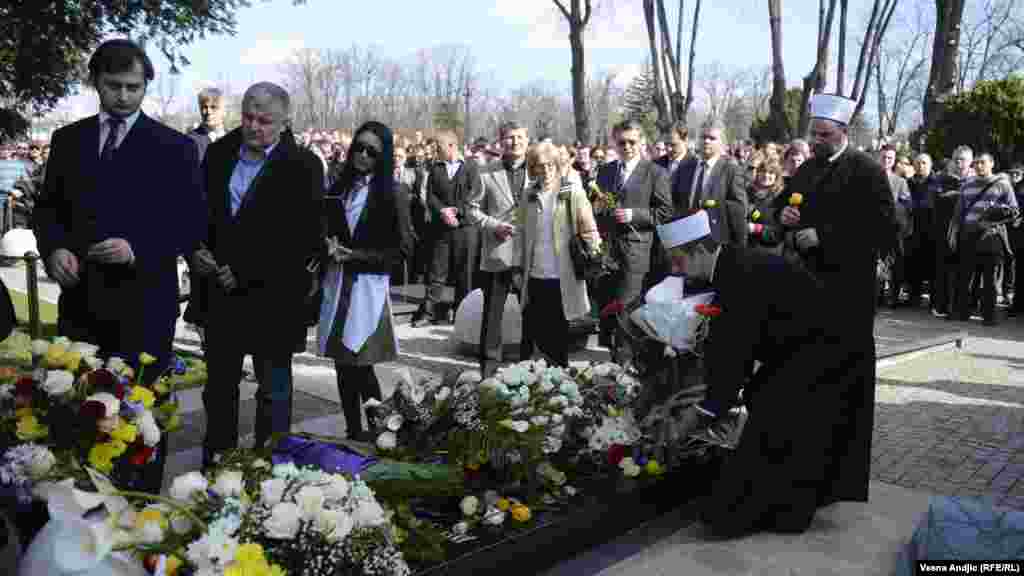
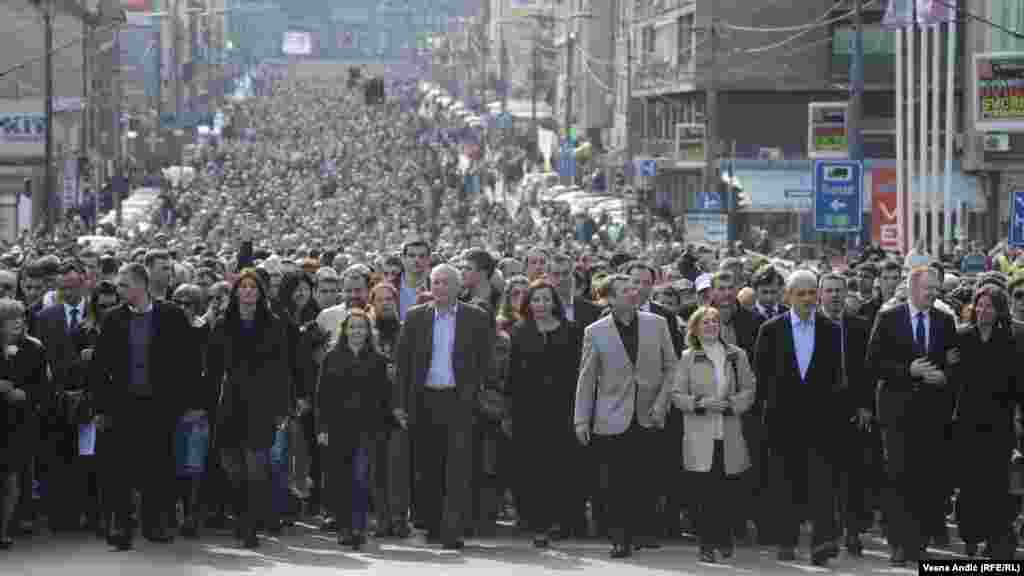
More than 15,000 people marched in Belgrade on March 12 in silence to mark the 10th anniversary of the assassination of Serbian Prime Minister Zoran Djindjic.
More than 15,000 people joined a march honoring Serbia's slain Prime Minister Zoran Djindjic, the reformist leader who led efforts to bring Belgrade closer to the West after the wars of the 1990s.
Djindjic was killed by a sniper on March 12, 2003 in front of the government headquarters in central Belgrade. He was 50 years old.
More than a dozen nationalist paramilitary members and gang members have been convicted and sentenced for the killing.
Djindjic played a key role in the ouster in 2000 of President Slobodan Milosevic and his extradition to the UN war crimes tribunal in The Hague.
While serving as prime minister in 2001-03, Djindjic launched reforms and set Serbia on the path toward European integration.
Analysts say Djindjic's killing was a major setback for Belgrade's progress.
PHOTO GALLERY: Remembering Zoran Djindjic:
Serbia Marks 10 Years Since Assassination Of Zoran Djindjic
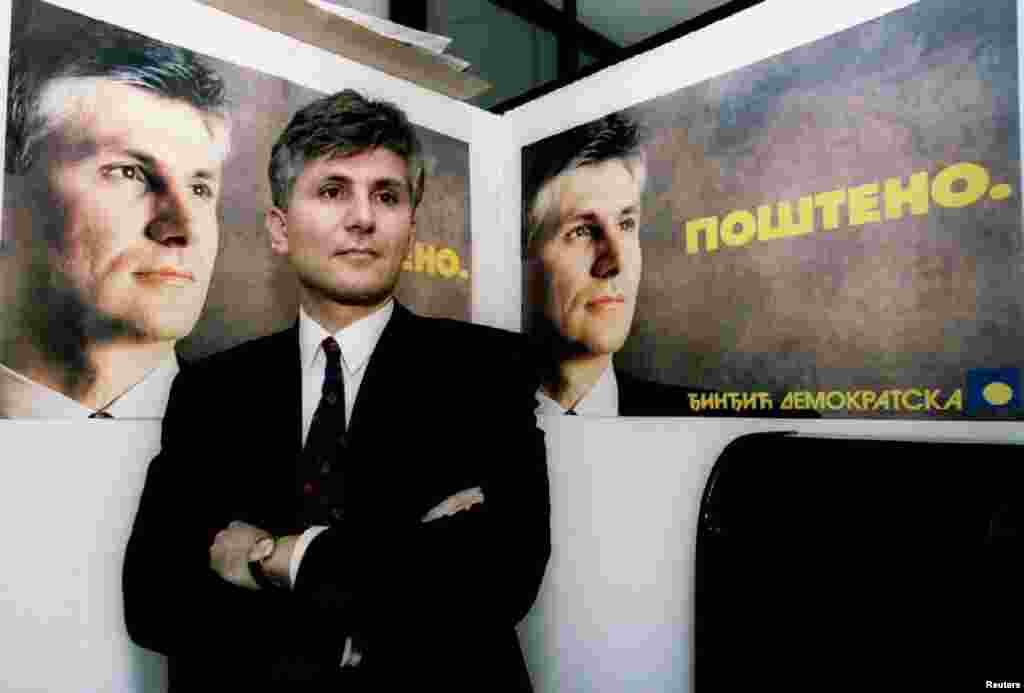
1/20Zoran Djindjic, the leader of Serbia's Democratic Party, which he helped found, poses in front of election posters with the slogan "Fair" on December 23, 1993.
On March 12, 2003, Serbian Prime Minister Zoran Djindjic was assassinated in Belgrade by a sniper from an ultranationalist special police unit with ties to organized crime. Djindjic had been a driving force behind the ouster of Yugoslav President Slobodan Milosevic and became the first democratically elected premier in post-communist Serbia. As Serbia prepares to mark the 10th anniversary of Djindjic’s assassination, here is a look back at his life and death. (16 PHOTOS)
Show moreShow less
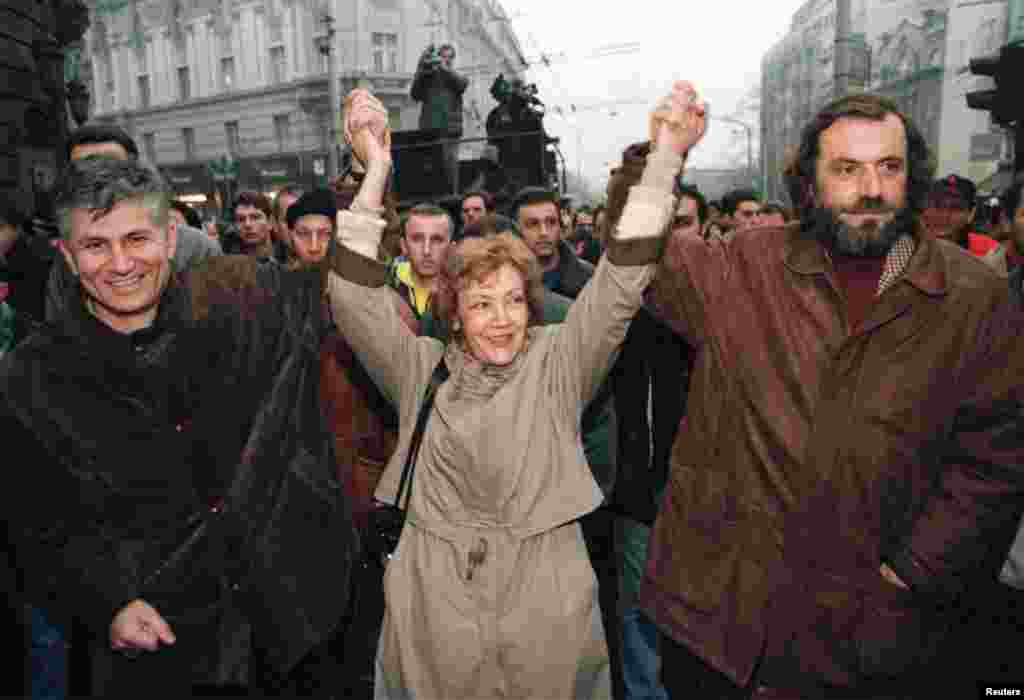
2/20Djindjic joins hands with fellow opposition leaders Vesna Pesic and Vuk Draskovic during a protest against then-Serbian President Slobodan Milosevic on December 4, 1996.
On March 12, 2003, Serbian Prime Minister Zoran Djindjic was assassinated in Belgrade by a sniper from an ultranationalist special police unit with ties to organized crime. Djindjic had been a driving force behind the ouster of Yugoslav President Slobodan Milosevic and became the first democratically elected premier in post-communist Serbia. As Serbia prepares to mark the 10th anniversary of Djindjic’s assassination, here is a look back at his life and death. (16 PHOTOS)
Show moreShow less
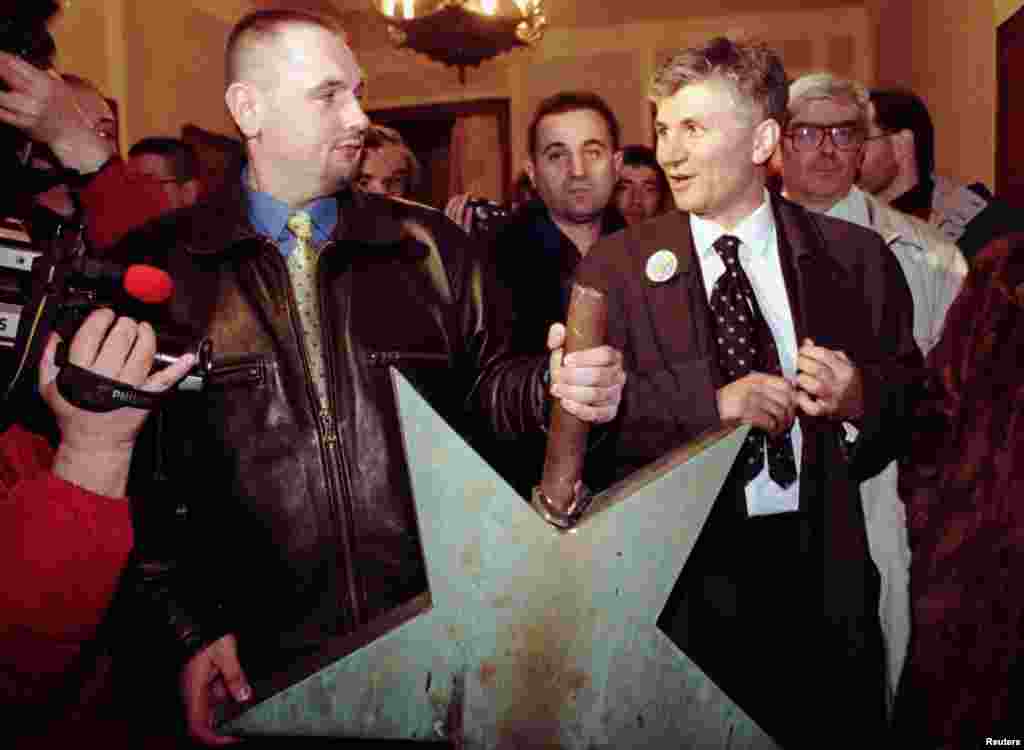
3/20Djindjic took office as mayor of Belgrade in February 1997, becoming the city's first noncommunist mayor since World War II. Here, he stands next to a communist five-pointed star after it was removed from the Belgrade parliament building.
On March 12, 2003, Serbian Prime Minister Zoran Djindjic was assassinated in Belgrade by a sniper from an ultranationalist special police unit with ties to organized crime. Djindjic had been a driving force behind the ouster of Yugoslav President Slobodan Milosevic and became the first democratically elected premier in post-communist Serbia. As Serbia prepares to mark the 10th anniversary of Djindjic’s assassination, here is a look back at his life and death. (16 PHOTOS)
Show moreShow less
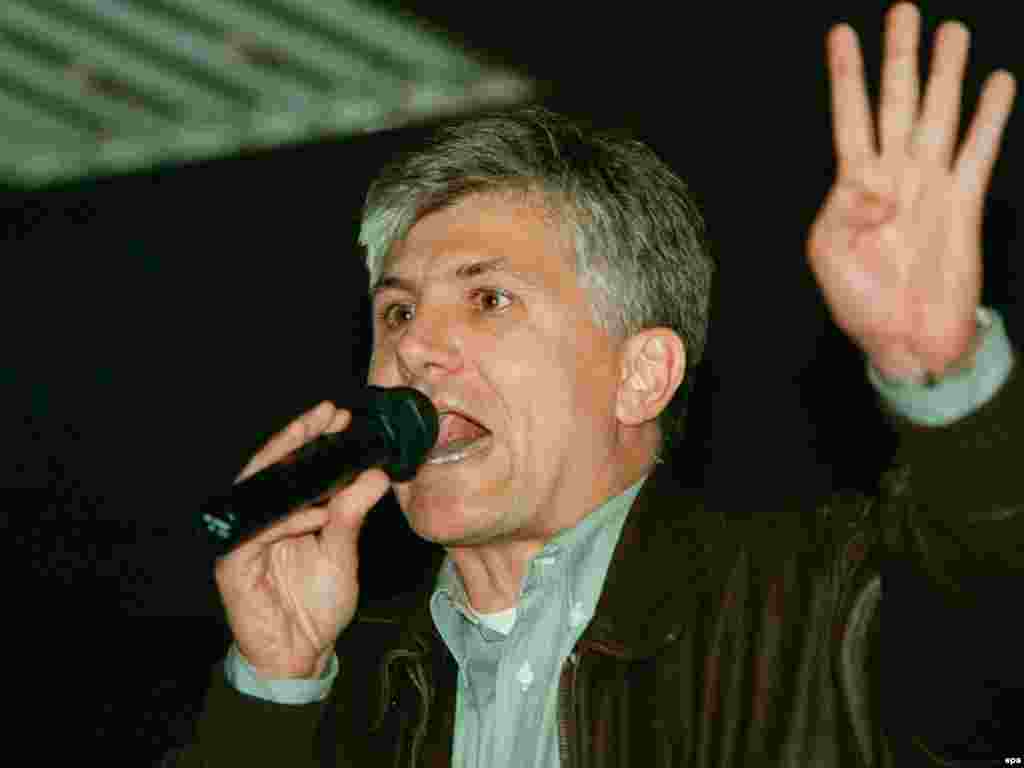
4/20A strong opponent of Yugoslav President Slobodan Milosevic, Djindjic calls for a boycott of presidential and parliamentary elections during a demonstration in Belgrade on September 20, 1997.
On March 12, 2003, Serbian Prime Minister Zoran Djindjic was assassinated in Belgrade by a sniper from an ultranationalist special police unit with ties to organized crime. Djindjic had been a driving force behind the ouster of Yugoslav President Slobodan Milosevic and became the first democratically elected premier in post-communist Serbia. As Serbia prepares to mark the 10th anniversary of Djindjic’s assassination, here is a look back at his life and death. (16 PHOTOS)
Show moreShow less
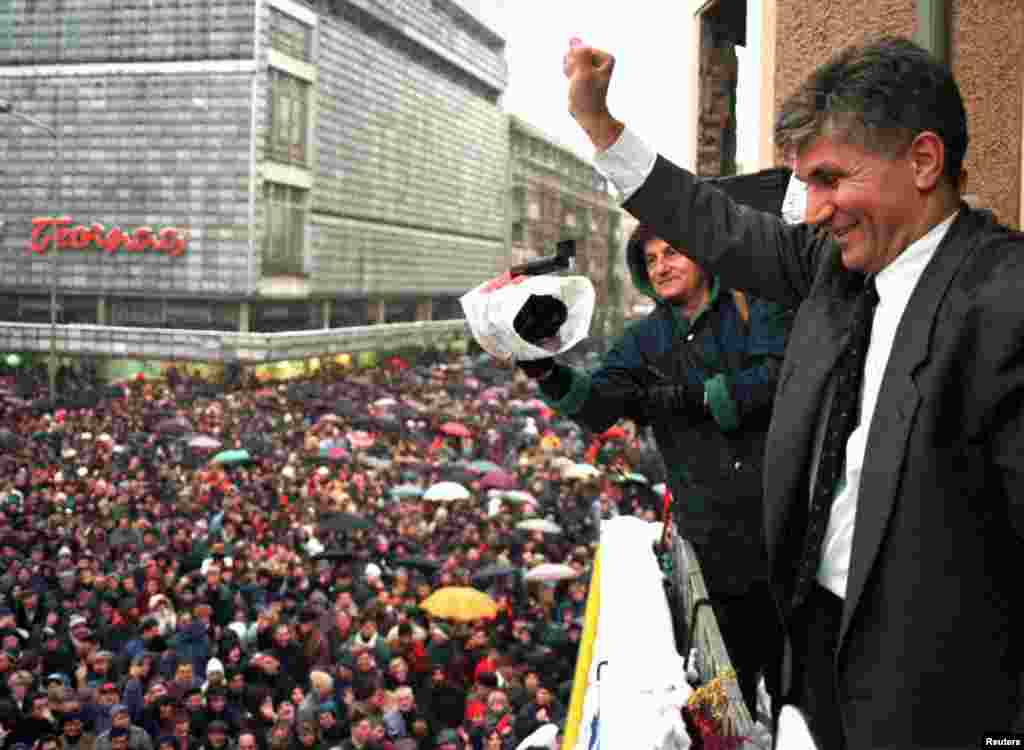
5/20Djindjic greets supporters of his Zajedno (Together) coalition during an antigovernment rally in the southern Serbian town of Nis on January 8, 1997.
On March 12, 2003, Serbian Prime Minister Zoran Djindjic was assassinated in Belgrade by a sniper from an ultranationalist special police unit with ties to organized crime. Djindjic had been a driving force behind the ouster of Yugoslav President Slobodan Milosevic and became the first democratically elected premier in post-communist Serbia. As Serbia prepares to mark the 10th anniversary of Djindjic’s assassination, here is a look back at his life and death. (16 PHOTOS)
Show moreShow less
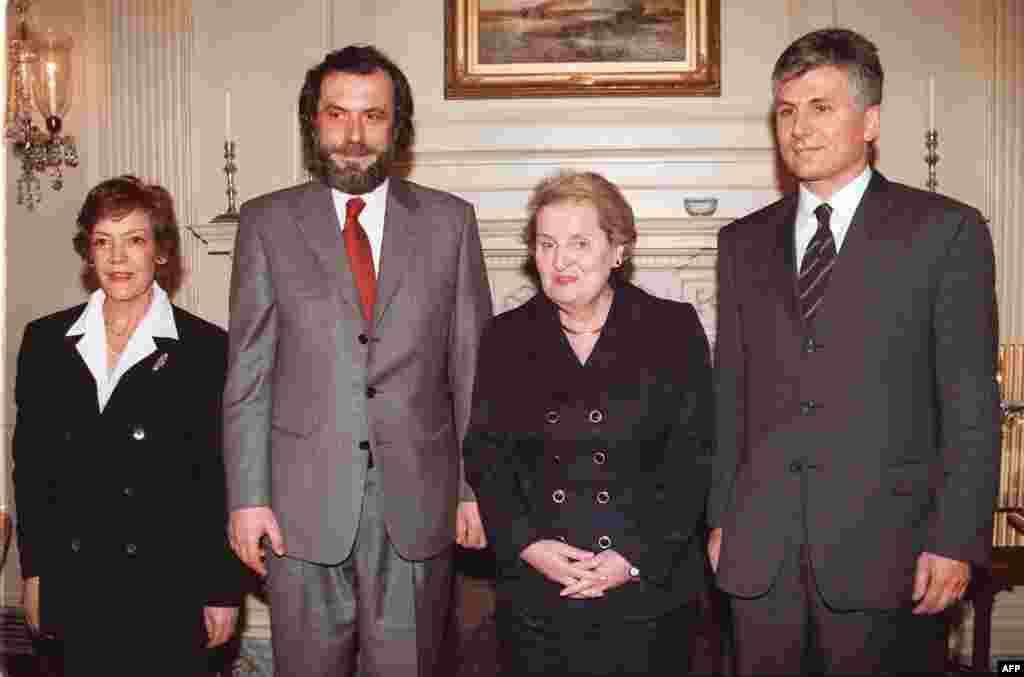
6/20The three leaders of the Zajedno opposition coalition meet U.S. Secretary of State Madeleine Albright at the U.S. State Department in Washington on April 4, 1997.
On March 12, 2003, Serbian Prime Minister Zoran Djindjic was assassinated in Belgrade by a sniper from an ultranationalist special police unit with ties to organized crime. Djindjic had been a driving force behind the ouster of Yugoslav President Slobodan Milosevic and became the first democratically elected premier in post-communist Serbia. As Serbia prepares to mark the 10th anniversary of Djindjic’s assassination, here is a look back at his life and death. (16 PHOTOS)
Show moreShow less
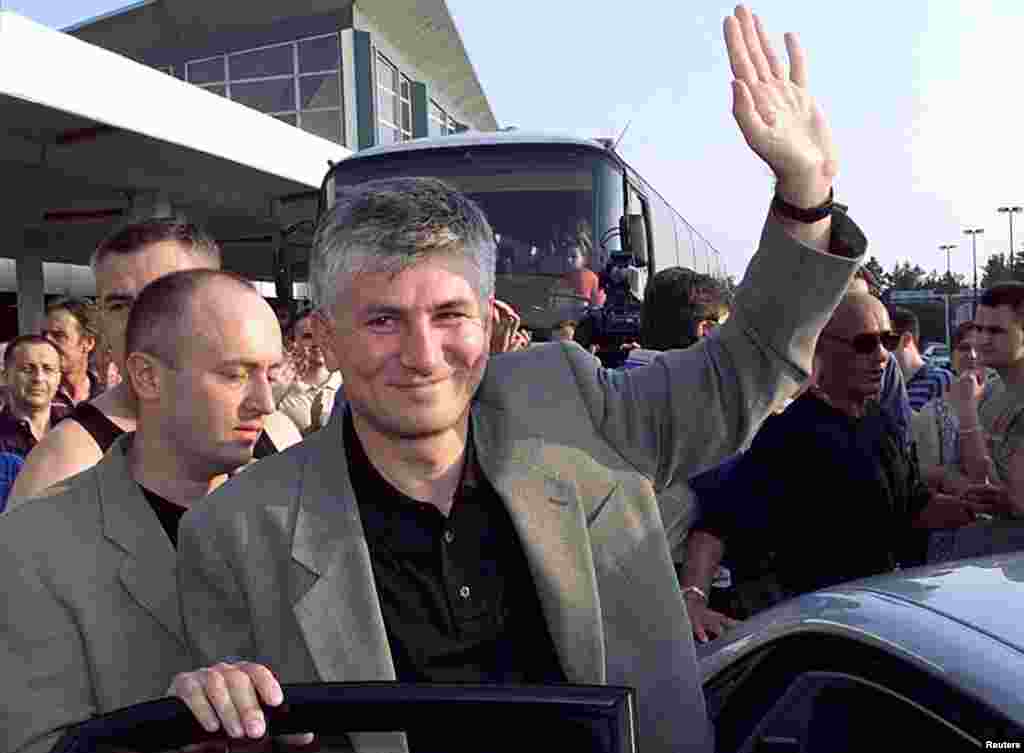
7/20Djindjic waves to supporters who had gathered at the airport upon his arrival in Belgrade on July 4, 1999. Djindjic had left Belgrade after the beginning of the NATO air strikes against Yugoslavia, facing charges of draft evasion that carried up to 20 years in prison.
On March 12, 2003, Serbian Prime Minister Zoran Djindjic was assassinated in Belgrade by a sniper from an ultranationalist special police unit with ties to organized crime. Djindjic had been a driving force behind the ouster of Yugoslav President Slobodan Milosevic and became the first democratically elected premier in post-communist Serbia. As Serbia prepares to mark the 10th anniversary of Djindjic’s assassination, here is a look back at his life and death. (16 PHOTOS)
Show moreShow less
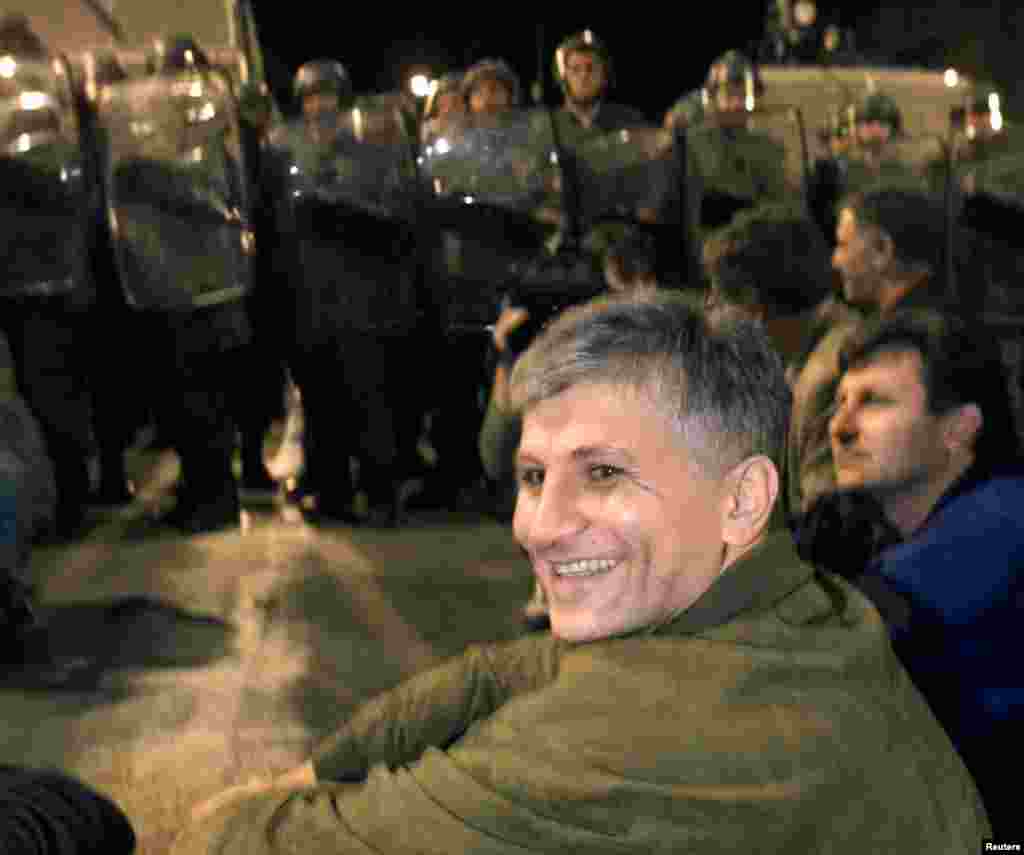
8/20Djindjic and fellow protesters sit in front of a police cordon during a march against Yugoslav President Slobodan Milosevic on September 29, 1999.
On March 12, 2003, Serbian Prime Minister Zoran Djindjic was assassinated in Belgrade by a sniper from an ultranationalist special police unit with ties to organized crime. Djindjic had been a driving force behind the ouster of Yugoslav President Slobodan Milosevic and became the first democratically elected premier in post-communist Serbia. As Serbia prepares to mark the 10th anniversary of Djindjic’s assassination, here is a look back at his life and death. (16 PHOTOS)
Show moreShow less
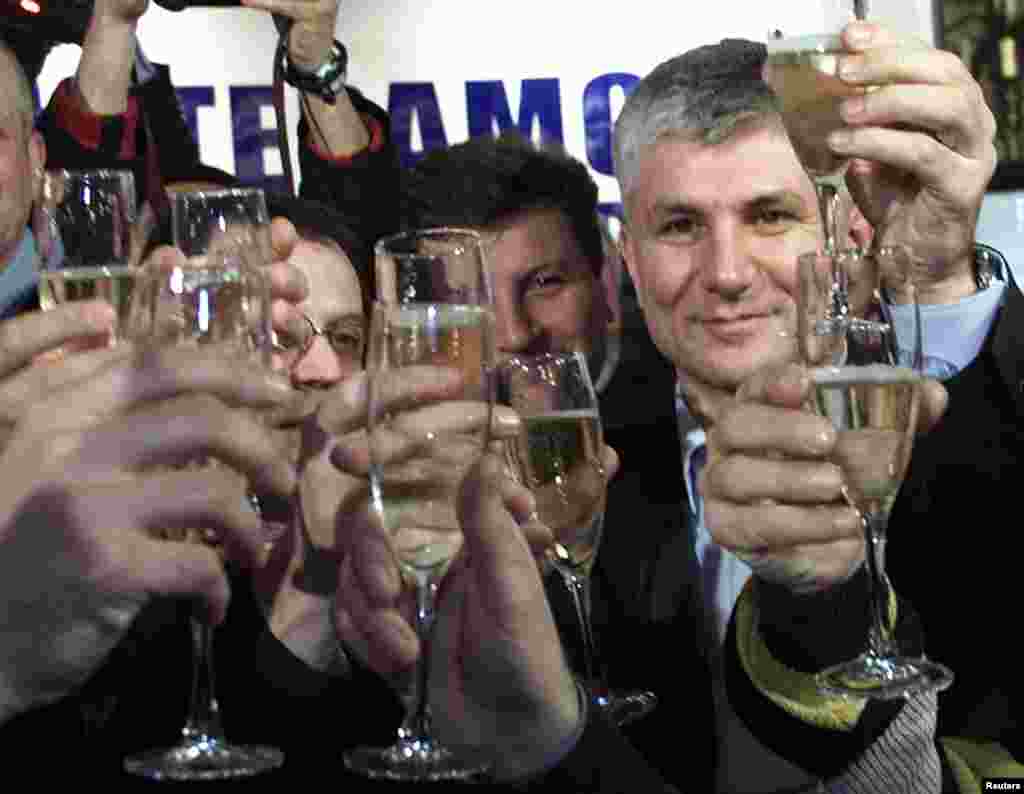
9/20Members of the Democratic Party of Serbia celebrate Djindjic's election victory in Belgrade on December 24, 2000. He took office as prime minister one month later.
On March 12, 2003, Serbian Prime Minister Zoran Djindjic was assassinated in Belgrade by a sniper from an ultranationalist special police unit with ties to organized crime. Djindjic had been a driving force behind the ouster of Yugoslav President Slobodan Milosevic and became the first democratically elected premier in post-communist Serbia. As Serbia prepares to mark the 10th anniversary of Djindjic’s assassination, here is a look back at his life and death. (16 PHOTOS)
Show moreShow less
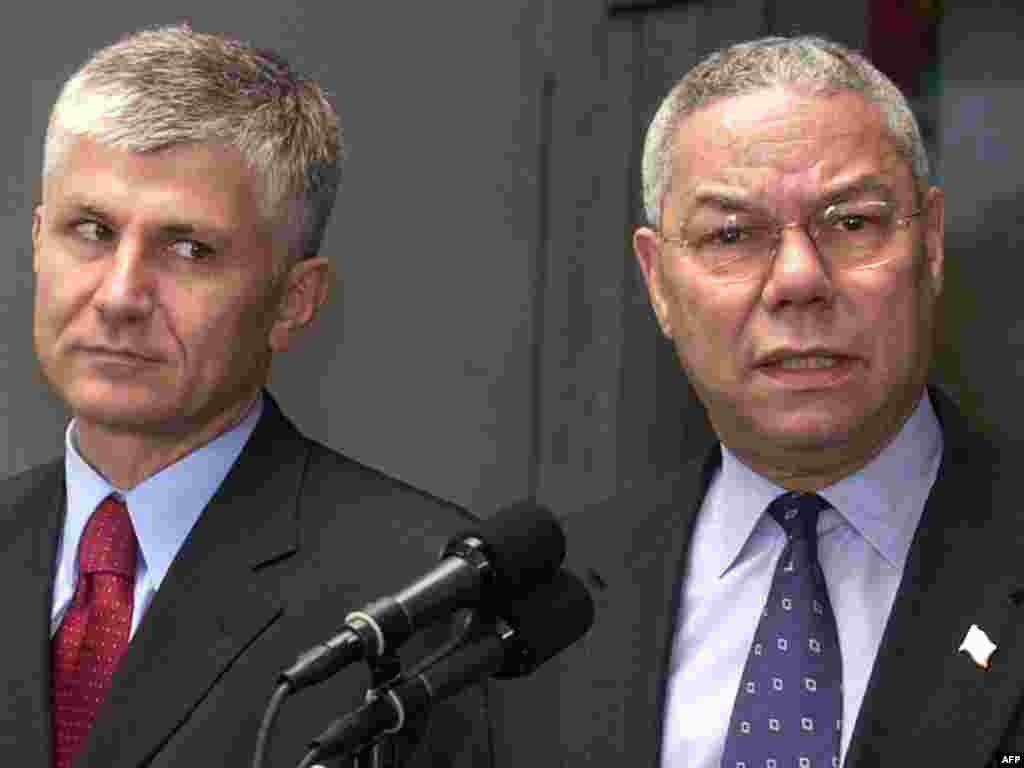
10/20Djindjic with U.S. Secretary of State Colin Powell outside the State Department in Washington, D.C., on May 21, 2002.
On March 12, 2003, Serbian Prime Minister Zoran Djindjic was assassinated in Belgrade by a sniper from an ultranationalist special police unit with ties to organized crime. Djindjic had been a driving force behind the ouster of Yugoslav President Slobodan Milosevic and became the first democratically elected premier in post-communist Serbia. As Serbia prepares to mark the 10th anniversary of Djindjic’s assassination, here is a look back at his life and death. (16 PHOTOS)
Show moreShow less
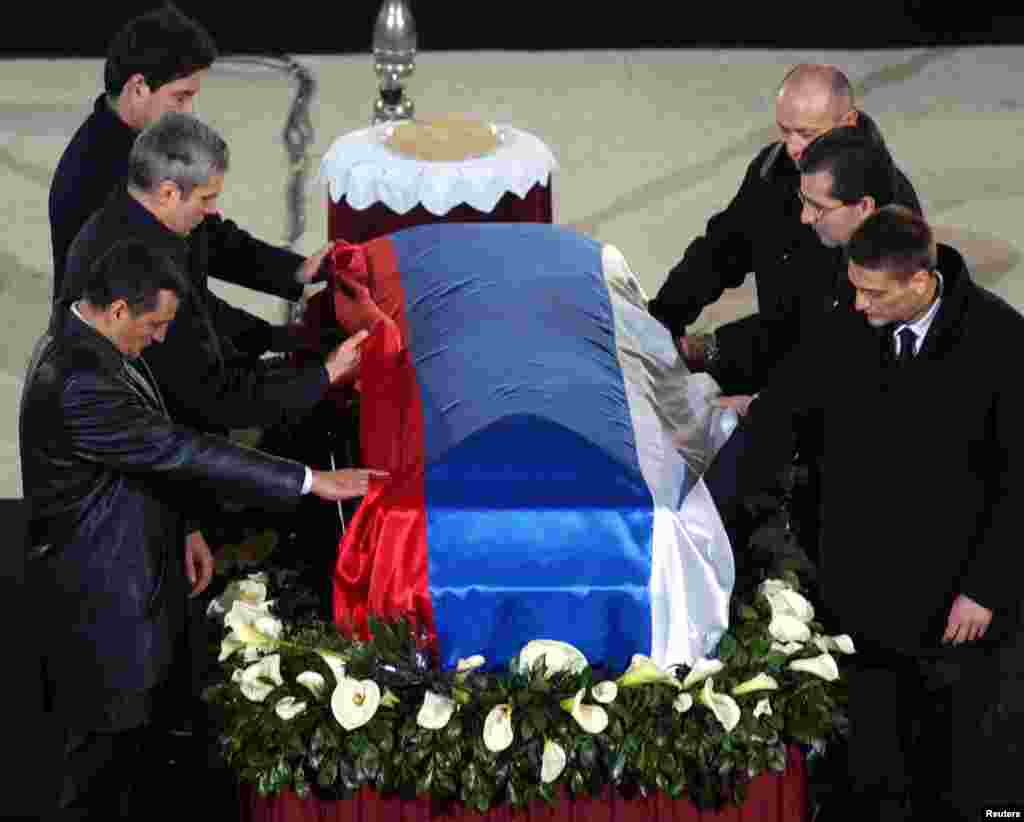
11/20On March 12, 2003, a sniper connected to an ultranationalist police unit shot Djindjic in broad daylight outside a government building. Here, close friends and colleagues pay their last respects at the St. Sava church in Belgrade on March 15.
On March 12, 2003, Serbian Prime Minister Zoran Djindjic was assassinated in Belgrade by a sniper from an ultranationalist special police unit with ties to organized crime. Djindjic had been a driving force behind the ouster of Yugoslav President Slobodan Milosevic and became the first democratically elected premier in post-communist Serbia. As Serbia prepares to mark the 10th anniversary of Djindjic’s assassination, here is a look back at his life and death. (16 PHOTOS)
Show moreShow less
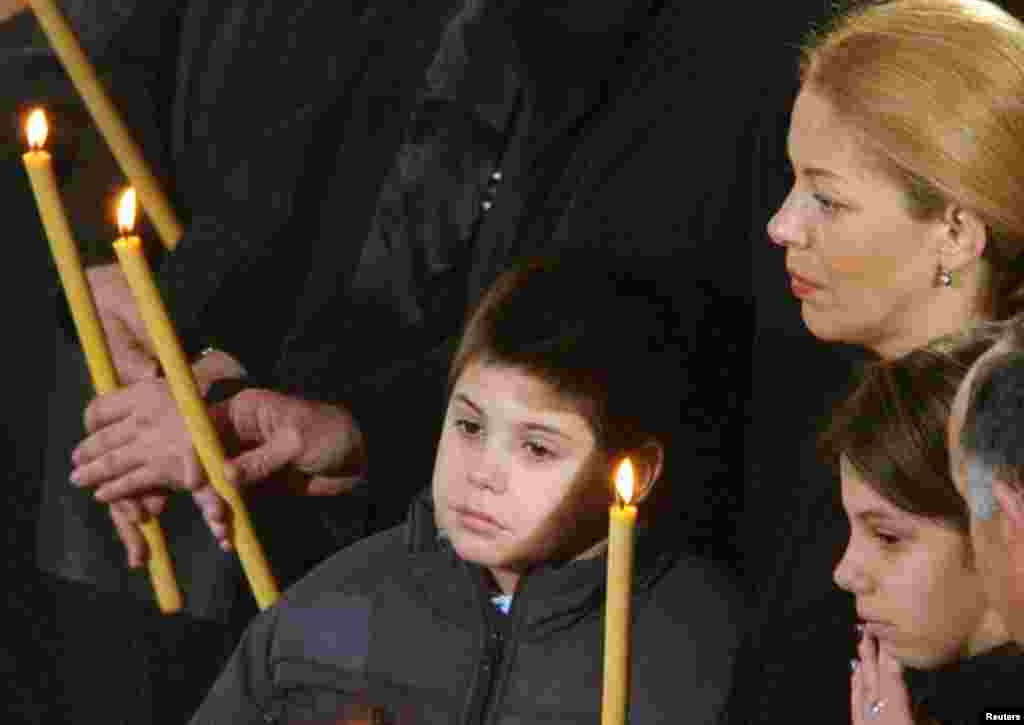
12/20Djindjic's son Luka, wife, Ruzica, and daughter Jovana at the funeral service
On March 12, 2003, Serbian Prime Minister Zoran Djindjic was assassinated in Belgrade by a sniper from an ultranationalist special police unit with ties to organized crime. Djindjic had been a driving force behind the ouster of Yugoslav President Slobodan Milosevic and became the first democratically elected premier in post-communist Serbia. As Serbia prepares to mark the 10th anniversary of Djindjic’s assassination, here is a look back at his life and death. (16 PHOTOS)
Show moreShow less
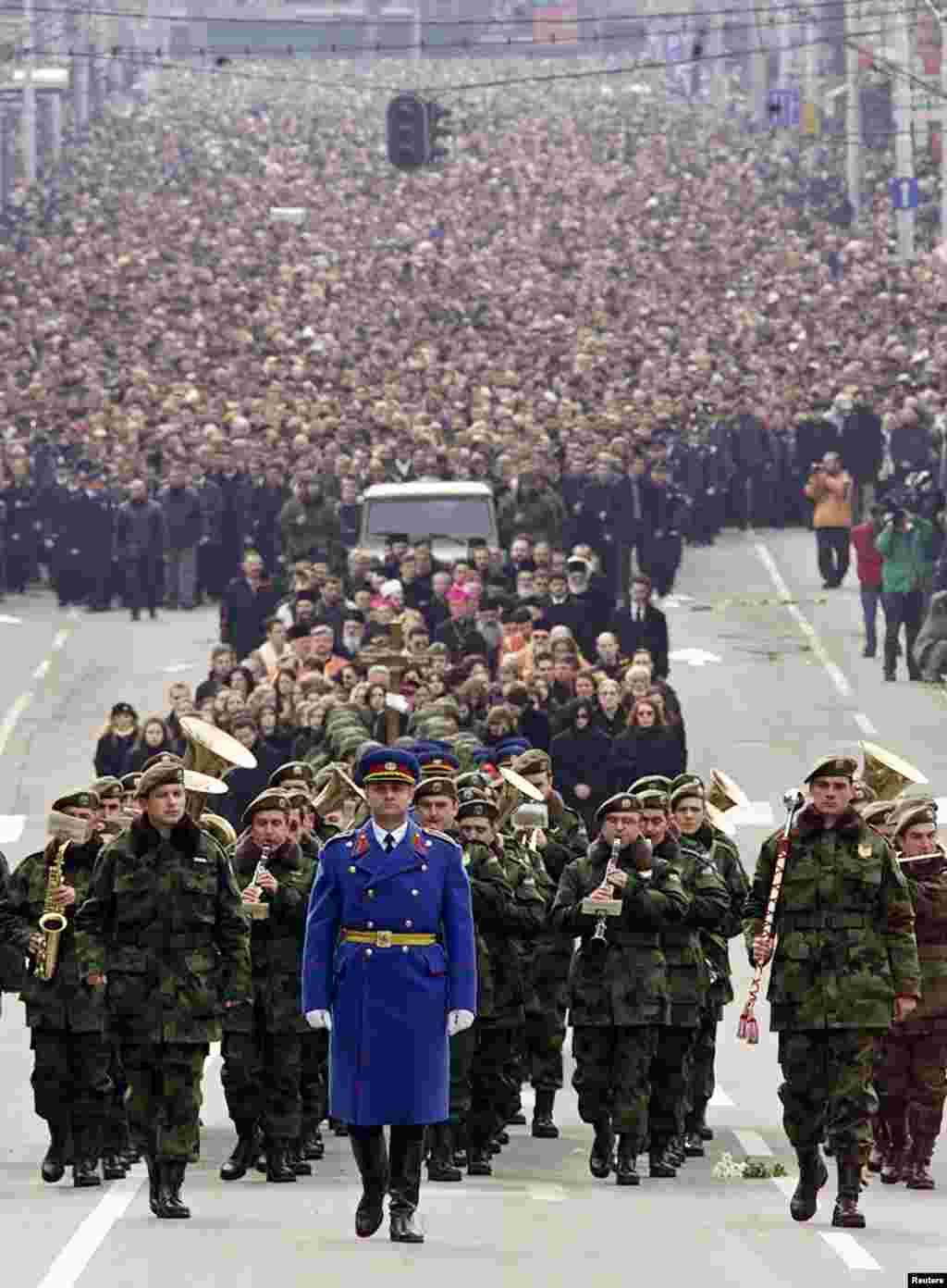
13/20Hundreds of thousands of people walk in a silent procession toward Belgrade's New Cemetery, where Djindjic was to be buried.
On March 12, 2003, Serbian Prime Minister Zoran Djindjic was assassinated in Belgrade by a sniper from an ultranationalist special police unit with ties to organized crime. Djindjic had been a driving force behind the ouster of Yugoslav President Slobodan Milosevic and became the first democratically elected premier in post-communist Serbia. As Serbia prepares to mark the 10th anniversary of Djindjic’s assassination, here is a look back at his life and death. (16 PHOTOS)
Show moreShow less
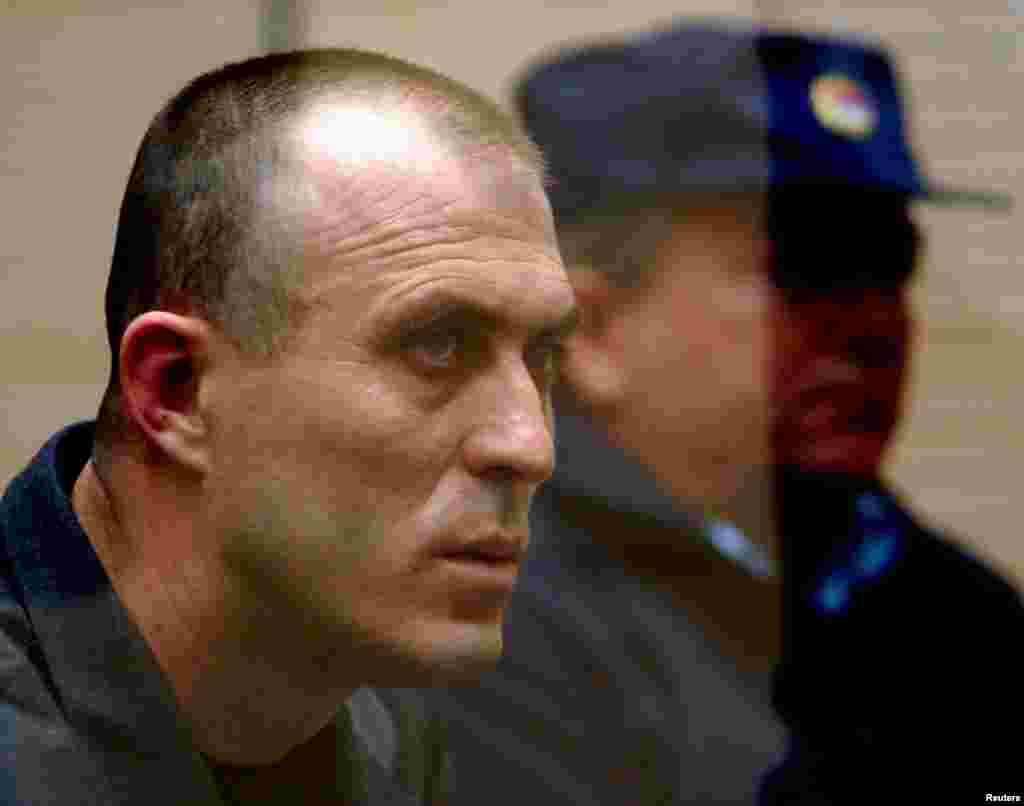
14/20Zvezdan Jovanovic, a former deputy commander of the elite Red Berets secret service unit, stands trial in Belgrade in 2003 for firing the bullets that killed Djindjic. He and another 11 men have been convicted of collaborating in the assassination plot.
On March 12, 2003, Serbian Prime Minister Zoran Djindjic was assassinated in Belgrade by a sniper from an ultranationalist special police unit with ties to organized crime. Djindjic had been a driving force behind the ouster of Yugoslav President Slobodan Milosevic and became the first democratically elected premier in post-communist Serbia. As Serbia prepares to mark the 10th anniversary of Djindjic’s assassination, here is a look back at his life and death. (16 PHOTOS)
Show moreShow less
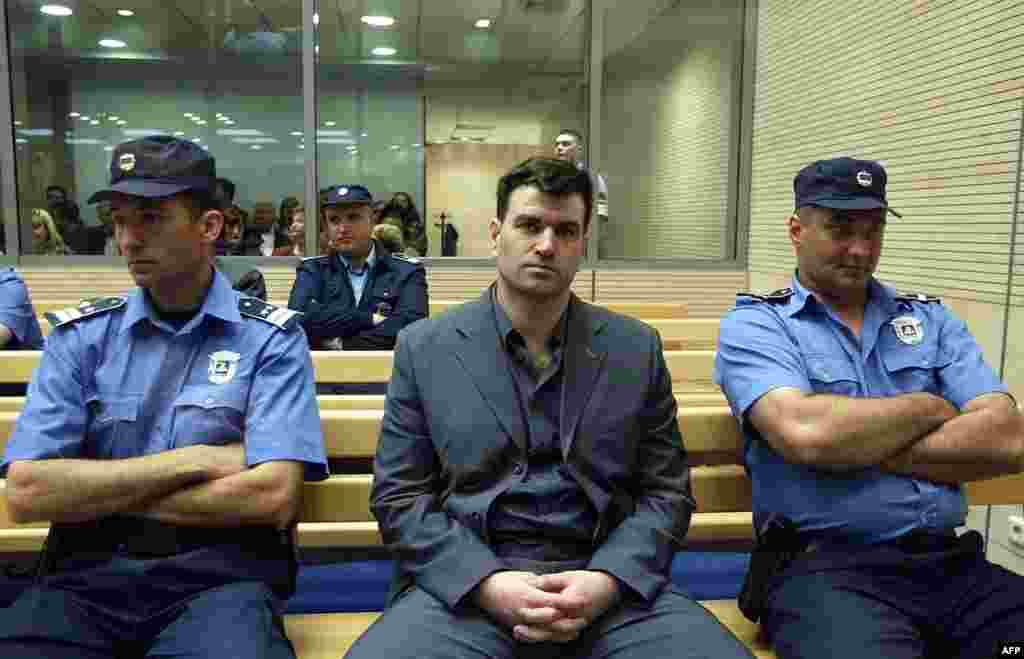
15/20The alleged mastermind of the assassination plot, former paramilitary leader Milorad Ulemek, also known as Legija, awaits trial on May 10, 2003. He and the shooter, Zvezdan Jovanovic, were both sentenced in 2007 to 40 years in jail for conspiring to assassinate Djindjic.
On March 12, 2003, Serbian Prime Minister Zoran Djindjic was assassinated in Belgrade by a sniper from an ultranationalist special police unit with ties to organized crime. Djindjic had been a driving force behind the ouster of Yugoslav President Slobodan Milosevic and became the first democratically elected premier in post-communist Serbia. As Serbia prepares to mark the 10th anniversary of Djindjic’s assassination, here is a look back at his life and death. (16 PHOTOS)
Show moreShow less
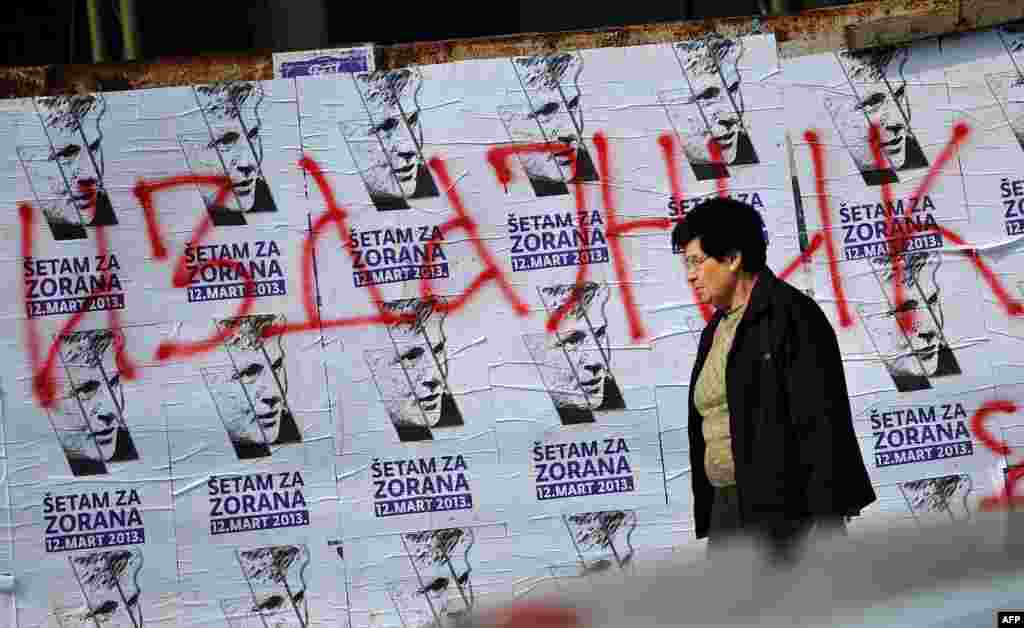
16/20A woman walks past placards announcing the commemorative march in the Serbian capital to mark the 10th anniversary of Djindjic's assassination. (AFP/Andrej Isakovic)
On March 12, 2003, Serbian Prime Minister Zoran Djindjic was assassinated in Belgrade by a sniper from an ultranationalist special police unit with ties to organized crime. Djindjic had been a driving force behind the ouster of Yugoslav President Slobodan Milosevic and became the first democratically elected premier in post-communist Serbia. As Serbia prepares to mark the 10th anniversary of Djindjic’s assassination, here is a look back at his life and death. (16 PHOTOS)
Show moreShow less
17/20More than 15,000 people marched in silence in Belgrade on March 12 to mark the 10th anniversary of Djindjic's assassination. (AFP/Andrej Isakovic)
On March 12, 2003, Serbian Prime Minister Zoran Djindjic was assassinated in Belgrade by a sniper from an ultranationalist special police unit with ties to organized crime. Djindjic had been a driving force behind the ouster of Yugoslav President Slobodan Milosevic and became the first democratically elected premier in post-communist Serbia. As Serbia prepares to mark the 10th anniversary of Djindjic’s assassination, here is a look back at his life and death. (16 PHOTOS)
Show moreShow less
18/20Religious, political, and cultural figures turned out to pay their respects at the March 12 ceremony.
On March 12, 2003, Serbian Prime Minister Zoran Djindjic was assassinated in Belgrade by a sniper from an ultranationalist special police unit with ties to organized crime. Djindjic had been a driving force behind the ouster of Yugoslav President Slobodan Milosevic and became the first democratically elected premier in post-communist Serbia. As Serbia prepares to mark the 10th anniversary of Djindjic’s assassination, here is a look back at his life and death. (16 PHOTOS)
Show moreShow less
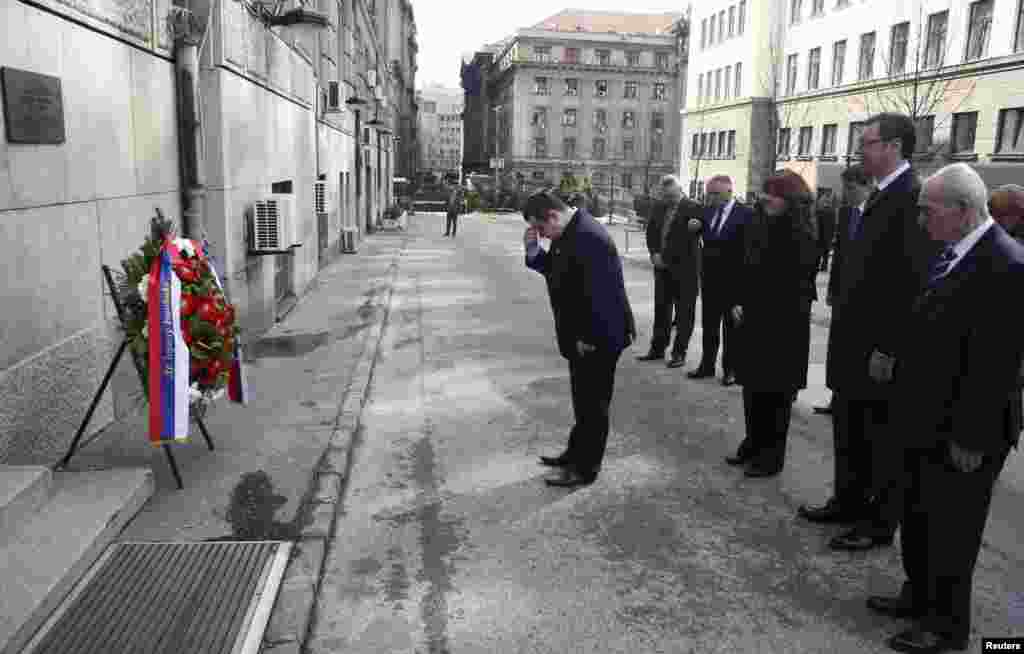
19/20Serbian Prime Minister Ivica Dacic (center) and members of the government pay their respects on March 12, 2013, in front of the Serbian government building where Djindjic was assassinated 10 years ago in Belgrade.
(Reuters/Djordje Kojadinovic)
On March 12, 2003, Serbian Prime Minister Zoran Djindjic was assassinated in Belgrade by a sniper from an ultranationalist special police unit with ties to organized crime. Djindjic had been a driving force behind the ouster of Yugoslav President Slobodan Milosevic and became the first democratically elected premier in post-communist Serbia. As Serbia prepares to mark the 10th anniversary of Djindjic’s assassination, here is a look back at his life and death. (16 PHOTOS)
Show moreShow less
20/20
On March 12, 2003, Serbian Prime Minister Zoran Djindjic was assassinated in Belgrade by a sniper from an ultranationalist special police unit with ties to organized crime. Djindjic had been a driving force behind the ouster of Yugoslav President Slobodan Milosevic and became the first democratically elected premier in post-communist Serbia. As Serbia prepares to mark the 10th anniversary of Djindjic’s assassination, here is a look back at his life and death. (16 PHOTOS)