




Speaking on May 18 in Strasbourg, Lavrov said Moscow will seek to stretch the council's mandate beyond protecting human rights and promoting democracy.
"We believe we can contribute not only to safeguarding and developing issues that are traditionally on the agenda of the Council of Europe, but also to extending cooperation in new areas, particularly in the context of the search for more effective responses to the threats of terrorism, drug trafficking, organized crime, and the proliferation of weapons of mass destruction," Lavrov said.
The Russian Foreign Ministry has also indicated it will use its chairmanship to fight what it calls Western "double standards" regarding Russia and other former Soviet republics.
Criticism
Such sentiments from Moscow have served to increase Western concerns about Russia's tenure at the head of the committee, which comprises the foreign ministers of all the member states, or their permanent diplomatic representatives in Strasbourg.
Just this week, the Council of Europe's European Commission Against Racism and Intolerance criticized Moscow for not doing enough to combat a virtual epidemic of hate crimes.
And last week, the International Helsinki Federation for Human Rights accused Russia of running a network of secret prisons in Chechnya, and asked the Council of Europe to investigate.
Rights Obligations
Human rights activists say that rather than seeking to expand the Council of Europe's mandate, Russia should instead focus on meeting its own obligations as a member of the organization.

The Committee of Ministers
"Russia is definitely a whole lot less democratic than it was in 1996. Freedom of speech, freedom of the media have been restricted severely over the last 10 years. In addition to that, there of course still is the lingering armed conflict in Chechnya, where people continue to disappear on a very regular basis at the hands of Russian forces or pro-Moscow Chechen forces," Lohman says. "And the Russians have not taken any effective steps to stop these abuses there or to bring the perpetrators to justice. "
Lohman adds that Russia has room for improvement in many areas, including reforming the prosecutor's office and the security services, formally abolishing the death penalty, and protecting basic rights such as freedom of the press.
Rights activists say that Russia's claims of double standards and warnings about the West imposing its own standards are disingenuous:
"By being a member of the Council of Europe, Russia has formally taken on certain human rights obligations. It can no longer say that these are 'Western' values, because they are values that it has signed on to," Lohman says. "The European Court of Human Rights has very clear jurisprudence, and that jurisprudence applies to every single member state in the Council of Europe, including Russia. So there really are no double standards."
As a member of the Council of Europe, Russia is expected to take over the committee chairmanship. The chair is not elected, but rotates alphabetically among the Council of Europe's 46 member states.
Epidemic Of Hate
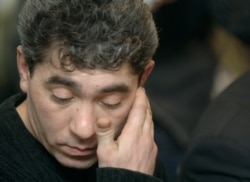 Yusuf Sultonov, whose 9-year-old daughter was beaten and stabbed to death in St. Petersburg on February 9, 2004 (TASS)
EXTREMISM ASCENDANT: More than half of Russians have xenophobic views, according to a report published in August 2005. In the report, rights groups say that -- despite progress in some areas -- racism, xenophobia, and anti-Semitism remain rife in Russia. But what worries watchdogs most are recent moves by nationalist-patriotic movements to form paramilitary groups....(more)
RELATED ARTICLES
A Timeline Of Recent Racial Incidents
Russian Ombudsman Condemns Hate Crimes
Hate Crime Trial Highlights Mounting Racism
Minister Says Russia Can't Stop Xenophobia Alone
For African Students In Russia, Affordable Education Comes At A Price
ARCHIVE
To view an archive of all of RFE/RL's coverage of Russia, click here.

SUBSCRIBE
For a regular review of civil-society developments throughout RFE/RL's broadcast region, subscribe to "RFE/RL (Un)Civil Societies."

RFE/RL IN RUSSIAN: Visit RFE/RL's Russian-language website, featuring news, analysis, features, streaming audio, and more in Russian, courtesy of RFE/RL's Russian Service.