




The contentious Afghan peace process finally came to a grinding halt when Afghan President Hamid Karzai announced on September 30 on local Afghan TV that there was no point in dialogue with the Taliban after its peace emissary turned out to be a suicide bomber.
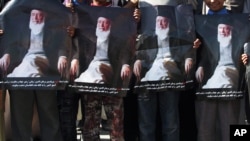
By abandoning talks with the Taliban and speaking directly with Pakistan, Karzai is essentially pointing the finger at its southeastern neighbor as the primary source of Afghanistan's woes. By some accounts, this was precisely the move that the Afghan president had been itching to make since the July assassination of his half-brother, Ahmad Wali Karzai, reportedly by neo-Taliban extremists. But what clenched Karzai's resolve was the brazen assassination of former Afghan President Burhanuddin Rabbani on September 20 -- the latest in a wave of assassinations that began about six months ago, targeting influential Afghan figures.
"At the time, most of [Karzai's] advisers, including my father, advised the president against making statements against Pakistan, or alluding publicly to Pakistan's hand in this string of assassinations," said Jalal Rabbani, son of the slain leader. "My father told him that it would be better not to antagonize Pakistan at the time, but right now it seems there simply isn't any other option."
The consensus in the power circles of Kabul is that Pakistan, fearful of losing influence in Afghanistan, has covertly agitated the security situation in order to force Afghans to the negotiating table with Islamabad.
Exposed
Prince Abdul Ali Seraj, head of the National Coalition for Dialogue with Tribes of Afghanistan, says: "Pakistan wanted this all along but it did not want to be exposed as the backer of the Taliban. Now the world hears Karzai saying, 'You are backing Taliban so we will talk to you directly for you to stop the Taliban.'"
But Seraj cautions against the pitfalls of negotiating with a meddlesome neighbor. "Karzai has to be careful. We should not succumb to Pakistan's demands to play a major role in Afghanistan's future," he says. "Afghanistan is an independent country. They can always play a role as neighbor. But Afghanistan cannot be a suburb of Pakistan."
Karzai's decision to bypass Taliban emissaries and speak instead with Pakistan may also be viewed as the result of pressure by zealous Afghan opposition figures, who were quick to capitalize on the Rabbani assassination to discredit Karzai's policy of engagement with the Taliban. Karzai's decision to make this declaration on Noor TV, owned by Rabbani's eldest son, may have fostered this impression.
After all, the late Rabbani's appointment to the helm of the High Peace Council in 2010 was in part an attempt to placate the mainly ethnic-Tajik opposition who were vehemently opposed to negotiating with the Taliban -- a process they dubbed "appeasement" -- but this move only served to fuel simmering tensions in the Jamiat-e Islami party headed by the slain leader.
Ahmad Wali Masud, head of the Massoud Foundation and former Afghan ambassador to the U.K., is skeptical of any major shift in policy on the part of Karzai. "Let's not forget that Karzai has always insisted on holding talks with the Taliban, calling them 'brothers', 'sons of Afghanistan,' and even on one occasion claiming they were better than the mujahedin. And let's not forget that he has been in contact with the Taliban for years; it's just that it has been made public recently."
Masud, an ethnic Tajik, adds: "Why has he maintained these relations with the Taliban? Because he wanted a force on his side to counter the opposition he faced from the United Front, those who fought against the Taliban in the first place. Karzai needed foot soldiers to skew the balance of power between ethnic Pashtuns and non-Pashtuns in the country. All this was to consolidate his own power base, which is south of the country, among the ethnic Pashtuns."
Members of the Jamiat-e Islami party reacted variously to the Rabbani assassination, with some pledging bloody vengeance, and others somberly reflecting upon the possibility that this was a plot that extended far beyond the Taliban.
'Shameless Opportunism'
Jalal Rabbani expressed "disgust" at the "shameless opportunism" displayed by some former members of Jamiat-e Islami, who he believes have used his father's assassination to further their own agendas. "The nature and intentions of these individuals were known, even while my father was alive," he says without naming names. "It is no surprise that they have now jumped at the chance to further their own stagnant political careers, using my father's martyrdom as a springboard."
For the Jamiat-e Islami, a party that has long been plagued by internal division and rivalry, the task at hand is to select a successor to the late Rabbani, whose legacy -- however controversial and hotly debated -- spans half a century, notably his key role in the Afghan war against Soviet occupation.
"Fortunately, my father had already put in place a mechanism for succession, by appointing a hundred or so representatives to hold a kangara [party congress] and select the most suitable candidate," Jalal says, adding that this congress would take place when "things have settled."
There are a few contenders vying for the party's top job, including Rabbani's son-in-law Ahmad Zia Masud and a number of former jihadi lieutenants, notably General Atta Mohammad, governor of Mazar-e Sharif. Although there are doubts over the ability of these contenders to fill the shoes of the late Rabbani -- widely regarded as a savvy politician and an "elder" -- the likely successor is by all accounts Rabbani's eldest son, Salahuddin, who is currently Afghanistan's ambassador to Turkey, and holds a degree from Columbia University in New York.
"After every situation like this, there will always be a power struggle," says Seraj, who does not forecast an ugly contest over the leadership of Jamiat-e Islami. "The final draw is likely to be between the son and the son-in-law because the general is too controversial a figure."
Jalal goes on to deny rumors of tensions in the family as a result of his brother-in-law's reported bid for succession. Ahmad Zia Masud, brother of the slain mujahedin commander Ahmad Shah Masud also known as "The Lion of Panjshir," served as vice president for a term, and previously as Afghan ambassador to Russia. Some feel that Masud's ascension to the helm of Jamiat-e Islami might allay reported tensions between the Panjshiri contingent and those at the party's core.
"There is no basis to these rumors," Jalal says. "Ahmad Zia loved my father and he is very much a key member of Jamiat. He has no aspirations to succeed my father, and there would never be a family rift over such an issue."
Mastermind
For now, Jalal's primary concern lies in finding the masterminds behind the assassination of his father, which he believes is fundamental to the peace and security of Afghanistan. "The probe into my father's martyrdom has been concluded on the Afghan side, and we are satisfied with the findings," he says. "But there are still a lot of unanswered questions on the Pakistan side. We hope that the Pakistani authorities will be cooperative."
Jalal, who met Pakistani Prime Minister Yusuf Raza Gilani a few days ago at the Presidential Palace in Kabul, adds: "It is time Pakistan stopped playing the game with two faces in Afghanistan. They are playing a dangerous game in my country, by looking after their own interests vis-a-vis India in a way that is devastating to Afghanistan. This must come to an end now."
Whatever the outcome of the Pakistani investigations into the Rabbani assassination, Afghan public opinion has already -- for the most part -- been made up. In a land where hearsay carries more weight than official statements, Pakistan's all-pervading Inter-Services Intelligence (ISI) agency is widely believed to have masterminded the audacious suicide attack on the former president, who was tasked with brokering a truce with the neo-Taliban.
By offering a sample of what would ensue as a result of Pakistan's marginalization from Afghan affairs, Islamabad has muscled Kabul to the negotiating table. As such, it remains to be seen whether a terrorized Afghanistan can further any of its own national interests faced with an emboldened Pakistani goliath.
Never before have Karzai, scrutinized at home and abroad, and the fragile Afghan state, been in greater need of Washington's support. If the United States and the international community do not throw their weight behind Afghanistan, the eventual "peace settlement" will no doubt skew in favor of Islamabad, and Afghanistan will once again become Pakistan's suburb, as it was during the rule of the Taliban.
Tanya Goudsouzian is a journalist who has covered Afghanistan since 2001. The views expressed in this commentary are the author's own and do not necessarily reflect those of RFE/RL
By abandoning talks with the Taliban and speaking directly with Pakistan, Karzai is essentially pointing the finger at its southeastern neighbor as the primary source of Afghanistan's woes. By some accounts, this was precisely the move that the Afghan president had been itching to make since the July assassination of his half-brother, Ahmad Wali Karzai, reportedly by neo-Taliban extremists. But what clenched Karzai's resolve was the brazen assassination of former Afghan President Burhanuddin Rabbani on September 20 -- the latest in a wave of assassinations that began about six months ago, targeting influential Afghan figures.
"At the time, most of [Karzai's] advisers, including my father, advised the president against making statements against Pakistan, or alluding publicly to Pakistan's hand in this string of assassinations," said Jalal Rabbani, son of the slain leader. "My father told him that it would be better not to antagonize Pakistan at the time, but right now it seems there simply isn't any other option."
The consensus in the power circles of Kabul is that Pakistan, fearful of losing influence in Afghanistan, has covertly agitated the security situation in order to force Afghans to the negotiating table with Islamabad.
Exposed
Prince Abdul Ali Seraj, head of the National Coalition for Dialogue with Tribes of Afghanistan, says: "Pakistan wanted this all along but it did not want to be exposed as the backer of the Taliban. Now the world hears Karzai saying, 'You are backing Taliban so we will talk to you directly for you to stop the Taliban.'"
But Seraj cautions against the pitfalls of negotiating with a meddlesome neighbor. "Karzai has to be careful. We should not succumb to Pakistan's demands to play a major role in Afghanistan's future," he says. "Afghanistan is an independent country. They can always play a role as neighbor. But Afghanistan cannot be a suburb of Pakistan."
Karzai's decision to bypass Taliban emissaries and speak instead with Pakistan may also be viewed as the result of pressure by zealous Afghan opposition figures, who were quick to capitalize on the Rabbani assassination to discredit Karzai's policy of engagement with the Taliban. Karzai's decision to make this declaration on Noor TV, owned by Rabbani's eldest son, may have fostered this impression.
After all, the late Rabbani's appointment to the helm of the High Peace Council in 2010 was in part an attempt to placate the mainly ethnic-Tajik opposition who were vehemently opposed to negotiating with the Taliban -- a process they dubbed "appeasement" -- but this move only served to fuel simmering tensions in the Jamiat-e Islami party headed by the slain leader.
Ahmad Wali Masud, head of the Massoud Foundation and former Afghan ambassador to the U.K., is skeptical of any major shift in policy on the part of Karzai. "Let's not forget that Karzai has always insisted on holding talks with the Taliban, calling them 'brothers', 'sons of Afghanistan,' and even on one occasion claiming they were better than the mujahedin. And let's not forget that he has been in contact with the Taliban for years; it's just that it has been made public recently."
Masud, an ethnic Tajik, adds: "Why has he maintained these relations with the Taliban? Because he wanted a force on his side to counter the opposition he faced from the United Front, those who fought against the Taliban in the first place. Karzai needed foot soldiers to skew the balance of power between ethnic Pashtuns and non-Pashtuns in the country. All this was to consolidate his own power base, which is south of the country, among the ethnic Pashtuns."
Members of the Jamiat-e Islami party reacted variously to the Rabbani assassination, with some pledging bloody vengeance, and others somberly reflecting upon the possibility that this was a plot that extended far beyond the Taliban.
'Shameless Opportunism'
Jalal Rabbani expressed "disgust" at the "shameless opportunism" displayed by some former members of Jamiat-e Islami, who he believes have used his father's assassination to further their own agendas. "The nature and intentions of these individuals were known, even while my father was alive," he says without naming names. "It is no surprise that they have now jumped at the chance to further their own stagnant political careers, using my father's martyrdom as a springboard."
For the Jamiat-e Islami, a party that has long been plagued by internal division and rivalry, the task at hand is to select a successor to the late Rabbani, whose legacy -- however controversial and hotly debated -- spans half a century, notably his key role in the Afghan war against Soviet occupation.
"Fortunately, my father had already put in place a mechanism for succession, by appointing a hundred or so representatives to hold a kangara [party congress] and select the most suitable candidate," Jalal says, adding that this congress would take place when "things have settled."
There are a few contenders vying for the party's top job, including Rabbani's son-in-law Ahmad Zia Masud and a number of former jihadi lieutenants, notably General Atta Mohammad, governor of Mazar-e Sharif. Although there are doubts over the ability of these contenders to fill the shoes of the late Rabbani -- widely regarded as a savvy politician and an "elder" -- the likely successor is by all accounts Rabbani's eldest son, Salahuddin, who is currently Afghanistan's ambassador to Turkey, and holds a degree from Columbia University in New York.
"After every situation like this, there will always be a power struggle," says Seraj, who does not forecast an ugly contest over the leadership of Jamiat-e Islami. "The final draw is likely to be between the son and the son-in-law because the general is too controversial a figure."
Jalal goes on to deny rumors of tensions in the family as a result of his brother-in-law's reported bid for succession. Ahmad Zia Masud, brother of the slain mujahedin commander Ahmad Shah Masud also known as "The Lion of Panjshir," served as vice president for a term, and previously as Afghan ambassador to Russia. Some feel that Masud's ascension to the helm of Jamiat-e Islami might allay reported tensions between the Panjshiri contingent and those at the party's core.
"There is no basis to these rumors," Jalal says. "Ahmad Zia loved my father and he is very much a key member of Jamiat. He has no aspirations to succeed my father, and there would never be a family rift over such an issue."
Mastermind
For now, Jalal's primary concern lies in finding the masterminds behind the assassination of his father, which he believes is fundamental to the peace and security of Afghanistan. "The probe into my father's martyrdom has been concluded on the Afghan side, and we are satisfied with the findings," he says. "But there are still a lot of unanswered questions on the Pakistan side. We hope that the Pakistani authorities will be cooperative."
Jalal, who met Pakistani Prime Minister Yusuf Raza Gilani a few days ago at the Presidential Palace in Kabul, adds: "It is time Pakistan stopped playing the game with two faces in Afghanistan. They are playing a dangerous game in my country, by looking after their own interests vis-a-vis India in a way that is devastating to Afghanistan. This must come to an end now."
Whatever the outcome of the Pakistani investigations into the Rabbani assassination, Afghan public opinion has already -- for the most part -- been made up. In a land where hearsay carries more weight than official statements, Pakistan's all-pervading Inter-Services Intelligence (ISI) agency is widely believed to have masterminded the audacious suicide attack on the former president, who was tasked with brokering a truce with the neo-Taliban.
By offering a sample of what would ensue as a result of Pakistan's marginalization from Afghan affairs, Islamabad has muscled Kabul to the negotiating table. As such, it remains to be seen whether a terrorized Afghanistan can further any of its own national interests faced with an emboldened Pakistani goliath.
Never before have Karzai, scrutinized at home and abroad, and the fragile Afghan state, been in greater need of Washington's support. If the United States and the international community do not throw their weight behind Afghanistan, the eventual "peace settlement" will no doubt skew in favor of Islamabad, and Afghanistan will once again become Pakistan's suburb, as it was during the rule of the Taliban.
Tanya Goudsouzian is a journalist who has covered Afghanistan since 2001. The views expressed in this commentary are the author's own and do not necessarily reflect those of RFE/RL