A Teletype operator at Radio Liberty in Lampertheim, Germany in the 1950s.
WASHINGTON -- Radio Free Europe/Radio Liberty has marked 60 years of Russian-language broadcasting on March 1, with events in Washington and Moscow to commemorate the anniversary.
On March 1, 1953, at the height of the Cold War, the U.S.-funded radio beamed its first broadcast to the Soviet Union.
Presenter Boris Vinogradov went on air to solemnly announce the launch of Radio Liberation, later renamed Radio Liberty.
"Listen! Listen! Today, a new radio station, Liberation, begins its broadcasts,” Vinogradov said.
The goal of the new radio station was to counter communist propaganda by providing Soviet citizens with uncensored news.
In its maiden broadcast, Vinogradov said the radio would advocate “complete freedom of conscience and the right to religious preaching,” as well as “the elimination of exploitation of man by a party or the state.”
The original jingle was based on Aleksandr Grechaninov's "Anthem Of A Free Russia," which was proposed as Russia's national anthem after the overthrow of tsarist rule in 1917 but rejected by the Provisional Government.
It is unclear whether these early broadcasts reached Russian cities due to the low-powered transmitters initially used. But the radio was able to quickly upgrade its equipment and soon gained a strong following.
Its coverage of Josef Stalin’s death on March 5, 1953, just four days after its first broadcast, was instrumental in establishing its reputation as an alternative to the Soviet Union’s heavily censored news.
Despite significant effort by Soviet authorities to jam its signals -- the jamming continued uninterrupted until 1988 – growing numbers of listeners regularly tuned in.
On March 1, 60 years after its inception, RFE/RL acting President Kevin Klose said the Russian Service remains an important source of accurate, independent news.
“We honor the broadcasters of that day -- and the dedicated professionals of today – of the Russian Service of Radio Liberty," Klose said.
"We honor the millions upon millions of listeners who, through six decades, have sought and heard the voices of liberty reporting accurate, independent news of the never-ending search for truth, and rights, and cultural freedoms in Russia itself and throughout the world.”
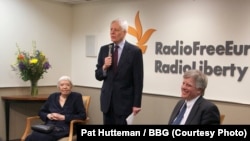
Klose hosted an event to mark the anniversary at the company's Washington offices that featured veteran Russian rights campaigner Lyudmila Alekseyeva and U.S. journalist and author David Satter.
RFE/RL President Kevin Klose, flanked by Russian human rights leader Lyudmila Alekseyeva (left) and journalist and author David Satter (right) at a Washington, DC reception to mark the 60th anniversary of Radio Liberty's first broadcast to Russia on March 1, 1953
Alekseyeva, who became a freelance contributor to the radio after her emigration to the United States in 1977, described its broadcasts into the Soviet Union as "an enormous school of instruction in democracy."
That instruction, she added, is still needed today.
"Democracy still has a long way to go in Russia, so we very much need the help of foreign radio stations so they can explain to Russians what [democracy] is and what it is we need to achieve," Alekseyeva said.
A parallel event was held in Moscow by a group of former Russian Service journalists who were laid off last year as part of a restructuring plan.
More than 100 people attended that event, including rights activists and journalists, with speakers praising Svoboda's legacy but criticizing the service's restructuring.
In the days and weeks following the launch of Russian broadcasts, the radio added programming in other languages of the Soviet Union, including Georgian, Armenian, Azeri, and the languages of Central Asia.
In 1955, the radio set up transmitters in Taiwan to make its Russian-language programs available to residents in eastern parts of Siberia and along the Soviet Union’s Pacific coast.
Radio Liberty and its sister station, Radio Free Europe, which broadcast to Eastern Europe, merged in 1976 under the name RFE/RL.
The company continues to broadcast to 21 countries in 28 languages.
RFE/RL will mark its Russian Service’s birthday on March 1 with a roundtable discussion at its Washington office featuring veteran Russian rights campaigner Lyudmila Alekseyeva and U.S. journalist and author David Satter.
A parallel event was scheduled to be held in Moscow by a group of former Russian Service journalists laid off last year as part of a restructuring plan.
About 120 people, including prominent opposition politicians and rights activists, are expected to attend the Moscow event. Several longtime supporters of the radio are scheduled to deliver speeches.
PHOTO GALLERY: Radio Liberty turns 60.
Radio Liberty Marks 60 Years
1/12Composer Vernon Duke (Vladimir Dukelsky) is interviewed by Radio Liberty correspondents Viktoriya Semenova (center) and Michael Koryakov (right) in a studio in Munich in 1955.
Radio Liberty (originally called Radio Liberation) began broadcasting to the former Soviet Union from West Germany on March 1, 1953, and it almost immediately gained a substantial audience when it covered the death of Josef Stalin four days later. Throughout the Cold War, Radio Liberty and its fellow broadcaster Radio Free Europe transmitted uncensored news and information to audiences behind the Iron Curtain, while also giving a voice to dissidents and opposition movements in communist countries. In this way, both stations are widely believed to have played an important role in the collapse of communism and the rise of democracies in the former Eastern Bloc. Based in Prague since 1995, RFE/RL is now a multimedia outlet providing news and information to countries where an independent media is either banned by government authorities or not fully developed.
Show moreShow less
2/12Radio Liberty’s master control room in Munich in 1964.
Radio Liberty (originally called Radio Liberation) began broadcasting to the former Soviet Union from West Germany on March 1, 1953, and it almost immediately gained a substantial audience when it covered the death of Josef Stalin four days later. Throughout the Cold War, Radio Liberty and its fellow broadcaster Radio Free Europe transmitted uncensored news and information to audiences behind the Iron Curtain, while also giving a voice to dissidents and opposition movements in communist countries. In this way, both stations are widely believed to have played an important role in the collapse of communism and the rise of democracies in the former Eastern Bloc. Based in Prague since 1995, RFE/RL is now a multimedia outlet providing news and information to countries where an independent media is either banned by government authorities or not fully developed.
Show moreShow less
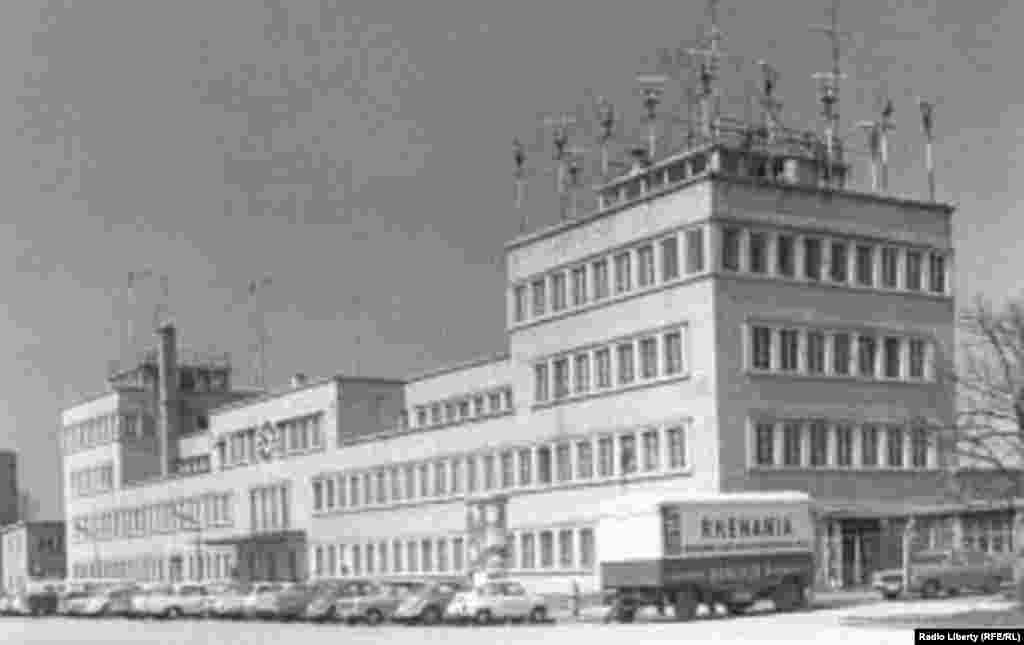
3/12The first Radio Liberation building in Munich's Obervizenfeld in 1953.
Radio Liberty (originally called Radio Liberation) began broadcasting to the former Soviet Union from West Germany on March 1, 1953, and it almost immediately gained a substantial audience when it covered the death of Josef Stalin four days later. Throughout the Cold War, Radio Liberty and its fellow broadcaster Radio Free Europe transmitted uncensored news and information to audiences behind the Iron Curtain, while also giving a voice to dissidents and opposition movements in communist countries. In this way, both stations are widely believed to have played an important role in the collapse of communism and the rise of democracies in the former Eastern Bloc. Based in Prague since 1995, RFE/RL is now a multimedia outlet providing news and information to countries where an independent media is either banned by government authorities or not fully developed.
Show moreShow less
4/12A Radio Liberty teletype operator in the 1950s.
Radio Liberty (originally called Radio Liberation) began broadcasting to the former Soviet Union from West Germany on March 1, 1953, and it almost immediately gained a substantial audience when it covered the death of Josef Stalin four days later. Throughout the Cold War, Radio Liberty and its fellow broadcaster Radio Free Europe transmitted uncensored news and information to audiences behind the Iron Curtain, while also giving a voice to dissidents and opposition movements in communist countries. In this way, both stations are widely believed to have played an important role in the collapse of communism and the rise of democracies in the former Eastern Bloc. Based in Prague since 1995, RFE/RL is now a multimedia outlet providing news and information to countries where an independent media is either banned by government authorities or not fully developed.
Show moreShow less
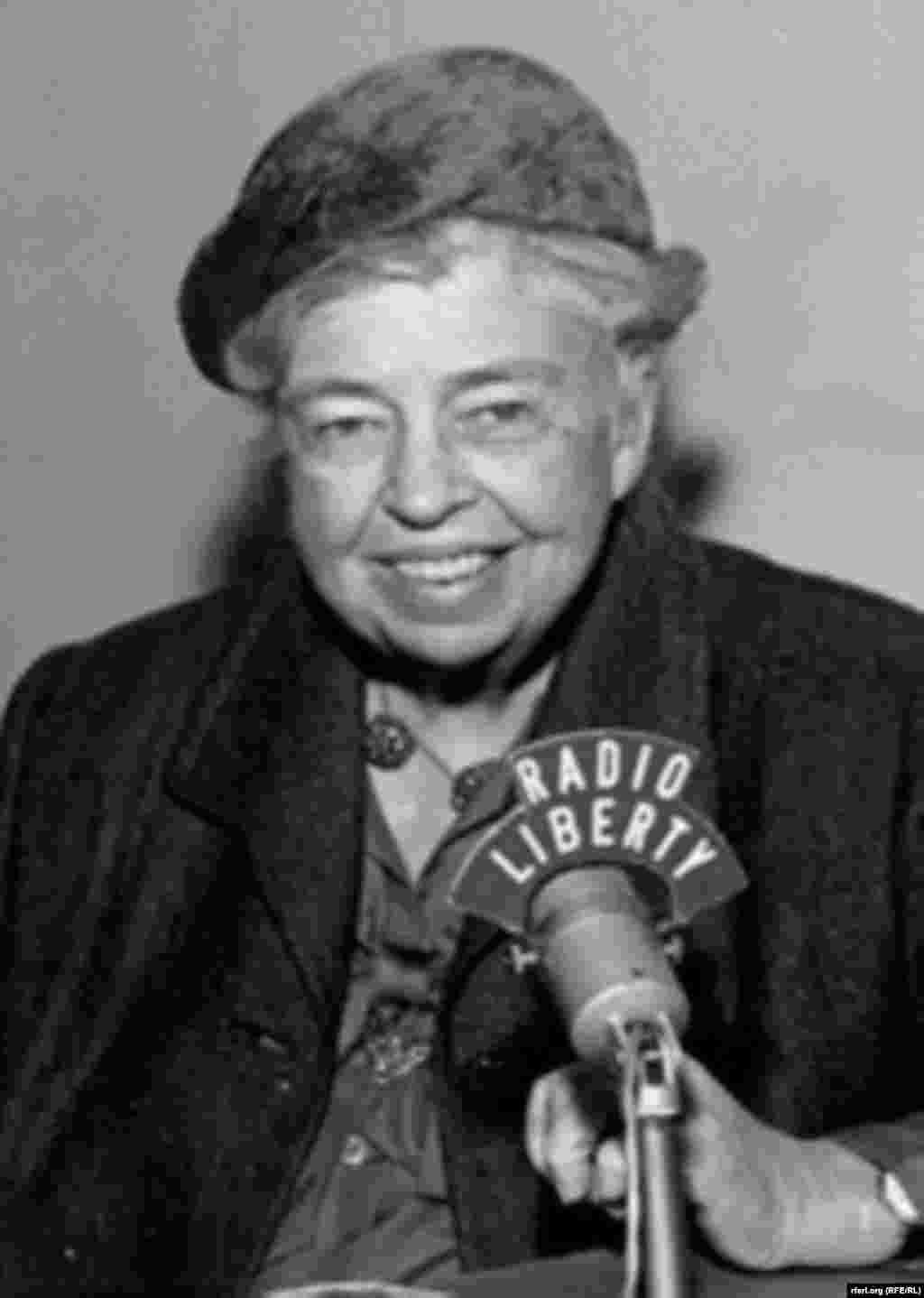
5/12Former U.S. first lady and human rights champion Eleanor Roosevelt sits down for an interview with Radio Liberty in the late 1950s.
Radio Liberty (originally called Radio Liberation) began broadcasting to the former Soviet Union from West Germany on March 1, 1953, and it almost immediately gained a substantial audience when it covered the death of Josef Stalin four days later. Throughout the Cold War, Radio Liberty and its fellow broadcaster Radio Free Europe transmitted uncensored news and information to audiences behind the Iron Curtain, while also giving a voice to dissidents and opposition movements in communist countries. In this way, both stations are widely believed to have played an important role in the collapse of communism and the rise of democracies in the former Eastern Bloc. Based in Prague since 1995, RFE/RL is now a multimedia outlet providing news and information to countries where an independent media is either banned by government authorities or not fully developed.
Show moreShow less
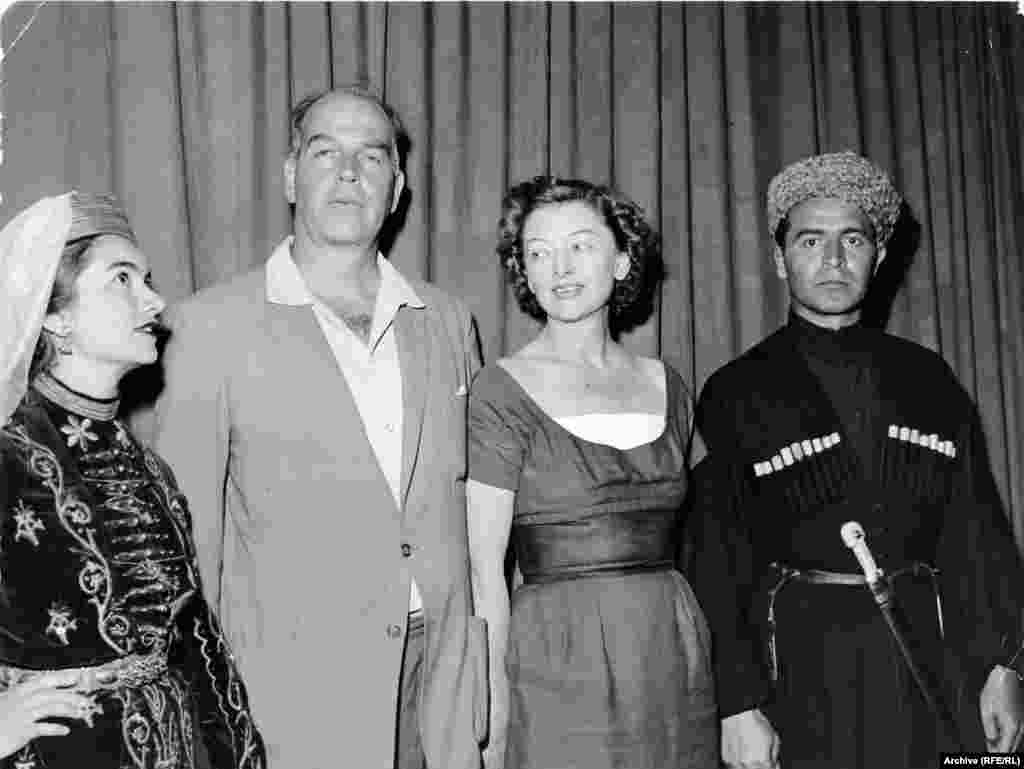
6/12Radio Liberty employees relax in national dress at a retreat in Bavaria in the late 1950s. From left, Aza Ryzer, the head of the music library; Radio Liberty President Howland H. Sargeant; film star Myrna Loy, who was married to Sargeant; and Ibrahim Gelischanow, a founding member of the North Caucasus Desk.
Radio Liberty (originally called Radio Liberation) began broadcasting to the former Soviet Union from West Germany on March 1, 1953, and it almost immediately gained a substantial audience when it covered the death of Josef Stalin four days later. Throughout the Cold War, Radio Liberty and its fellow broadcaster Radio Free Europe transmitted uncensored news and information to audiences behind the Iron Curtain, while also giving a voice to dissidents and opposition movements in communist countries. In this way, both stations are widely believed to have played an important role in the collapse of communism and the rise of democracies in the former Eastern Bloc. Based in Prague since 1995, RFE/RL is now a multimedia outlet providing news and information to countries where an independent media is either banned by government authorities or not fully developed.
Show moreShow less
7/12Radio Liberty journalist Valerian Obolensky in the 1950s.
Radio Liberty (originally called Radio Liberation) began broadcasting to the former Soviet Union from West Germany on March 1, 1953, and it almost immediately gained a substantial audience when it covered the death of Josef Stalin four days later. Throughout the Cold War, Radio Liberty and its fellow broadcaster Radio Free Europe transmitted uncensored news and information to audiences behind the Iron Curtain, while also giving a voice to dissidents and opposition movements in communist countries. In this way, both stations are widely believed to have played an important role in the collapse of communism and the rise of democracies in the former Eastern Bloc. Based in Prague since 1995, RFE/RL is now a multimedia outlet providing news and information to countries where an independent media is either banned by government authorities or not fully developed.
Show moreShow less
8/12The head of Radio Liberty's Engineering Department, Richard Jewel Tanksley (left), shows some guests the master control room in Munich in 1964.
Radio Liberty (originally called Radio Liberation) began broadcasting to the former Soviet Union from West Germany on March 1, 1953, and it almost immediately gained a substantial audience when it covered the death of Josef Stalin four days later. Throughout the Cold War, Radio Liberty and its fellow broadcaster Radio Free Europe transmitted uncensored news and information to audiences behind the Iron Curtain, while also giving a voice to dissidents and opposition movements in communist countries. In this way, both stations are widely believed to have played an important role in the collapse of communism and the rise of democracies in the former Eastern Bloc. Based in Prague since 1995, RFE/RL is now a multimedia outlet providing news and information to countries where an independent media is either banned by government authorities or not fully developed.
Show moreShow less
9/12Radio Liberty editor Francis Ronalds interviews U.S. civil rights leader Martin Luther King Jr. about the ongoing fight for racial equality in America in 1966.
Radio Liberty (originally called Radio Liberation) began broadcasting to the former Soviet Union from West Germany on March 1, 1953, and it almost immediately gained a substantial audience when it covered the death of Josef Stalin four days later. Throughout the Cold War, Radio Liberty and its fellow broadcaster Radio Free Europe transmitted uncensored news and information to audiences behind the Iron Curtain, while also giving a voice to dissidents and opposition movements in communist countries. In this way, both stations are widely believed to have played an important role in the collapse of communism and the rise of democracies in the former Eastern Bloc. Based in Prague since 1995, RFE/RL is now a multimedia outlet providing news and information to countries where an independent media is either banned by government authorities or not fully developed.
Show moreShow less
10/12In 1976, Radio Free Europe and Radio Liberty merged into one entity (RFE/RL), which had its headquarters in Munich's "English Garden."
Radio Liberty (originally called Radio Liberation) began broadcasting to the former Soviet Union from West Germany on March 1, 1953, and it almost immediately gained a substantial audience when it covered the death of Josef Stalin four days later. Throughout the Cold War, Radio Liberty and its fellow broadcaster Radio Free Europe transmitted uncensored news and information to audiences behind the Iron Curtain, while also giving a voice to dissidents and opposition movements in communist countries. In this way, both stations are widely believed to have played an important role in the collapse of communism and the rise of democracies in the former Eastern Bloc. Based in Prague since 1995, RFE/RL is now a multimedia outlet providing news and information to countries where an independent media is either banned by government authorities or not fully developed.
Show moreShow less
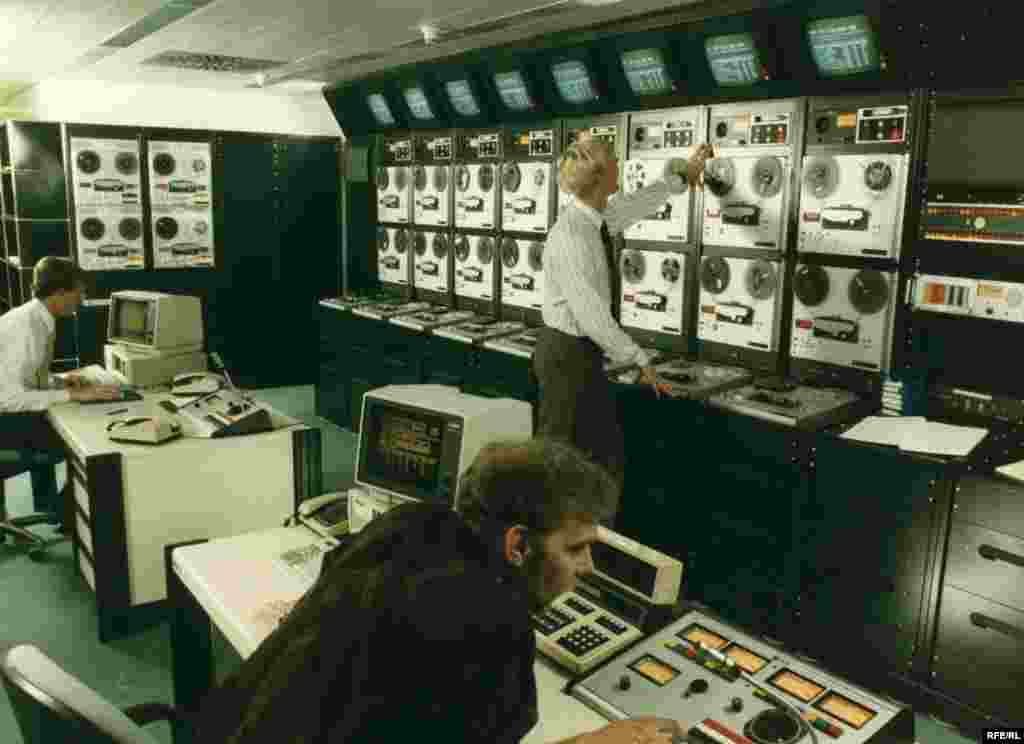
11/12RFE/RL's master control room in Munich in the 1980s.
Radio Liberty (originally called Radio Liberation) began broadcasting to the former Soviet Union from West Germany on March 1, 1953, and it almost immediately gained a substantial audience when it covered the death of Josef Stalin four days later. Throughout the Cold War, Radio Liberty and its fellow broadcaster Radio Free Europe transmitted uncensored news and information to audiences behind the Iron Curtain, while also giving a voice to dissidents and opposition movements in communist countries. In this way, both stations are widely believed to have played an important role in the collapse of communism and the rise of democracies in the former Eastern Bloc. Based in Prague since 1995, RFE/RL is now a multimedia outlet providing news and information to countries where an independent media is either banned by government authorities or not fully developed.
Show moreShow less
12/12RFE/RL now broadcasts from its headquarters in Prague, Czech Republic.
Radio Liberty (originally called Radio Liberation) began broadcasting to the former Soviet Union from West Germany on March 1, 1953, and it almost immediately gained a substantial audience when it covered the death of Josef Stalin four days later. Throughout the Cold War, Radio Liberty and its fellow broadcaster Radio Free Europe transmitted uncensored news and information to audiences behind the Iron Curtain, while also giving a voice to dissidents and opposition movements in communist countries. In this way, both stations are widely believed to have played an important role in the collapse of communism and the rise of democracies in the former Eastern Bloc. Based in Prague since 1995, RFE/RL is now a multimedia outlet providing news and information to countries where an independent media is either banned by government authorities or not fully developed.
RFE/RL journalists report the news in 24 languages in 18 countries where a free press is banned by the government or not fully established. We provide what many people cannot get locally: uncensored news, responsible discussion, and open debate.