


Talks On Opening Ukrainian Ports 'Complex,' Zelenskiy Says, As Top EU Diplomat Calls Blockade A 'War Crime'
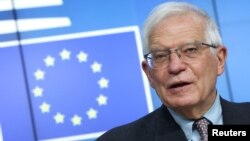
High Representative of the European Union for Foreign Affairs and Security Policy Borrell (file photo)
Ukraine is engaged in “complex” negotiations to free its ports from a Russian naval blockade, President Volodymyr Zelenskiy said on June 20, after the EU's top diplomat accused Russia of committing a "real war crime" by blocking grain exports from the ports.
There has been no progress yet on “complex multilevel negotiations to unblock our Ukrainian ports,” Zelenskiy said, warning that the current global grain crisis would last as long as Russia's "colonial war."
Zelenskiy made the comments in a video address to the African Union. Earlier on June 20, Josep Borrell, the EU's foreign policy chief, commented on the grain export situation at the start of a meeting of the bloc's foreign ministers in Luxembourg.
WATCH: Satellite images bolster accusations that Russia is transporting huge quantities of stolen Ukrainian grain to Bashar al-Assad's regime in Syria. RFE/RL's Ukrainian Service has documented a series of shipments through the largest grain terminal in Russian-occupied Crimea.
"One cannot imagine that millions of tons of wheat remain blocked in Ukraine while in the rest of the world people are suffering hunger. This is a real war crime," Josep Borrell, the EU's foreign policy chief, said at the start of a meeting of the bloc's foreign ministers on June 20 in Luxembourg.
The ministers are scheduled to discuss ways to free millions of tons of grain stuck in Ukraine due to a blockade of its Black Sea ports by Russian forces.
Since Russia launched its unprovoked attack on Ukraine and blocked its ports, the country's grain shipments have stalled, leaving more than 20 million tons of grain trapped in silos.
Romanian Port Overwhelmed As Grain Ships Reroute Around War Zone
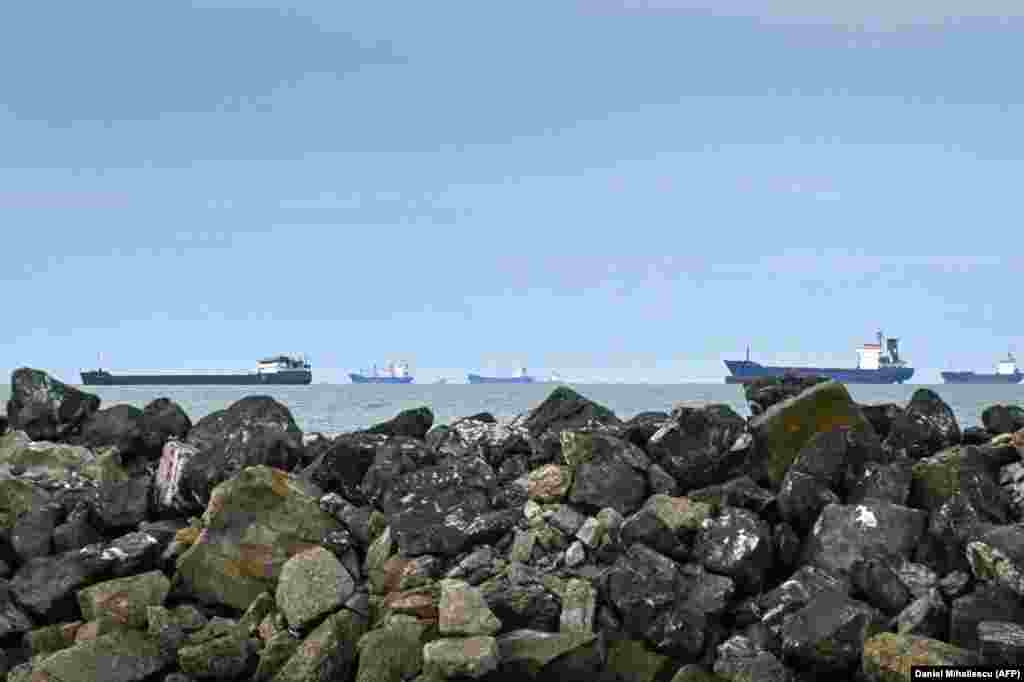
1/9Ships off Romania's Black Sea coast wait on June 8 to enter the Sulina Canal, a waterway less than 5 kilometers from Romania's border with Ukraine.
A canal dock on Romania's Black Sea coast is struggling under a massive backlog of ships carrying vital food supplies out of Europe. The vessels cannot access Ukrainian ports due to Russia's war-ready naval presence in the Black Sea.
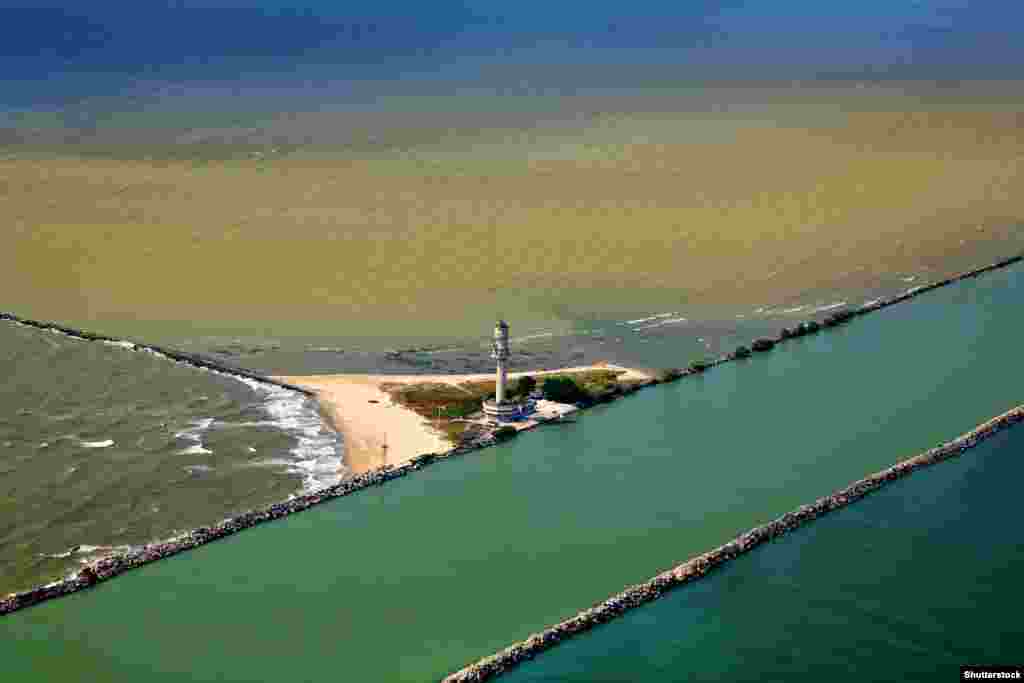
2/9The Sulina Canal where it enters the Black Sea
According to a June 17 AFP report, nearly 100 boats are currently queueing to enter the canal as nearby Ukrainian ports remain blocked due to the presence of Russian naval vessels on a war footing in the Black Sea.
A canal dock on Romania's Black Sea coast is struggling under a massive backlog of ships carrying vital food supplies out of Europe. The vessels cannot access Ukrainian ports due to Russia's war-ready naval presence in the Black Sea.
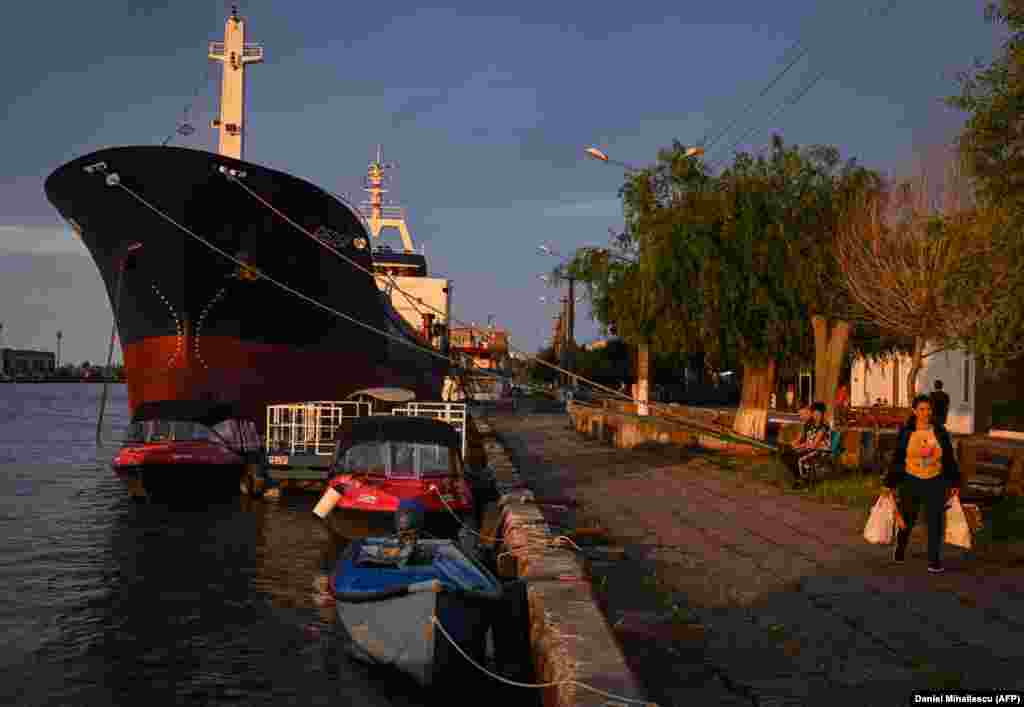
3/9A ship moored in the Sulina Canal on June 7
The massive backlog on this Romanian canal has resulted in calls to speed up the processing of ships, especially those carrying essential food grains. Exporters want longer hours for port operations, higher speed limits on the canal, and the allowance for ships to navigate the waterway at night.
A canal dock on Romania's Black Sea coast is struggling under a massive backlog of ships carrying vital food supplies out of Europe. The vessels cannot access Ukrainian ports due to Russia's war-ready naval presence in the Black Sea.
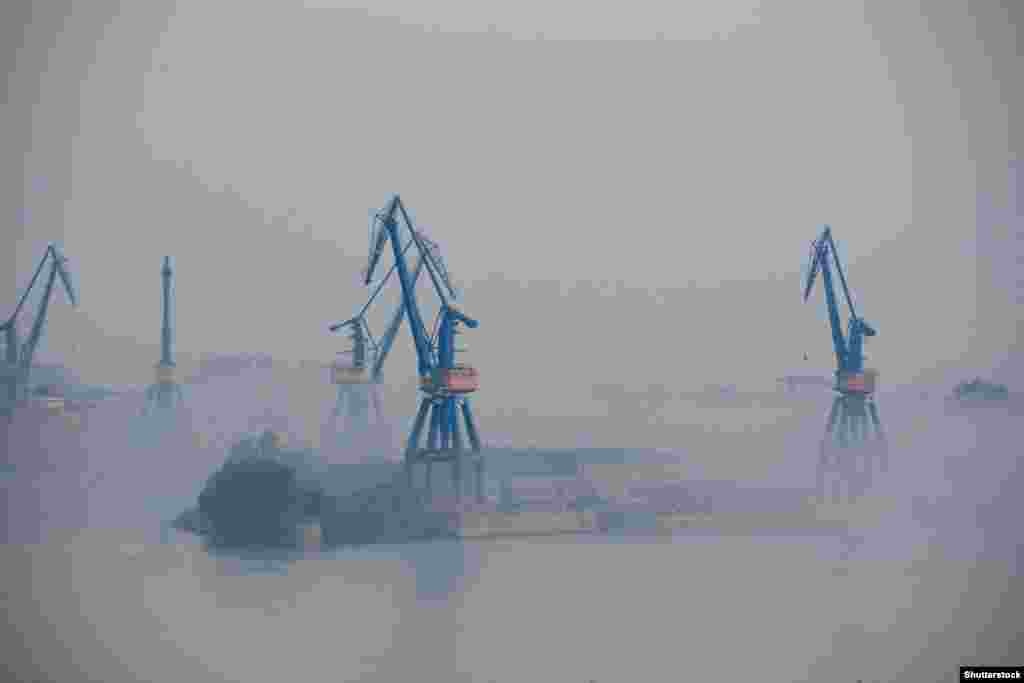
4/9Port cranes at Tulcea, near where the Sulina Canal meets the Danube River
The limited capabilities of Romanian ports has resulted in a huge buildup of both ships, trucks, and trains, which queue on Ukraine's borders to export grain. Ukraine's railway lines are wider than most of the rest of Europe, resulting in sluggish transport speeds from the country's western border.
A canal dock on Romania's Black Sea coast is struggling under a massive backlog of ships carrying vital food supplies out of Europe. The vessels cannot access Ukrainian ports due to Russia's war-ready naval presence in the Black Sea.
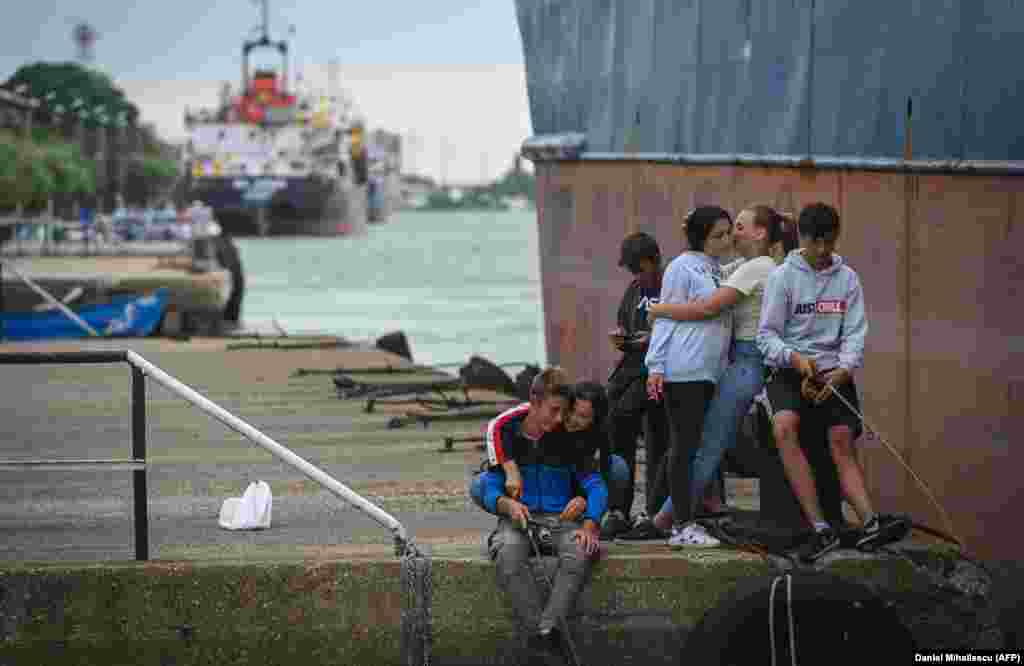
5/9Young locals relax at a port on the Sulina Canal.
International observers warn that a food crisis is looming as a result of Moscow's invasion of Ukraine, especially in some African countries that rely mostly on shipments from Russia and Ukraine for their grain supply. The UN has warned of a "hurricane of hunger" if grain transport out of Europe cannot be sped up.
A canal dock on Romania's Black Sea coast is struggling under a massive backlog of ships carrying vital food supplies out of Europe. The vessels cannot access Ukrainian ports due to Russia's war-ready naval presence in the Black Sea.
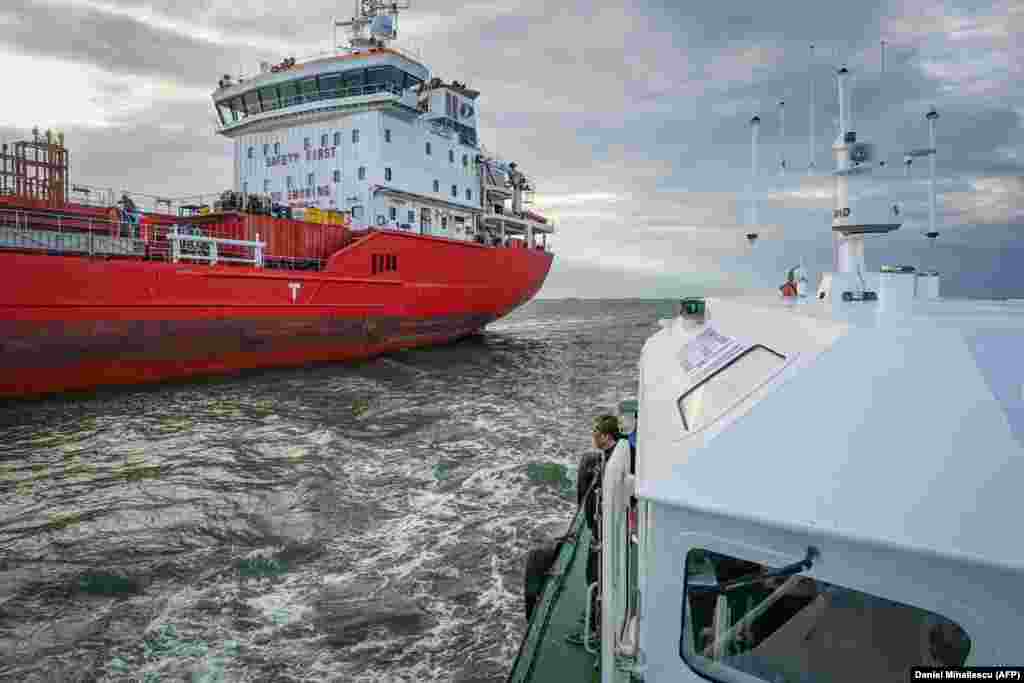
6/9A cargo ship seen from a Romanian pilot vessel
A pilot boat captain told AFP that since war broke out their workload navigating ships into the Sulina Canal "has increased a lot," adding, "we are hard at work from sunrise to sunset." A reported 400 boats passed through the Sulina Canal, last month, triple the traffic of May 2021.
A canal dock on Romania's Black Sea coast is struggling under a massive backlog of ships carrying vital food supplies out of Europe. The vessels cannot access Ukrainian ports due to Russia's war-ready naval presence in the Black Sea.
7/9A small vessel on the Sulina Canal
Despite massive efforts to get grain out of Ukraine and to market, Ukrainian Infrastructure Minister Oleksandr Kubrakov told the Financial Times that "all of our activity won't cover even 20 percent of what we could do through the Black Sea ports."
A canal dock on Romania's Black Sea coast is struggling under a massive backlog of ships carrying vital food supplies out of Europe. The vessels cannot access Ukrainian ports due to Russia's war-ready naval presence in the Black Sea.
8/9Barley is loaded onto a vessel in the Russian port of Rostov-on-Don on June 11.
Russian President Vladimir Putin has blamed the looming food crisis on sanctions against Russian exports.
A canal dock on Romania's Black Sea coast is struggling under a massive backlog of ships carrying vital food supplies out of Europe. The vessels cannot access Ukrainian ports due to Russia's war-ready naval presence in the Black Sea.
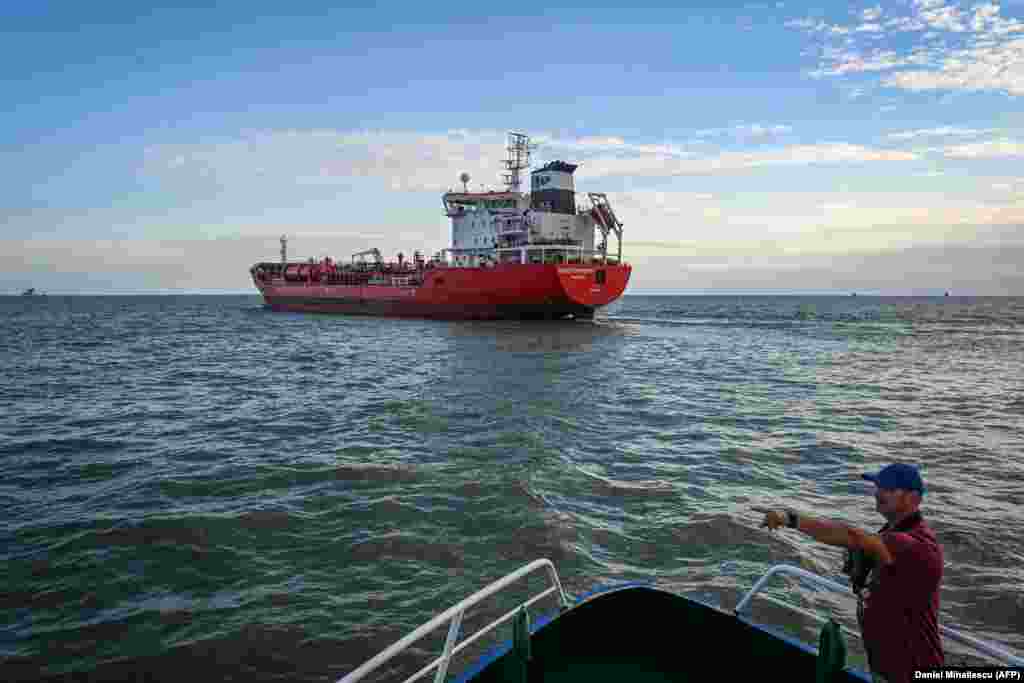
9/9A Romanian pilot boat crewman is seen in front of a ship preparing to enter the Sulina Canal.
A director of a Romanian port operations company told Al-Jazeera that "Considering the large grain volumes that are in need of export from Ukraine, I believe this has to be a conjugated effort of all the European operators that have the capacity to participate." He added, "There is no place for ego here."
A canal dock on Romania's Black Sea coast is struggling under a massive backlog of ships carrying vital food supplies out of Europe. The vessels cannot access Ukrainian ports due to Russia's war-ready naval presence in the Black Sea.
Previous slide
Next slide
Russian President Vladimir Putin has dismissed Western accusations that Moscow is responsible for a sharp rise in global grain prices due to its naval blockade of the ports.
He claimed last week that Russia was ready to guarantee the transit of ships exporting Ukrainian grain across the Black Sea and that Ukraine had alternative land routes, something Western experts say is not feasible.
Moscow has previously demanded that economic sanctions on it be lifted in exchange for allowing grain exports.
Russian Foreign Ministry spokeswoman Maria Zakharova blamed the "destructive" stance of the West for soaring grain prices.
"Concerning the possibility of famine, more and more experts are leaning toward a pessimistic scenario... and that is the fault of Western regimes, which act as provokers and destroyers," Zakharova said on Telegram on June 20.
According to Zakharova, the West has made "systematic mistakes" in its agricultural policy planning and has caused global inflation with "shortsighted" financial mechanisms created during the COVID-19 pandemic.
Sanctions imposed on Russia have also disrupted logistical and financial circuits, particularly for grain exports, she said.
Borrell said that Russia's actions, and not Western sanctions, were to blame for the worsening global food crisis as the EU works to defuse the Kremlin's counternarrative.
"I want to insist that it's not the European sanctions [that are] creating this crisis. Our sanctions don't target food, don't target fertilizers," Borrell said.
International grain prices have soared amid the standoff, and key importers in the Middle East and Africa are facing supply shortfalls.

RFE/RL journalists report the news in 24 languages in 18 countries where a free press is banned by the government or not fully established. We provide what many people cannot get locally: uncensored news, responsible discussion, and open debate.