


Accessibility links

Breaking News

'There's Nothing Left': Victims Of Devastating Afghan Floods Struggling For Survival

Afghan men clear debris and mud from a damaged house after a flash flood caused by heavy rainfall in Laqiha village of Baghlan-e Markazi district in the northern Baghlan Province on May 11.

Sabzinah survived the devastating flash floods that have ripped through northern Afghanistan and left hundreds dead and missing.

But the mother of three is now struggling to keep her family alive as international aid groups battle to deliver medicines, blankets, and food to affected communities, most of them in Baghlan Province.

"We don't have anything," Sabzinah, whose home in Baghlan's Barka district was washed away in the floods, told RFE/RL's Radio Azadi. "We're hungry and thirsty."

"We haven't received a tent yet," she added. "My leg was injured, but the doctor could only give me a tablet for the pain."

Sabzinah is among the tens of thousands of people affected by the flash floods triggered by heavy rains on May 10. Deadly floods have also been reported in the provinces of Badakhshan, Takhar, Ghor, and Faryab in recent days.
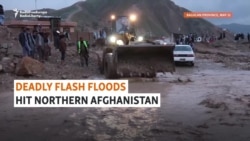
Deadly Flash Floods Hit Northern Afghanistan
please wait

No media source currently available

0:00 0:01:22 0:00

At least 315 people have been killed in Baghlan alone, according to the United Nations, which added that around 1,600 people were injured and hundreds more were still missing as of May 12. Nearly 3,000 homes were washed away, the world body said.

Rescuers and aid organizations are in a fight against time to reach affected communities.

The World Health Organization said on May 12 that it had delivered 7 tons of medicines and emergency kits to stricken areas. But relief efforts have been hampered by the floods, which have made most of Baghlan inaccessible to trucks.

Some flood victims say they have received little help.

"Some people were able to pull themselves from the floods," Khoda Dad, a resident of Barka district, told Radio Azadi. "But now, everyone is homeless. We need food and also blankets to survive the nights."

Search For Survivors Continues Following Deadly Flash Flooding In Northern Afghanistan
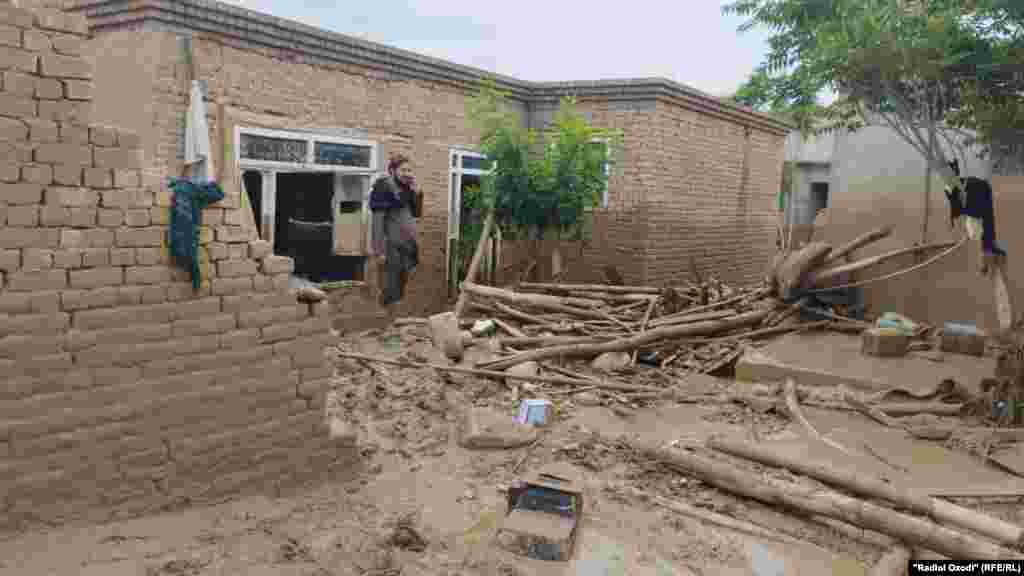
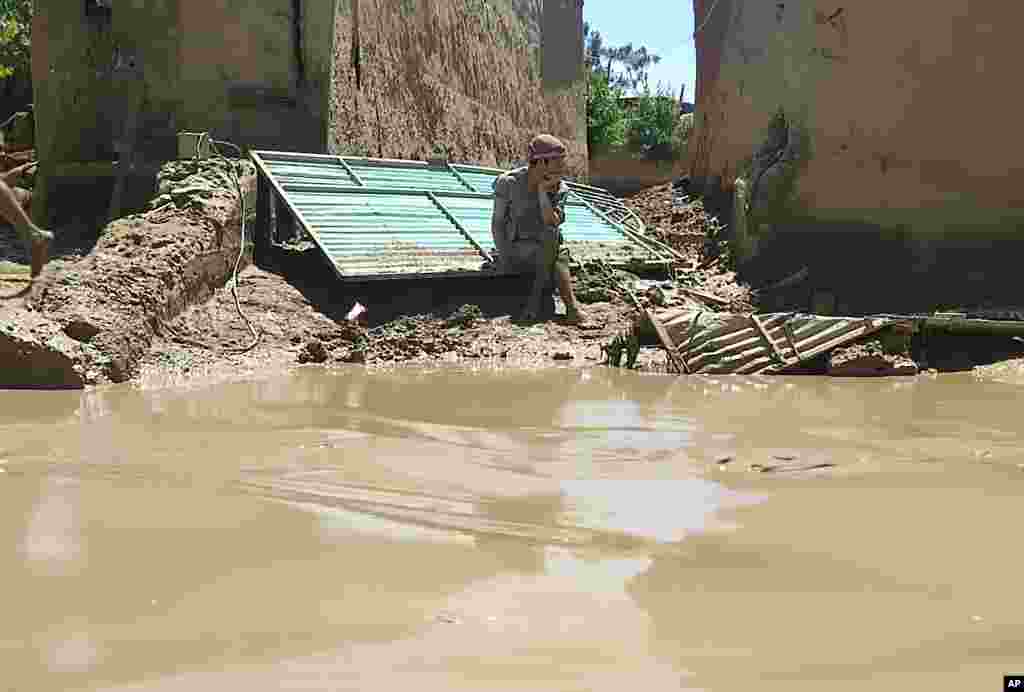
An Afghan man looks at the damage to his home on May 12 following flash flooding that has inundated northern Afghanistan&#39;s&nbsp;Baghlan Province,<br />
<br />
The latest wave of flooding from heavy seasonal rains has left more than <strong><a href="https://da.azadiradio.com/a/32942265.html" target="_blank">300 people dead</a></strong>, many more injured, and more than 1,000 homes destroyed, according to UN World Food Program (WFP) officials.<br />
&nbsp;
1/12 An Afghan man looks at the damage to his home on May 12 following flash flooding that has inundated northern Afghanistan's Baghlan Province,

The latest wave of flooding from heavy seasonal rains has left more than 300 people dead, many more injured, and more than 1,000 homes destroyed, according to UN World Food Program (WFP) officials.
 
Rescue crews are searching for victims in hard-to-reach areas of northern Afghanistan, where at least 300 people have died in flash flooding caused by heavy rainfall.
Afghanistan&rsquo;s ruling Taliban government said on May 12 that at least 1,630 people were injured in Baghlan Province, and more than 2,660 homes were destroyed&nbsp;as emergency crews and family members continue to search for survivors.
2/12 Afghanistan’s ruling Taliban government said on May 12 that at least 1,630 people were injured in Baghlan Province, and more than 2,660 homes were destroyed as emergency crews and family members continue to search for survivors.
Rescue crews are searching for victims in hard-to-reach areas of northern Afghanistan, where at least 300 people have died in flash flooding caused by heavy rainfall.
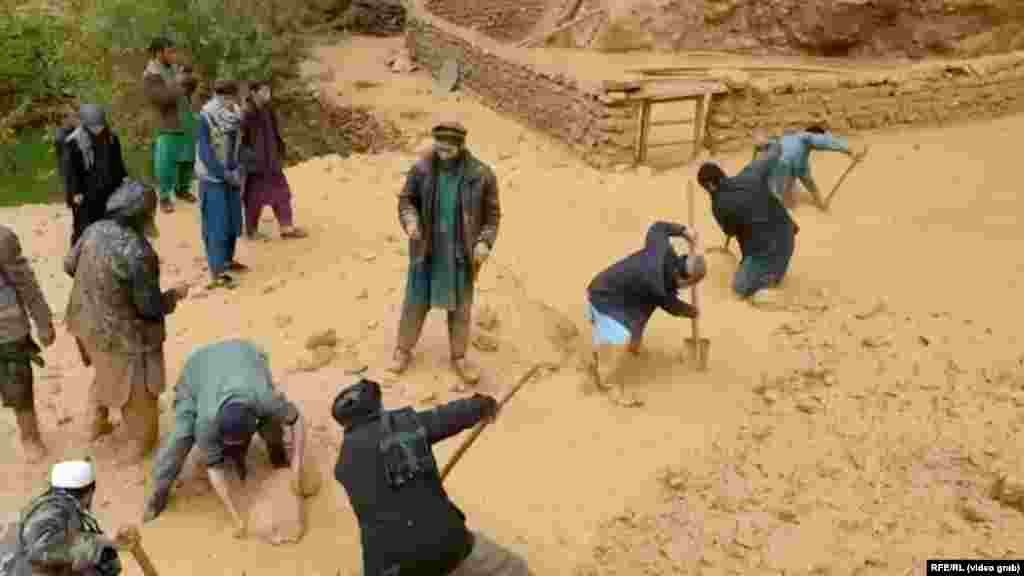
A video grab of Afghan men shoveling thick mud as they search for survivors and try to salvage their belongings in Baghlan Province.
3/12 A video grab of Afghan men shoveling thick mud as they search for survivors and try to salvage their belongings in Baghlan Province.
Rescue crews are searching for victims in hard-to-reach areas of northern Afghanistan, where at least 300 people have died in flash flooding caused by heavy rainfall.
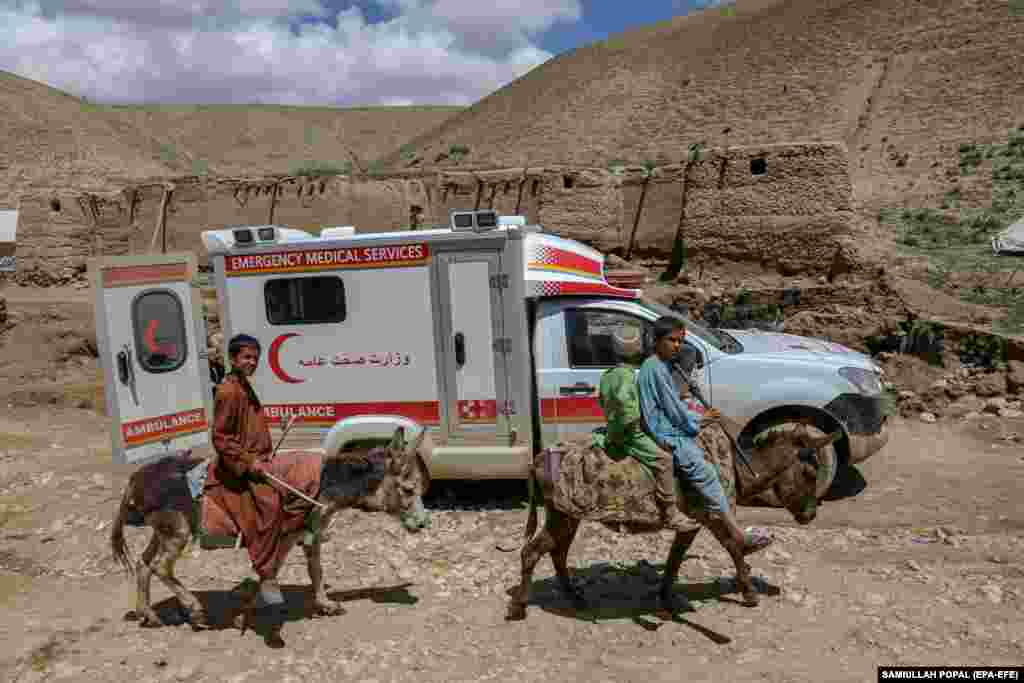
An ambulance reaches flooded areas near the village of Shirjalal in Baghlan.<br />
<br />
The destruction was most severe in Baghlan Province, where <strong><a href="https://reliefweb.int/report/afghanistan/afghanistan-flooding-situation-report-no-1-12-may-2024" target="_self">&quot;unprecedented rainfall&quot;</a></strong> has damaged or destroyed thousands of homes since May 10.
4/12 An ambulance reaches flooded areas near the village of Shirjalal in Baghlan.

The destruction was most severe in Baghlan Province, where "unprecedented rainfall" has damaged or destroyed thousands of homes since May 10.
Rescue crews are searching for victims in hard-to-reach areas of northern Afghanistan, where at least 300 people have died in flash flooding caused by heavy rainfall.
Baghlan Province was initially said to be among the hardest-hit areas, but officials have since added Badakhshan, Ghor, and Herat provinces to that list.
5/12 Baghlan Province was initially said to be among the hardest-hit areas, but officials have since added Badakhshan, Ghor, and Herat provinces to that list.
Rescue crews are searching for victims in hard-to-reach areas of northern Afghanistan, where at least 300 people have died in flash flooding caused by heavy rainfall.
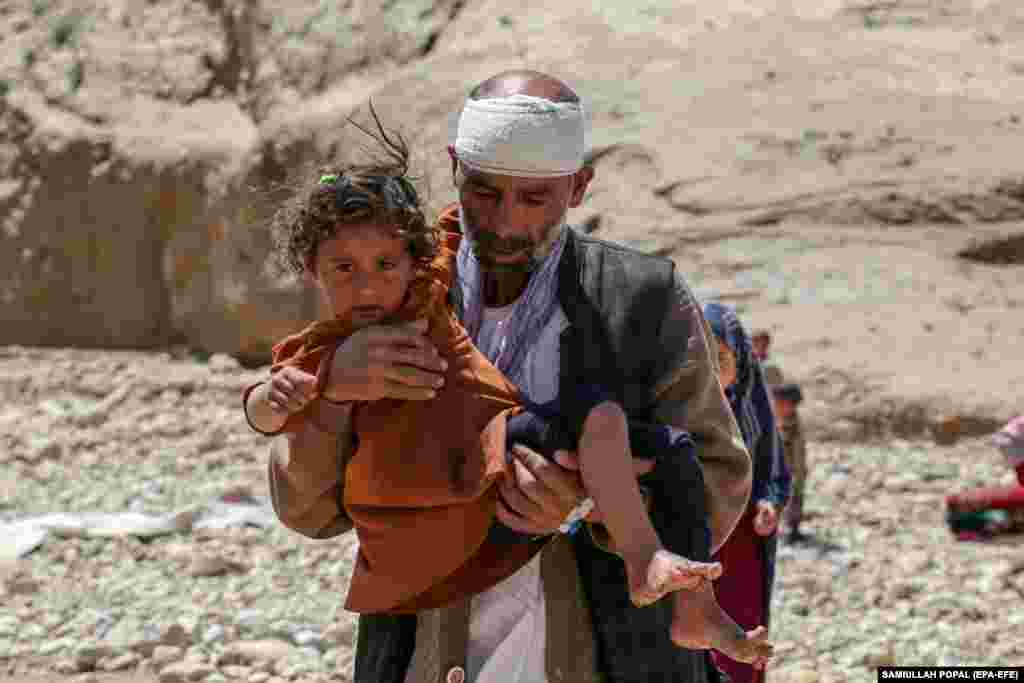
Carrying a child, Salim, a 45-year-old man from Baghlan who lost four of his family members in the flash flooding, visits the graves of his relatives in the village of Sherjalal.
6/12 Carrying a child, Salim, a 45-year-old man from Baghlan who lost four of his family members in the flash flooding, visits the graves of his relatives in the village of Sherjalal.
Rescue crews are searching for victims in hard-to-reach areas of northern Afghanistan, where at least 300 people have died in flash flooding caused by heavy rainfall.
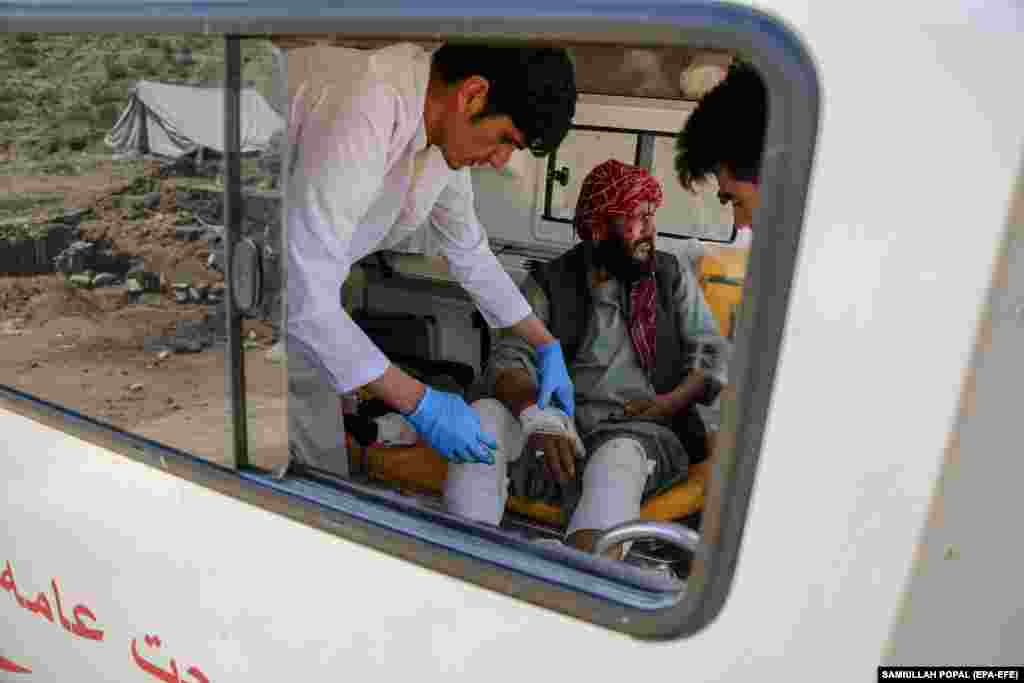
Haji Sarakha, a 48-year-old Afghan man who lost all of his family members in floods, receives treatment inside an ambulance.<br />
<br />
&nbsp;
7/12 Haji Sarakha, a 48-year-old Afghan man who lost all of his family members in floods, receives treatment inside an ambulance.

 
Rescue crews are searching for victims in hard-to-reach areas of northern Afghanistan, where at least 300 people have died in flash flooding caused by heavy rainfall.
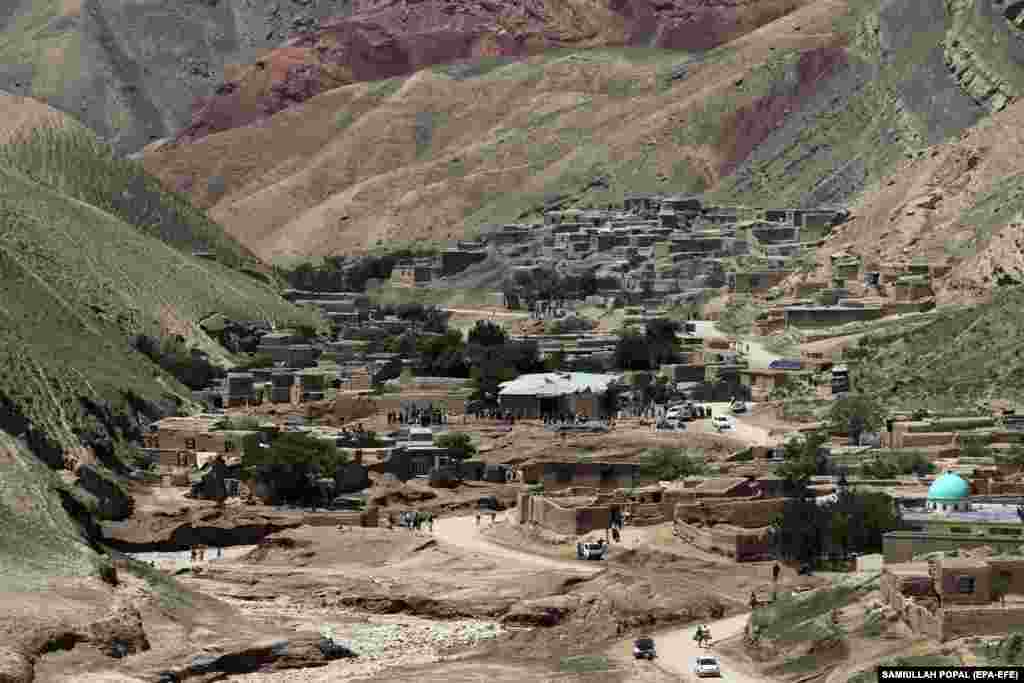
A view of damaged homes following the flash flooding in the village of&nbsp;Shirjalal.<br />
<br />
Afghanistan is one of the world&#39;s most vulnerable countries when it comes to climate change and the least prepared to adapt, according to a report by the United Nations Office for the Coordination of Humanitarian Affairs (OCHA).<br />
<br />
&nbsp;
8/12 A view of damaged homes following the flash flooding in the village of Shirjalal.

Afghanistan is one of the world's most vulnerable countries when it comes to climate change and the least prepared to adapt, according to a report by the United Nations Office for the Coordination of Humanitarian Affairs (OCHA).

 
Rescue crews are searching for victims in hard-to-reach areas of northern Afghanistan, where at least 300 people have died in flash flooding caused by heavy rainfall.
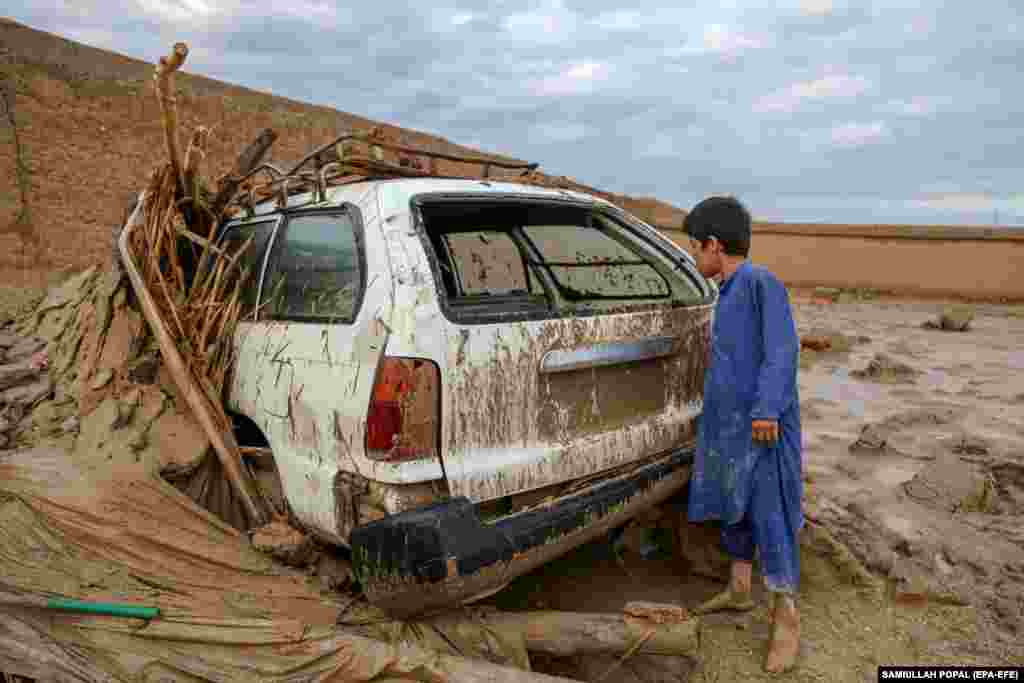
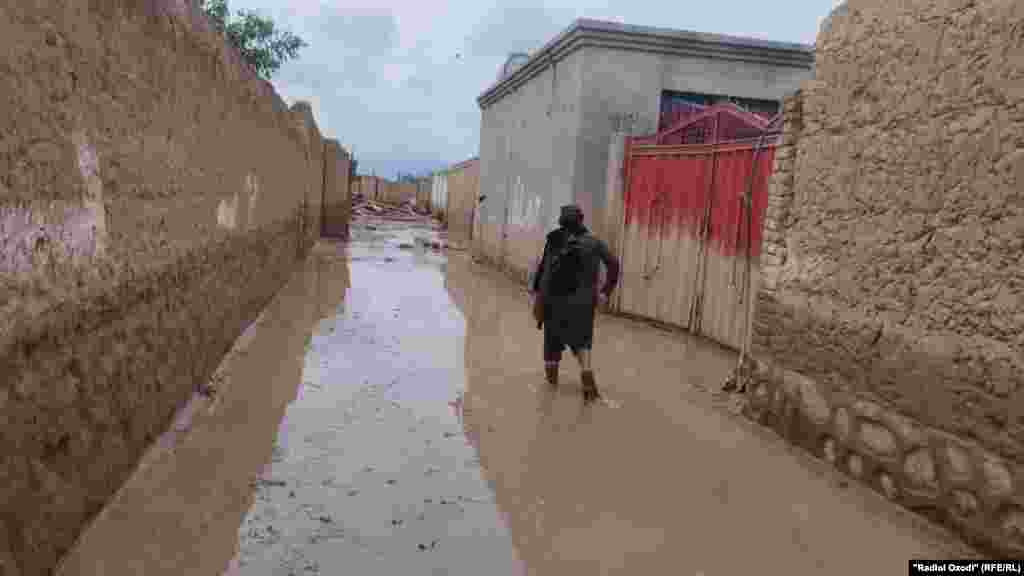
An Afghan boy surveys a vehicle stuck in a flooded area after flash floods in the village of Shahrak Muhajireen.
9/12 An Afghan boy surveys a vehicle stuck in a flooded area after flash floods in the village of Shahrak Muhajireen.
Rescue crews are searching for victims in hard-to-reach areas of northern Afghanistan, where at least 300 people have died in flash flooding caused by heavy rainfall.
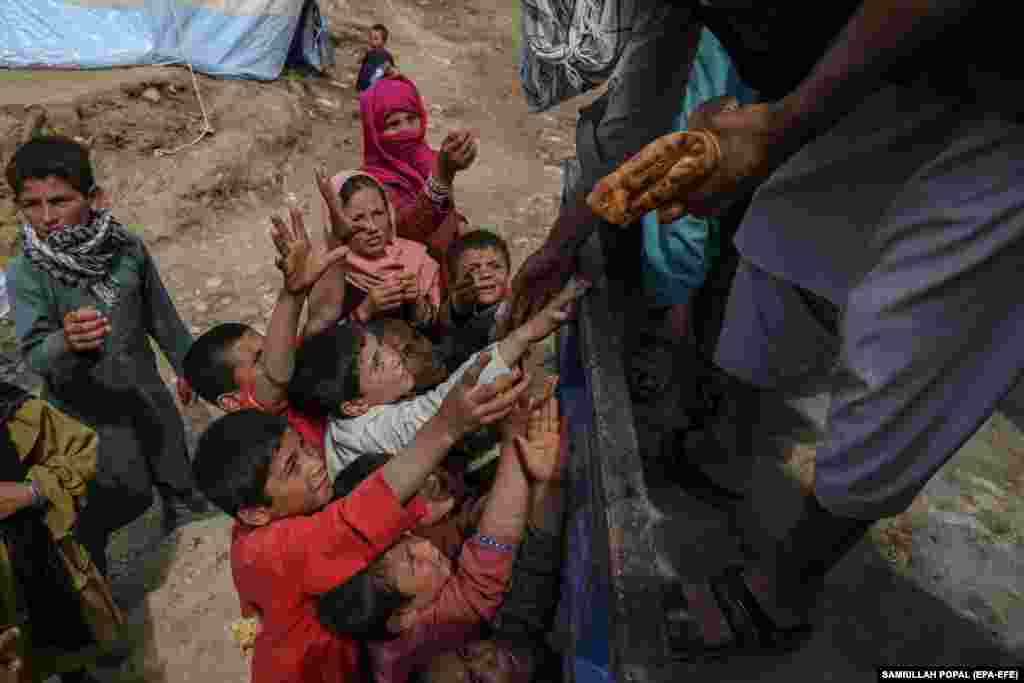
Volunteers distribute bread among people affected by floods near the village of Shirjalal.
10/12 Volunteers distribute bread among people affected by floods near the village of Shirjalal.
Rescue crews are searching for victims in hard-to-reach areas of northern Afghanistan, where at least 300 people have died in flash flooding caused by heavy rainfall.
Transport links and supply routes in the mountainous region remain severely disrupted.
11/12 Transport links and supply routes in the mountainous region remain severely disrupted.
Rescue crews are searching for victims in hard-to-reach areas of northern Afghanistan, where at least 300 people have died in flash flooding caused by heavy rainfall.
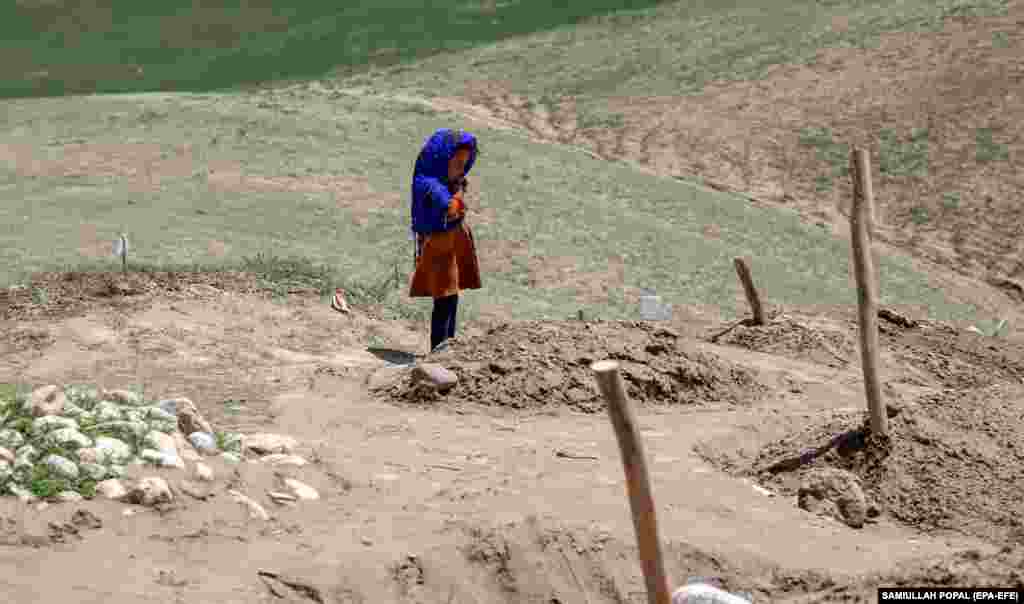
A young girl, who lost four of her family members, stands beside the grave of her brother near the village of Sherjalal.
12/12 A young girl, who lost four of her family members, stands beside the grave of her brother near the village of Sherjalal.
Rescue crews are searching for victims in hard-to-reach areas of northern Afghanistan, where at least 300 people have died in flash flooding caused by heavy rainfall.
Previous slide
Next slide

Shamsullah, a volunteer in Baghlan's Nahrin district who only goes by one name, said the flash floods were unprecedented.

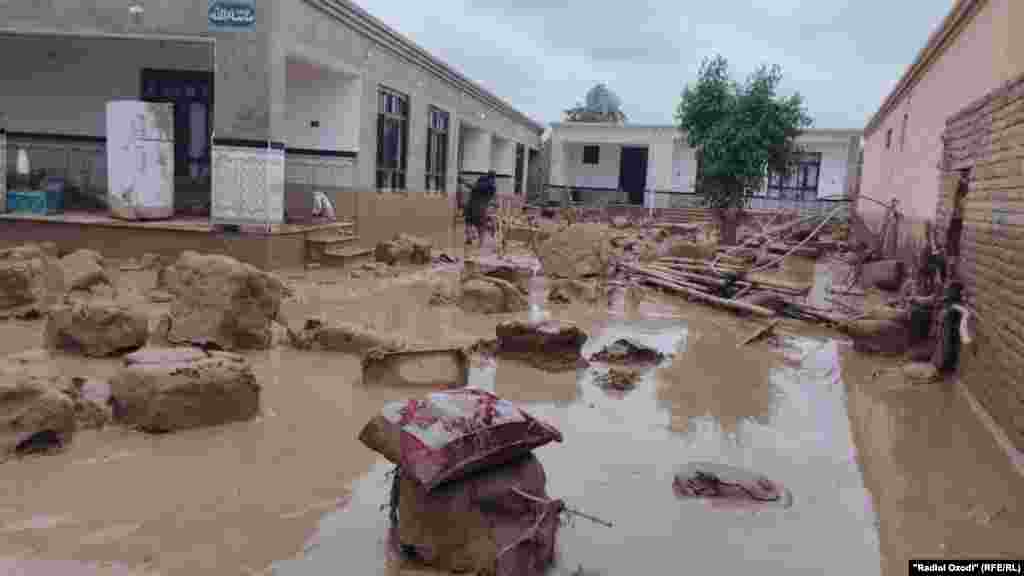
"There's nothing left after these floods," he told Radio Azadi. "If you look around, you will think that no one lived here."

As rescuers and locals search for the hundreds of people missing, aid organizations have warned that the death toll from the floods in Baghlan could rise sharply.

The floods have worsened the devastating humanitarian crisis in Afghanistan, already the world’s largest, where millions of people are on the verge of starvation.
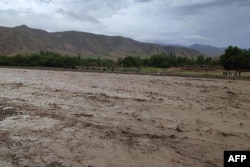
Residents stand next to a river covered with mud after flash floods in the village of Logariha in the Nahrin district of Baghlan Province on May 10.

In March and April, heavy rains and floods killed over 100 people and injured scores in central and eastern Afghanistan.

Hayatullah Rasooli, head of the World Food Program office in northeastern Afghanistan, said on May 13 that the floods in Baghlan had ravaged a region where most people "already faced emergency levels of hunger" and deprived them of their main livelihoods -- agriculture.

"The damage is enormous," said Din Mohammad, a farmer in Baghlan's Dana-e Ghoari district, adding that the floods had destroyed vegetable crops on more than 1,000 acres of farmland.

Written by Abubakar Siddique based on reporting by Faiza Ibrahimi of RFE/RL's Radio Azadi
This item is part of
XS
SM
MD
LG