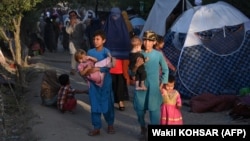
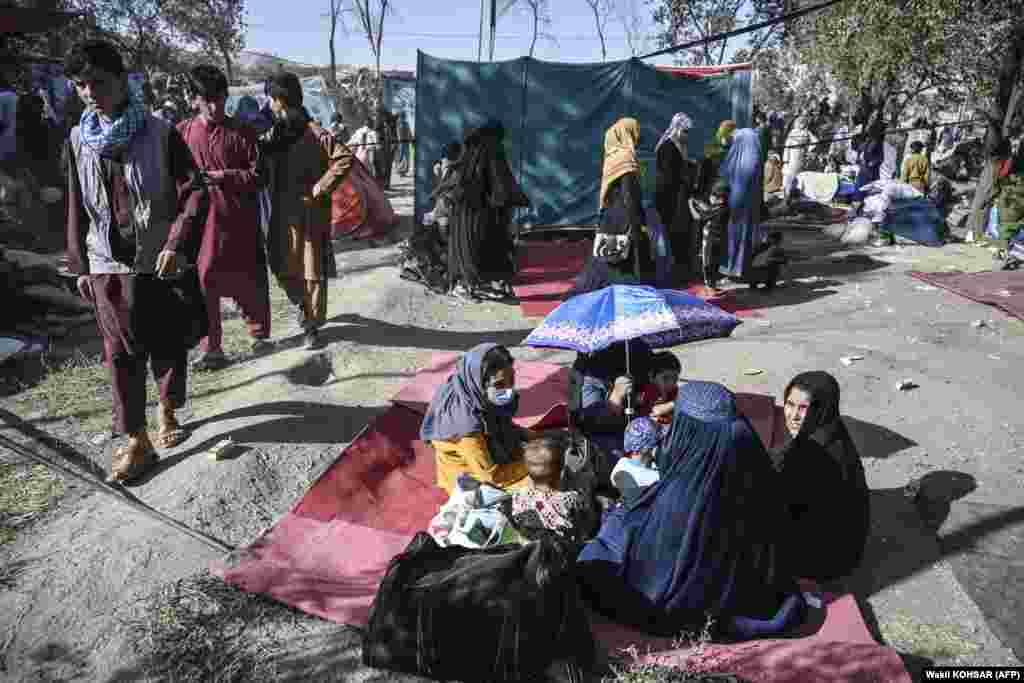
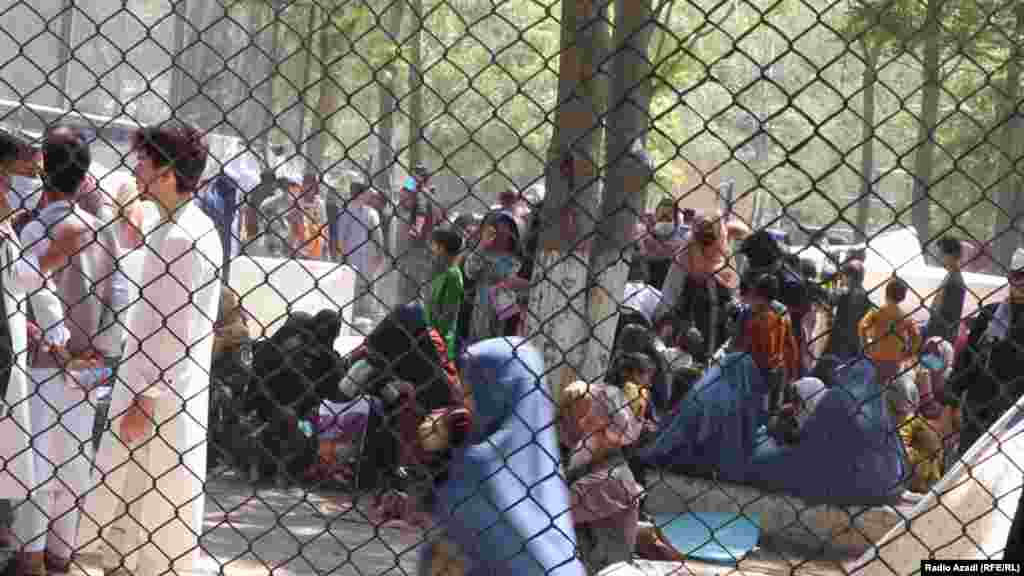
Internally displaced Afghans who fled from Kunduz, Takhar, and Baghlan provinces due to battles between the Taliban and Afghan security forces walk past temporary tents at the Sara-e Shamali camp in Kabul on August 11.
The United Nations refugee agency is calling on Afghanistan's neighbors to keep borders open as the Taliban continues its lightning offensives across the country.
"We are on the [brink] of a humanitarian disaster," UNHCR spokeswoman Shabia Mantoo told a briefing in Geneva on August 13, as thousands of men, women, and children were fleeing for safety from advancing Taliban militants.
"An inability to seek safety may risk innumerable civilian lives. UNHCR stands ready to help national authorities scale up humanitarian responses as needed," she added.
Afghanistan borders Iran, Pakistan, Turkmenistan, Uzbekistan, and Tajikistan. It also shares a tiny 75-kilometer boundary with China.
Tens of thousands of people have been flooding into the Afghan capital, Kabul, and gathering at the Pakistan border to escape the escalating fighting between Taliban militants and government forces. As more provincial capitals fell to the Taliban, Afghanistan's Refugees and Repatriations Ministry said that more than 35,000 families had arrived in the capital over the last week and that officials are struggling to provide them food and shelter.
2/18Thousands of internally displaced people (IDPs) flooded into Kabul's northern Khair Khana district on August 11. Many traveled from Badakhshan, Baghlan, Kunduz, Takhar, and other Afghan provinces that have been overrun by Taliban militants.
Tens of thousands of people have been flooding into the Afghan capital, Kabul, and gathering at the Pakistan border to escape the escalating fighting between Taliban militants and government forces. As more provincial capitals fell to the Taliban, Afghanistan's Refugees and Repatriations Ministry said that more than 35,000 families had arrived in the capital over the last week and that officials are struggling to provide them food and shelter.
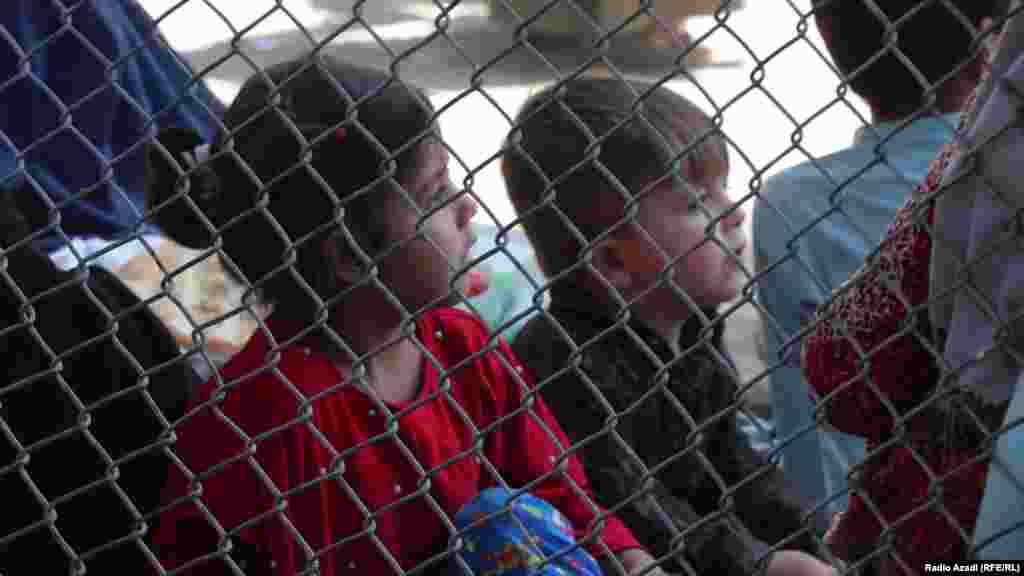
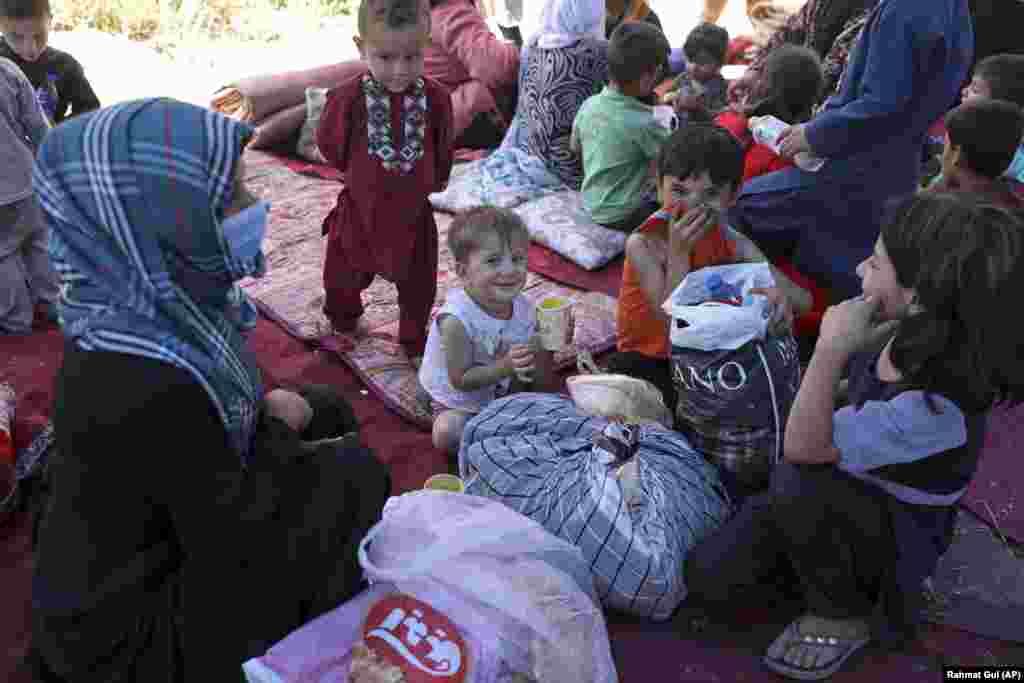
3/18Children who have fled recent fighting find safety in the Afghan capital, Kabul.
Tens of thousands of people have been flooding into the Afghan capital, Kabul, and gathering at the Pakistan border to escape the escalating fighting between Taliban militants and government forces. As more provincial capitals fell to the Taliban, Afghanistan's Refugees and Repatriations Ministry said that more than 35,000 families had arrived in the capital over the last week and that officials are struggling to provide them food and shelter.
4/18Internally displaced Afghan families rest in a field in Kabul after fleeing Kunduz and Takhar provinces, where fighting raged between Taliban militants and Afghan security forces.
Tens of thousands of people have been flooding into the Afghan capital, Kabul, and gathering at the Pakistan border to escape the escalating fighting between Taliban militants and government forces. As more provincial capitals fell to the Taliban, Afghanistan's Refugees and Repatriations Ministry said that more than 35,000 families had arrived in the capital over the last week and that officials are struggling to provide them food and shelter.
5/18Some Afghan families have been living in tents at a makeshift camp in the Sara-e Shamali district of Kabul.
Tens of thousands of people have been flooding into the Afghan capital, Kabul, and gathering at the Pakistan border to escape the escalating fighting between Taliban militants and government forces. As more provincial capitals fell to the Taliban, Afghanistan's Refugees and Repatriations Ministry said that more than 35,000 families had arrived in the capital over the last week and that officials are struggling to provide them food and shelter.
6/18Internally displaced Afghans sit under their shelters at the Sara-e Shamali camp in Kabul.
Tens of thousands of people have been flooding into the Afghan capital, Kabul, and gathering at the Pakistan border to escape the escalating fighting between Taliban militants and government forces. As more provincial capitals fell to the Taliban, Afghanistan's Refugees and Repatriations Ministry said that more than 35,000 families had arrived in the capital over the last week and that officials are struggling to provide them food and shelter.
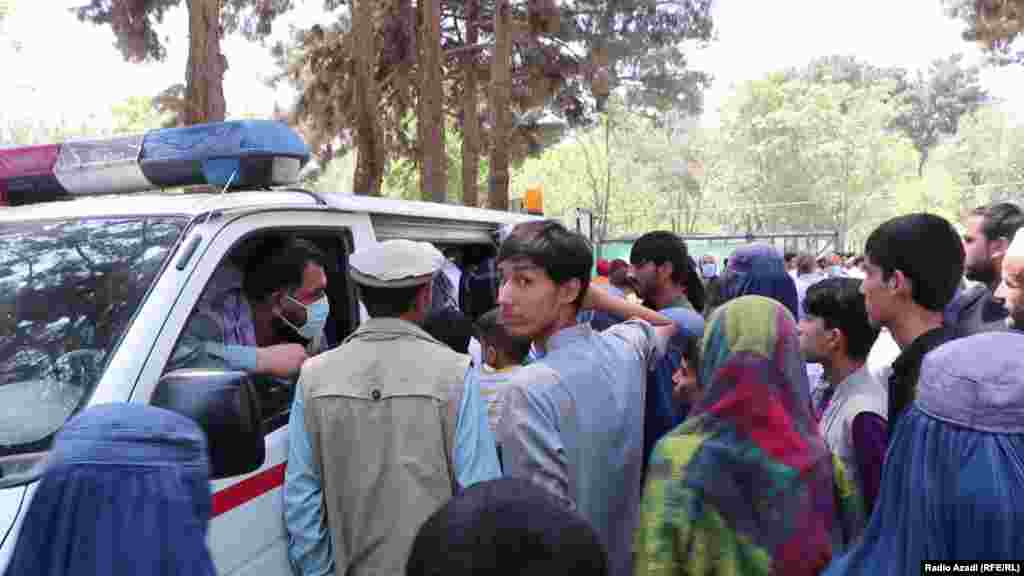
7/18People seeking medical care gather around an ambulance in Kabul's northern Khair Khana district on August 11.
Tens of thousands of people have been flooding into the Afghan capital, Kabul, and gathering at the Pakistan border to escape the escalating fighting between Taliban militants and government forces. As more provincial capitals fell to the Taliban, Afghanistan's Refugees and Repatriations Ministry said that more than 35,000 families had arrived in the capital over the last week and that officials are struggling to provide them food and shelter.
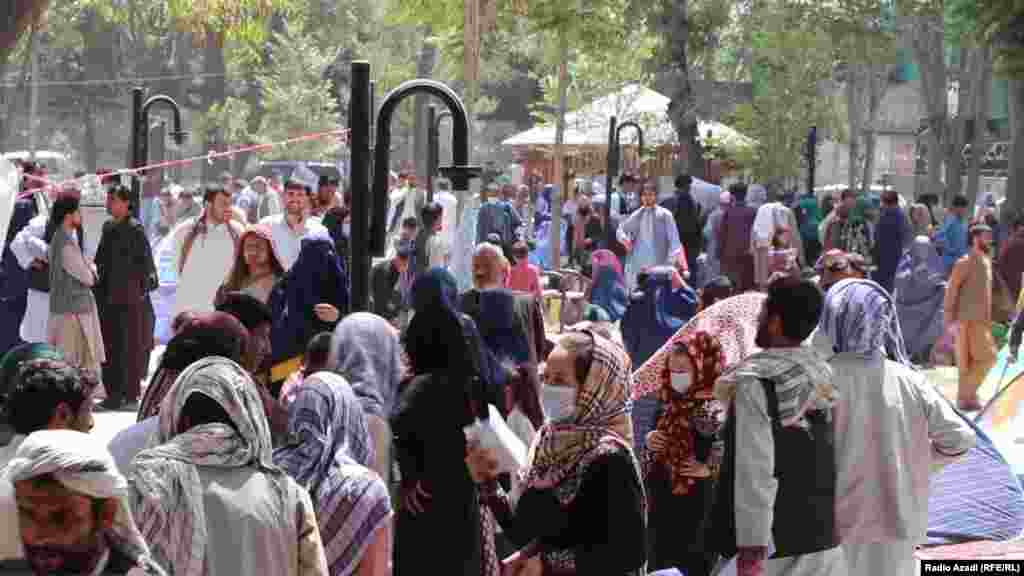
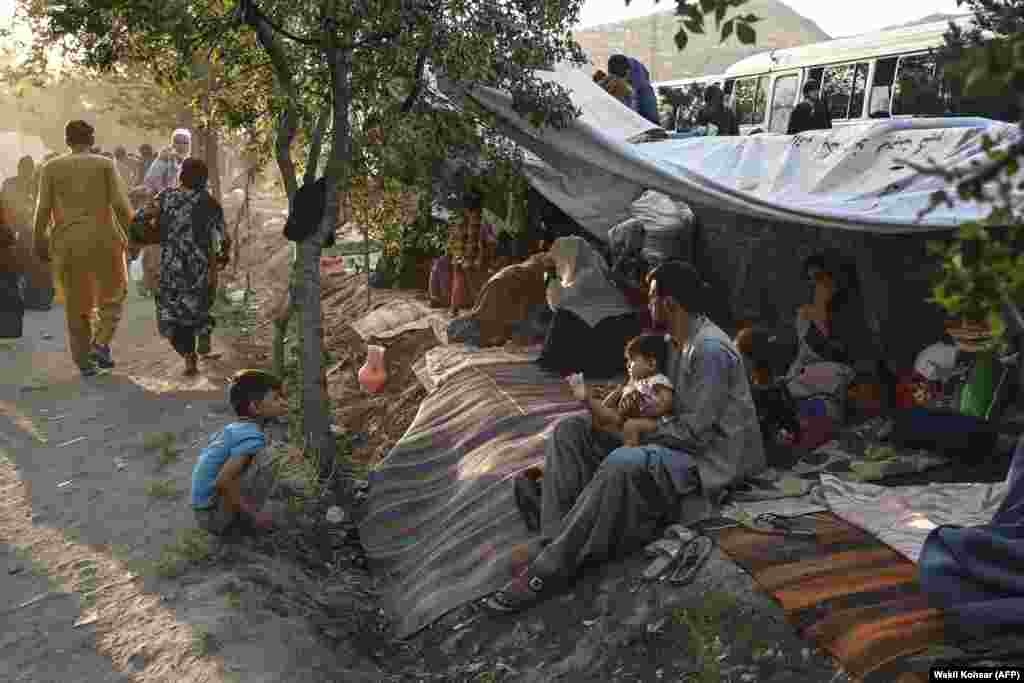
8/18Displaced Afghans have been living in this Kabul park.
Tens of thousands of people have been flooding into the Afghan capital, Kabul, and gathering at the Pakistan border to escape the escalating fighting between Taliban militants and government forces. As more provincial capitals fell to the Taliban, Afghanistan's Refugees and Repatriations Ministry said that more than 35,000 families had arrived in the capital over the last week and that officials are struggling to provide them food and shelter.
9/18Displaced children from Afghanistan's northern provinces take refuge in a public park in Kabul.
Tens of thousands of people have been flooding into the Afghan capital, Kabul, and gathering at the Pakistan border to escape the escalating fighting between Taliban militants and government forces. As more provincial capitals fell to the Taliban, Afghanistan's Refugees and Repatriations Ministry said that more than 35,000 families had arrived in the capital over the last week and that officials are struggling to provide them food and shelter.
10/18An Afghan child receives medical treatment in a Kabul park.
Tens of thousands of people have been flooding into the Afghan capital, Kabul, and gathering at the Pakistan border to escape the escalating fighting between Taliban militants and government forces. As more provincial capitals fell to the Taliban, Afghanistan's Refugees and Repatriations Ministry said that more than 35,000 families had arrived in the capital over the last week and that officials are struggling to provide them food and shelter.
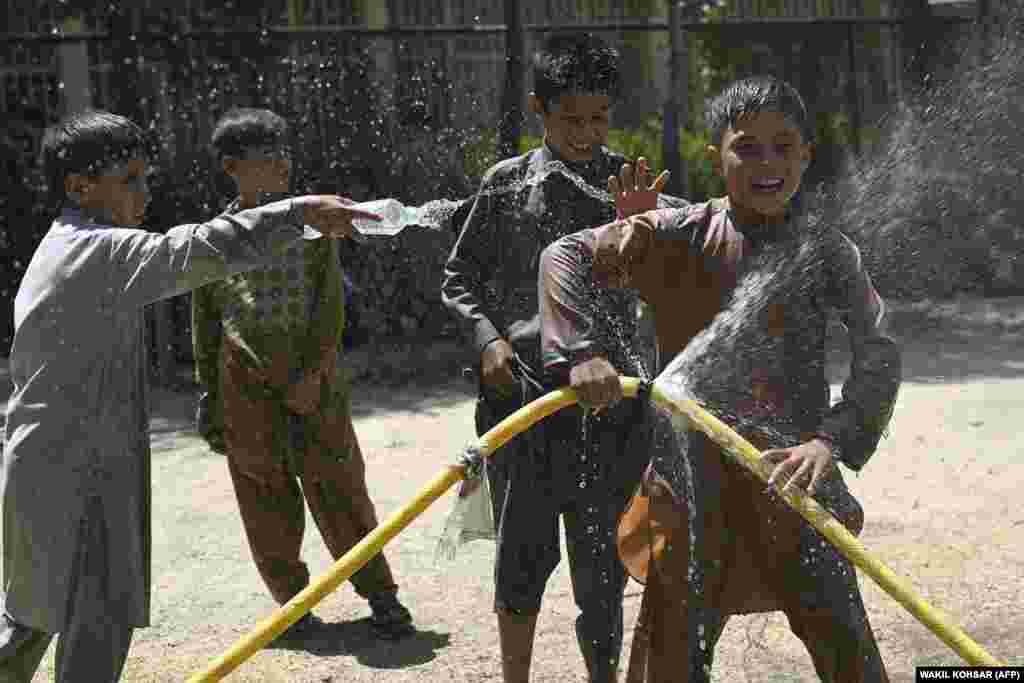
11/18Afghan children cool off while playing with a hose at the Shahr-e Naw park in Kabul.
Tens of thousands of people have been flooding into the Afghan capital, Kabul, and gathering at the Pakistan border to escape the escalating fighting between Taliban militants and government forces. As more provincial capitals fell to the Taliban, Afghanistan's Refugees and Repatriations Ministry said that more than 35,000 families had arrived in the capital over the last week and that officials are struggling to provide them food and shelter.
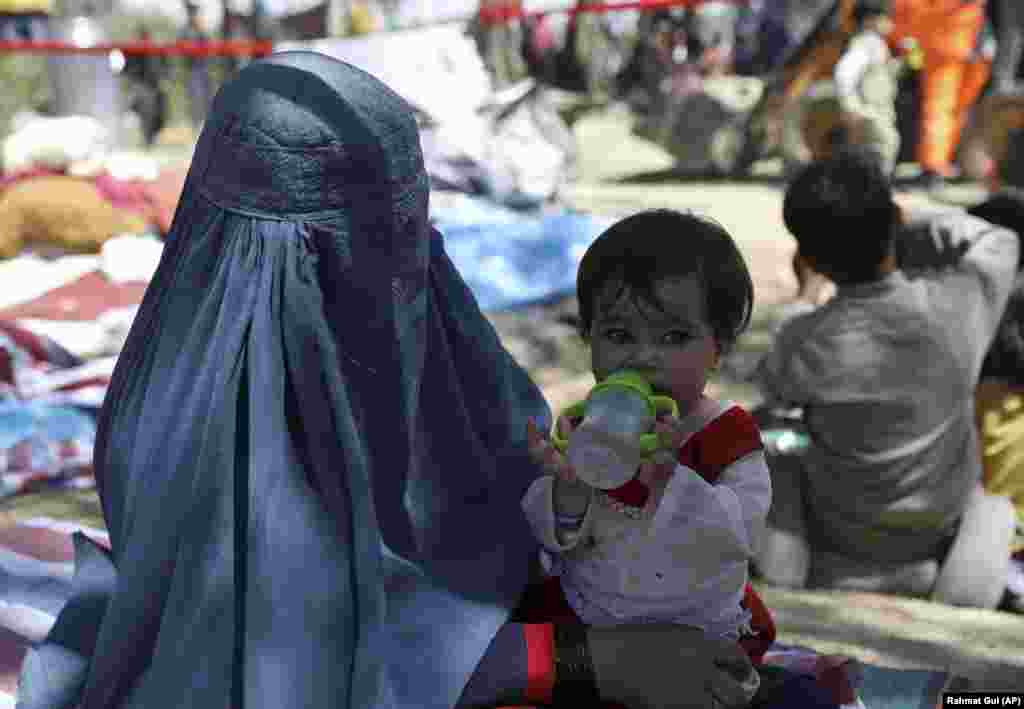
12/18An Afghan woman and child in a Kabul public park.
Tens of thousands of people have been flooding into the Afghan capital, Kabul, and gathering at the Pakistan border to escape the escalating fighting between Taliban militants and government forces. As more provincial capitals fell to the Taliban, Afghanistan's Refugees and Repatriations Ministry said that more than 35,000 families had arrived in the capital over the last week and that officials are struggling to provide them food and shelter.
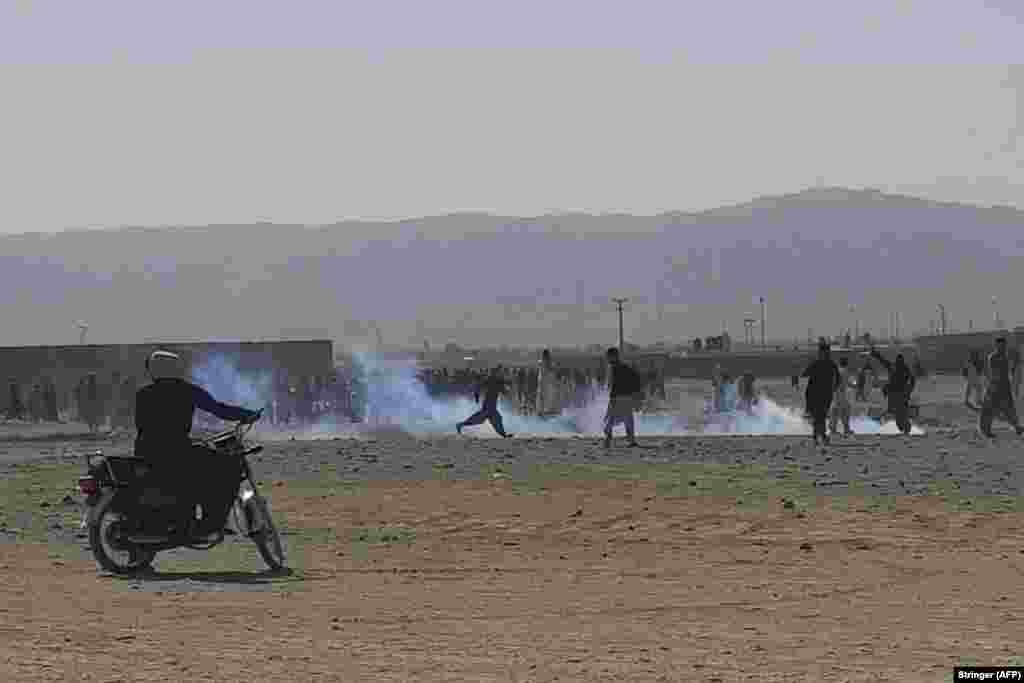
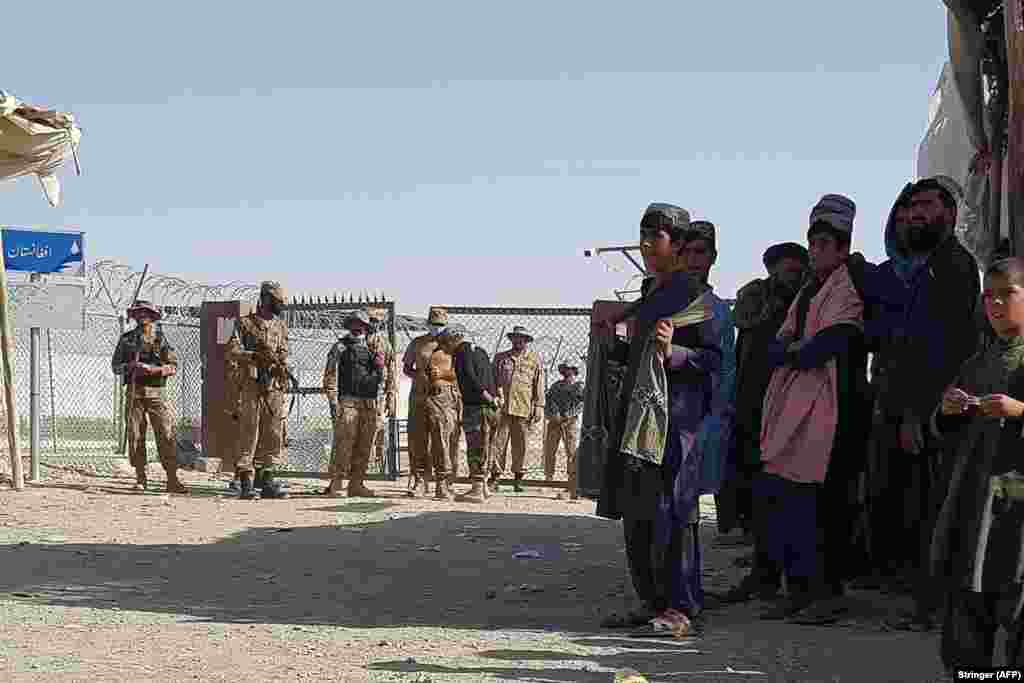
13/18Pakistani security forces use tear gas to disperse displaced Afghans who were gathering at the Pakistani border on August 12. Many Afghans want to get to the Pakistani city of the Chaman border crossing, but it was closed after the Taliban took control of the Kandahar side.
Tens of thousands of people have been flooding into the Afghan capital, Kabul, and gathering at the Pakistan border to escape the escalating fighting between Taliban militants and government forces. As more provincial capitals fell to the Taliban, Afghanistan's Refugees and Repatriations Ministry said that more than 35,000 families had arrived in the capital over the last week and that officials are struggling to provide them food and shelter.
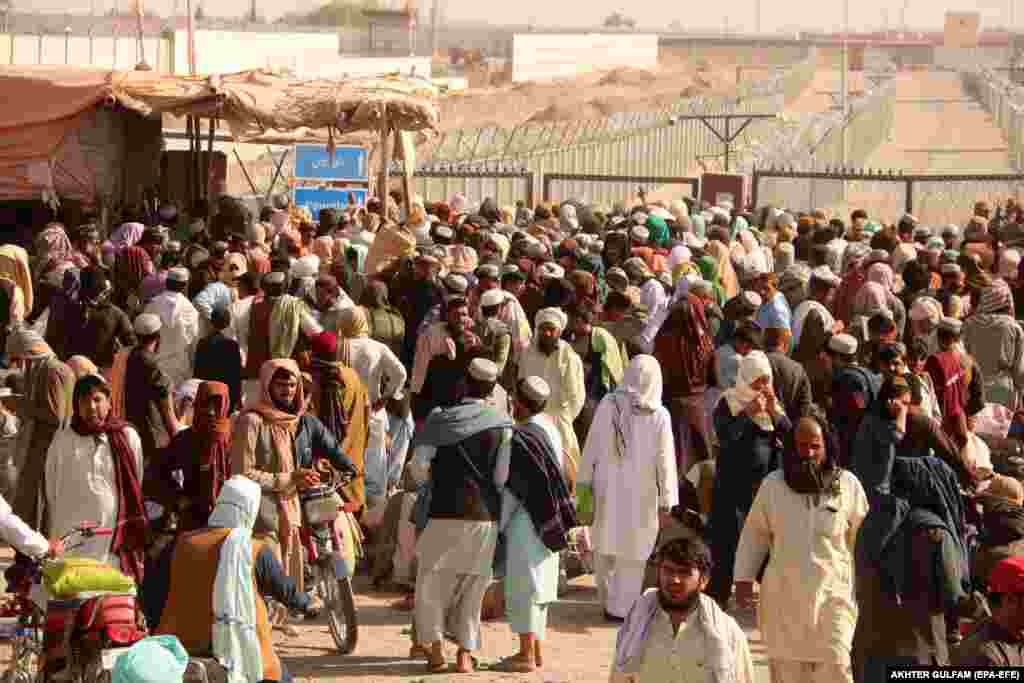
14/18People stranded at the Afghan-Pakistan border on August 11 after the Chaman crossing was closed. The Taliban's shadow governor for Kandahar Province issued a statement a week before, announcing the closure of the border.
Tens of thousands of people have been flooding into the Afghan capital, Kabul, and gathering at the Pakistan border to escape the escalating fighting between Taliban militants and government forces. As more provincial capitals fell to the Taliban, Afghanistan's Refugees and Repatriations Ministry said that more than 35,000 families had arrived in the capital over the last week and that officials are struggling to provide them food and shelter.
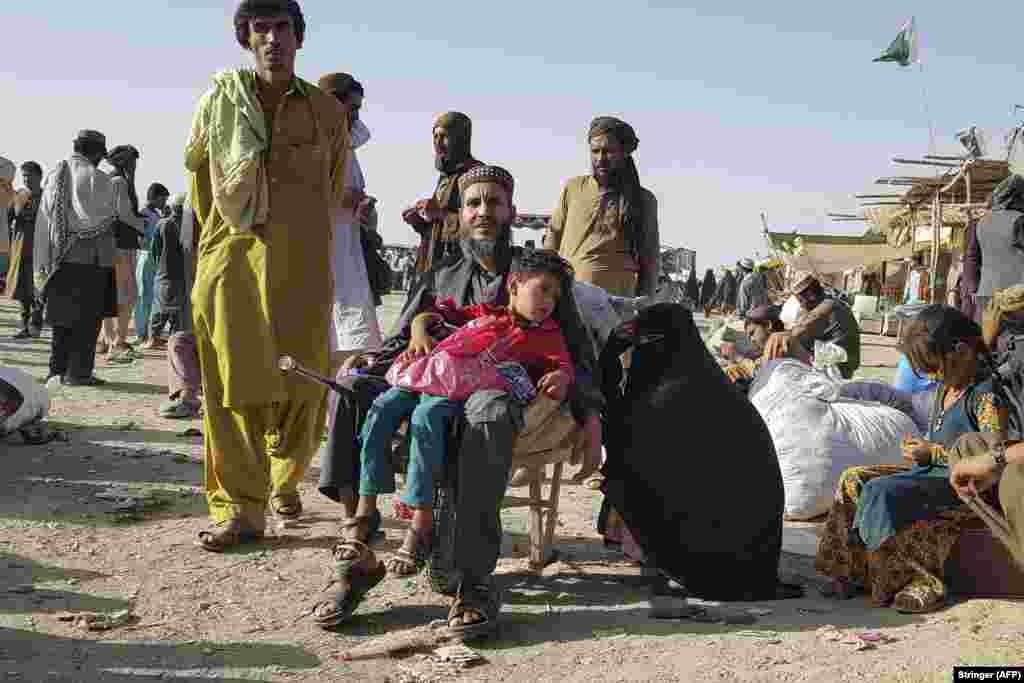
15/18Afghan families stranded at the Afghan-Pakistan border on August 12. The Taliban has taken control of most of Kandahar Province and there has been heavy fighting in the provincial capital as government forces try to hold onto Kandahar city.
Tens of thousands of people have been flooding into the Afghan capital, Kabul, and gathering at the Pakistan border to escape the escalating fighting between Taliban militants and government forces. As more provincial capitals fell to the Taliban, Afghanistan's Refugees and Repatriations Ministry said that more than 35,000 families had arrived in the capital over the last week and that officials are struggling to provide them food and shelter.
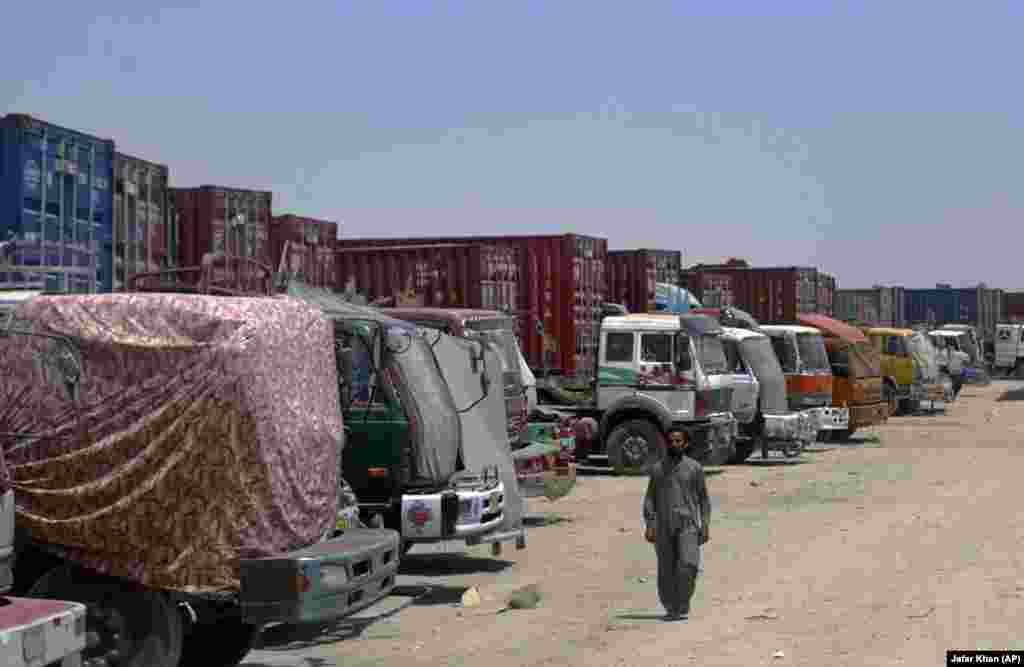
16/18A driver walks past Afghan-bound trucks stuck at the Chaman border crossing.
Tens of thousands of people have been flooding into the Afghan capital, Kabul, and gathering at the Pakistan border to escape the escalating fighting between Taliban militants and government forces. As more provincial capitals fell to the Taliban, Afghanistan's Refugees and Repatriations Ministry said that more than 35,000 families had arrived in the capital over the last week and that officials are struggling to provide them food and shelter.
17/18Pakistani soldiers stand guard as stranded Afghans wait for the reopening of the border crossing on August 12.
Tens of thousands of people have been flooding into the Afghan capital, Kabul, and gathering at the Pakistan border to escape the escalating fighting between Taliban militants and government forces. As more provincial capitals fell to the Taliban, Afghanistan's Refugees and Repatriations Ministry said that more than 35,000 families had arrived in the capital over the last week and that officials are struggling to provide them food and shelter.
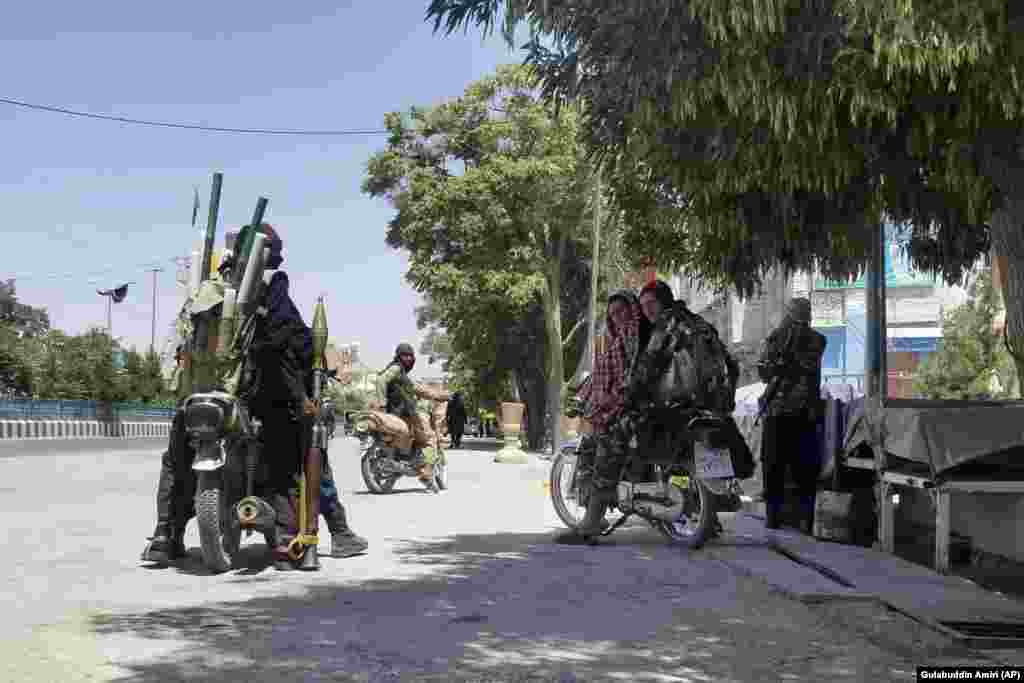
18/18Taliban fighters took control of Ghazni, the capital of Ghazni Province, on August 12. It becomes the 10th Afghan provincial capital to fall to the militants over the past week. Ghazni is located 150 kilometers southwest of Kabul and has major strategic importance. It lies along the Kabul-Kandahar highway that connects the capital with militant strongholds in the south.
Tens of thousands of people have been flooding into the Afghan capital, Kabul, and gathering at the Pakistan border to escape the escalating fighting between Taliban militants and government forces. As more provincial capitals fell to the Taliban, Afghanistan's Refugees and Repatriations Ministry said that more than 35,000 families had arrived in the capital over the last week and that officials are struggling to provide them food and shelter.
Previous slide
Next slide
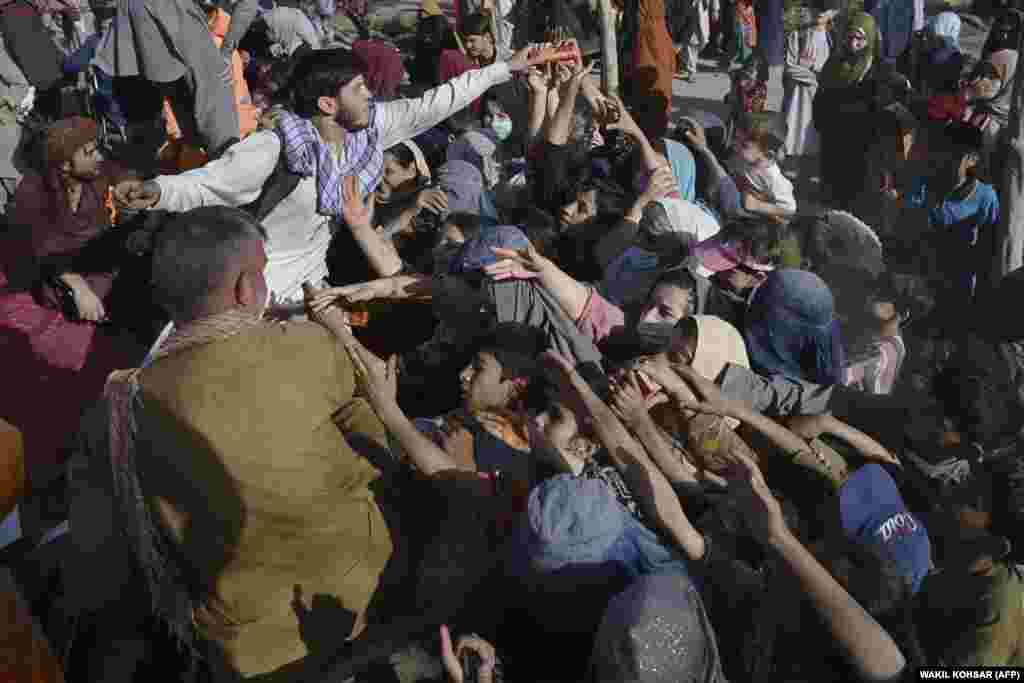
"Terrified families have been fleeing into Kabul in the past days. Camps are overcrowded and children are sleeping out in the open. Families are fighting over food," said Tracey Van Heerden, the Norwegian Refugee Council’s acting country director in Afghanistan.
The escalating conflict also makes the work of aid organizations more difficult and dangerous, Van Heerden said.
"Eighty percent of our projects are affected by the ongoing conflict, impacting the delivery of critical aid to over 900,000 Afghans."
Earlier this week, France, Germany, and other European countries announced a suspension of deportations to Afghanistan due to the deteriorating security situation in the country.
RFE/RL journalists report the news in 24 languages in 18 countries where a free press is banned by the government or not fully established. We provide what many people cannot get locally: uncensored news, responsible discussion, and open debate.