



Accessibility links

Breaking News

'Nobody Dares To Leave Their Homes': Diary Of An Afghan Refugee In Pakistan

“I suffer from pain -- the pain of homelessness, the pain of being a refugee, and the pain of helplessness,” writes Afghan journalist and writer Samina Hafizi.

Pakistan issued an ultimatum to the estimated 1.7 million undocumented Afghans living in the country: leave or face arrest and forcible expulsion after November 1.

One of them is Samina Hafizi, an Afghan writer and former journalist who lives with her mother and five siblings in the Pakistani capital, Islamabad.

Since the Taliban seized power in Afghanistan in 2021, hundreds of thousands of Afghans have fled to Pakistan to escape a devastating economic and humanitarian crisis and possible retribution by the militant group.

RFE/RL's Radio Azadi asked the 24-year-old Hafizi to keep a diary amid the mass exodus of undocumented Afghan refugees and migrants from the South Asian nation.

October 22

It is 6 a.m. I slept poorly. I had nightmares and anxious thoughts.

Why did we become refugees? This question haunts me.

Nobody dares to leave their homes.

Who wants to postpone their dreams?

Now that we are refugees, why should we endure such bad days?

If we leave, where can we seek refuge?

I have not written anything for a year. I suffer from pain -- the pain of homelessness, the pain of being a refugee, and the pain of helplessness.

Wherever I go, I hear that Afghans are being expelled from Pakistan -- drivers, shopkeepers, and cooks.

WATCH: Afghan refugees in Pakistan, many having traveled for days, crossed into Afghanistan as a November 1 deadline to leave the country took effect. Islamabad has vowed to deport an estimated 1.7 million undocumented Afghans living in Pakistan if they don't leave voluntarily.
Thousands Of Afghan Refugees Leave Pakistan As Deadline Expires
please wait

No media source currently available

0:00 0:03:01 0:00


Yesterday morning, the landlords of our apartment building came and checked everyone’s documents. They gave a deadline to two families to get valid residency papers or they would be evicted.

Members of these families once had good lives in Afghanistan. Some were journalists, while others were soldiers. Their daughters attended schools and universities. They now fret over what will happen to them.

While visiting the hospital yesterday, I felt that nothing was the same. Anxiety and fear were written over the faces of every Afghan I met.

In Islamabad, police were looking for Afghans at security checkpoints across the city. The Afghans they found were questioned and harassed.

While waiting for my turn to see the doctor at the hospital, an Afghan woman with her toddler was breathing heavily. I brought her a glass of water. She thanked me and asked whether I had valid documents.

She told me that she fled her oppressive husband in Afghanistan to seek a new life in a third country with the help of the United Nations. But the fear of being forced to return to her cruel husband and the Taliban’s harsh rule has stressed her deeply.

Tens of thousands of Afghan families across Pakistan are seeking a miracle. We don’t know where fate will take us.

October 25

My sister’s phone woke me up early in the morning.

When she finished talking, she told me that her Afghan friend was told by her landlord to leave her apartment by the afternoon. My sister was trembling. She said her friend and her family would stay with us until they found another place.

Later in the day, I went to a nearby market to buy supplies for our guests. The usually cheerful Afghan vegetable seller I go to was distressed. He told me that if he was deported, he would lose the business that enabled him to earn a living for the past 15 years.

Around 5 p.m., my sister’s friend and her family arrived. Their voices were hoarse from crying so much. We all cried.


I felt like a caged bird unable to fly.

They were evicted because only one of the eight family members did not have a Pakistani visa. Her visa application was rejected several times.

Cruelty and fear have forced Afghans in Islamabad to stop leaving their houses.

It is heartbreaking to see dozens of Afghan families announcing the sale of their household items on Facebook daily.

October 28

I’m always worried. My mental health has gradually deteriorated during the past two years.

In the morning today, Hajira, one of our Pakistani neighbors, visited us. We talked about the customs and traditions in Afghanistan and Pakistan.

Suddenly, Hajira blamed us helpless Afghans for some of the problems Pakistanis face these days.

She said Afghan refugees are bringing polio to Pakistan because our children are not vaccinated against the disease. And she said the price of everything has increased because of Afghan refugees.
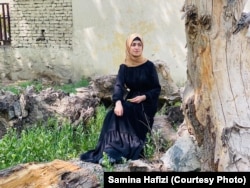
Afghan journalist and writer Samina Hafizi: "Returning to Taliban rule in Afghanistan is not a choice. My two younger sisters still need to go to university. But the Taliban closed that door for all Afghan women last year."

When we disputed her claims, she threatened to call the police.

Thankfully, the police didn’t show up. So far, we haven’t given anyone an excuse to evict us. But I feel nervous.

My generation will tell their children the stories of how our homeland, dreams, and hopes were snatched from us. We were defeated and destroyed just as we were ready to prosper.

We were broken into pieces and scattered to all corners of the world.

All this has broken our hearts.

October 31

If someone cannot talk, write, or cry to lessen their sorrows, what else should they do?

Die or break?

If someone asked me who are the most unfortunate people in the world, I would say refugees.

If someone asked what the worst state of existence is, I would say being a refugee.

I hate this word.

Recently, I asked fellow Afghans living in Pakistan to share their stories on Facebook.

Zuhal, 27, wrote that they left Afghanistan last year because her brother and sister worked as prosecutors for the fallen Afghan government. This prompted the Taliban to harass them and repeatedly raid their house to look for the armored car they had already returned to the government.

After constant harassment in Pakistan, most of her family members returned to Afghanistan. But she and her sister remain in Pakistan.

A 22-year-old young man told me about his ordeal.

He was stopped by the police in Islamabad a few days ago. Even though he had all the proper documents, he was detained for several hours, harassed, and threatened.

The ordeal was over when he paid a 10,000 rupee ($35) bribe to the police.

Hundreds of refugees like him are forced to pay bribes daily.

November 2

We are in a bind.

I’m overwhelmed by the news of Afghans being arrested or forcibly deported.

I'm overwhelmed by the videos and photos showing their desperation, dispossession, and anguish.

Those who remain are trying to stay invisible. Everyone wants to avoid the humiliation of being forced back to a country many have not seen or, like us, fled because of the Taliban's draconian governance.

Afghans Scramble To Return Home Ahead Of Pakistan's Deportation Deadline
Afghan refugees arrive in trucks from Pakistan at the Afghanistan-Pakistan border at Torkham on October 31.<br />
<br />
Islamabad has resorted to threats and abuse to compel the estimated 1.7 million illegal Afghan immigrants to leave the country ahead of a November 1 deadline, Human Rights Watch (HRW) says.
1/12 Afghan refugees arrive in trucks from Pakistan at the Afghanistan-Pakistan border at Torkham on October 31.

Islamabad has resorted to threats and abuse to compel the estimated 1.7 million illegal Afghan immigrants to leave the country ahead of a November 1 deadline, Human Rights Watch (HRW) says.
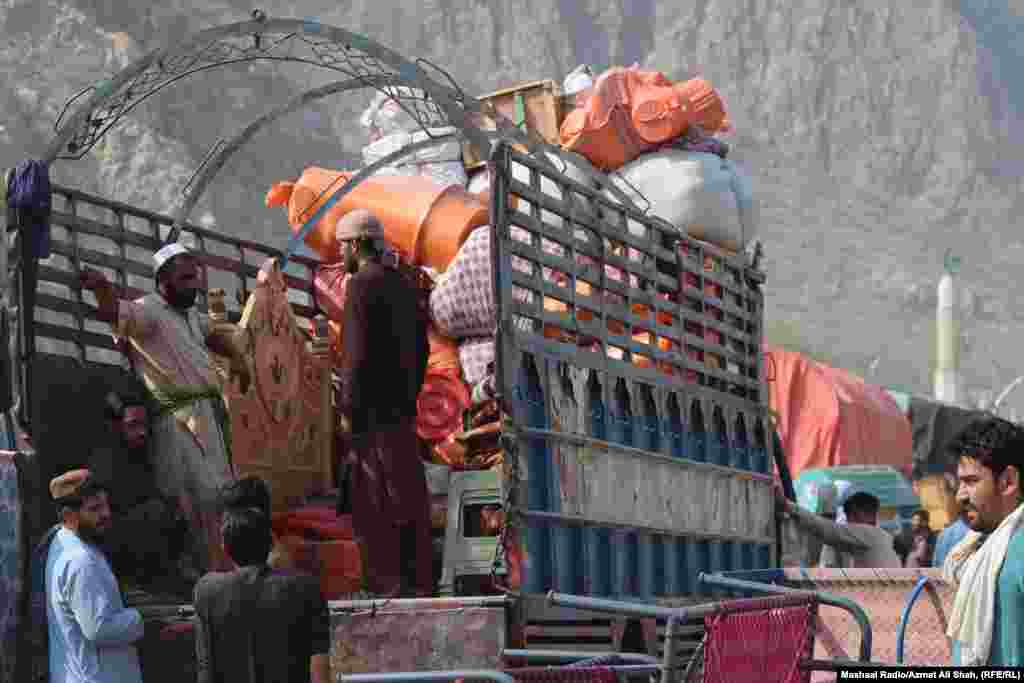
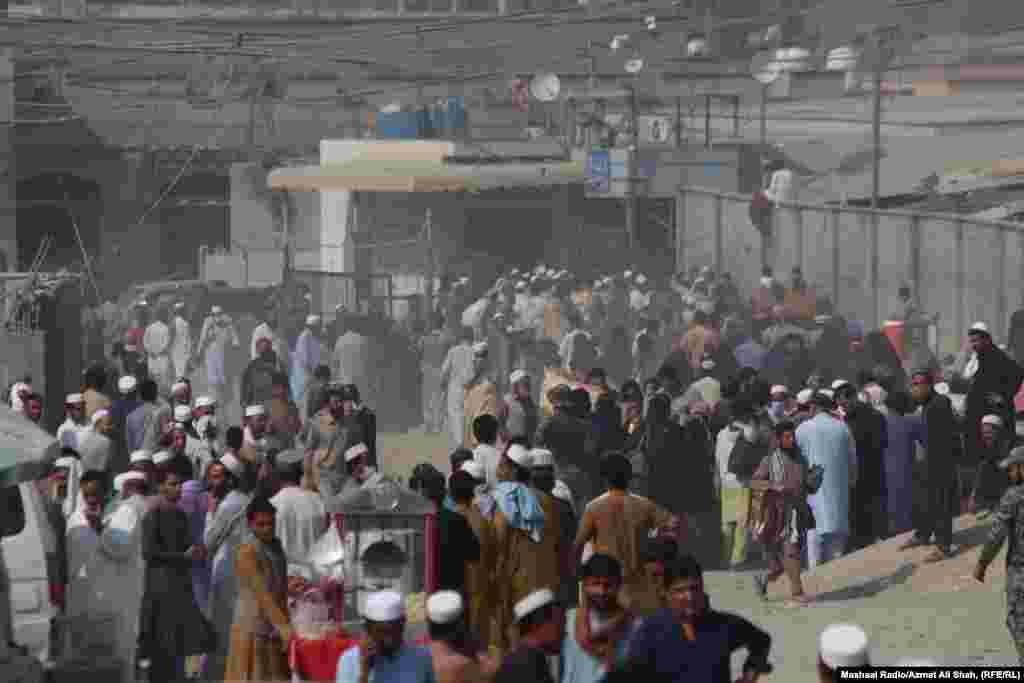
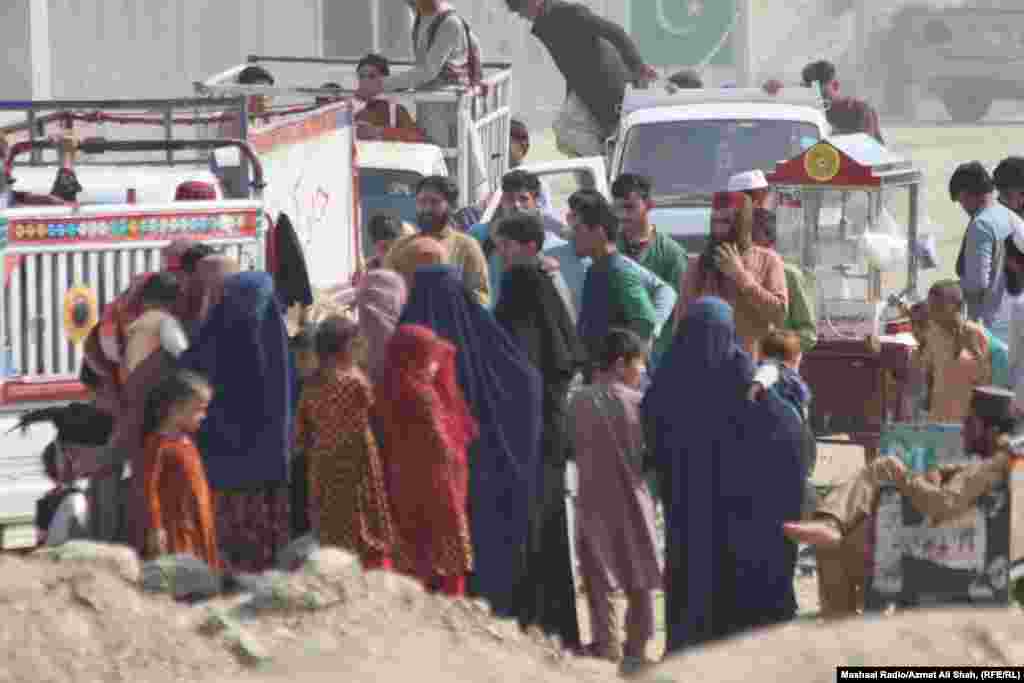
A flood of Afghan refugees flocked to the Torkham and Chaman checkpoints on the Pakistan-Afghanistan border on October 31 ahead of a November 1 deportation deadline by Pakistani authorities.
Afghan refugees wait to board trucks at the border crossing at Torkham.<br />
<br />
&quot;Pakistan&#39;s announced deadline for Afghans to return has led to detentions, beatings, and extortion, leaving thousands of Afghans in fear over their future,&quot;&nbsp;<strong><a href="https://www.hrw.org/news/2023/10/31/pakistan-afghans-detained-face-deportation" target="_blank">said</a></strong>&nbsp;Fereshta Abbasi, HRW&#39;s Afghanistan researcher.
2/12 Afghan refugees wait to board trucks at the border crossing at Torkham.

"Pakistan's announced deadline for Afghans to return has led to detentions, beatings, and extortion, leaving thousands of Afghans in fear over their future," said Fereshta Abbasi, HRW's Afghanistan researcher.
A flood of Afghan refugees flocked to the Torkham and Chaman checkpoints on the Pakistan-Afghanistan border on October 31 ahead of a November 1 deportation deadline by Pakistani authorities.
Afghan refugees arrive in Torkham.<br />
<br />
&quot;The situation in Afghanistan remains dangerous for many who fled, and deportation will expose them to significant security risks, including threats to their lives and well-being,&quot; Abbasi said.
3/12 Afghan refugees arrive in Torkham.

"The situation in Afghanistan remains dangerous for many who fled, and deportation will expose them to significant security risks, including threats to their lives and well-being," Abbasi said.
A flood of Afghan refugees flocked to the Torkham and Chaman checkpoints on the Pakistan-Afghanistan border on October 31 ahead of a November 1 deportation deadline by Pakistani authorities.
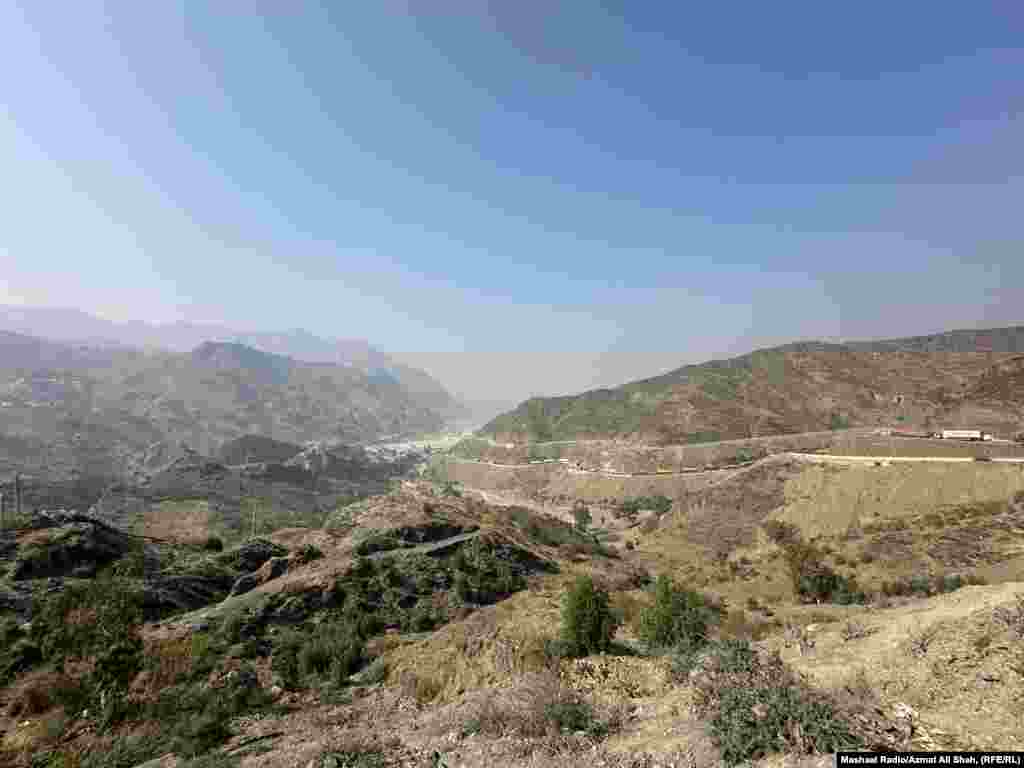
The winding road leading to the Torkham border crossing.<br />
<br />
HRW also says that many Afghans at risk of being deported are awaiting resettlement to the United States, United Kingdom, Germany, and Canada.&nbsp;
4/12 The winding road leading to the Torkham border crossing.

HRW also says that many Afghans at risk of being deported are awaiting resettlement to the United States, United Kingdom, Germany, and Canada. 
A flood of Afghan refugees flocked to the Torkham and Chaman checkpoints on the Pakistan-Afghanistan border on October 31 ahead of a November 1 deportation deadline by Pakistani authorities.
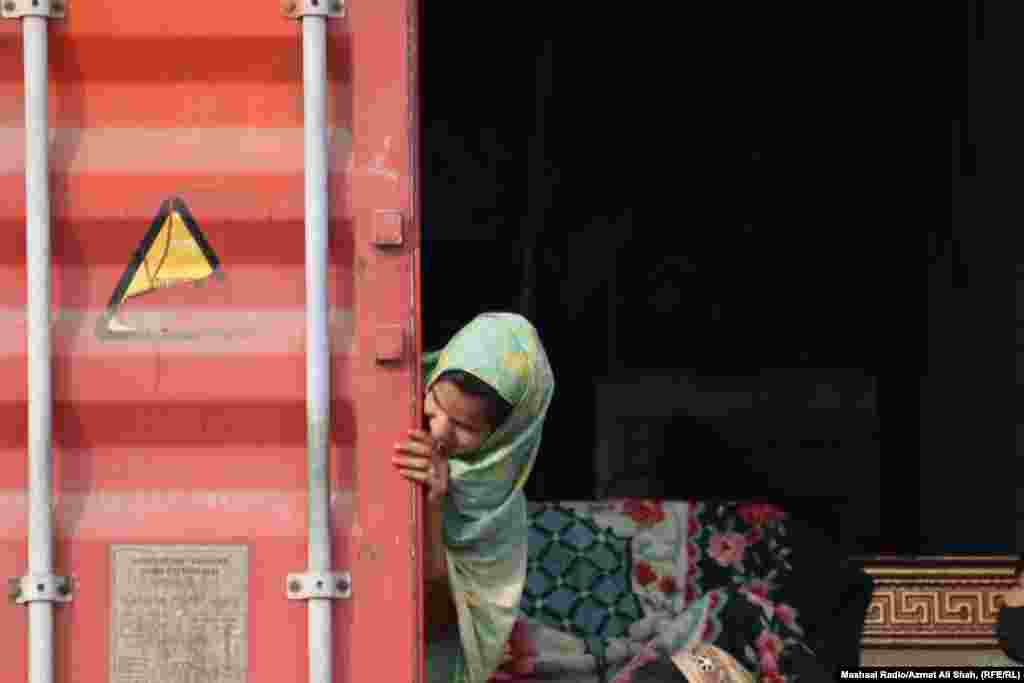
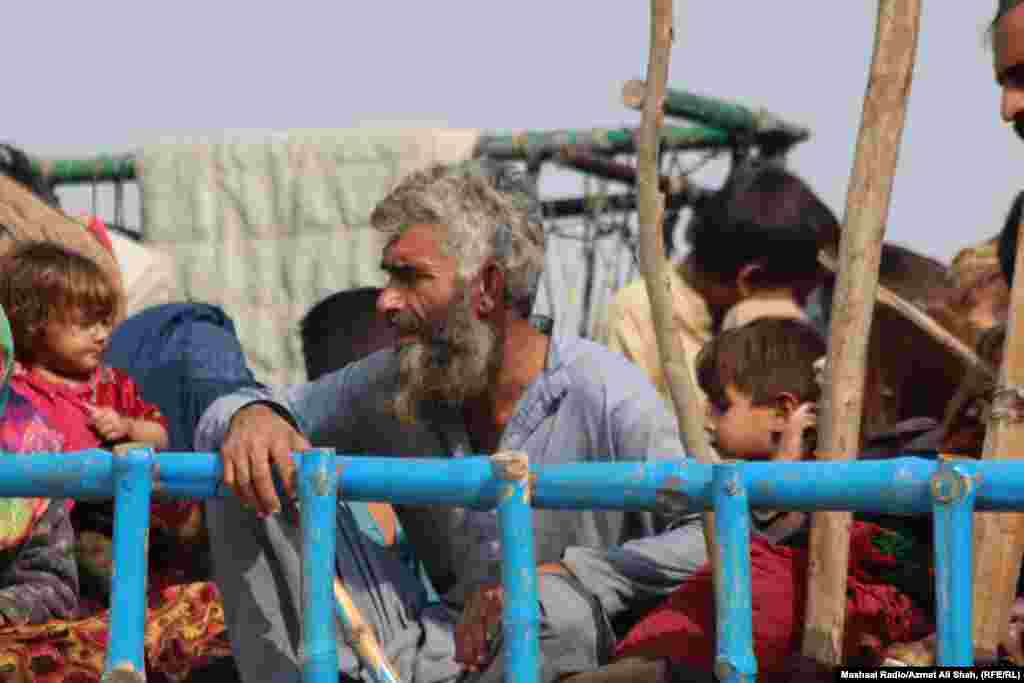
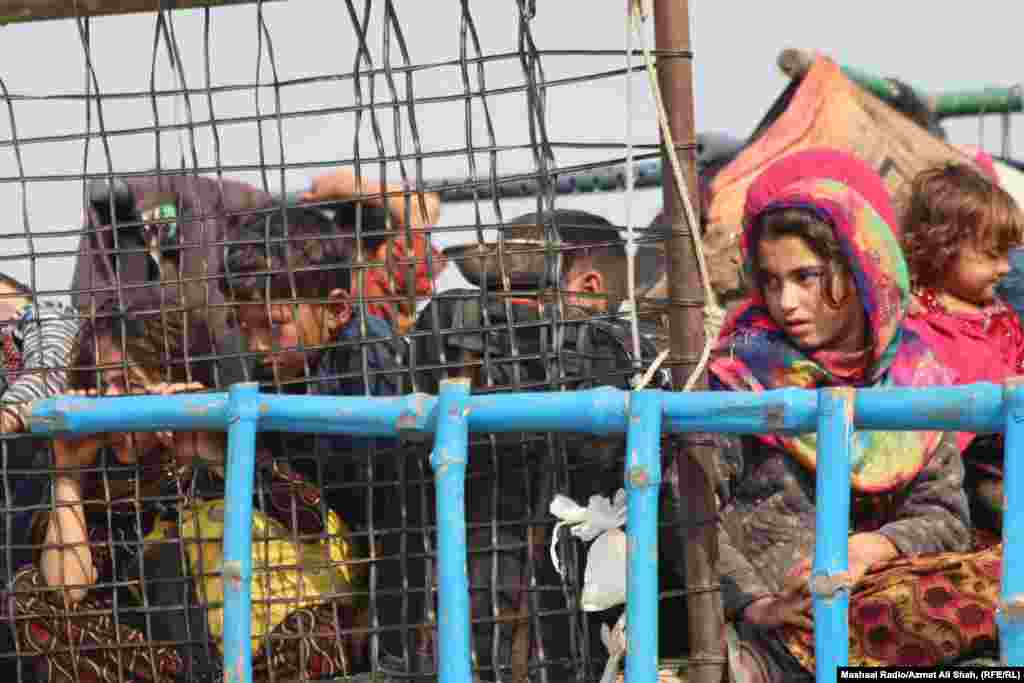
A young girl looks out from the back of a cargo container.<br />
<br />
On October 3, the Pakistani Interior Ministry announced that all undocumented immigrants in Pakistan had to leave the country within 28 days. As of October 27, about 60,000 Afghans had left Pakistan, the United Nations reported. Many of them cited a fear of arrest in Pakistan as the main reason for going back.
5/12 A young girl looks out from the back of a cargo container.

On October 3, the Pakistani Interior Ministry announced that all undocumented immigrants in Pakistan had to leave the country within 28 days. As of October 27, about 60,000 Afghans had left Pakistan, the United Nations reported. Many of them cited a fear of arrest in Pakistan as the main reason for going back.
A flood of Afghan refugees flocked to the Torkham and Chaman checkpoints on the Pakistan-Afghanistan border on October 31 ahead of a November 1 deportation deadline by Pakistani authorities.
Afghans wait to cross the border.<br />
<br />
HRW said the deportations &quot;violate Pakistan&#39;s obligations as a party to the UN Convention Against Torture and under the customary international law principle of nonrefoulment -- not to forcibly return people to countries where they face a clear risk of torture or other persecution,&quot; HRW wrote.
6/12 Afghans wait to cross the border.

HRW said the deportations "violate Pakistan's obligations as a party to the UN Convention Against Torture and under the customary international law principle of nonrefoulment -- not to forcibly return people to countries where they face a clear risk of torture or other persecution," HRW wrote.
A flood of Afghan refugees flocked to the Torkham and Chaman checkpoints on the Pakistan-Afghanistan border on October 31 ahead of a November 1 deportation deadline by Pakistani authorities.
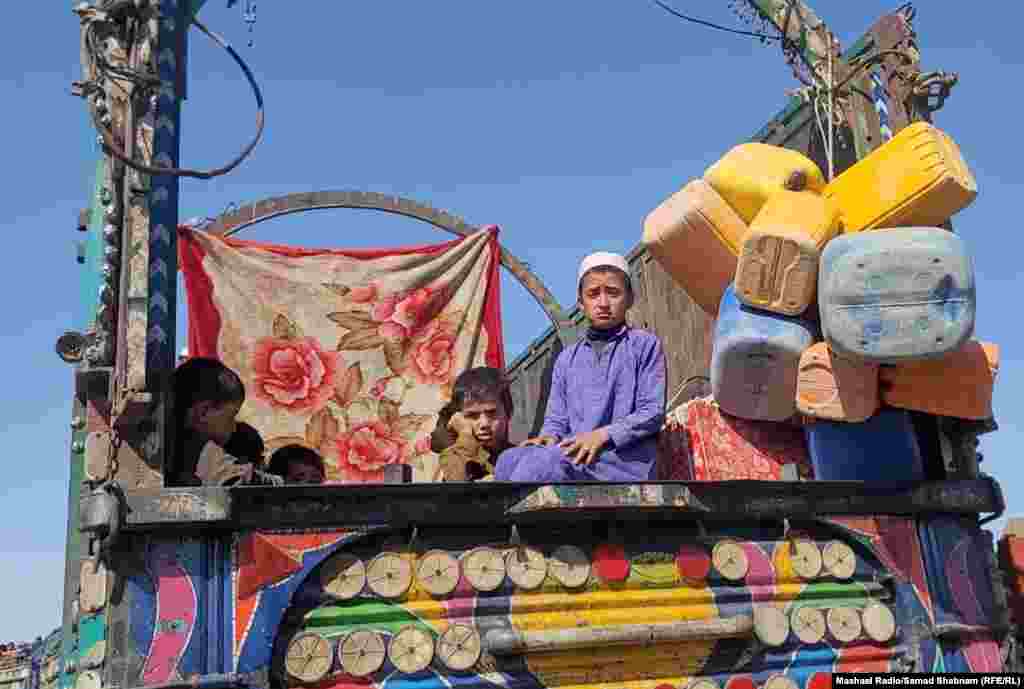
Afghan families crowd atop a truck before journeying into Afghanistan just hours before the expiration of the deadline.
7/12 Afghan families crowd atop a truck before journeying into Afghanistan just hours before the expiration of the deadline.
A flood of Afghan refugees flocked to the Torkham and Chaman checkpoints on the Pakistan-Afghanistan border on October 31 ahead of a November 1 deportation deadline by Pakistani authorities.
Another truck heading for Afghanistan<br />
<br />
The expulsion campaign has drawn widespread criticism from UN agencies, rights groups, and the Taliban-led administration in Afghanistan.&nbsp;With millions of Afghans already living with&nbsp;<a href="https://reliefweb.int/report/afghanistan/wfp-afghanistan-situation-report-august-2023" target="_self">food insecurity</a>, the country&#39;s already dire humanitarian situation may worsen with the arrival of impoverished Afghans from Pakistan.
8/12 Another truck heading for Afghanistan

The expulsion campaign has drawn widespread criticism from UN agencies, rights groups, and the Taliban-led administration in Afghanistan. With millions of Afghans already living with food insecurity, the country's already dire humanitarian situation may worsen with the arrival of impoverished Afghans from Pakistan.
A flood of Afghan refugees flocked to the Torkham and Chaman checkpoints on the Pakistan-Afghanistan border on October 31 ahead of a November 1 deportation deadline by Pakistani authorities.
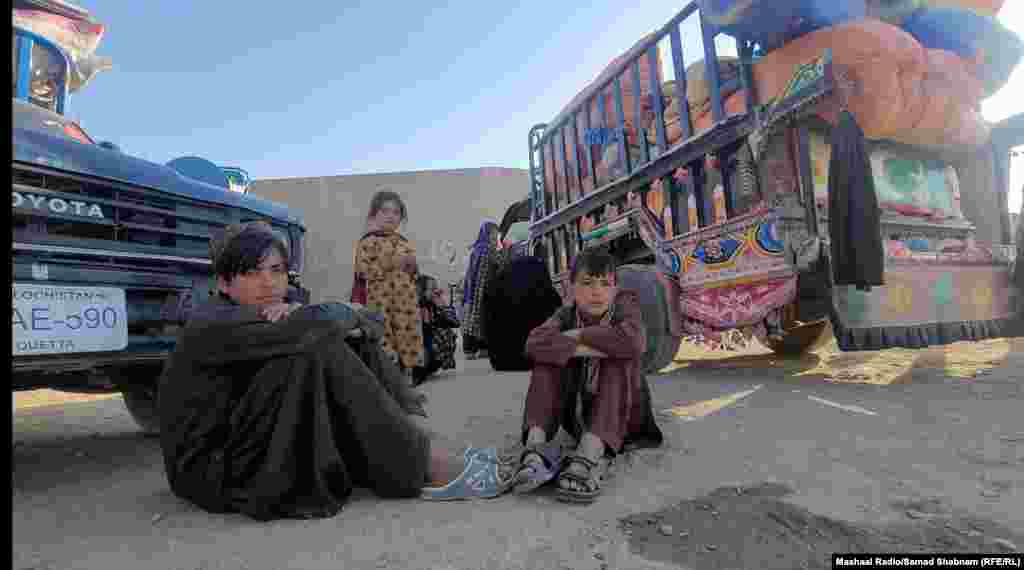
Afghans wait patiently for their journey to start at the Torkham border.
9/12 Afghans wait patiently for their journey to start at the Torkham border.
A flood of Afghan refugees flocked to the Torkham and Chaman checkpoints on the Pakistan-Afghanistan border on October 31 ahead of a November 1 deportation deadline by Pakistani authorities.
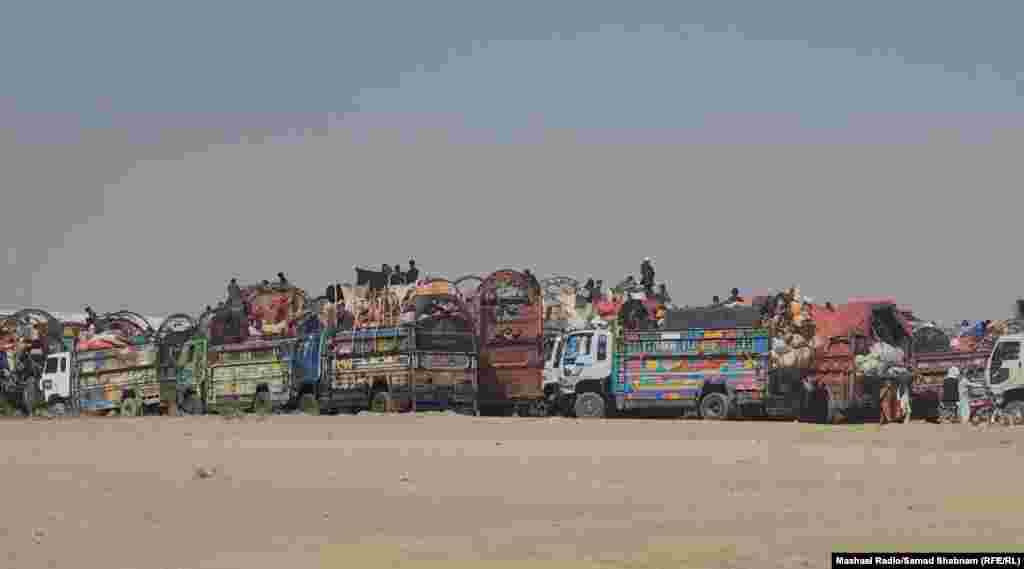
The Chaman border crossing, situated nearly 120 kilometers to the northwest of Pakistan&#39;s provincial capital, Quetta, was also backed up with trucks and buses carrying Afghans forced to return to Afghanistan.
10/12 The Chaman border crossing, situated nearly 120 kilometers to the northwest of Pakistan's provincial capital, Quetta, was also backed up with trucks and buses carrying Afghans forced to return to Afghanistan.
A flood of Afghan refugees flocked to the Torkham and Chaman checkpoints on the Pakistan-Afghanistan border on October 31 ahead of a November 1 deportation deadline by Pakistani authorities.
Afghans wait near trucks that will ferry them across the Chaman border crossing.<br />
<br />
Pakistani officials said the Torkham and Chaman border crossings with Afghanistan will remain open beyond their daily 4 p.m. closure to allow for those who have arrived there to leave the country.
11/12 Afghans wait near trucks that will ferry them across the Chaman border crossing.

Pakistani officials said the Torkham and Chaman border crossings with Afghanistan will remain open beyond their daily 4 p.m. closure to allow for those who have arrived there to leave the country.
A flood of Afghan refugees flocked to the Torkham and Chaman checkpoints on the Pakistan-Afghanistan border on October 31 ahead of a November 1 deportation deadline by Pakistani authorities.
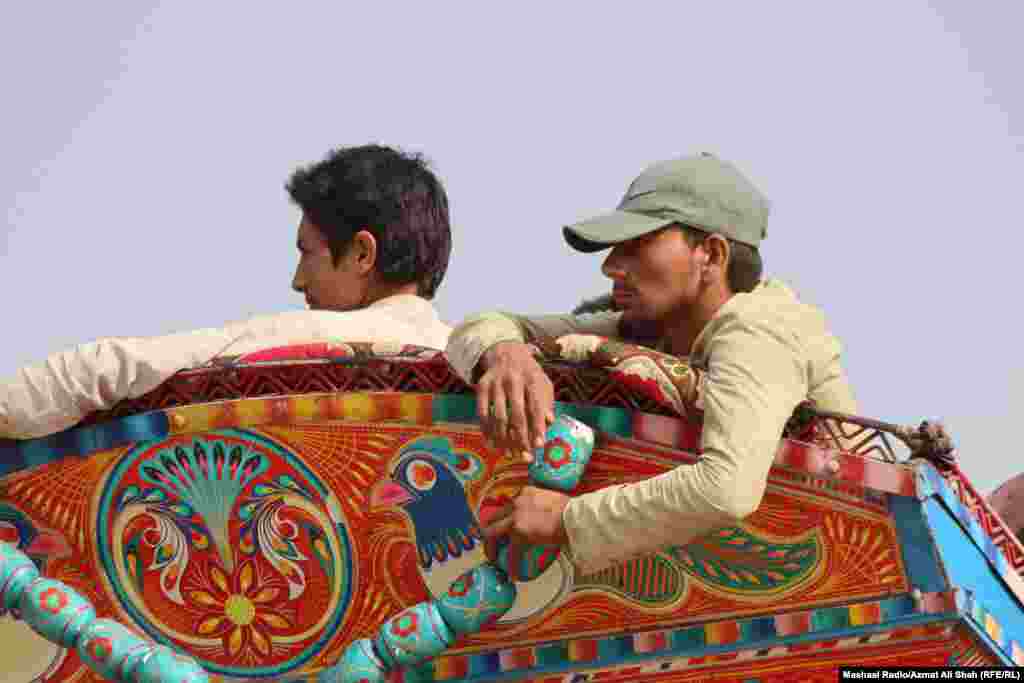
Young boys sit atop a truck that will carry them across the border at Chaman.<br />
<br />
Since ousting the Western-backed Afghan government and taking over the country in August 2021, the Taliban has placed restrictions on women&#39;s appearance, freedom of movement, right to work and study, and access to society.&nbsp;Restrictions have also been placed on the media, activists, and civil society organizations.
12/12 Young boys sit atop a truck that will carry them across the border at Chaman.

Since ousting the Western-backed Afghan government and taking over the country in August 2021, the Taliban has placed restrictions on women's appearance, freedom of movement, right to work and study, and access to society. Restrictions have also been placed on the media, activists, and civil society organizations.
A flood of Afghan refugees flocked to the Torkham and Chaman checkpoints on the Pakistan-Afghanistan border on October 31 ahead of a November 1 deportation deadline by Pakistani authorities.
Previous slide
Next slide


We are in limbo. We have no real choices.

Our efforts to be relocated to a third country through the UN have gone nowhere.

Returning to Taliban rule in Afghanistan is not a choice. My two younger sisters still need to go to university. But the Taliban closed that door for all Afghan women last year.

As a female-only household, we left Afghanistan because we feared that we would be forced to marry Taliban fighters. We witnessed such cases in Kabul.

We had sold everything before coming to Pakistan. We sold all our household items. Now, if we are forced to go back to Afghanistan, we will be forced to begin from zero again.

For now, we will stay in Pakistan until we are arrested or deported.

Uncertainty defines our lives. It describes the lives of all Afghans in our situation.

Diary entries have been edited for clarity; translated by Abubakar Siddique.
  • 16x9 Image

    RFE/RL's Radio Azadi

    RFE/RL's Radio Azadi is one of the most popular and trusted media outlets in Afghanistan. Nearly half of the country's adult audience accesses Azadi's reporting on a weekly basis.

This item is part of
XS
SM
MD
LG