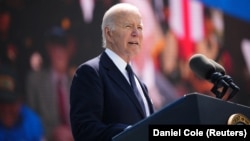
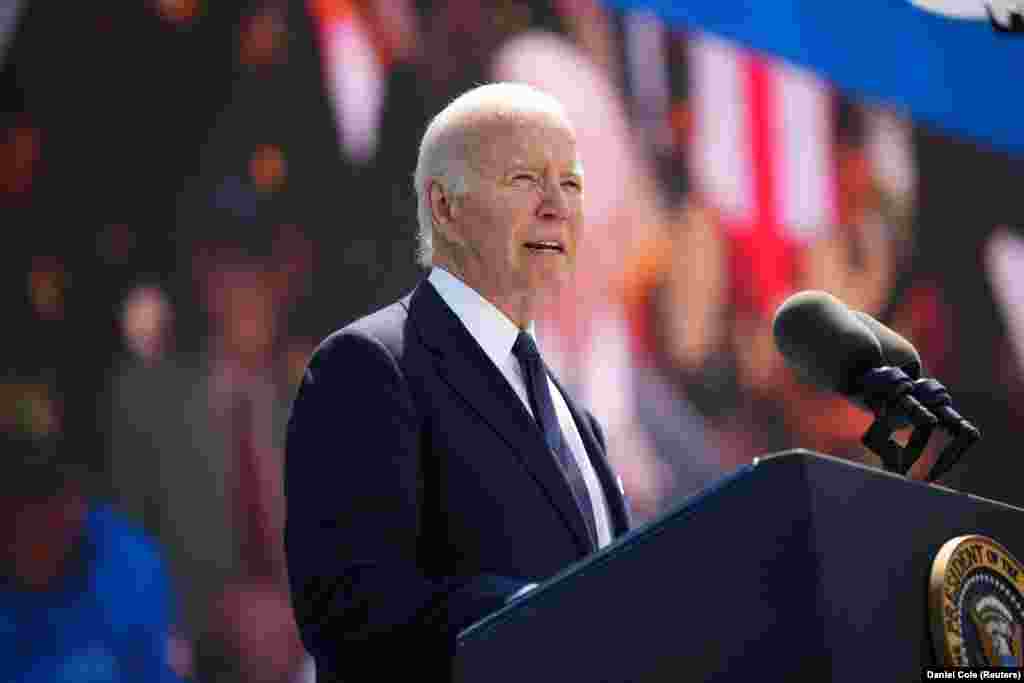
U.S. President Joe Biden delivers a speech during a commemorative ceremony to mark the 80th anniversary of D-Day at the U.S. cemetery in Colleville-sur-Mer, Normandy, France, on June 6.
U.S. President Joe Biden, marking the 80th anniversary of D-Day, said the free world stands with Ukraine and won't cave in to Russian aggression, drawing a parallel with the Allies' fight to liberate Europe from Nazi Germany's subjugation in World War II.
The United States and NATO "will not walk away" and abandon Ukraine, Biden said in a speech at commemorations in Normandy on June 6 to mark the anniversary of the 1944 Allied landing in Normandy, a turning point that contributed decisively to Adolf Hitler's ultimate defeat in 1945.
"Make no mistake: We will not bow down, we cannot surrender to the bullies; it is simply unthinkable. If we do, freedom will be subjugated, all Europe will be threatened," Biden said in Colleville-sur-Mer at a ceremony hosted by French President Emmanuel Macron in honor of the dwindling number of surviving World War II veterans and attended by Ukrainian President Volodymyr Zelenskiy, Canadian Prime Minister Justin Trudeau, Britain's King Charles III, and other heads of state and dignitaries.
Biden Calls For Solidarity With Ukraine At D-Day Commemorations
1/9President Joe Biden reaffirmed the United States' commitment to defending Ukraine in a speech marking the 80th anniversary of D-Day at the Normandy American Cemetery and Memorial in Colleville-sur-Mer, France, on June 6.
"To surrender to bullies, to bow down to dictators, is simply unthinkable," he said against a backdrop of World War II veterans. "If we were to do that, it means we'd be forgetting what happened here on these hallowed beaches."
U.S. President Joe Biden marked the 80th anniversary of D-Day on June 6 by saying that "we will not walk away" from the defense of Ukraine and allow Russia to threaten more of Europe.
Show moreShow less
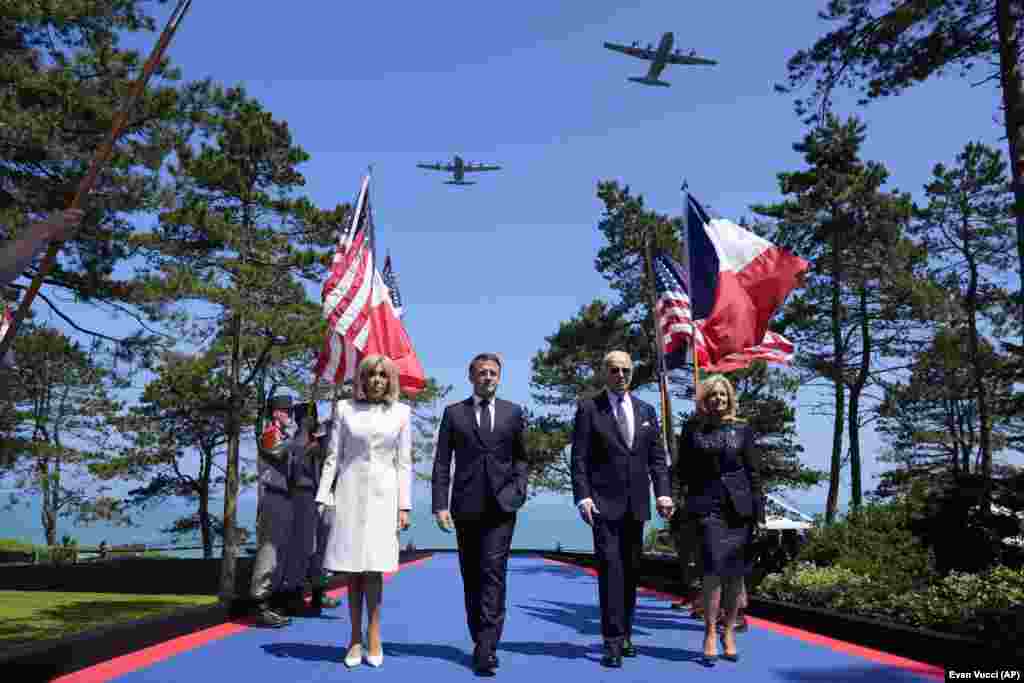
2/9Brigitte Macron (left to right), French President Emmanuel Macron, U.S. President Joe Biden, and first lady Jill Biden walk on stage during ceremonies to mark the 1944 Allied landings that contributed to the defeat of Nazi Germany.
Biden's comment about bullies was a reference to Russian President Vladimir Putin, who ordered the full-scale invasion of Ukraine in February 2022.
U.S. President Joe Biden marked the 80th anniversary of D-Day on June 6 by saying that "we will not walk away" from the defense of Ukraine and allow Russia to threaten more of Europe.
Show moreShow less
3/9"Ukraine’s neighbors will be threatened" and "all of Europe will be threatened" if the world walks away from Ukraine, Biden said.
U.S. President Joe Biden marked the 80th anniversary of D-Day on June 6 by saying that "we will not walk away" from the defense of Ukraine and allow Russia to threaten more of Europe.
Show moreShow less
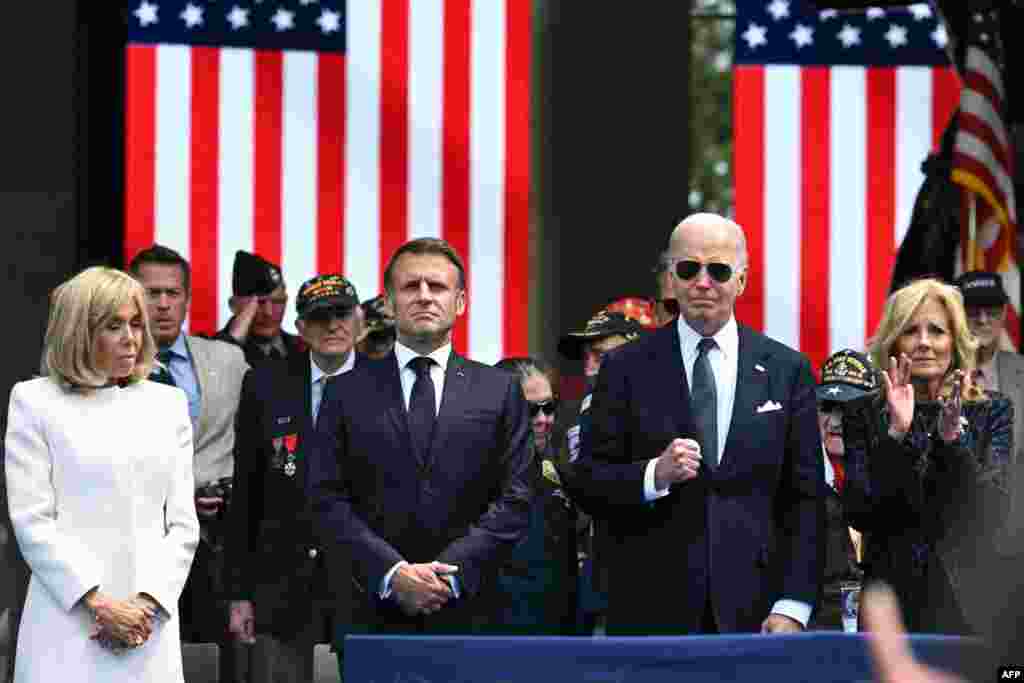
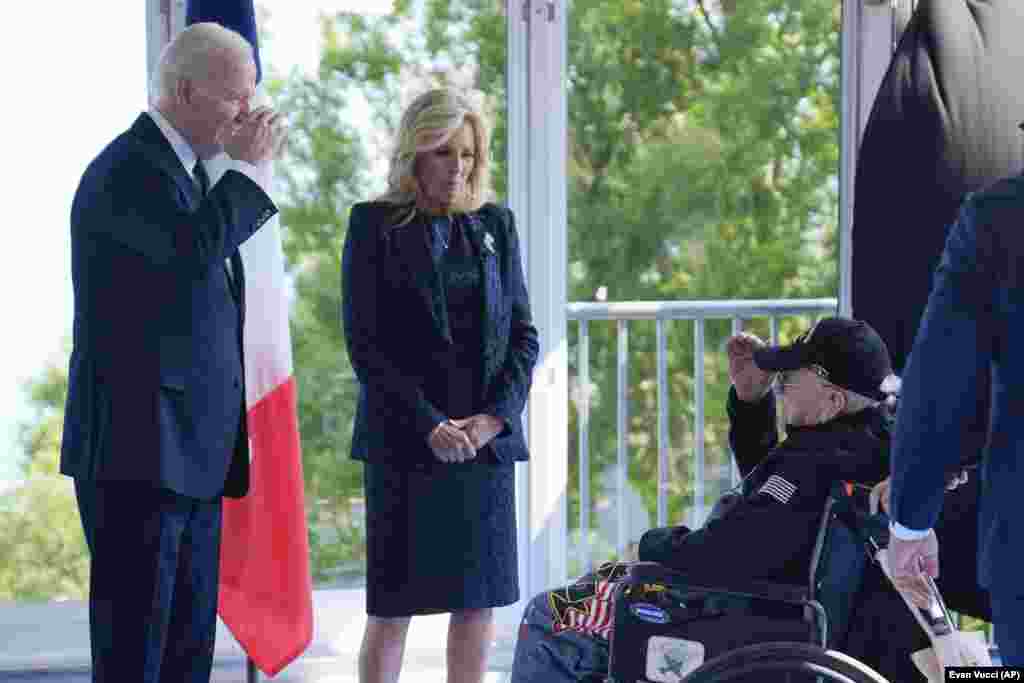
4/9Joe Biden salutes a World War II veteran as Jill Biden looks on.
"We must remember that the fact that they were heroes here that day does not absolve us of what we have to do today. Democracy is never guaranteed. Every generation must preserve it, defend it and fight for it. That’s the test of the ages," Biden said in his remarks.
U.S. President Joe Biden marked the 80th anniversary of D-Day on June 6 by saying that "we will not walk away" from the defense of Ukraine and allow Russia to threaten more of Europe.
Show moreShow less
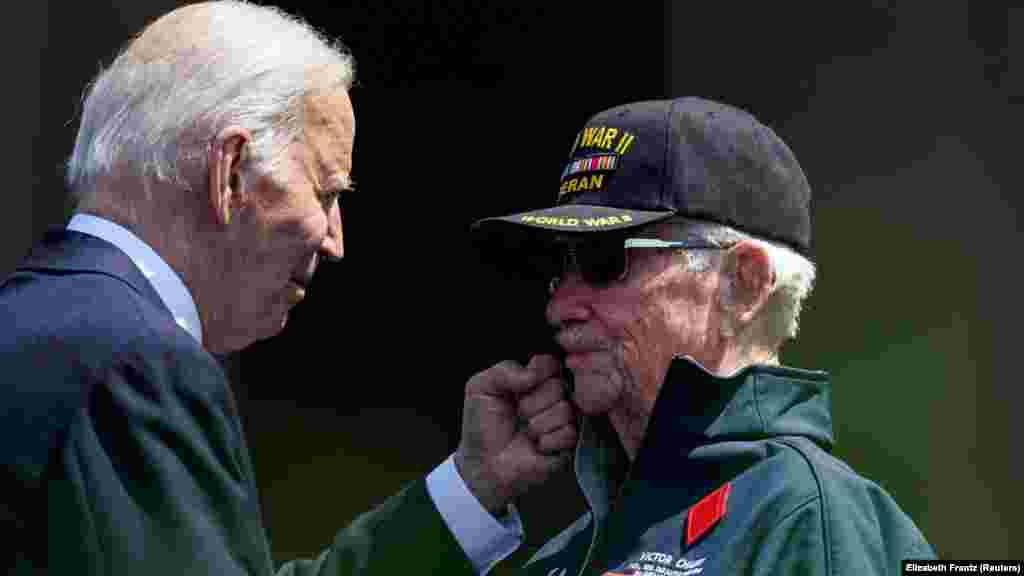
5/9Biden gestures toward a World War II veteran who took part in the storming of Normandy's beaches on June 6, 1944.
D-Day was the largest amphibious assault in history, and Biden called it a "powerful illustration of how alliances, real alliances make us stronger." He said that was “a lesson that I pray we Americans never forget."
U.S. President Joe Biden marked the 80th anniversary of D-Day on June 6 by saying that "we will not walk away" from the defense of Ukraine and allow Russia to threaten more of Europe.
Show moreShow less
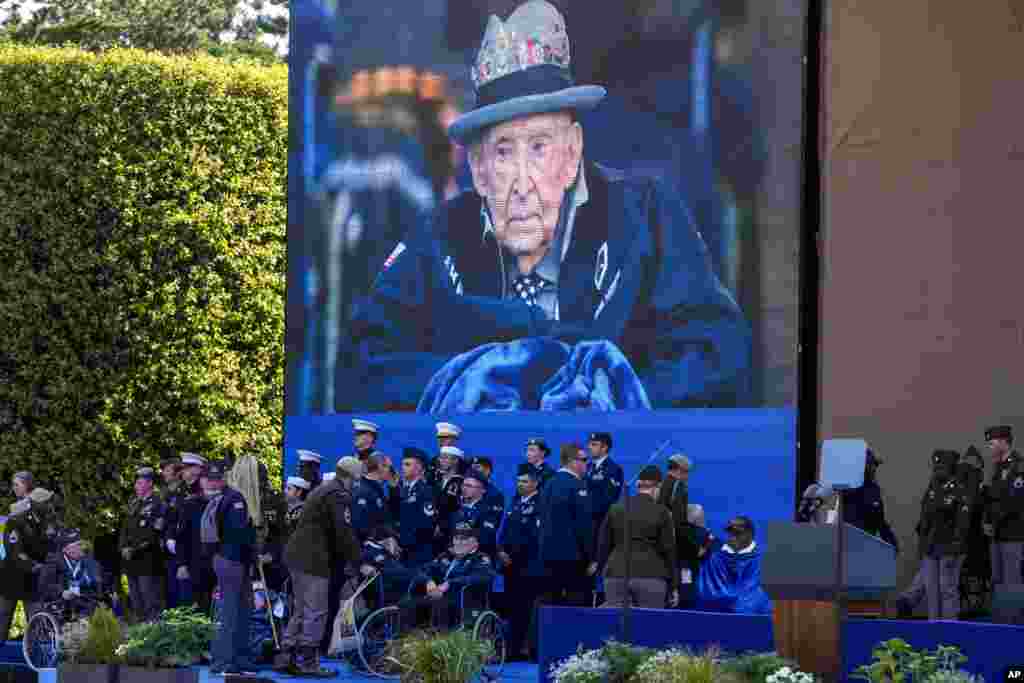
6/9Nearly 160,000 Allied troops came ashore on five code-named beaches: Utah, Omaha, Gold, Juno, and Sword, resulting in thousands of casualties from German coastal defenses. Few participants of the invasion remain alive today.
U.S. President Joe Biden marked the 80th anniversary of D-Day on June 6 by saying that "we will not walk away" from the defense of Ukraine and allow Russia to threaten more of Europe.
Show moreShow less
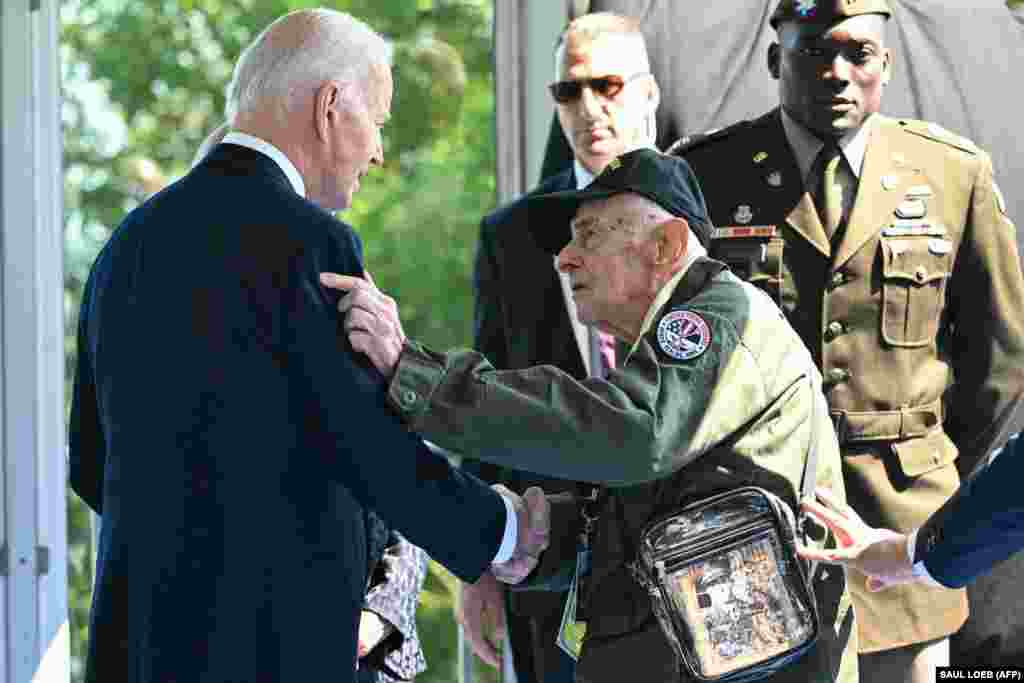
7/9Biden meets with another veteran during the ceremony.
U.S. President Joe Biden marked the 80th anniversary of D-Day on June 6 by saying that "we will not walk away" from the defense of Ukraine and allow Russia to threaten more of Europe.
Show moreShow less
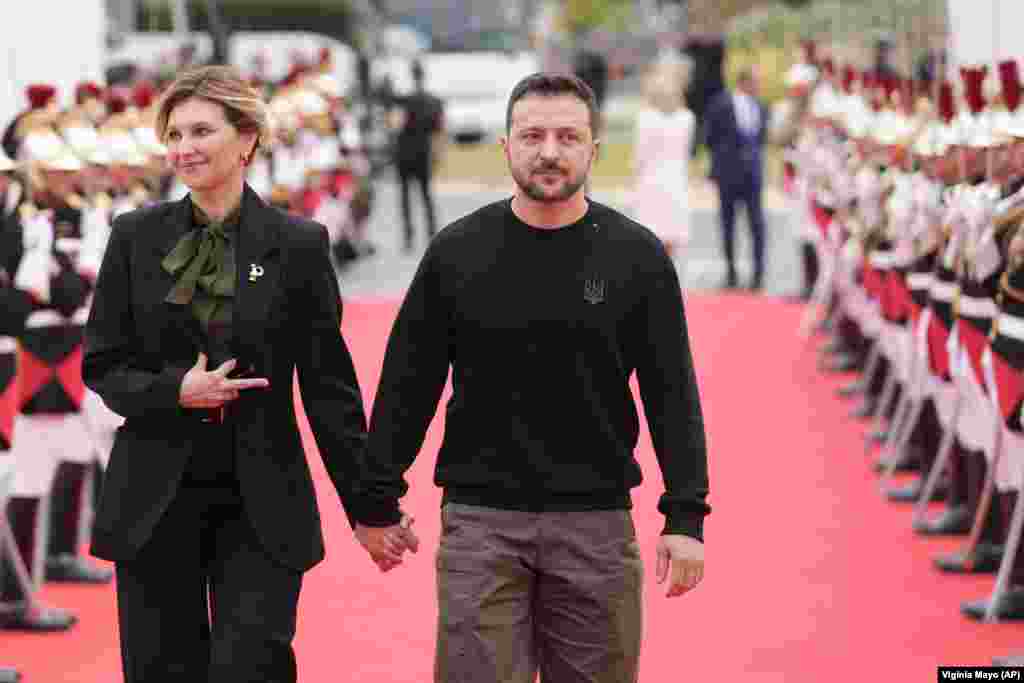
8/9Ukrainian President Volodymyr Zelenskiy arrives with his wife, Olena, at the international commemorative ceremony at Omaha Beach.
Zelenskiy -- who was invited by Macron -- will meet with Western leaders during the D-Day commemorations in hopes of securing more Western aid as his country faces a new offensive in the east.
U.S. President Joe Biden marked the 80th anniversary of D-Day on June 6 by saying that "we will not walk away" from the defense of Ukraine and allow Russia to threaten more of Europe.
Show moreShow less
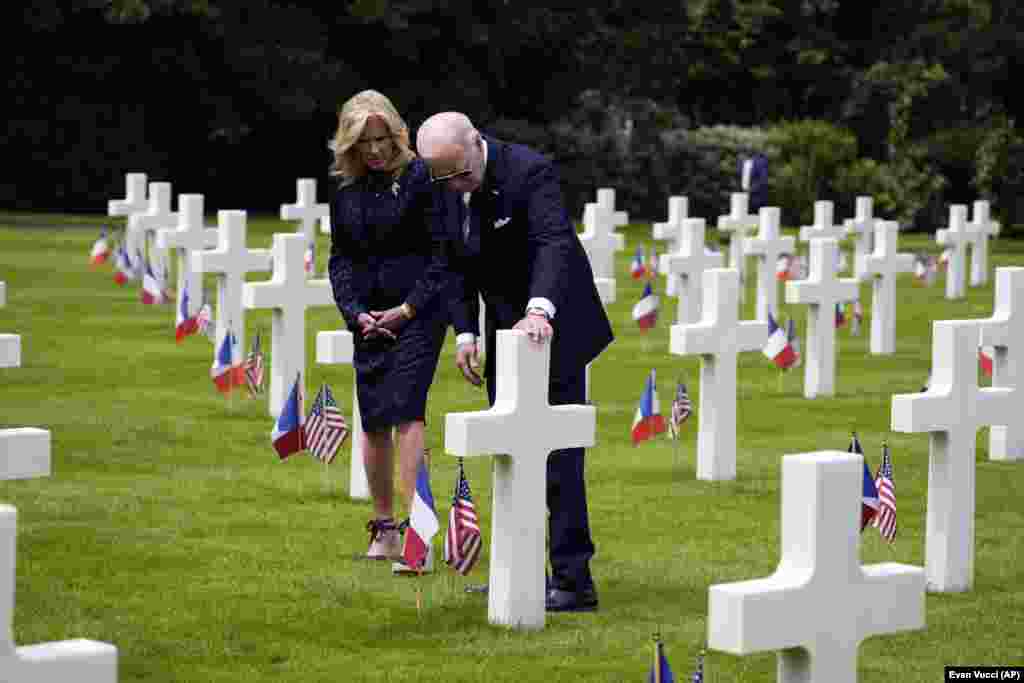
9/9The Bidens visit graves at the Normandy American Cemetery after a ceremony to mark the 80th anniversary of D-Day.
U.S. President Joe Biden marked the 80th anniversary of D-Day on June 6 by saying that "we will not walk away" from the defense of Ukraine and allow Russia to threaten more of Europe.
Show moreShow less
Previous slide
Next slide
Neither Russian President Vladimir Putin nor any other officials from Russia were invited to the commemoration.
"Ukraine has been invaded by a tyrant, they're fighting with extraordinary courage, suffering great losses but never backing down," Biden said describing Putin as a "tyrant bent on domination."
The U.S. president, meanwhile, hailed NATO as "the greatest military alliance in the world" and said it is "more determined than ever to keep peace."
Drawing again a parallel with World War II, Biden said America's "isolation was not the answer 80 years ago and it's not the answer today," a thinly veiled reference directed at some Republican politicians who are sceptical of U.S. support for Ukraine.
"We must remember that the fact that they were heroes here that day does not absolve us of what we have to do today. Democracy is never guaranteed. Every generation must preserve it, defend it, and fight for it. That's the test of the ages."
Macron, speaking at Omaha Beach, also drew a parallel with the war in Ukraine and thanked the Ukrainian people for their bravery in the face of the Russian full-scale invasion launched in 2022.
"Faced with the return of war on our continent...faced with those who purport to change borders by force to rewrite history, let us be worthy of those who landed here," Macron said.
The ceremony was held near Omaha Beach, the code name of one of the two U.S. forces' landing spots, where American troops suffered more than 2,500 deaths -- more than half the total of 4,414 Allied troops killed on D-Day.
In Pictures: How D-Day Diplomacy Has Shaped Geopolitics
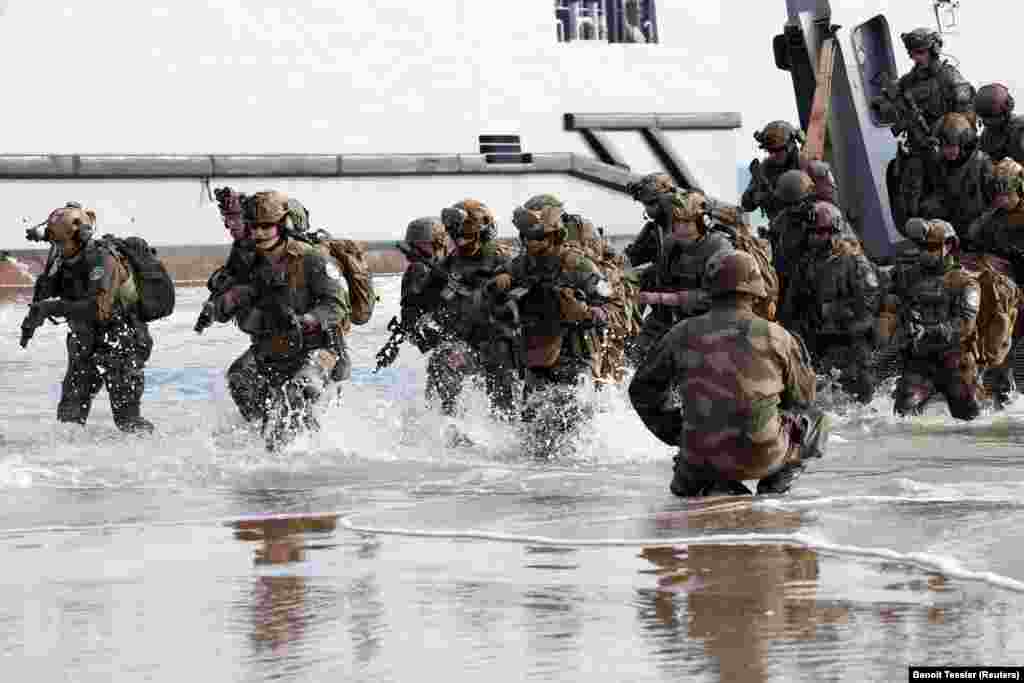
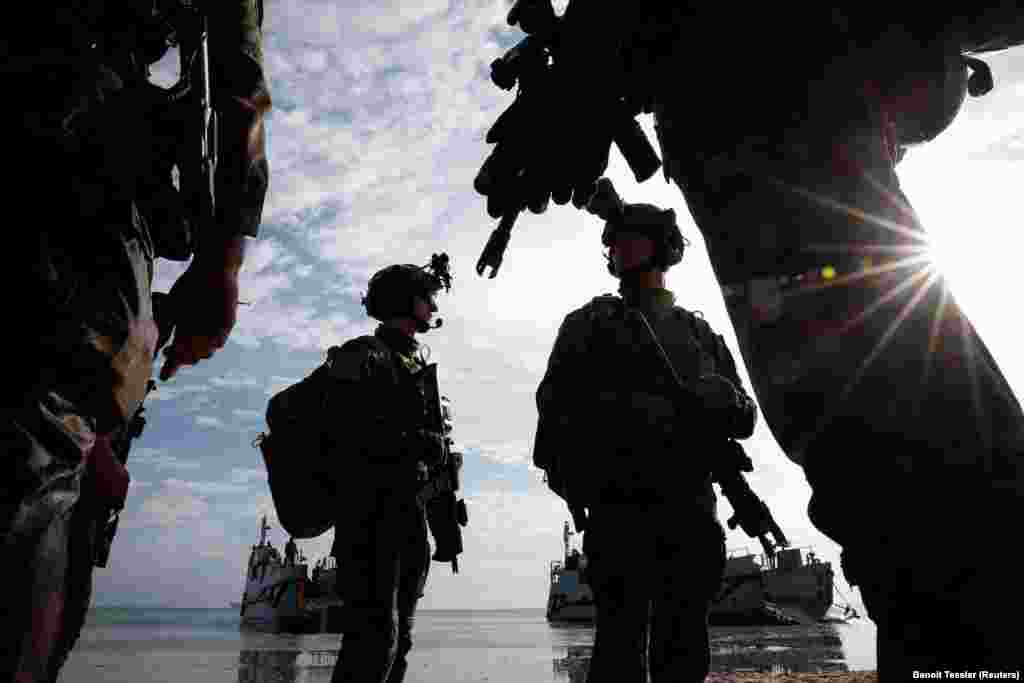
1/17French troops disembark from a U.S. landing craft showcasing an amphibious landing on Omaha Beach on June 4 ahead of 80th anniversary D-Day ceremonies in Saint-Laurent-sur-Mer. The drill was held at a time when French President Emmanuel Macron is considering sending military instructors from his country to Ukraine.
France is set to host world leaders, including Ukrainian President Volodymyr Zelenskiy, to mark the 80th anniversary of the D-Day landings in Normandy. Russia has not been invited to the June 6 commemorations due to its ongoing war in Ukraine. The ceremonies honor soldiers who fought and died in the 1944 Allied landings that contributed to the defeat of Nazi Germany. But over the years, the gatherings have taken on a diplomatic dimension with heads of state coming together to address burning geopolitical issues.
Macron has not ruled out sending soldiers to Ukraine, despite opposition from other NATO countries and strong criticism from Moscow, which has warned against such a move, arguing that it would dramatically escalate the conflict.
France is set to host world leaders, including Ukrainian President Volodymyr Zelenskiy, to mark the 80th anniversary of the D-Day landings in Normandy. Russia has not been invited to the June 6 commemorations due to its ongoing war in Ukraine. The ceremonies honor soldiers who fought and died in the 1944 Allied landings that contributed to the defeat of Nazi Germany. But over the years, the gatherings have taken on a diplomatic dimension with heads of state coming together to address burning geopolitical issues.
Show moreShow less
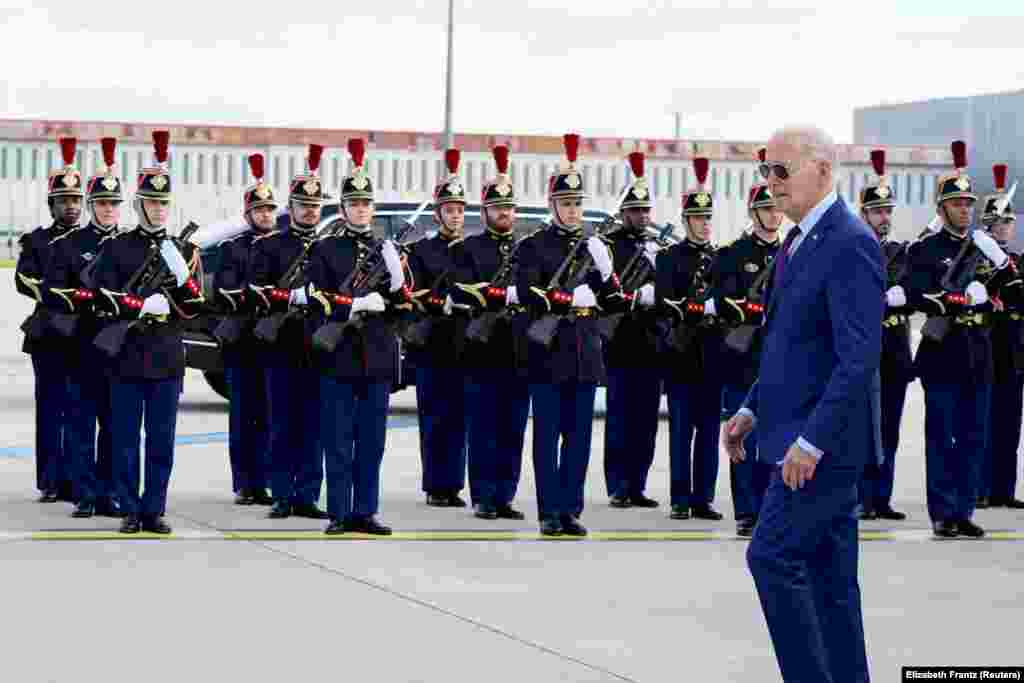
3/17U.S. President Joe Biden is greeted by members of a French honor guard as he arrives at Paris-Orly Airport on June 5 ahead of D-Day commemorations. Biden will meet with Ukrainian President Volodymyr Zelenskiy during the ceremonies and is expected to deliver a speech about defending democracy in Europe.
France is set to host world leaders, including Ukrainian President Volodymyr Zelenskiy, to mark the 80th anniversary of the D-Day landings in Normandy. Russia has not been invited to the June 6 commemorations due to its ongoing war in Ukraine. The ceremonies honor soldiers who fought and died in the 1944 Allied landings that contributed to the defeat of Nazi Germany. But over the years, the gatherings have taken on a diplomatic dimension with heads of state coming together to address burning geopolitical issues.
Show moreShow less
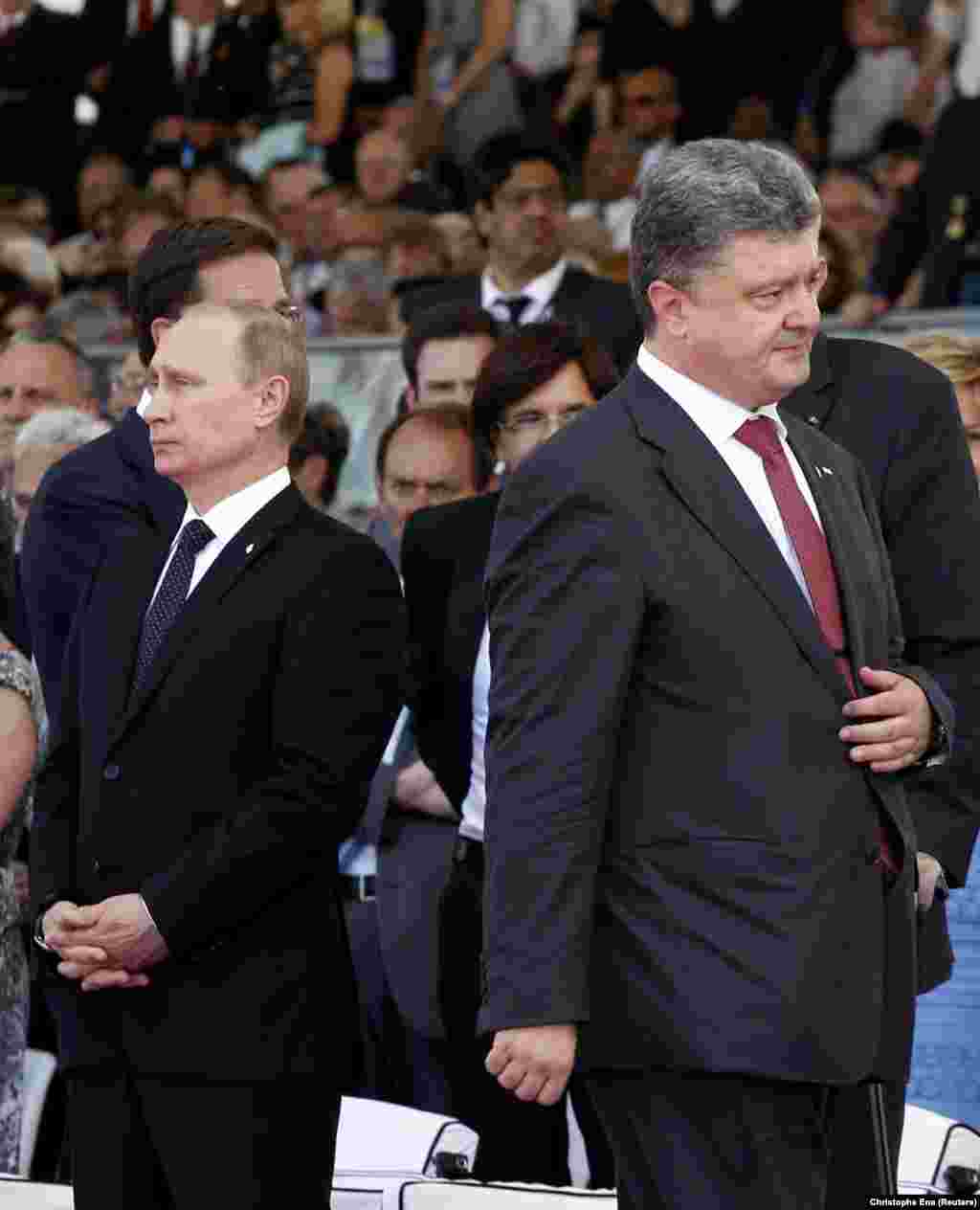
4/17During the 70th anniversary in 2014, Ukraine's president-elect, Petro Poroshenko (right), walks past Russian President Vladimir Putin without acknowledging his presence amid tensions over Russia's illegal annexation of Crimea, which had occurred three months earlier.
In an attempt to resolve the crisis sparked by Russia-backed separatists in eastern Ukraine and Moscow's annexation of Crimea, then-French President Francois Hollande had invited his Russian and Ukrainian counterparts in an effort to reduce tensions over the conflict.
France is set to host world leaders, including Ukrainian President Volodymyr Zelenskiy, to mark the 80th anniversary of the D-Day landings in Normandy. Russia has not been invited to the June 6 commemorations due to its ongoing war in Ukraine. The ceremonies honor soldiers who fought and died in the 1944 Allied landings that contributed to the defeat of Nazi Germany. But over the years, the gatherings have taken on a diplomatic dimension with heads of state coming together to address burning geopolitical issues.
Show moreShow less
5/17Russian President Vladimir Putin meets with German Chancellor Angela Merkel in Normandy on June 6, 2014, during events held to mark the 70th anniversary of D-Day.
During the commemorations, the leaders of Russia, Ukraine, Germany, and France met informally in an attempt to resolve the war in Ukraine's Donbas region. Notably absent from the group was the United States. The talks led to the establishment of the Minsk Protocol later the same year.
France is set to host world leaders, including Ukrainian President Volodymyr Zelenskiy, to mark the 80th anniversary of the D-Day landings in Normandy. Russia has not been invited to the June 6 commemorations due to its ongoing war in Ukraine. The ceremonies honor soldiers who fought and died in the 1944 Allied landings that contributed to the defeat of Nazi Germany. But over the years, the gatherings have taken on a diplomatic dimension with heads of state coming together to address burning geopolitical issues.
Show moreShow less
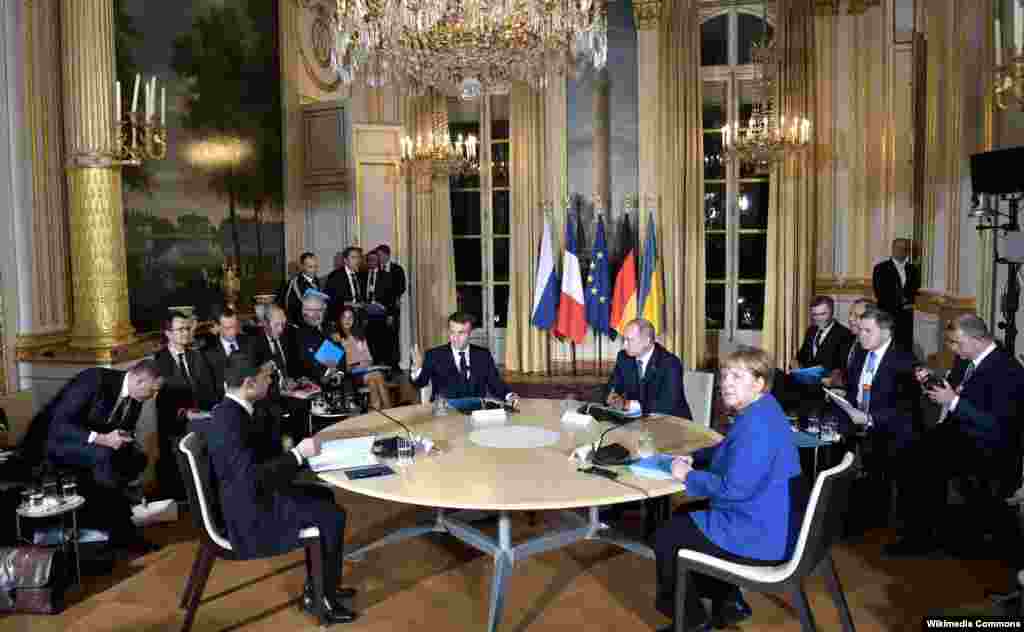
6/17After Russia was excluded from the 75th anniversary D-Day commemorations, the leaders of Ukraine, Russia, France, and Germany met at the Normandy Format meeting in Paris on December 9, 2019, in a significant diplomatic effort aimed at addressing the conflict in eastern Ukraine.
The participants -- Ukrainian President Volodymyr Zelenskiy, French President Emmanuel Macron, Russian President Vladimir Putin, and German Chancellor Angela Merkel -- met in hopes of achieving a lasting cease-fire in eastern Ukraine, parts of which had been under the control of Russia-backed separatists since 2014.
France is set to host world leaders, including Ukrainian President Volodymyr Zelenskiy, to mark the 80th anniversary of the D-Day landings in Normandy. Russia has not been invited to the June 6 commemorations due to its ongoing war in Ukraine. The ceremonies honor soldiers who fought and died in the 1944 Allied landings that contributed to the defeat of Nazi Germany. But over the years, the gatherings have taken on a diplomatic dimension with heads of state coming together to address burning geopolitical issues.
Show moreShow less
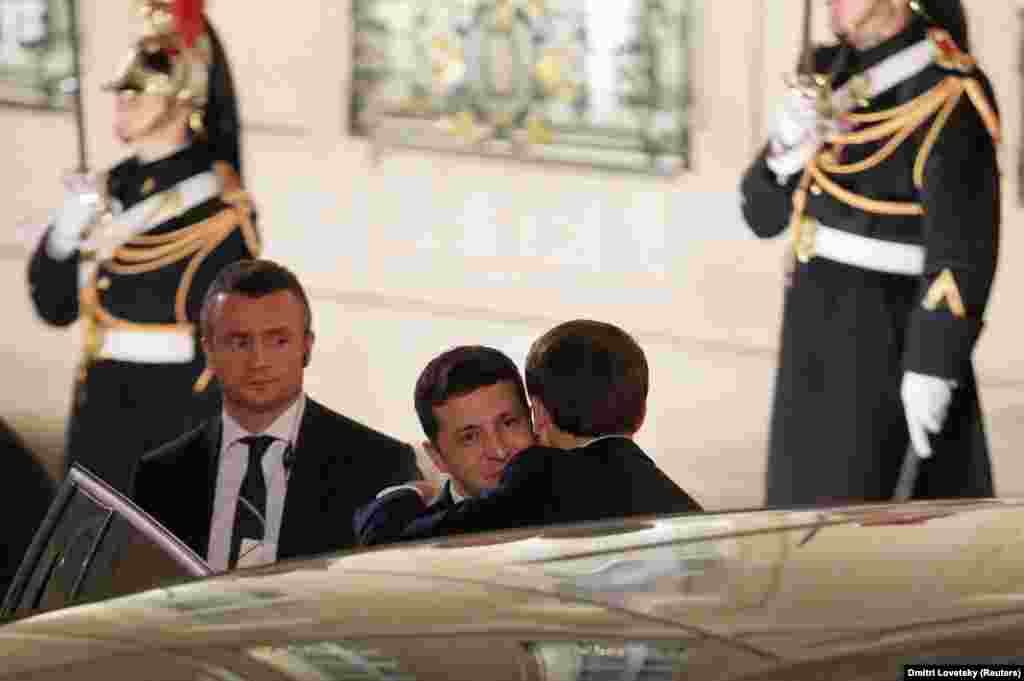
7/17Macron embraces Zelenskiy after the summit in Paris.
The meeting marked a tentative restart of high-level political communication between Kyiv and Moscow and a renewed commitment to the Minsk agreements, a series of measures aimed at achieving a lasting cease-fire. Despite the promising steps, the summit did not result in a major breakthrough.
France is set to host world leaders, including Ukrainian President Volodymyr Zelenskiy, to mark the 80th anniversary of the D-Day landings in Normandy. Russia has not been invited to the June 6 commemorations due to its ongoing war in Ukraine. The ceremonies honor soldiers who fought and died in the 1944 Allied landings that contributed to the defeat of Nazi Germany. But over the years, the gatherings have taken on a diplomatic dimension with heads of state coming together to address burning geopolitical issues.
Show moreShow less
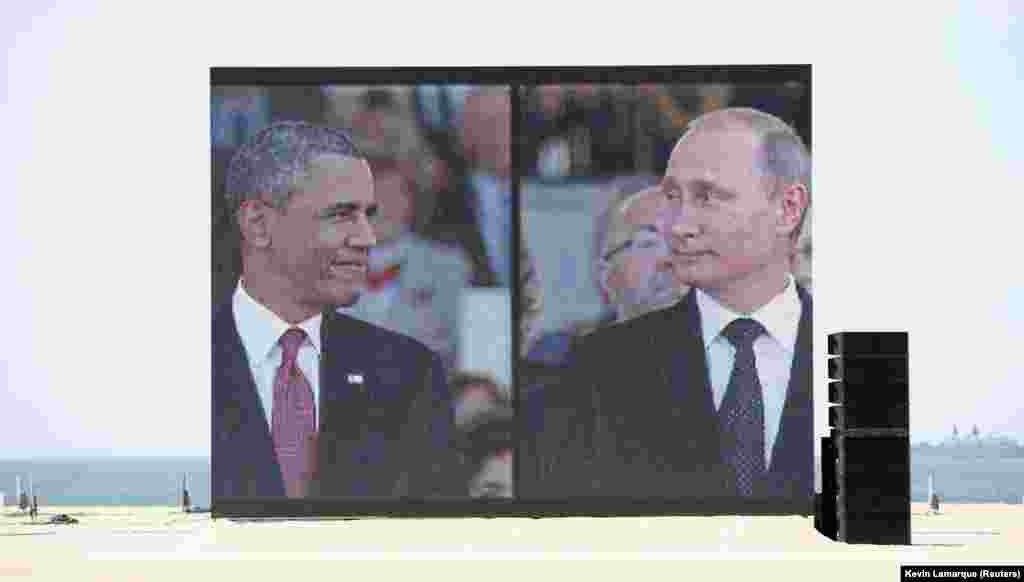
8/17A large video screen shows then-U.S. President Barack Obama and Russian President Vladimir Putin as they arrive for D-Day commemorations in 2014.
President Obama's speech underscored the importance of NATO and collective security in light of rising tensions with Russia over Ukraine.
France is set to host world leaders, including Ukrainian President Volodymyr Zelenskiy, to mark the 80th anniversary of the D-Day landings in Normandy. Russia has not been invited to the June 6 commemorations due to its ongoing war in Ukraine. The ceremonies honor soldiers who fought and died in the 1944 Allied landings that contributed to the defeat of Nazi Germany. But over the years, the gatherings have taken on a diplomatic dimension with heads of state coming together to address burning geopolitical issues.
Show moreShow less
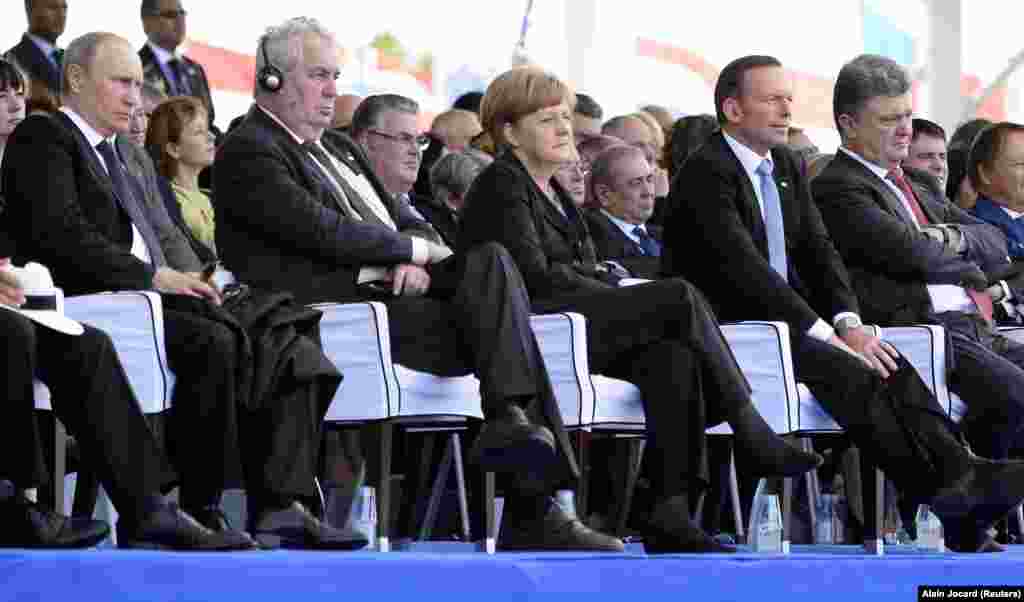
9/17The 2014 commemoration was attended by Russian President Vladimir Putin (left), Czech President Milos Zeman (second from left), German Chancellor Angela Merkel (center), Australian Prime Minister Tony Abbott (second from right), and Ukrainian President-elect Petro Poroshenko.
France is set to host world leaders, including Ukrainian President Volodymyr Zelenskiy, to mark the 80th anniversary of the D-Day landings in Normandy. Russia has not been invited to the June 6 commemorations due to its ongoing war in Ukraine. The ceremonies honor soldiers who fought and died in the 1944 Allied landings that contributed to the defeat of Nazi Germany. But over the years, the gatherings have taken on a diplomatic dimension with heads of state coming together to address burning geopolitical issues.
Show moreShow less
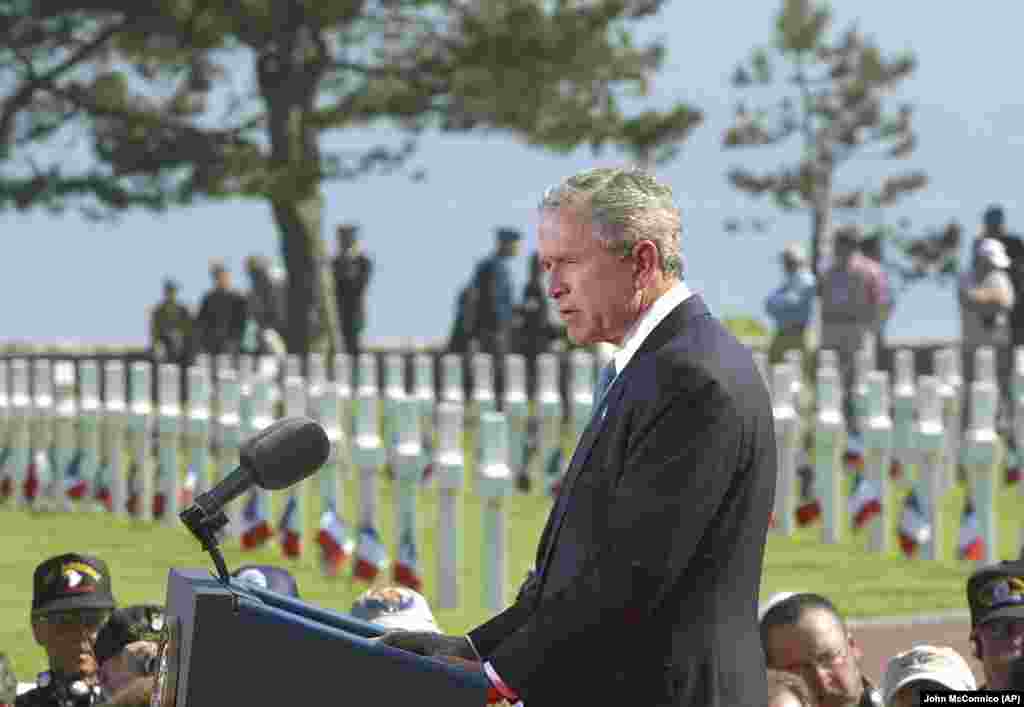
10/17U.S. President George W. Bush delivers a speech at the Normandy American Cemetery during the 60th anniversary of D-Day on June 6, 2004.
This was also the first time that Russian President Vladimir Putin was invited to the commemorations, where he highlighted the sacrifices of the Soviet Union.
France is set to host world leaders, including Ukrainian President Volodymyr Zelenskiy, to mark the 80th anniversary of the D-Day landings in Normandy. Russia has not been invited to the June 6 commemorations due to its ongoing war in Ukraine. The ceremonies honor soldiers who fought and died in the 1944 Allied landings that contributed to the defeat of Nazi Germany. But over the years, the gatherings have taken on a diplomatic dimension with heads of state coming together to address burning geopolitical issues.
Show moreShow less
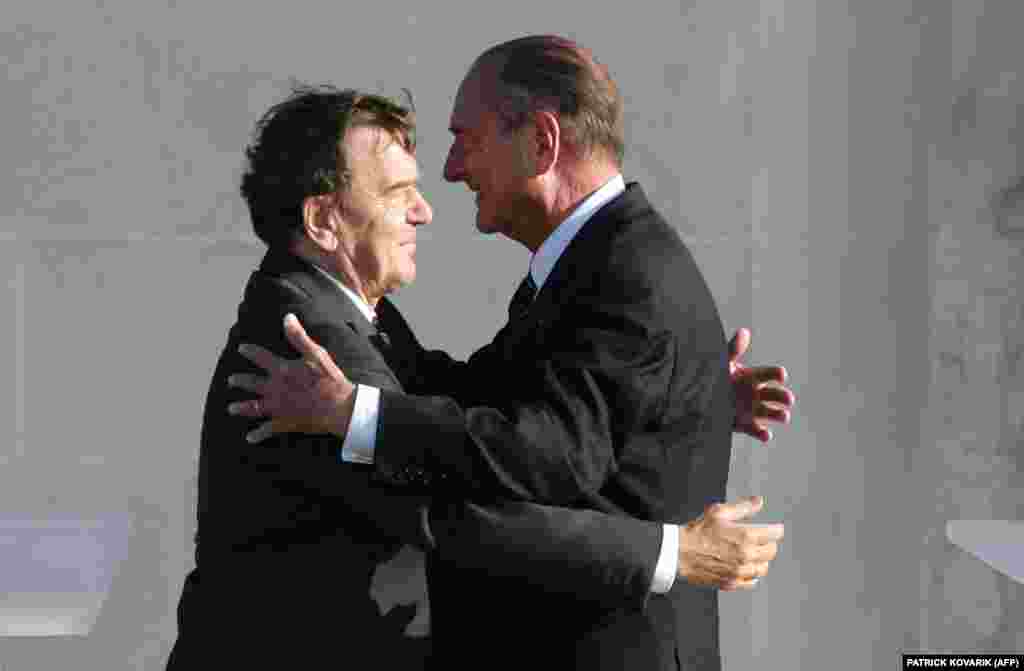
11/17During the 2004 D-Day commemoration, German Chancellor Gerhard Schroeder and French President Jacques Chirac embraced, marking a milestone in French-German relations.
France is set to host world leaders, including Ukrainian President Volodymyr Zelenskiy, to mark the 80th anniversary of the D-Day landings in Normandy. Russia has not been invited to the June 6 commemorations due to its ongoing war in Ukraine. The ceremonies honor soldiers who fought and died in the 1944 Allied landings that contributed to the defeat of Nazi Germany. But over the years, the gatherings have taken on a diplomatic dimension with heads of state coming together to address burning geopolitical issues.
Show moreShow less
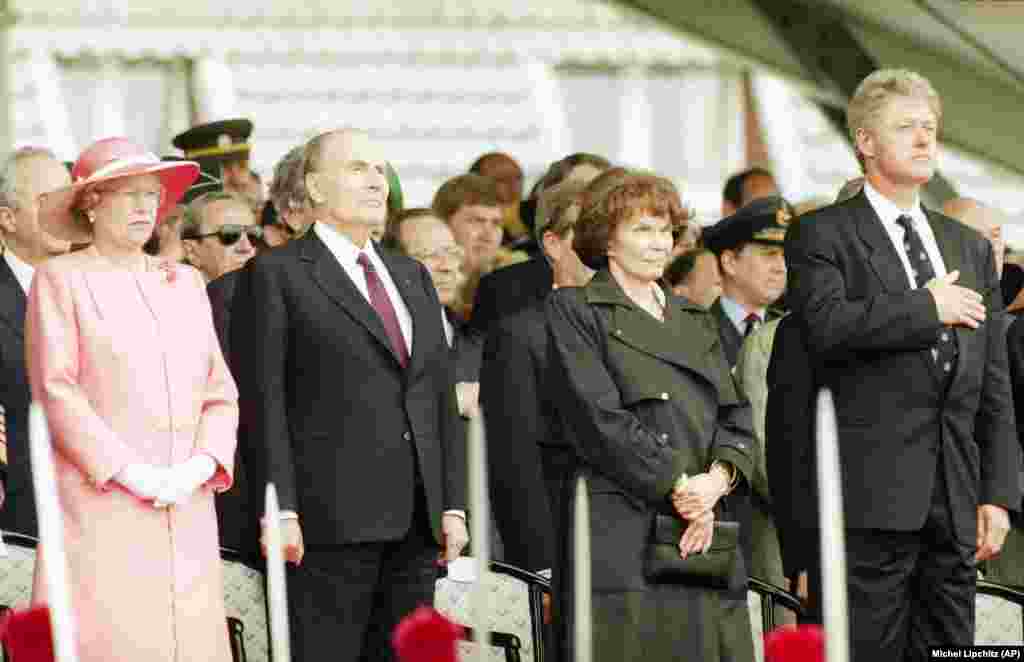
12/17D-Day ceremonies marking the 50th anniversary on June 6, 1994, were attended by then-French President Francois Mitterrand (second from left) and his wife, Danielle (second from right), who were joined by Britain's Queen Elizabeth II (left) and U.S. President Bill Clinton (right).
In remarks he made the next day, Clinton said, "The Soviet Empire is gone," as he praised Russians, Poles, and others for participating in the liberation of Europe. This period also saw NATO's expansion into Eastern Europe, underlining the United States' commitment to European security.
France is set to host world leaders, including Ukrainian President Volodymyr Zelenskiy, to mark the 80th anniversary of the D-Day landings in Normandy. Russia has not been invited to the June 6 commemorations due to its ongoing war in Ukraine. The ceremonies honor soldiers who fought and died in the 1944 Allied landings that contributed to the defeat of Nazi Germany. But over the years, the gatherings have taken on a diplomatic dimension with heads of state coming together to address burning geopolitical issues.
Show moreShow less
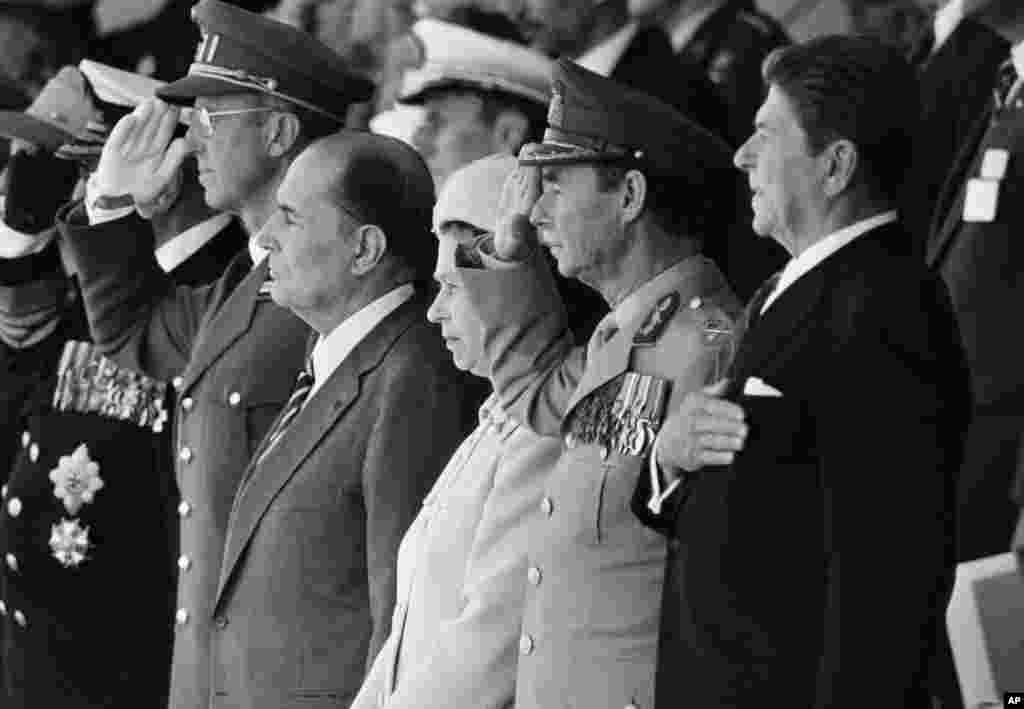
13/17From left: King Olav of Norway (partially obscured) King Baudouin of Belgium, French President Francois Mitterrand, Queen Elizabeth II of Britain, Grand Duke Jean of Luxembourg, and U.S. President Ronald Reagan stand at attention as anthems are played during 40th anniversary commemorations of the D-Day landings, on June 6, 1984, in Normandy.
Reagan's speech at Pointe du Hoc was intended not only as a tribute to the heroism of the men who stormed the beaches but was also seen as a symbolic statement reinforcing the U.S. commitment to the principles of freedom and democracy against the backdrop of the Cold War.
France is set to host world leaders, including Ukrainian President Volodymyr Zelenskiy, to mark the 80th anniversary of the D-Day landings in Normandy. Russia has not been invited to the June 6 commemorations due to its ongoing war in Ukraine. The ceremonies honor soldiers who fought and died in the 1944 Allied landings that contributed to the defeat of Nazi Germany. But over the years, the gatherings have taken on a diplomatic dimension with heads of state coming together to address burning geopolitical issues.
Show moreShow less
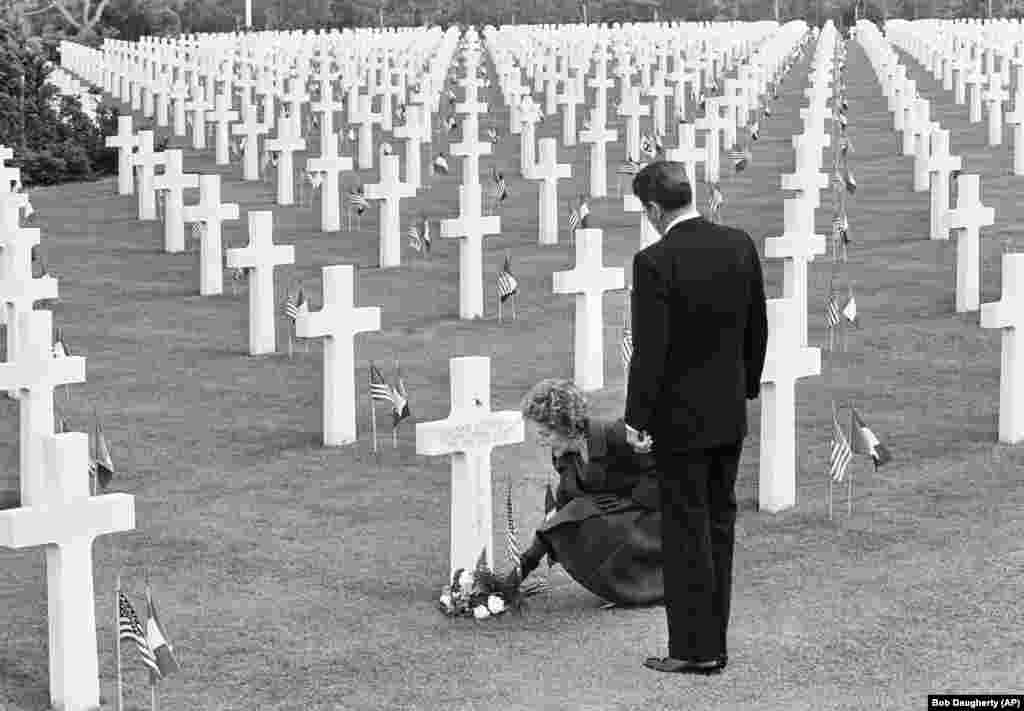
14/17President Reagan and his wife, Nancy, lay flowers at the grave of World War II Brigadier General Theodore Roosevelt Jr. at the Normandy American Cemetery on June 6, 1984.
U.S. historian Michael Dolski noted that Reagan's speeches at the D-Day commemorations significantly contributed to the “mythic” status of the event in late 20th-century American culture.
France is set to host world leaders, including Ukrainian President Volodymyr Zelenskiy, to mark the 80th anniversary of the D-Day landings in Normandy. Russia has not been invited to the June 6 commemorations due to its ongoing war in Ukraine. The ceremonies honor soldiers who fought and died in the 1944 Allied landings that contributed to the defeat of Nazi Germany. But over the years, the gatherings have taken on a diplomatic dimension with heads of state coming together to address burning geopolitical issues.
Show moreShow less
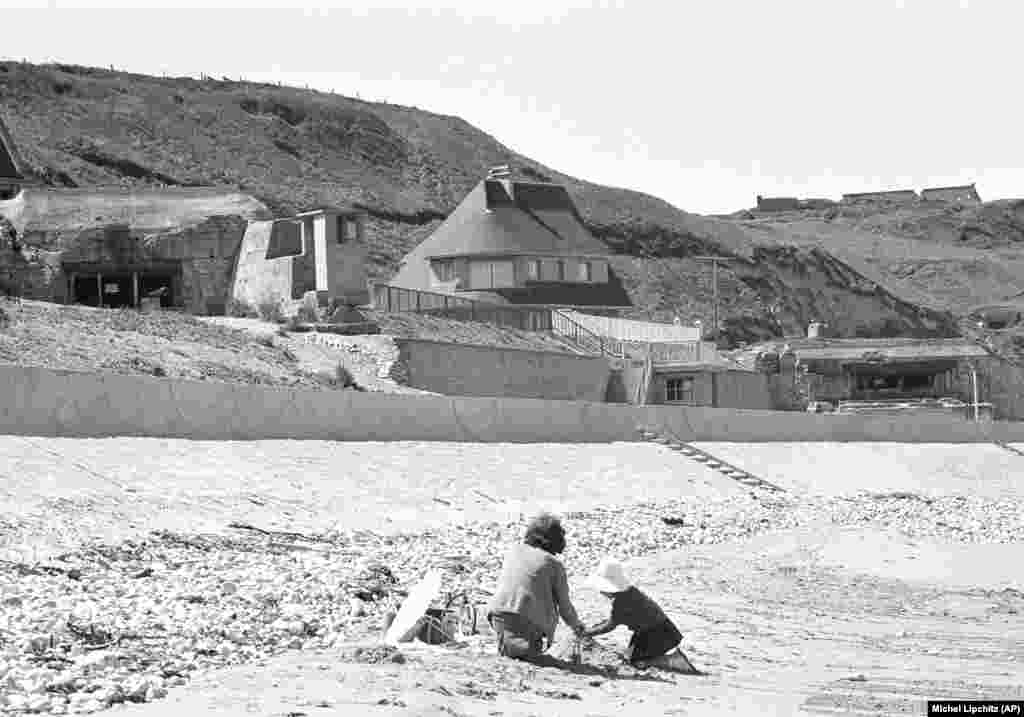
15/17French children play on the beach in Vierville-dur-Mer -- known as Omaha Beach -- where German bunkers still stand on June 6, 1964, 20 years after the D-Day landings.
Throughout his 11 years as president of France, Charles de Gaulle declined to take part in D-Day events. “He refused to commemorate June 6, given the way he had been treated at the time of the D-Day landings. He hadn't been involved in the discussions or in the implementation of the plan,” says historian Denis Peschanski.
De Gaulle also did not invite world leaders to the 25th anniversary in 1969.
France is set to host world leaders, including Ukrainian President Volodymyr Zelenskiy, to mark the 80th anniversary of the D-Day landings in Normandy. Russia has not been invited to the June 6 commemorations due to its ongoing war in Ukraine. The ceremonies honor soldiers who fought and died in the 1944 Allied landings that contributed to the defeat of Nazi Germany. But over the years, the gatherings have taken on a diplomatic dimension with heads of state coming together to address burning geopolitical issues.
Show moreShow less
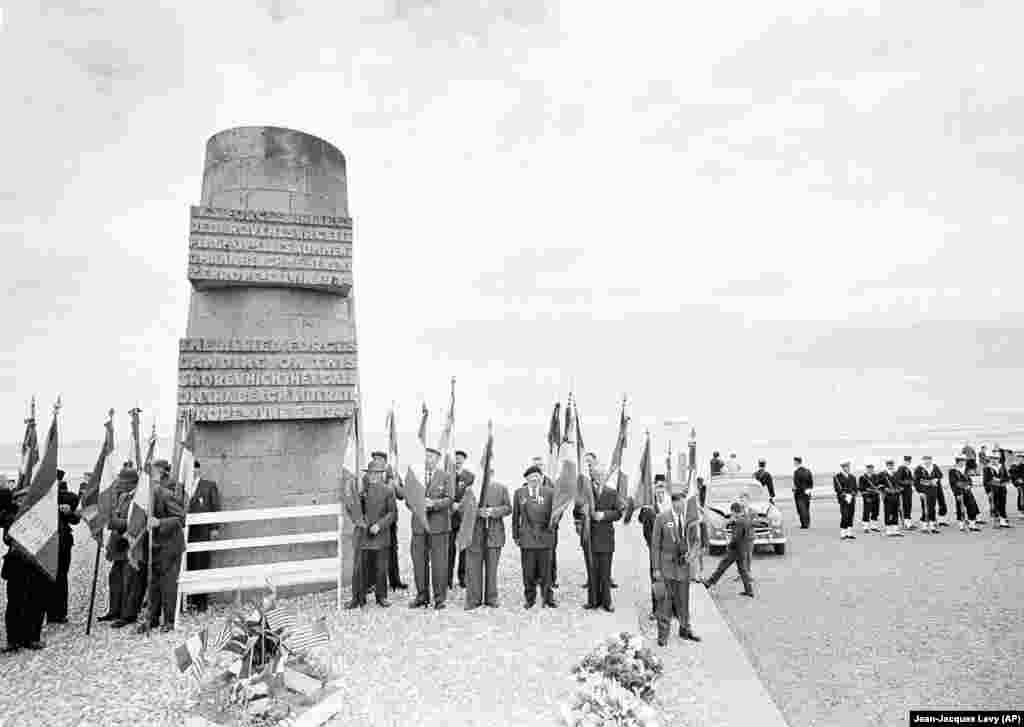
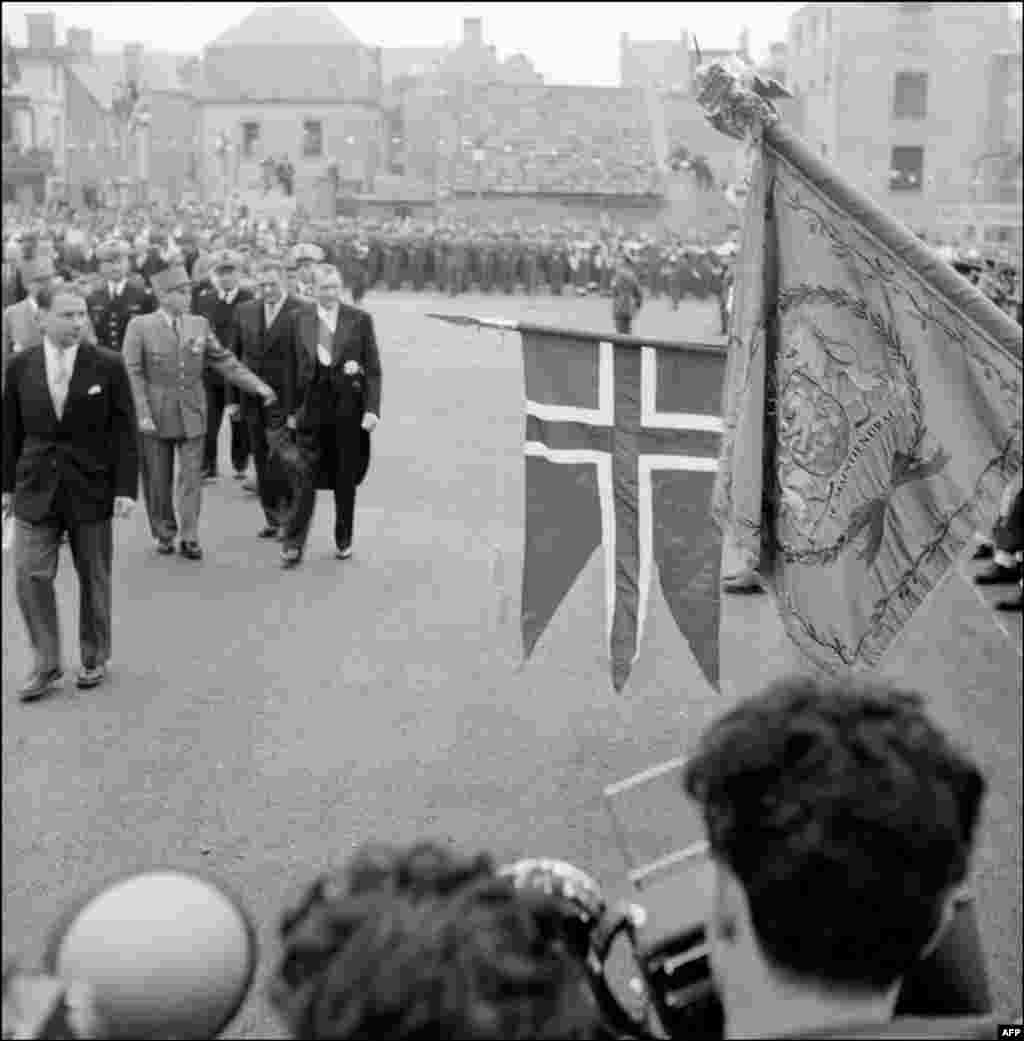
16/17The 20th anniversary of the Allies' D-Day landings on June 6, 1964, was a modest event compared to modern commemorations.
Many of the world's leaders now view events marking D-Day as crucial political and diplomatic occasions, but June 6 was not always so well-attended, and it took several decades for the date to become a red-letter day of commemoration.
France is set to host world leaders, including Ukrainian President Volodymyr Zelenskiy, to mark the 80th anniversary of the D-Day landings in Normandy. Russia has not been invited to the June 6 commemorations due to its ongoing war in Ukraine. The ceremonies honor soldiers who fought and died in the 1944 Allied landings that contributed to the defeat of Nazi Germany. But over the years, the gatherings have taken on a diplomatic dimension with heads of state coming together to address burning geopolitical issues.
Show moreShow less
17/17For the 10th anniversary of D-Day in 1954, the ceremonies took on a more official tone. French President René Coty, a native of Le Havre, inaugurated the D-Day Museum, the first museum built in Normandy to commemorate the landings.
The 80th anniversary will likely be the last 10-year anniversary at which veterans who fought and survived will be present on the beaches where thousands of their counterparts died.
France is set to host world leaders, including Ukrainian President Volodymyr Zelenskiy, to mark the 80th anniversary of the D-Day landings in Normandy. Russia has not been invited to the June 6 commemorations due to its ongoing war in Ukraine. The ceremonies honor soldiers who fought and died in the 1944 Allied landings that contributed to the defeat of Nazi Germany. But over the years, the gatherings have taken on a diplomatic dimension with heads of state coming together to address burning geopolitical issues.
Show moreShow less
Previous slide
Next slide
D-Day, the start of the landing in Normandy codenamed Operation Overlord, was the largest amphibious assault in history, with 156,115 troops from 12 countries taking part.
Biden called it a "powerful illustration of how alliances, real alliances, make us stronger," adding it was "a lesson that I pray we Americans never forget."
In a message posted on social media, Zelenskiy said, "This event and today are a reminder of the courage and determination shown for the sake of freedom and democracy."
"Allies defended the freedom of Europe then, Ukrainians defend the freedom of Europe now. Unity won then, true unity is capable of winning even now," Zelenskiy added.
Zelenskiy is due to hold talks with Biden and Macron during his trip to France.
RFE/RL journalists report the news in 24 languages in 18 countries where a free press is banned by the government or not fully established. We provide what many people cannot get locally: uncensored news, responsible discussion, and open debate.