



Accessibility links

Breaking News

Flags Burned As Iran Marks 35th Anniversary Of U.S. Embassy Takeover

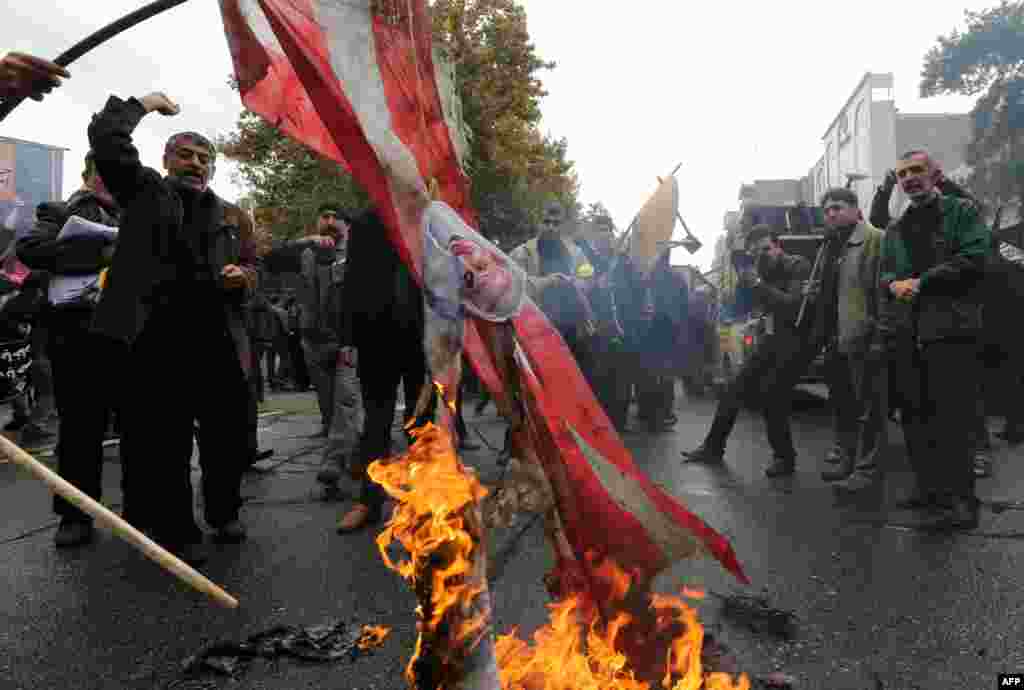
Iranians burn U.S. flags outside the former U.S. Embassy in Tehran on November 4, 2014.
1/12 Iranians burn U.S. flags outside the former U.S. Embassy in Tehran on November 4, 2014.
Several thousand people have demonstrated outside the former U.S. Embassy in Tehran to mark the 35th anniversary of its takeover on November 4, 1979. Participants in the annual demonstration burned American, Israeli, and British flags and chanted slogans against the three countries. In January 1979, under mounting pressure from street protests and anger at his brutal reign, Iran's Shah Reza Pahlavi fled the, leading to the overthrow of the royal regime by guerrillas and rebel troops the following month. Eight months later, and after much turmoil, led by hundreds of students later known as the Muslim Student Followers of the Imam's Line, radicals broke into the U.S. Embassy in Tehran on November 4, 1979, and took 90 people hostage in a standoff that was to last more than 14 months. The leader of the revolution, Ayatollah Ruhollah Khomeini, returned to Iran from exile and became supreme leader of the Islamic Republic of Iran in December 1979.
Iranians burn U.S. flags outside the former U.S. Embassy in Tehran on November 4, 2014.
2/12 Iranians burn U.S. flags outside the former U.S. Embassy in Tehran on November 4, 2014.
Several thousand people have demonstrated outside the former U.S. Embassy in Tehran to mark the 35th anniversary of its takeover on November 4, 1979. Participants in the annual demonstration burned American, Israeli, and British flags and chanted slogans against the three countries. In January 1979, under mounting pressure from street protests and anger at his brutal reign, Iran's Shah Reza Pahlavi fled the, leading to the overthrow of the royal regime by guerrillas and rebel troops the following month. Eight months later, and after much turmoil, led by hundreds of students later known as the Muslim Student Followers of the Imam's Line, radicals broke into the U.S. Embassy in Tehran on November 4, 1979, and took 90 people hostage in a standoff that was to last more than 14 months. The leader of the revolution, Ayatollah Ruhollah Khomeini, returned to Iran from exile and became supreme leader of the Islamic Republic of Iran in December 1979.
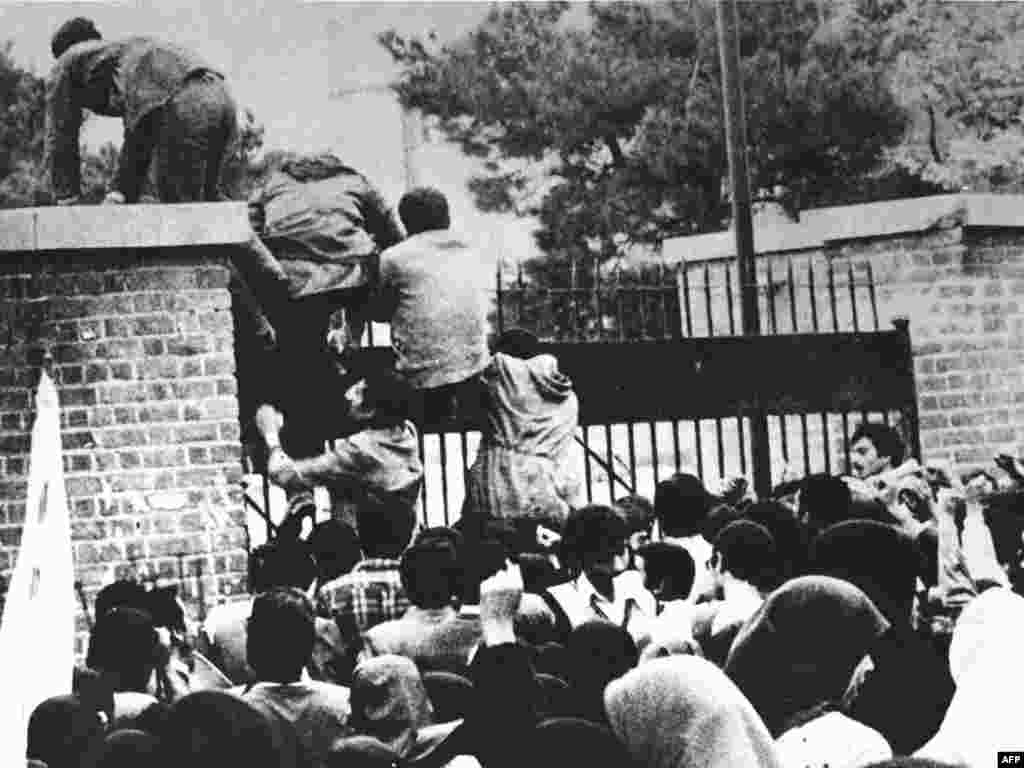
The final seizure of the U.S. Embassy in Tehran began on November 4, 1979, when some 400 radical Iranian students stormed through the gates and climbed over the walls.<strong>&nbsp;</strong>The students demanded that the Shah of Iran be extradited from the United States, where he had fled to receive medical treatment. The shah had expelled Khomeini in 1964.
3/12 The final seizure of the U.S. Embassy in Tehran began on November 4, 1979, when some 400 radical Iranian students stormed through the gates and climbed over the walls. The students demanded that the Shah of Iran be extradited from the United States, where he had fled to receive medical treatment. The shah had expelled Khomeini in 1964.
Several thousand people have demonstrated outside the former U.S. Embassy in Tehran to mark the 35th anniversary of its takeover on November 4, 1979. Participants in the annual demonstration burned American, Israeli, and British flags and chanted slogans against the three countries. In January 1979, under mounting pressure from street protests and anger at his brutal reign, Iran's Shah Reza Pahlavi fled the, leading to the overthrow of the royal regime by guerrillas and rebel troops the following month. Eight months later, and after much turmoil, led by hundreds of students later known as the Muslim Student Followers of the Imam's Line, radicals broke into the U.S. Embassy in Tehran on November 4, 1979, and took 90 people hostage in a standoff that was to last more than 14 months. The leader of the revolution, Ayatollah Ruhollah Khomeini, returned to Iran from exile and became supreme leader of the Islamic Republic of Iran in December 1979.
Some 90 Americans were originally taken hostage inside the compound by the students.
4/12 Some 90 Americans were originally taken hostage inside the compound by the students.
Several thousand people have demonstrated outside the former U.S. Embassy in Tehran to mark the 35th anniversary of its takeover on November 4, 1979. Participants in the annual demonstration burned American, Israeli, and British flags and chanted slogans against the three countries. In January 1979, under mounting pressure from street protests and anger at his brutal reign, Iran's Shah Reza Pahlavi fled the, leading to the overthrow of the royal regime by guerrillas and rebel troops the following month. Eight months later, and after much turmoil, led by hundreds of students later known as the Muslim Student Followers of the Imam's Line, radicals broke into the U.S. Embassy in Tehran on November 4, 1979, and took 90 people hostage in a standoff that was to last more than 14 months. The leader of the revolution, Ayatollah Ruhollah Khomeini, returned to Iran from exile and became supreme leader of the Islamic Republic of Iran in December 1979.
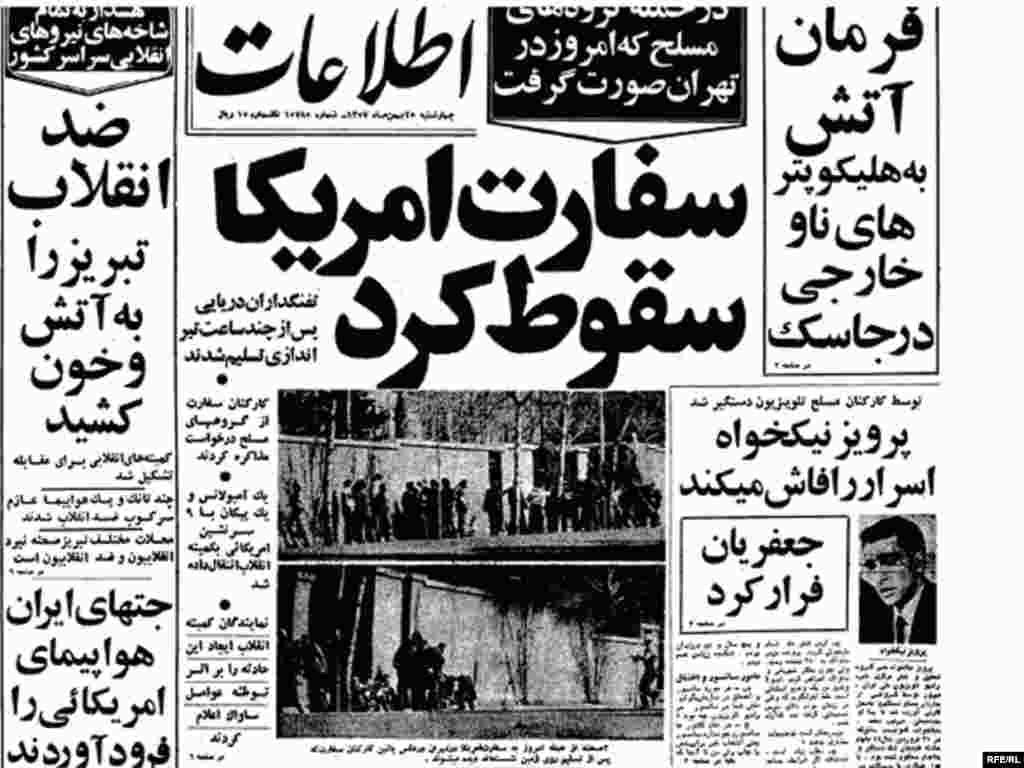
The front page of the &quot;Itilaat&quot; newspaper on November 4, 1979, was devoted to news of the embassy seizure. Khomeini gave his blessing to the display of force.
5/12 The front page of the "Itilaat" newspaper on November 4, 1979, was devoted to news of the embassy seizure. Khomeini gave his blessing to the display of force.
Several thousand people have demonstrated outside the former U.S. Embassy in Tehran to mark the 35th anniversary of its takeover on November 4, 1979. Participants in the annual demonstration burned American, Israeli, and British flags and chanted slogans against the three countries. In January 1979, under mounting pressure from street protests and anger at his brutal reign, Iran's Shah Reza Pahlavi fled the, leading to the overthrow of the royal regime by guerrillas and rebel troops the following month. Eight months later, and after much turmoil, led by hundreds of students later known as the Muslim Student Followers of the Imam's Line, radicals broke into the U.S. Embassy in Tehran on November 4, 1979, and took 90 people hostage in a standoff that was to last more than 14 months. The leader of the revolution, Ayatollah Ruhollah Khomeini, returned to Iran from exile and became supreme leader of the Islamic Republic of Iran in December 1979.
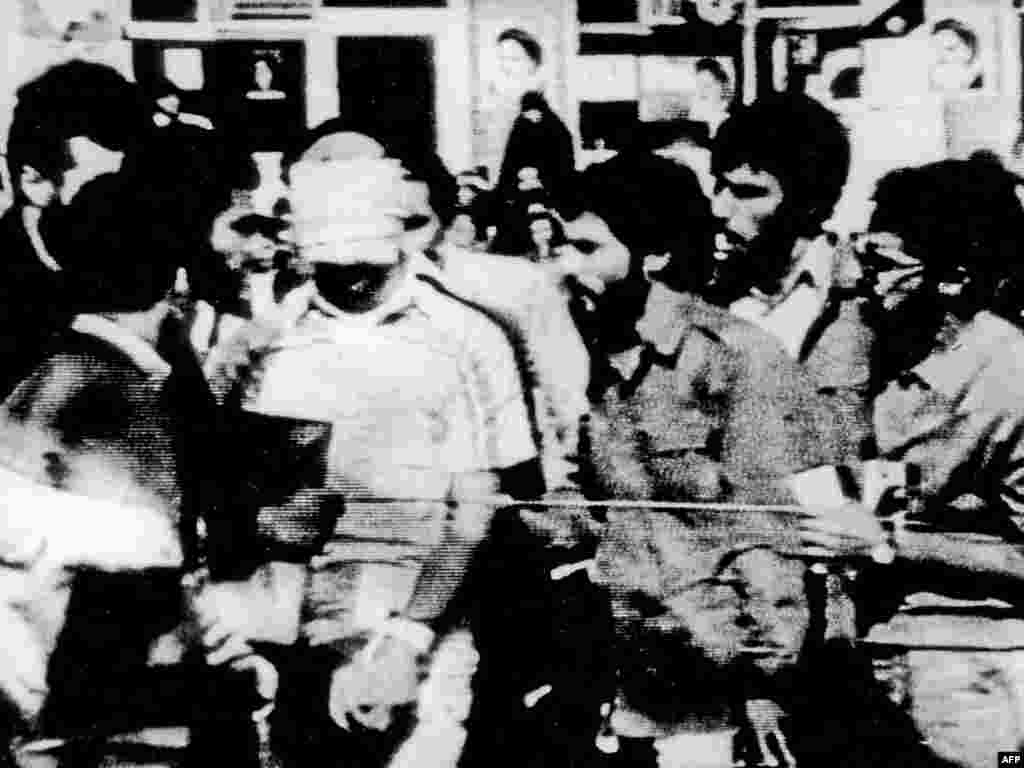
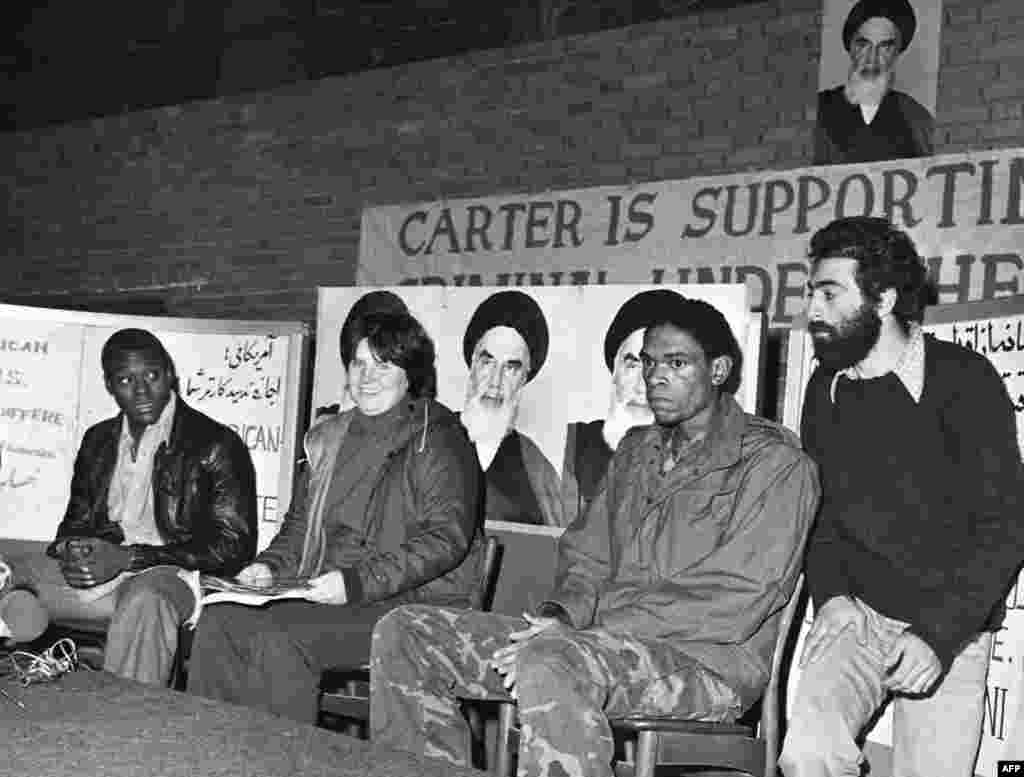
Thirteen female and black hostages were released. Some spoke to the press as one of their captors (right) watched.
6/12 Thirteen female and black hostages were released. Some spoke to the press as one of their captors (right) watched.
Several thousand people have demonstrated outside the former U.S. Embassy in Tehran to mark the 35th anniversary of its takeover on November 4, 1979. Participants in the annual demonstration burned American, Israeli, and British flags and chanted slogans against the three countries. In January 1979, under mounting pressure from street protests and anger at his brutal reign, Iran's Shah Reza Pahlavi fled the, leading to the overthrow of the royal regime by guerrillas and rebel troops the following month. Eight months later, and after much turmoil, led by hundreds of students later known as the Muslim Student Followers of the Imam's Line, radicals broke into the U.S. Embassy in Tehran on November 4, 1979, and took 90 people hostage in a standoff that was to last more than 14 months. The leader of the revolution, Ayatollah Ruhollah Khomeini, returned to Iran from exile and became supreme leader of the Islamic Republic of Iran in December 1979.
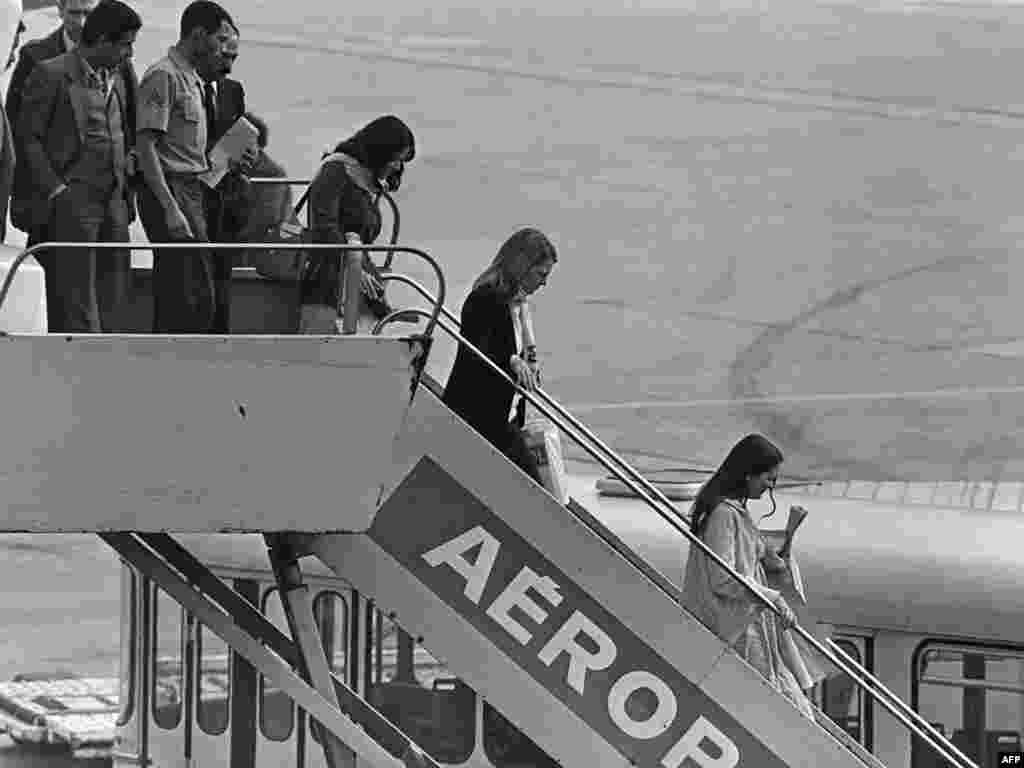
Former hostages, released by their captors, arrive at France&#39;s Orly airport on November 20, 1979.
7/12 Former hostages, released by their captors, arrive at France's Orly airport on November 20, 1979.
Several thousand people have demonstrated outside the former U.S. Embassy in Tehran to mark the 35th anniversary of its takeover on November 4, 1979. Participants in the annual demonstration burned American, Israeli, and British flags and chanted slogans against the three countries. In January 1979, under mounting pressure from street protests and anger at his brutal reign, Iran's Shah Reza Pahlavi fled the, leading to the overthrow of the royal regime by guerrillas and rebel troops the following month. Eight months later, and after much turmoil, led by hundreds of students later known as the Muslim Student Followers of the Imam's Line, radicals broke into the U.S. Embassy in Tehran on November 4, 1979, and took 90 people hostage in a standoff that was to last more than 14 months. The leader of the revolution, Ayatollah Ruhollah Khomeini, returned to Iran from exile and became supreme leader of the Islamic Republic of Iran in December 1979.
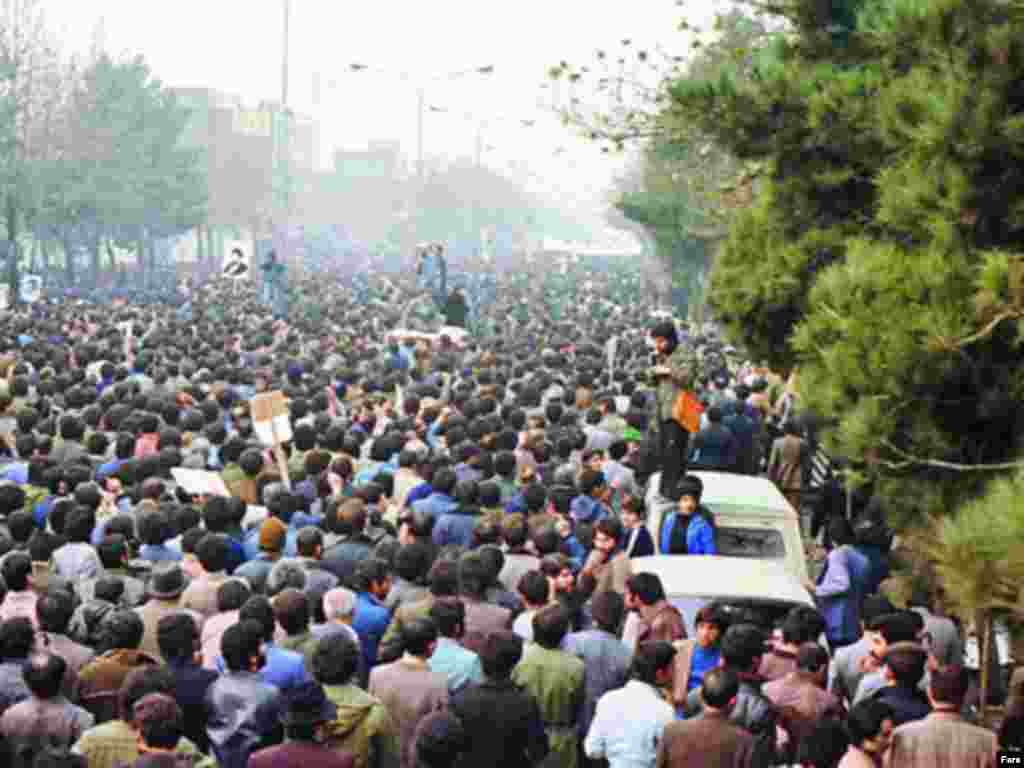
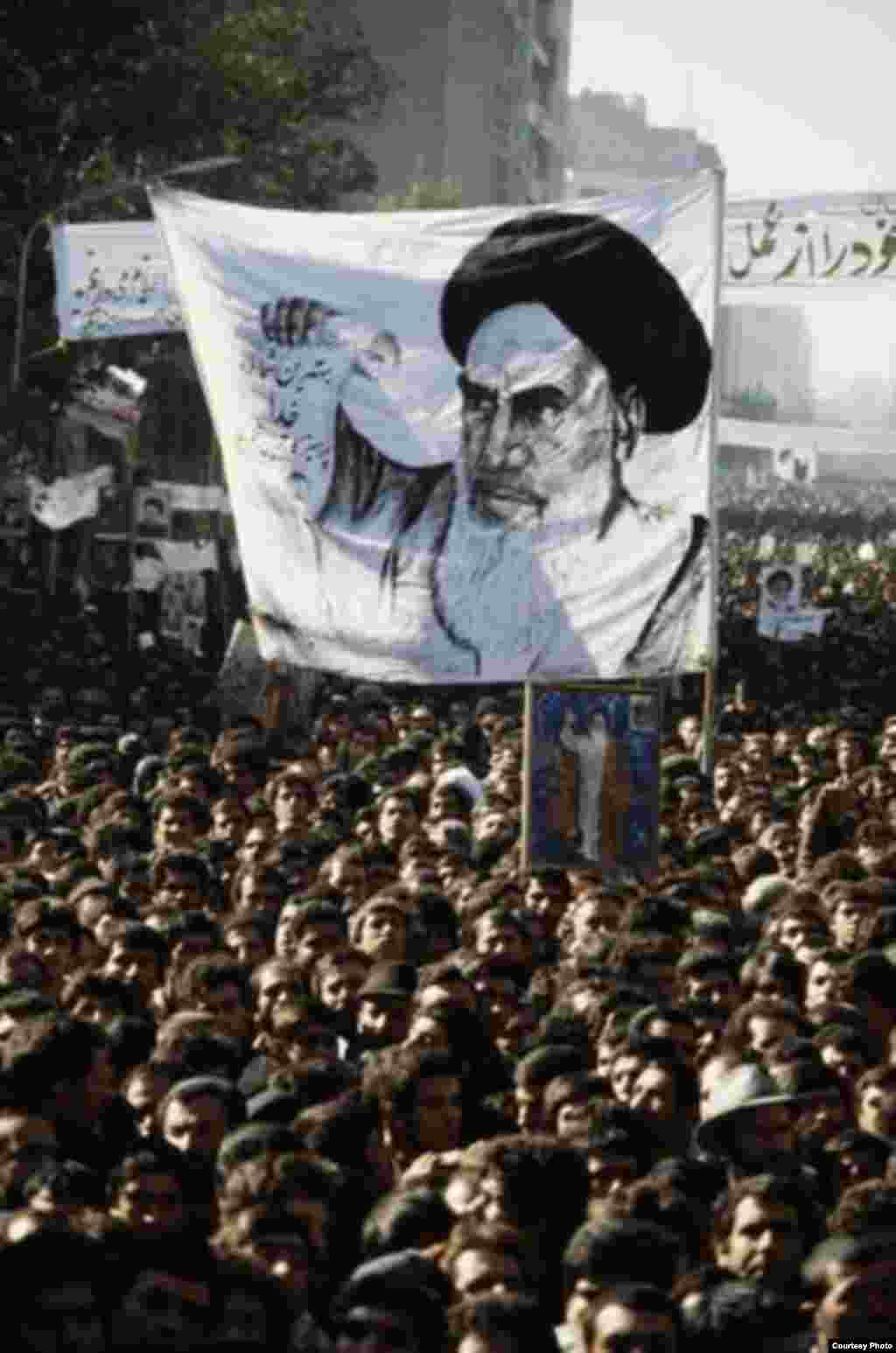
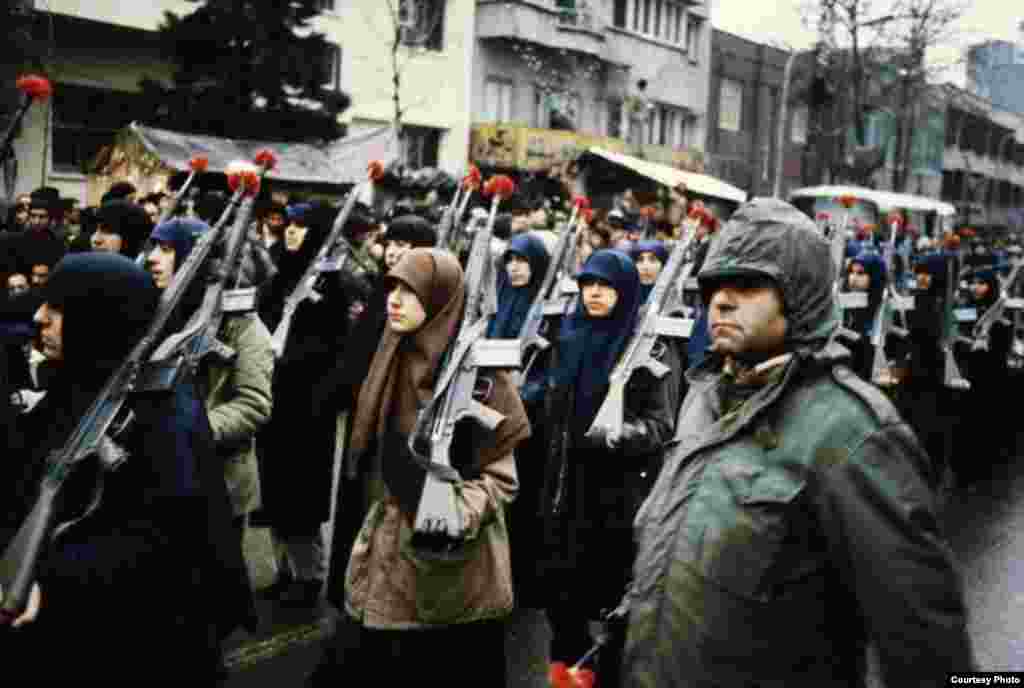
Supporters of the Iranian Revolution demonstrate outside the U.S. Embassy in Tehran during the crisis.
8/12 Supporters of the Iranian Revolution demonstrate outside the U.S. Embassy in Tehran during the crisis.
Several thousand people have demonstrated outside the former U.S. Embassy in Tehran to mark the 35th anniversary of its takeover on November 4, 1979. Participants in the annual demonstration burned American, Israeli, and British flags and chanted slogans against the three countries. In January 1979, under mounting pressure from street protests and anger at his brutal reign, Iran's Shah Reza Pahlavi fled the, leading to the overthrow of the royal regime by guerrillas and rebel troops the following month. Eight months later, and after much turmoil, led by hundreds of students later known as the Muslim Student Followers of the Imam's Line, radicals broke into the U.S. Embassy in Tehran on November 4, 1979, and took 90 people hostage in a standoff that was to last more than 14 months. The leader of the revolution, Ayatollah Ruhollah Khomeini, returned to Iran from exile and became supreme leader of the Islamic Republic of Iran in December 1979.
Revolutionaries demonstrate in front of the U.S. Embassy in Tehran.&nbsp;On April 24, 1980, a rescue mission to release the hostages failed after two aircraft collided in the Iranian desert. Eight U.S. soldiers were killed.
9/12 Revolutionaries demonstrate in front of the U.S. Embassy in Tehran. On April 24, 1980, a rescue mission to release the hostages failed after two aircraft collided in the Iranian desert. Eight U.S. soldiers were killed.
Several thousand people have demonstrated outside the former U.S. Embassy in Tehran to mark the 35th anniversary of its takeover on November 4, 1979. Participants in the annual demonstration burned American, Israeli, and British flags and chanted slogans against the three countries. In January 1979, under mounting pressure from street protests and anger at his brutal reign, Iran's Shah Reza Pahlavi fled the, leading to the overthrow of the royal regime by guerrillas and rebel troops the following month. Eight months later, and after much turmoil, led by hundreds of students later known as the Muslim Student Followers of the Imam's Line, radicals broke into the U.S. Embassy in Tehran on November 4, 1979, and took 90 people hostage in a standoff that was to last more than 14 months. The leader of the revolution, Ayatollah Ruhollah Khomeini, returned to Iran from exile and became supreme leader of the Islamic Republic of Iran in December 1979.
An effigy of then-U.S. President Jimmy Carter is carried outside the embassy on November 18, 1979. Carter froze Iranian assets in the United States and cut diplomatic ties with Iran.
10/12 An effigy of then-U.S. President Jimmy Carter is carried outside the embassy on November 18, 1979. Carter froze Iranian assets in the United States and cut diplomatic ties with Iran.
Several thousand people have demonstrated outside the former U.S. Embassy in Tehran to mark the 35th anniversary of its takeover on November 4, 1979. Participants in the annual demonstration burned American, Israeli, and British flags and chanted slogans against the three countries. In January 1979, under mounting pressure from street protests and anger at his brutal reign, Iran's Shah Reza Pahlavi fled the, leading to the overthrow of the royal regime by guerrillas and rebel troops the following month. Eight months later, and after much turmoil, led by hundreds of students later known as the Muslim Student Followers of the Imam's Line, radicals broke into the U.S. Embassy in Tehran on November 4, 1979, and took 90 people hostage in a standoff that was to last more than 14 months. The leader of the revolution, Ayatollah Ruhollah Khomeini, returned to Iran from exile and became supreme leader of the Islamic Republic of Iran in December 1979.
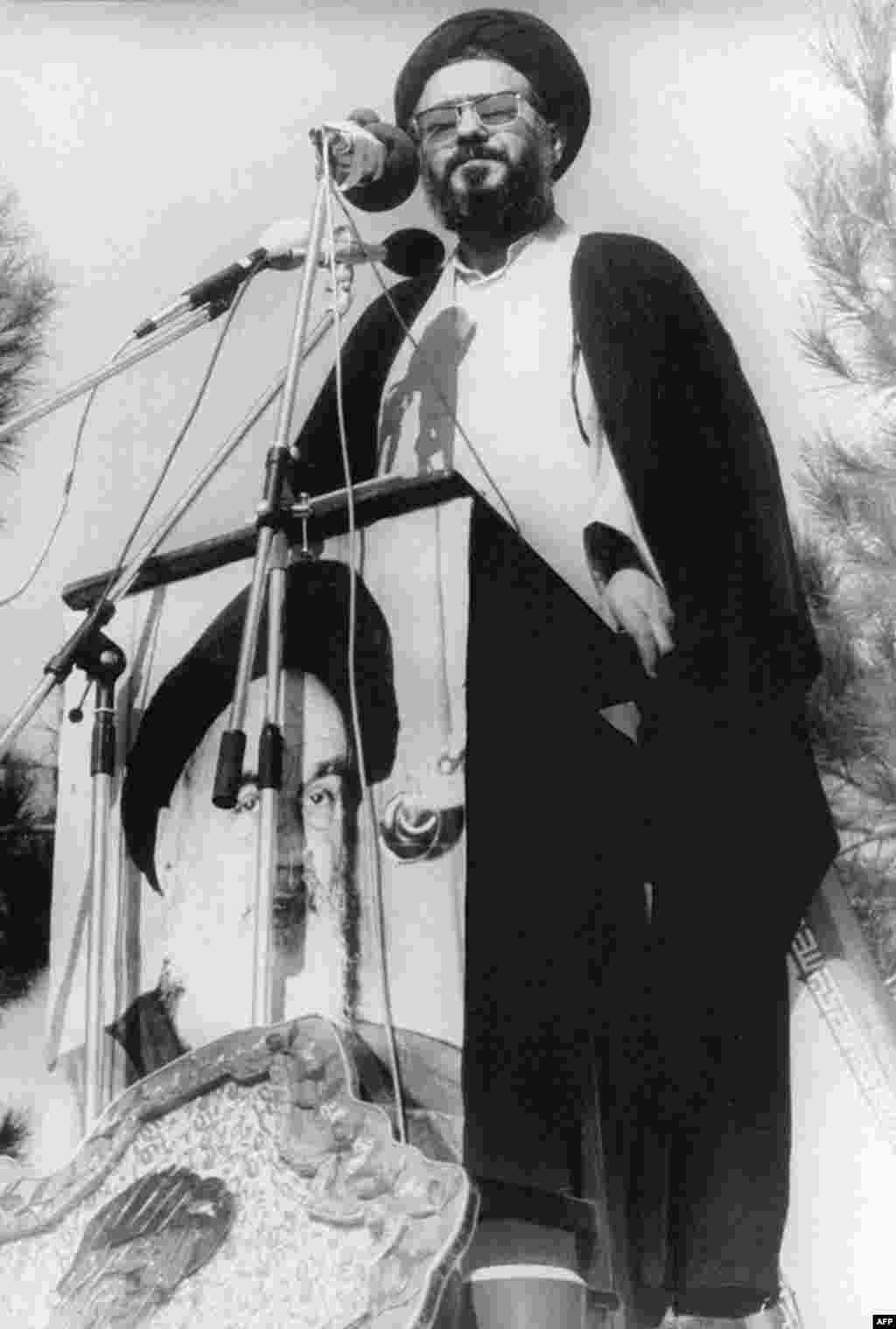
Student leader Ayatollah Musavi Khoeniha speaks from the top of a U.S. Embassy wall on the siege&#39;s first anniversary.
11/12 Student leader Ayatollah Musavi Khoeniha speaks from the top of a U.S. Embassy wall on the siege's first anniversary.
Several thousand people have demonstrated outside the former U.S. Embassy in Tehran to mark the 35th anniversary of its takeover on November 4, 1979. Participants in the annual demonstration burned American, Israeli, and British flags and chanted slogans against the three countries. In January 1979, under mounting pressure from street protests and anger at his brutal reign, Iran's Shah Reza Pahlavi fled the, leading to the overthrow of the royal regime by guerrillas and rebel troops the following month. Eight months later, and after much turmoil, led by hundreds of students later known as the Muslim Student Followers of the Imam's Line, radicals broke into the U.S. Embassy in Tehran on November 4, 1979, and took 90 people hostage in a standoff that was to last more than 14 months. The leader of the revolution, Ayatollah Ruhollah Khomeini, returned to Iran from exile and became supreme leader of the Islamic Republic of Iran in December 1979.
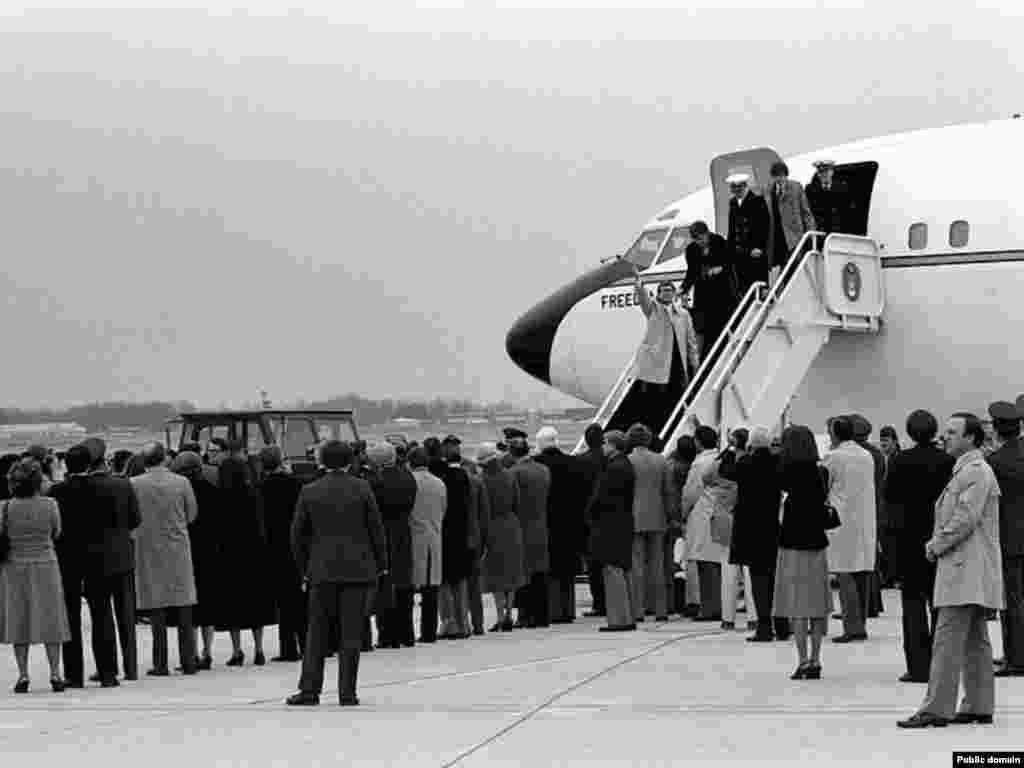
All 52 of the remaining hostages were eventually released on January 20, 1981, after 444 days in captivity.&nbsp;The freed Americans were welcomed at Andrews Air Force Base in Maryland on January 27, 1981.
12/12 All 52 of the remaining hostages were eventually released on January 20, 1981, after 444 days in captivity. The freed Americans were welcomed at Andrews Air Force Base in Maryland on January 27, 1981.
Several thousand people have demonstrated outside the former U.S. Embassy in Tehran to mark the 35th anniversary of its takeover on November 4, 1979. Participants in the annual demonstration burned American, Israeli, and British flags and chanted slogans against the three countries. In January 1979, under mounting pressure from street protests and anger at his brutal reign, Iran's Shah Reza Pahlavi fled the, leading to the overthrow of the royal regime by guerrillas and rebel troops the following month. Eight months later, and after much turmoil, led by hundreds of students later known as the Muslim Student Followers of the Imam's Line, radicals broke into the U.S. Embassy in Tehran on November 4, 1979, and took 90 people hostage in a standoff that was to last more than 14 months. The leader of the revolution, Ayatollah Ruhollah Khomeini, returned to Iran from exile and became supreme leader of the Islamic Republic of Iran in December 1979.
Previous slide
Next slide

Several thousand people have demonstrated outside the former U.S. Embassy in Tehran to mark the 35th anniversary of its takeover.

Participants in the annual demonstration on November 4 burned American, Israeli, and British flags and chanted slogans against the three countries.

This year's rally coincided in Iran with Ashura, which commemorates the death of Imam Hussein, one of the most revered figures in Shi'ite Islam.

In his address to the demonstrators, cleric and university professor Ali Reza Panahian compared the United States to enemies Hussein faced in his final battle in Karbala in present-day Iraq.

Similar rallies were held in other Iranian cities.

Student activists stormed the U.S. Embassy in November 1979 following the Islamic Revolution, which deposed the U.S.-backed shah.

Fifty-two American hostages were held for 444 days.

Based on reporting by AFP and AP
This item is part of
XS
SM
MD
LG