


Accessibility links

Breaking News

Recently Identified Remains Of 30 Genocide Victims Buried At Bosnia's Srebrenica Memorial

Updated
During the July 11 ceremony in Potocari, the remains of 30 victims were laid to rest. The remains were brought back from mass graves found in eastern Bosnia, where they had been relocated to try and cover up the crime. 

The remains of 30 newly identified victims of the Srebrenica genocide were buried on July 11 as Bosnia-Herzegovina marked the 28th anniversary of the killings.

The victims' remains were laid to rest at the Srebrenica-Potocari Memorial Center in Potocari, where more than 6,700 of the estimated 8,000 victims have been buried.

The remains of the 30 Bosniak Muslims were brought back from mass graves found in eastern Bosnia, where they had been relocated by Bosnian Serb forces trying to cover up the crime in the closing months of Bosnia's 1992-95 civil war.

The youngest victim buried on July 11 was Elvir Salcinovic, who was 15 years old when he was killed.

The burials took place during the 28th anniversary ceremony, which was attended by several thousand state officials, foreign dignitaries, and Bosnians. The event was preceded by a 110-kilometer peace march, a three-day hike with 6,000 participants.

The Pain Never Ends: Commemorating The Srebrenica Genocide As New Victims Are Buried
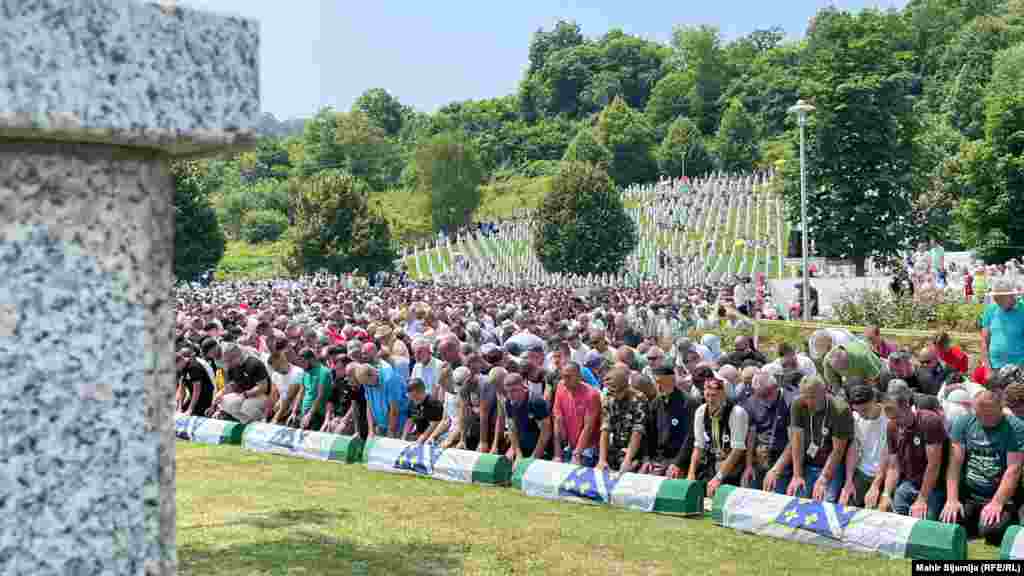
Muslim women pray next to 30 coffins containing the remains of their loved ones in Potocari, Bosnia-Herzegovina, on July 9.<br />
<br />
Their family members were&nbsp;victims of the 1995 Srebrenica genocide. The remains were to be buried on July 11 following a <strong><a href="https://www.rferl.org/a/bosnia-peace-march-genocide-srebrenica-/32497627.html" target="_self">commemorative ceremony</a></strong> marking the 28th anniversary of the massacre, Europe&#39;s only&nbsp;acknowledged genocide since World War II.
1/11 Muslim women pray next to 30 coffins containing the remains of their loved ones in Potocari, Bosnia-Herzegovina, on July 9.

Their family members were victims of the 1995 Srebrenica genocide. The remains were to be buried on July 11 following a commemorative ceremony marking the 28th anniversary of the massacre, Europe's only acknowledged genocide since World War II.
Thousands of people have converged on Srebrenica in Bosnia-Herzegovina to mark the 28th anniversary of Europe's only recognized genocide since the Holocaust to attend the funeral of 30 newly identified victims.
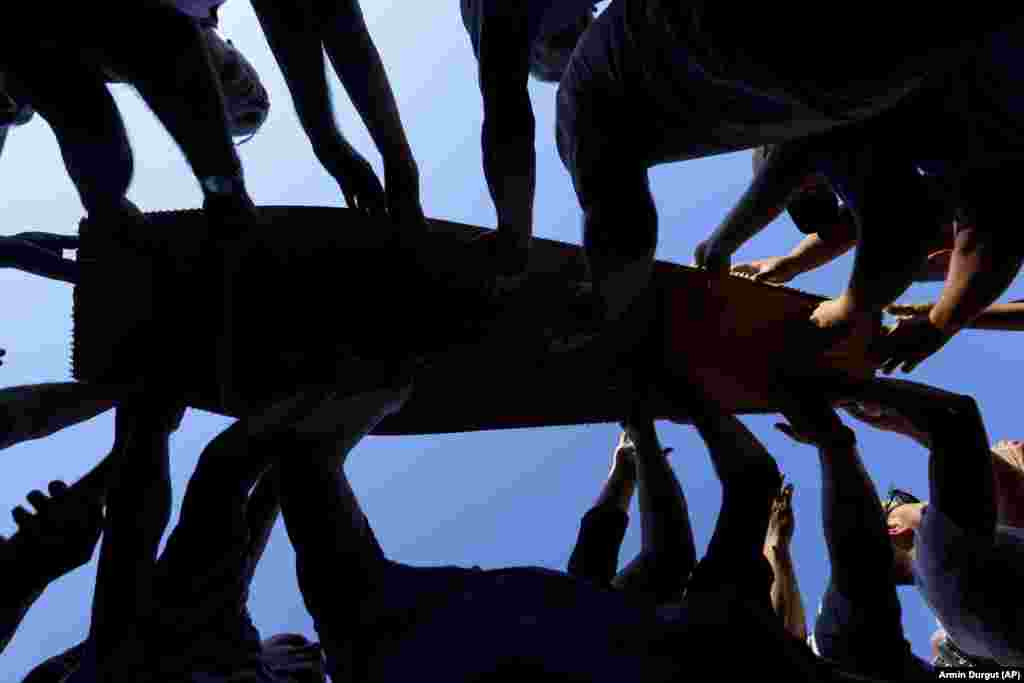
Muslim men carry coffins containing the remains of recently identified victims of the 1995 Srebrenica genocide.<br />
<br />
Among the remains are those of four minors who were 15 and 16 years of age when they were killed.
2/11 Muslim men carry coffins containing the remains of recently identified victims of the 1995 Srebrenica genocide.

Among the remains are those of four minors who were 15 and 16 years of age when they were killed.
Thousands of people have converged on Srebrenica in Bosnia-Herzegovina to mark the 28th anniversary of Europe's only recognized genocide since the Holocaust to attend the funeral of 30 newly identified victims.
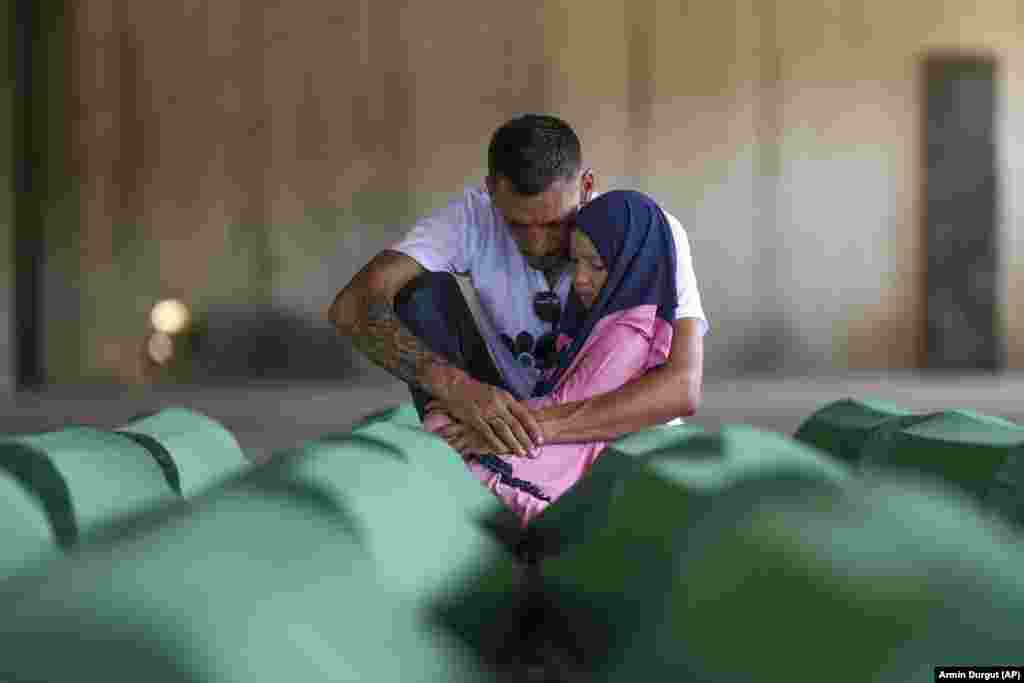
Samed Alic mourns with his daughter next to the coffin containing the remains of his father at the Srebrenica-Potocari Memorial Center on July 10.
3/11 Samed Alic mourns with his daughter next to the coffin containing the remains of his father at the Srebrenica-Potocari Memorial Center on July 10.
Thousands of people have converged on Srebrenica in Bosnia-Herzegovina to mark the 28th anniversary of Europe's only recognized genocide since the Holocaust to attend the funeral of 30 newly identified victims.
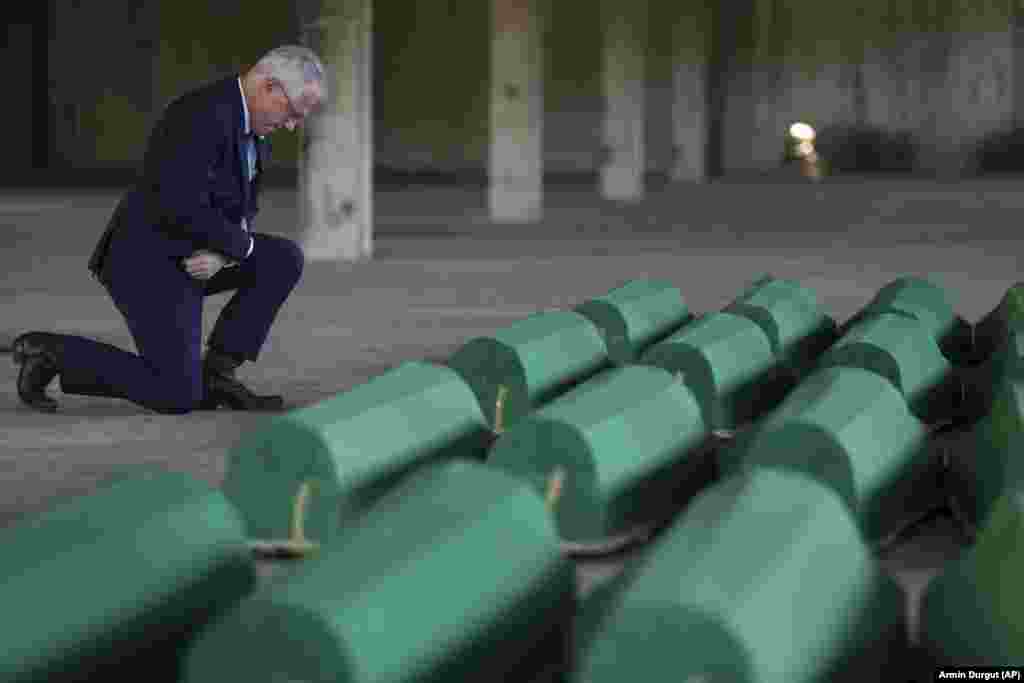
U.S. Ambassador to Bosnia-Herzegovina Michael Murphy kneels next to the coffins containing the remains of the newly identified victims.
4/11 U.S. Ambassador to Bosnia-Herzegovina Michael Murphy kneels next to the coffins containing the remains of the newly identified victims.
Thousands of people have converged on Srebrenica in Bosnia-Herzegovina to mark the 28th anniversary of Europe's only recognized genocide since the Holocaust to attend the funeral of 30 newly identified victims.
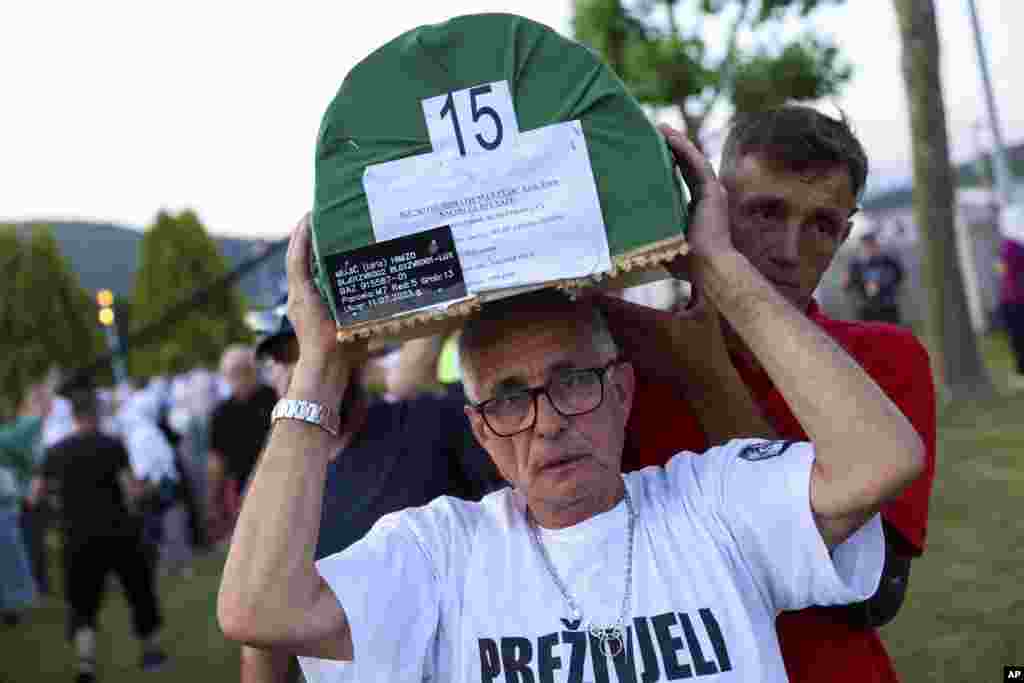
Muslim men carry coffins containing the remains of their recently identified relatives that were interned on July 11.
5/11 Muslim men carry coffins containing the remains of their recently identified relatives that were interned on July 11.
Thousands of people have converged on Srebrenica in Bosnia-Herzegovina to mark the 28th anniversary of Europe's only recognized genocide since the Holocaust to attend the funeral of 30 newly identified victims.
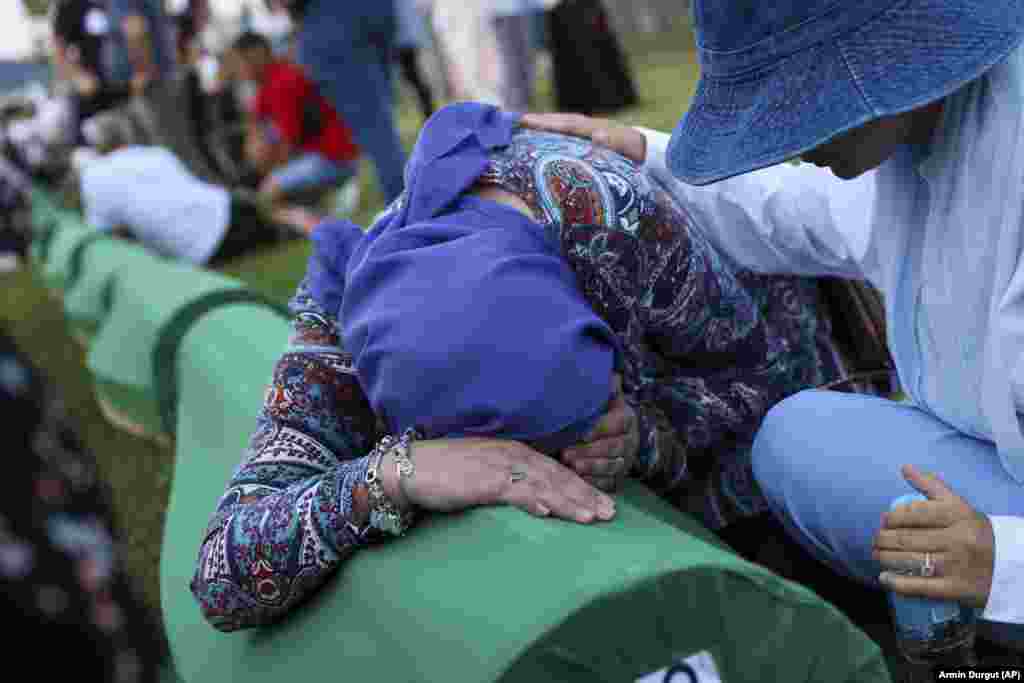
A Bosnian woman is comforted as she weeps over the coffin containing the remains of a relative.
6/11 A Bosnian woman is comforted as she weeps over the coffin containing the remains of a relative.
Thousands of people have converged on Srebrenica in Bosnia-Herzegovina to mark the 28th anniversary of Europe's only recognized genocide since the Holocaust to attend the funeral of 30 newly identified victims.
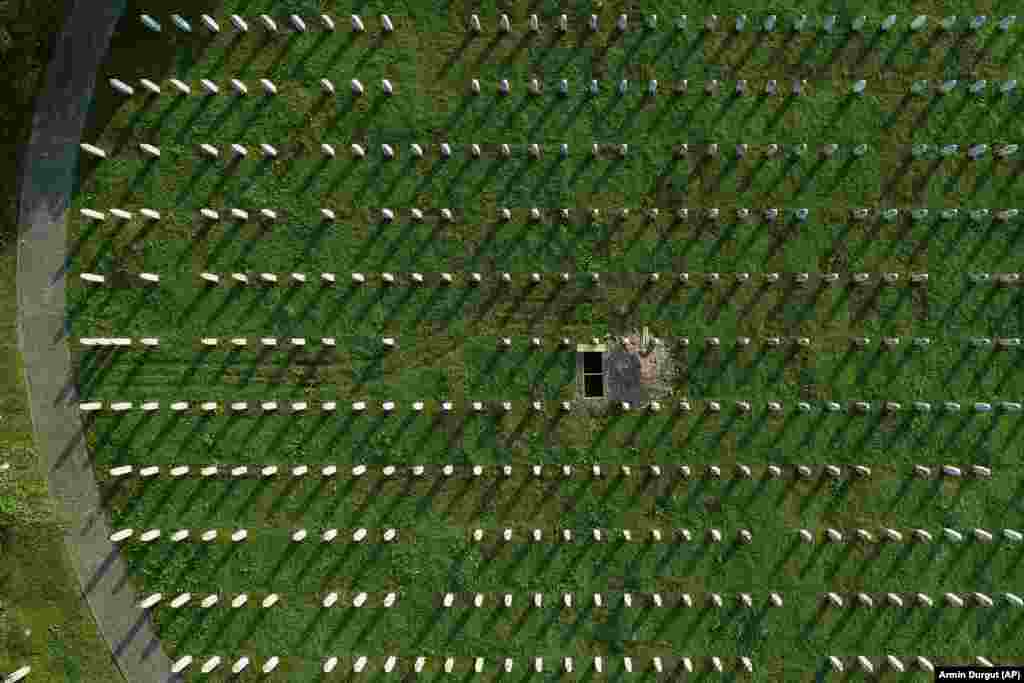
More than 8,000 Bosniak boys and men were killed by Bosnian Serb troops in 1995.&nbsp;After a funeral for the 30 victims on July 11 the memorial center will be the final resting place for 6,752 genocide victims. The rest of the victims are either still missing or buried elsewhere.
7/11 More than 8,000 Bosniak boys and men were killed by Bosnian Serb troops in 1995. After a funeral for the 30 victims on July 11 the memorial center will be the final resting place for 6,752 genocide victims. The rest of the victims are either still missing or buried elsewhere.
Thousands of people have converged on Srebrenica in Bosnia-Herzegovina to mark the 28th anniversary of Europe's only recognized genocide since the Holocaust to attend the funeral of 30 newly identified victims.
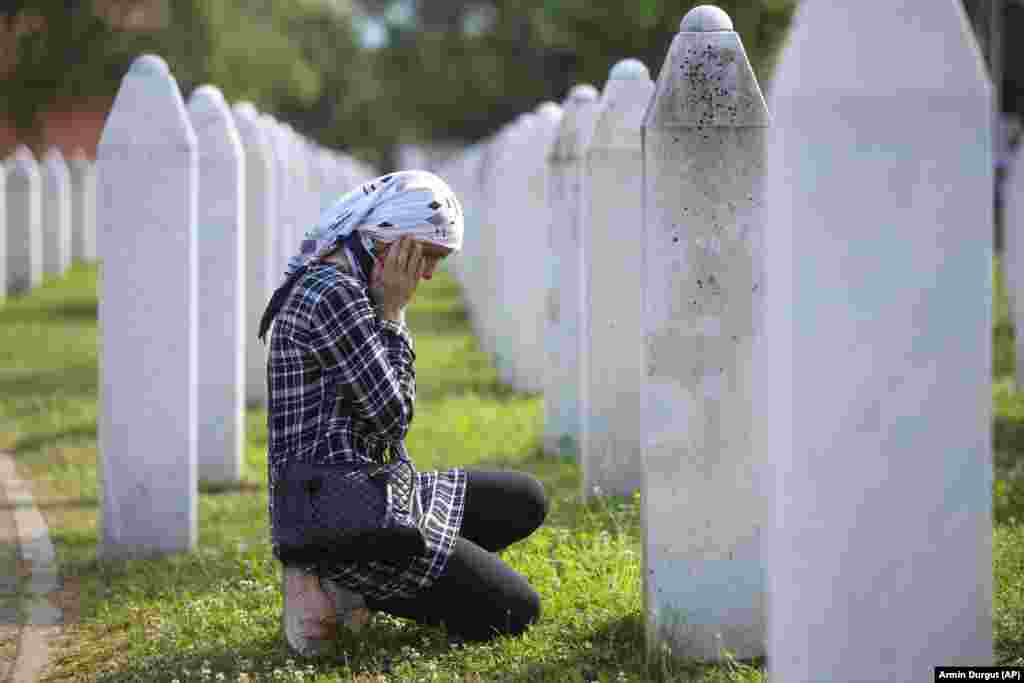
A Bosnian Muslim woman mourns next to the graves of her children and husband on July 11.
8/11 A Bosnian Muslim woman mourns next to the graves of her children and husband on July 11.
Thousands of people have converged on Srebrenica in Bosnia-Herzegovina to mark the 28th anniversary of Europe's only recognized genocide since the Holocaust to attend the funeral of 30 newly identified victims.
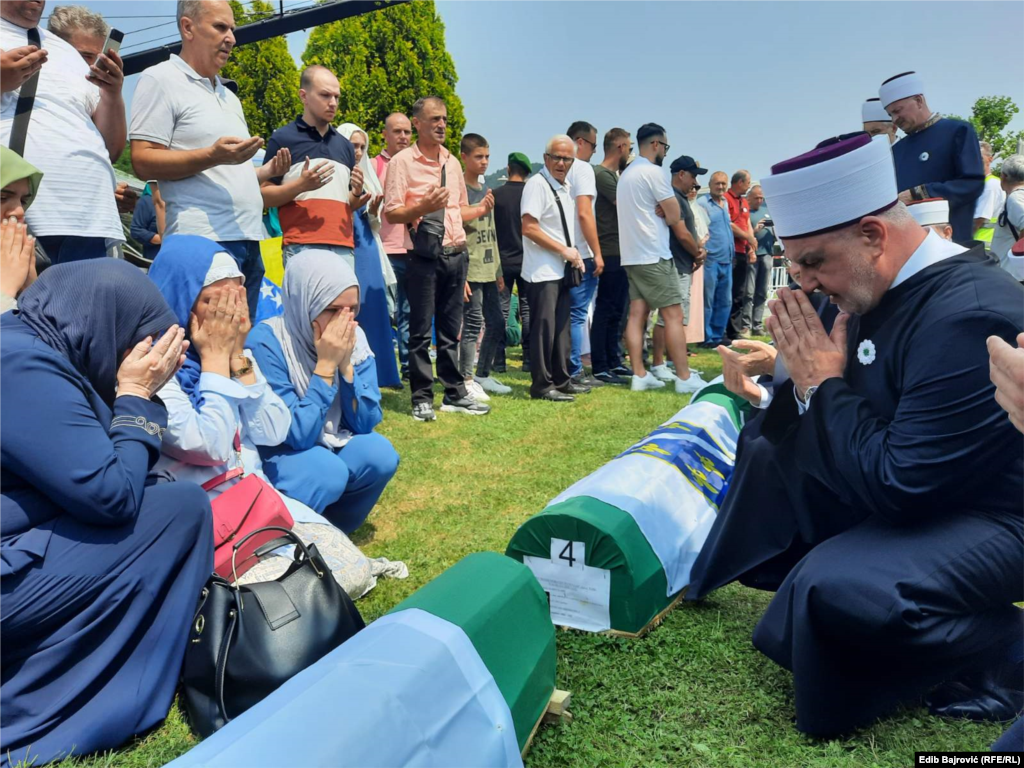
Bosnian Grand Mufti Efendi prays with the families as their relatives&#39; coffins await burial.<br />
<br />
<br />
&nbsp;
9/11 Bosnian Grand Mufti Efendi prays with the families as their relatives' coffins await burial.


Thousands of people have converged on Srebrenica in Bosnia-Herzegovina to mark the 28th anniversary of Europe's only recognized genocide since the Holocaust to attend the funeral of 30 newly identified victims.
Mourners gather for the religious ceremony before the burial of the genocide victims.
10/11 Mourners gather for the religious ceremony before the burial of the genocide victims.
Thousands of people have converged on Srebrenica in Bosnia-Herzegovina to mark the 28th anniversary of Europe's only recognized genocide since the Holocaust to attend the funeral of 30 newly identified victims.
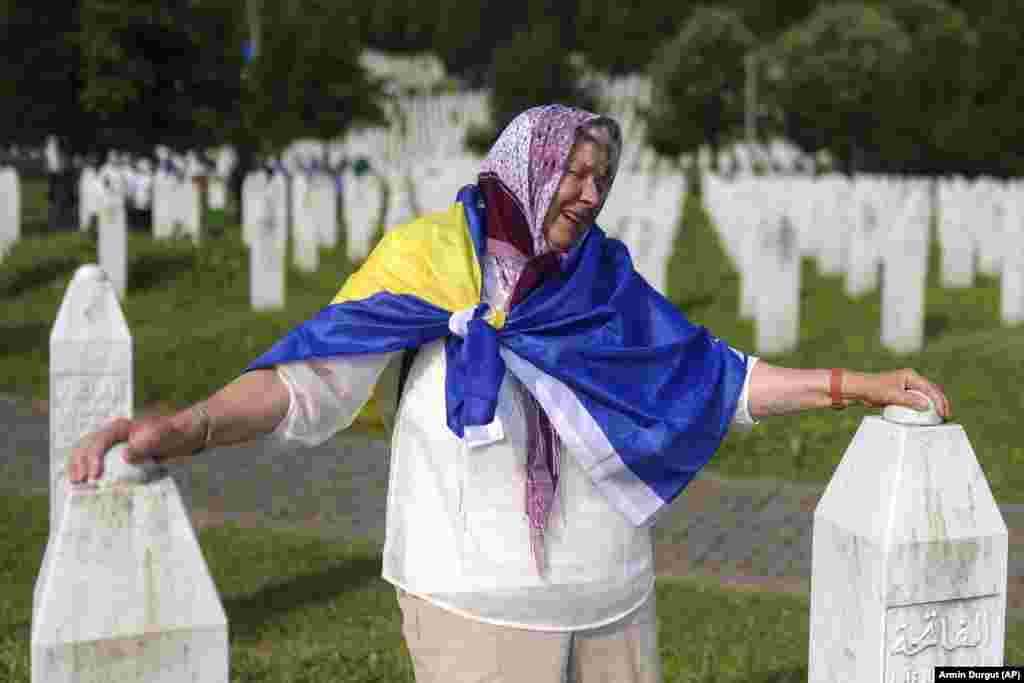
A Bosnian Muslim woman mourns next to the grave of a relative during the commemoration ceremony.<br />
<br />
Many Serbs deny the extent of the killings, adding to the suffering of the survivors. Bosnian Serb leader Milorad Dodik has previously called the genocide &quot;a fabricated myth.&quot;
11/11 A Bosnian Muslim woman mourns next to the grave of a relative during the commemoration ceremony.

Many Serbs deny the extent of the killings, adding to the suffering of the survivors. Bosnian Serb leader Milorad Dodik has previously called the genocide "a fabricated myth."
Thousands of people have converged on Srebrenica in Bosnia-Herzegovina to mark the 28th anniversary of Europe's only recognized genocide since the Holocaust to attend the funeral of 30 newly identified victims.
Previous slide
Next slide

The Srebrenica killings were the only episode of the conflict -- in which some 100,000 people died -- to be legally defined as genocide, including by two UN courts. However, Serbian and Bosnian Serb officials -- including current Republika Srpska leader Milorad Dodik -- refuse to accept that wording.

The continued denial of the genocide was a major subject at the anniversary ceremony. The Office of the High Representative (OHR) of Bosnia-Herzegovina called on officials to continue pursuing the prosecution of those responsible for the denial of genocide and the glorification of war crimes.

In a thinly veiled message to politicians in Republika Srpska, the country's Serb-majority entity, High Representative Christian Schmidt said that his office was ready to use all of its means to help Bosnia bring indictments against genocide deniers.

"It is clear that we must have decisive moves by the Prosecutor's office," Schmidt said at the commemoration.

"Those who deny the genocide, wherever they live and stay, are committing a criminal offense because the changes to the law that my predecessor, Valentin Inzko, brought two years ago are rigid and clearly state that denying the genocide is a criminal offense. Don't forget that this is a law that applies to the whole of Bosnia-Herzegovina," he said.

Denis Becirovic, the Bosnian Muslim member of the Bosnian tripartite presidency, warned that "the danger of genocide over Bosniaks being repeated hasn't been removed yet," adding that certain politicians in Bosnia want to destroy the country's constitutional order, insult the victims, and glorify war criminals.

"Today, not only Bosnia-Herzegovina but also the entire civilized part of the world offer deep condolences to the victims of the only genocide committed in Europe after World War II," he said. "All those who offer Bosnia-Herzegovina a strategy of forgetting don't have good intentions with our country."

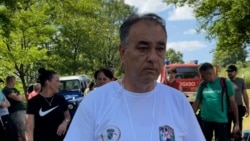
WATCH: Every year, Suljo Cakanovic takes part in the Peace March, a three-day hike across Bosnia-Herzegovina to the Potocari cemetery for the July 11 memorial to victims of the 1995 Srebrenica genocide.
Memory March: One Man's Three-Day Hike For Peace In Bosnia Memory March: One Man's Three-Day Hike For Peace In Bosnia
please wait

No media source currently available

0:00 0:02:54 0:00

Years of ethnic tensions between the Serbs of Republika Srpska and Bosnia's central authorities escalated in the months leading up to the anniversary, culminating in Republika Srpska's parliament voting on June 27 to suspend recognition of any decisions by Bosnia's multiethnic Constitutional Court.

Dodik on July 8 challenged the OHR's authority by filing a "criminal complaint" against Schmidt "because he has been dealing with the affairs of the high representative without authorization for a long time, for which there is no UN Security Council decision."

Dodik claimed that "with the intention of causing damage to Republika Srpska, Schmidt falsely presents himself as an official knowing that he was not appointed in accordance with Annex 10 of the Dayton peace accords," which give Schmidt the power to impose laws as the final interpreter of the state constitution, though his decisions can be reviewed and questioned by the Constitutional Court of Bosnia, if the OHR approves.

A day before filing the complaint, Dodik signed into law controversial changes approved by the National Assembly of Republika Srpska that effectively allow it to disregard decisions made by Schmidt as the international envoy.

Schmidt has joined Washington and European Union officials in accusing Dodik of violating Bosnia's constitution and undermining the Dayton accords with this recent action.

Johann Sattler, chief of the EU delegation to Bosnia, said in Srebrenica that reconciliation is key, but that its basis is having the perpetrators face the justice.

With reporting by Goran Katic of RFE/RL's Balkan Service and Shelby Rayer in Washington
  • 16x9 Image

    RFE/RL's Balkan Service

    In 2019, RFE/RL's Balkan Service marked 25 years of reporting in one of the world’s most contested regions, championing professionalism and moderation in a media landscape that is sharply divided along ethnic and partisan lines.

This item is part of
XS
SM
MD
LG