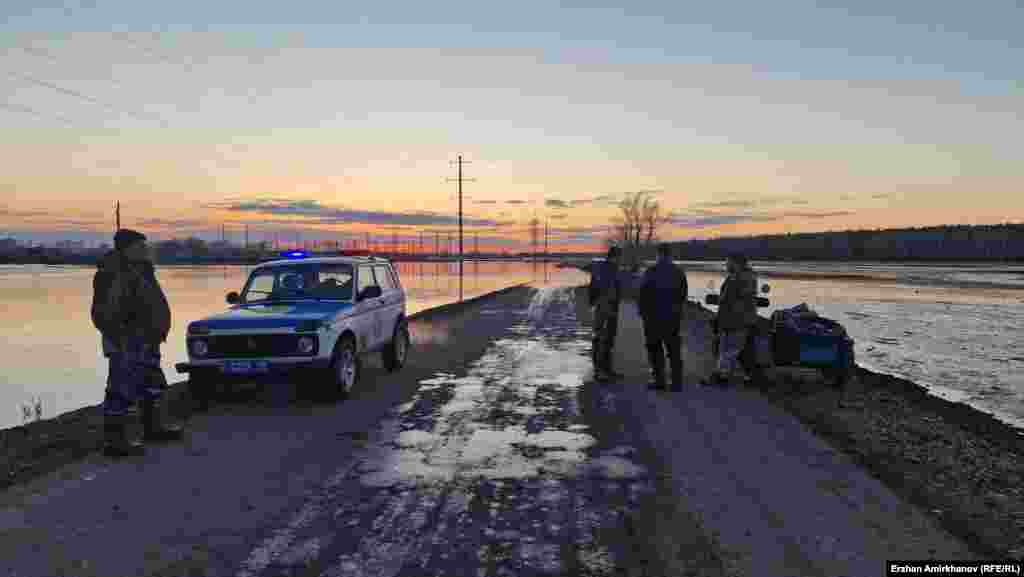
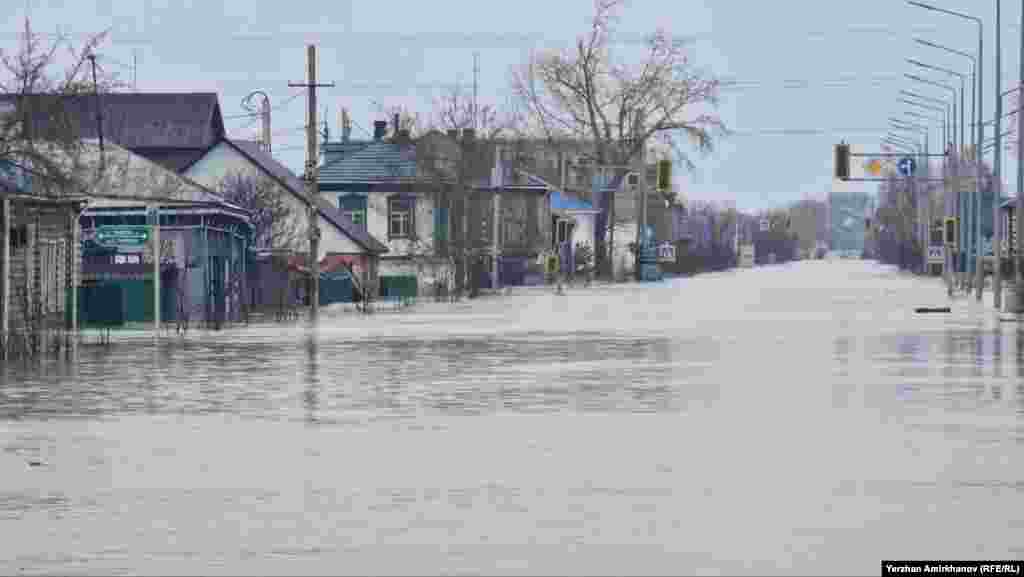
Qulsary residents protest to demand compensation in Kazakhstan's western region of Atyrau on May 16.
Dozens of residents of the town of Qulsary in Kazakhstan's western region of Atyrau have demanded immediate and higher compensation to allow them to rebuild their lives after devastating floods caused by abrupt warm weather in late March that led to massive snowmelt.
Protesters gathered in front of the town's administrative building told RFE/RL on May 16 that they spent the previous night at the site, adding that the number of the protesters during the night was much higher.
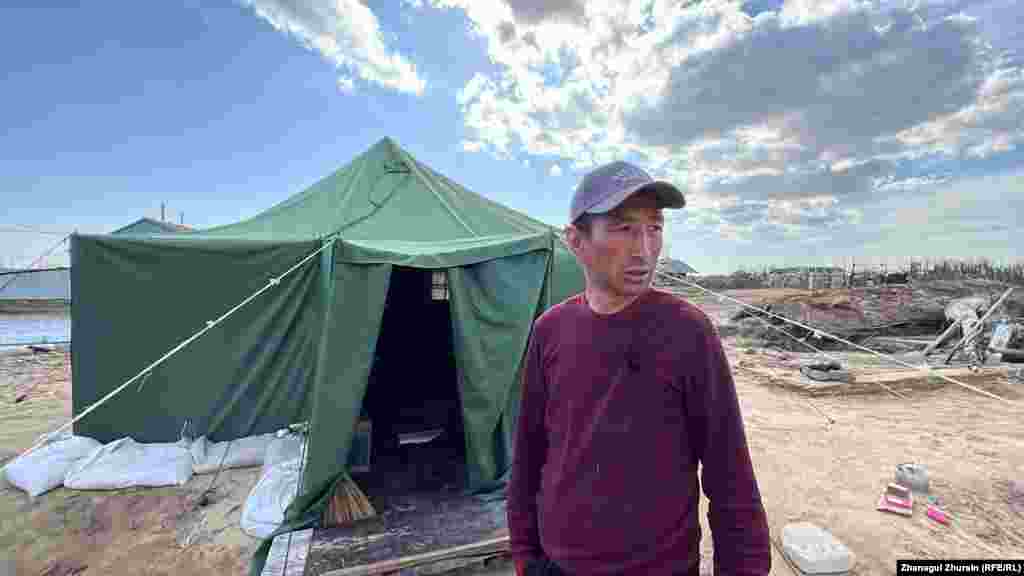
The protesters have set up three tents at the site and say they plan to stay there until their demands are met by local administrators.
Police officers have monitored the protest, which has remained peaceful.
The protesters are demanding the government calculate compensation at 400,000 tenges ($903) per square meter, while the officials say the calculations will be made by 200,000-240,000 tenges per square meter.
No End In Sight As Flooding Continues Unabated In Kazakhstan, Tajikistan, Russia
1/12In some of the worst flooding in recent memory, more than 114,000 people have been evacuated from their homes in Kazakhstan as floodwaters continue to rise across the region.
Unusually warm weather after heavy winter snowfalls caused the sudden melting of snow, which in turn led to the rapid swelling of rivers.
As the worst flooding in living memory persists, floodwaters continue to wreak havoc across Kazakhstan, Tajikistan, and Russia, prompting the mass evacuation of more than 125,000 people.
Show moreShow less
2/12Kazakh President Qasym-Zhomart Toqaev, who traveled to the partially submerged city of Petropavl (pictured), told frustrated residents who are unable to get to their homes: "We are going through tough times. This is a disaster of a national scale."
As the worst flooding in living memory persists, floodwaters continue to wreak havoc across Kazakhstan, Tajikistan, and Russia, prompting the mass evacuation of more than 125,000 people.
Show moreShow less
3/12In the settlement of Karatal, in the Aqtobe Province of northern Kazakhstan, families are now sharing tents as their homes were rendered uninhabitable by the rising waters and their aftermath.
As the worst flooding in living memory persists, floodwaters continue to wreak havoc across Kazakhstan, Tajikistan, and Russia, prompting the mass evacuation of more than 125,000 people.
Show moreShow less
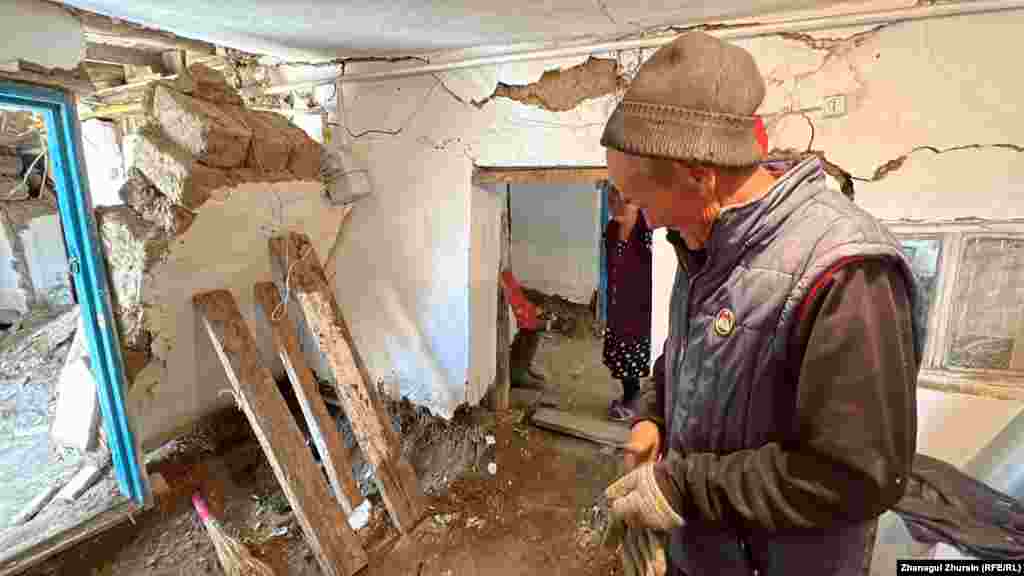
4/12Another villager from Karatal, Madeniet Eleuov, is using wooden planks to support a partially collapsed wall in his flood-damaged home.
Villagers are not only trying to salvage their homes but locate the livestock that they depend on for their livelihoods -- many of which have succumbed to the flooding and now lie scattered in the streets.
As the worst flooding in living memory persists, floodwaters continue to wreak havoc across Kazakhstan, Tajikistan, and Russia, prompting the mass evacuation of more than 125,000 people.
Show moreShow less
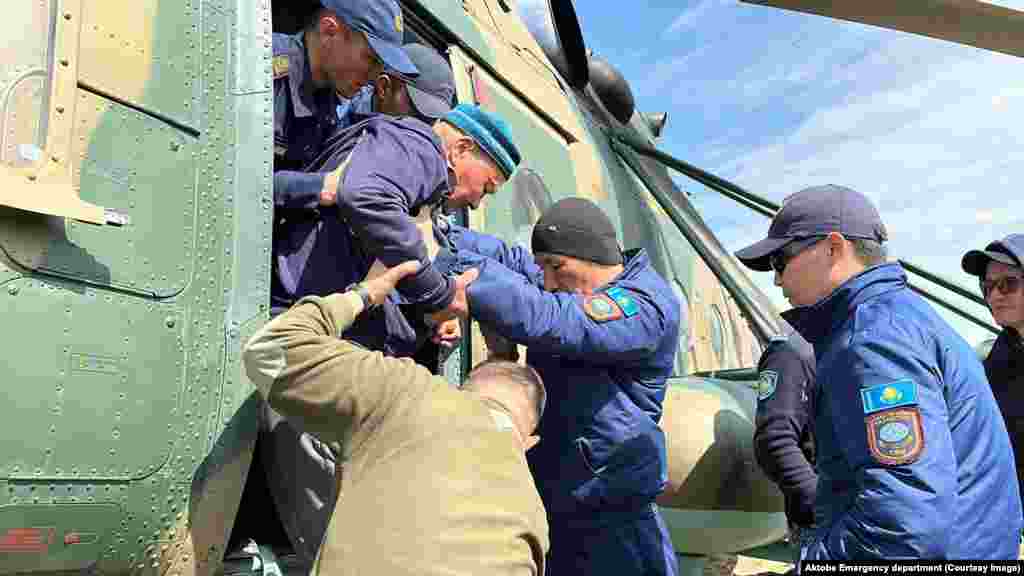
5/12A Kazakh government handout photo shows evacuees being rescued by a military helicopter on April 15.
Toqaev assured evacuees that the government would not leave them without assistance. "The state will take care of every citizen, every family. This is my priority," he vowed.
As the worst flooding in living memory persists, floodwaters continue to wreak havoc across Kazakhstan, Tajikistan, and Russia, prompting the mass evacuation of more than 125,000 people.
Show moreShow less
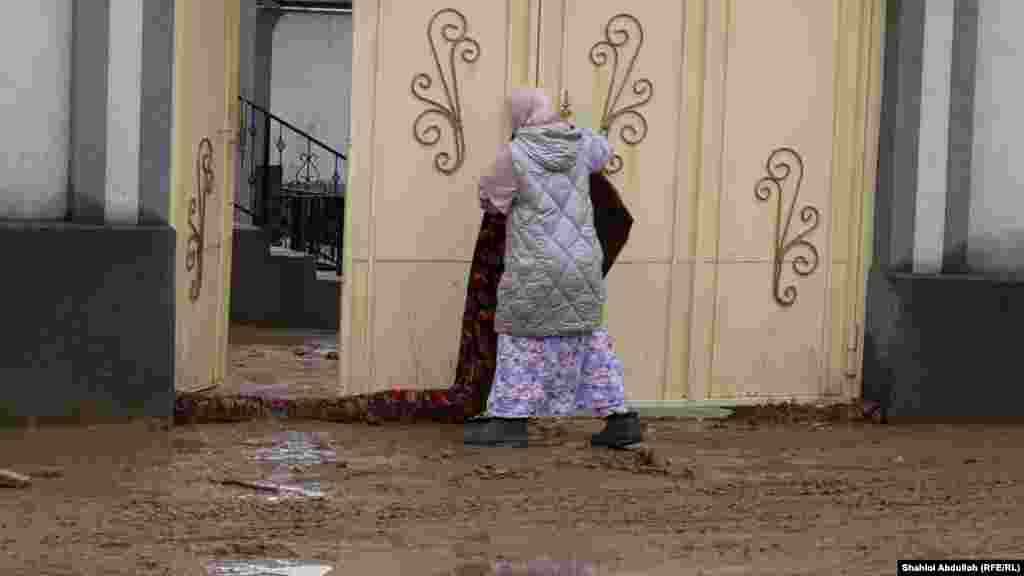
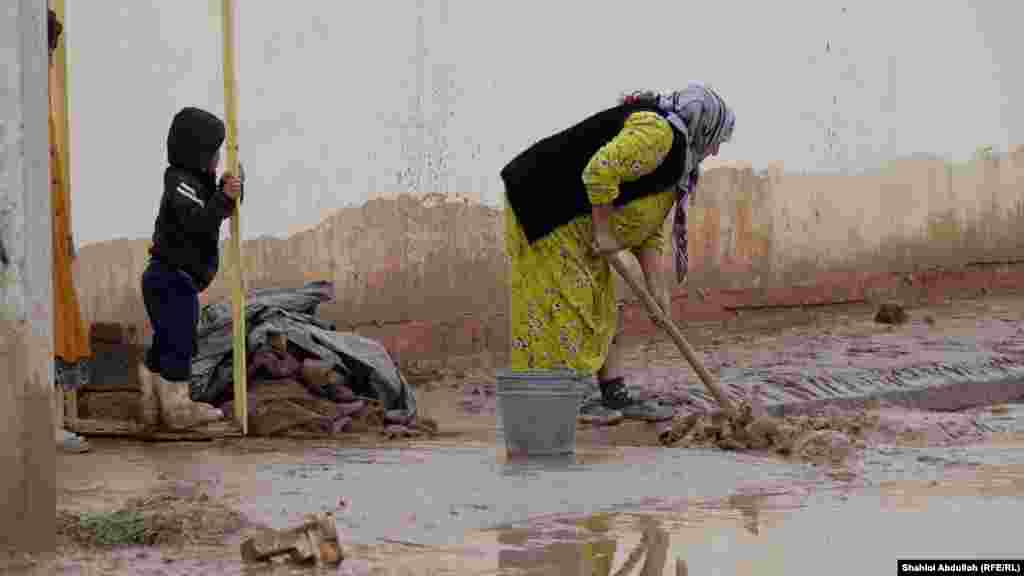
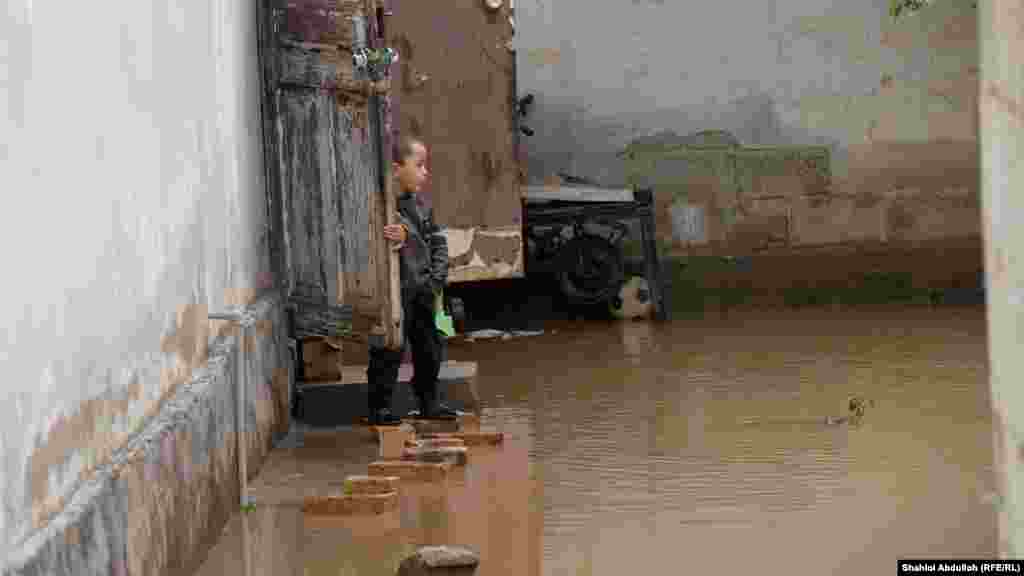
6/12In Tajikistan, floodwaters are also wreaking havoc. In the Rudaki district, south of Dushanbe, residents were left to clean up after flooding hit their homes in the early hours of April 15.
As the worst flooding in living memory persists, floodwaters continue to wreak havoc across Kazakhstan, Tajikistan, and Russia, prompting the mass evacuation of more than 125,000 people.
Show moreShow less
7/12Khotamsho Latifzoda, a Tajik emergency-services official, told RFE/RL's Tajik Service that damage to flooded residential buildings was "insignificant."
As the worst flooding in living memory persists, floodwaters continue to wreak havoc across Kazakhstan, Tajikistan, and Russia, prompting the mass evacuation of more than 125,000 people.
Show moreShow less
8/12RFE/RL journalists on the scene said that residents were relying on each other for the cleanup, as government resources were not enough.
As the worst flooding in living memory persists, floodwaters continue to wreak havoc across Kazakhstan, Tajikistan, and Russia, prompting the mass evacuation of more than 125,000 people.
Show moreShow less
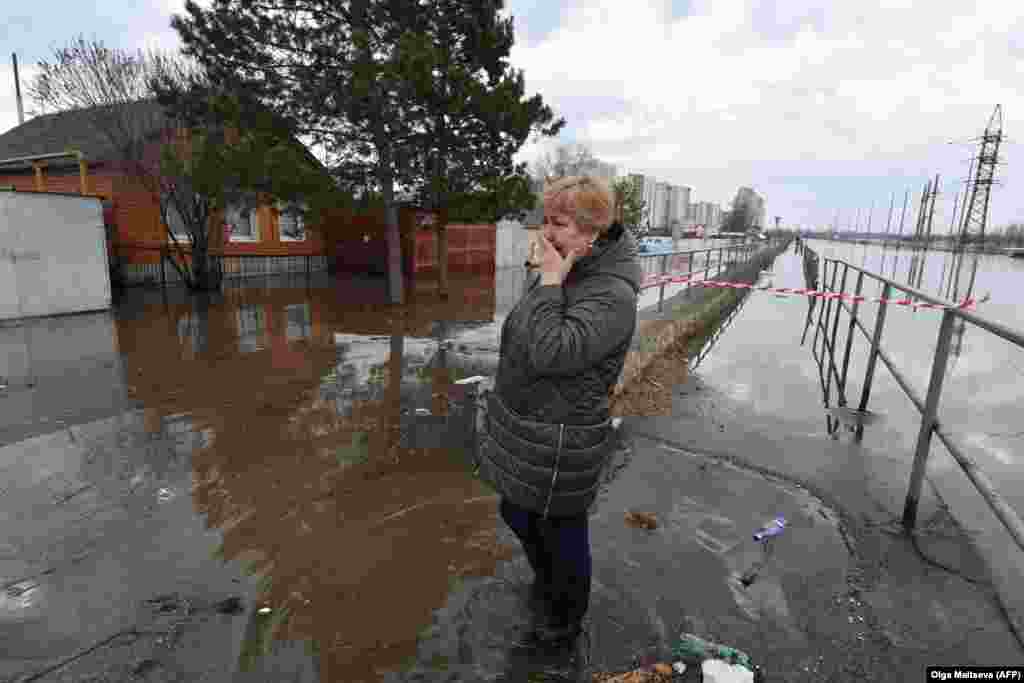
9/12Lyudmila Borodina, 56, a medical worker, cries in a flooded residential area of the Russian city of Orenburg on April 13.
Flooding in Orenburg became "critical" on April 12, resulting in "mass evacuations" as the Ural River continued to rise.
As the worst flooding in living memory persists, floodwaters continue to wreak havoc across Kazakhstan, Tajikistan, and Russia, prompting the mass evacuation of more than 125,000 people.
Show moreShow less
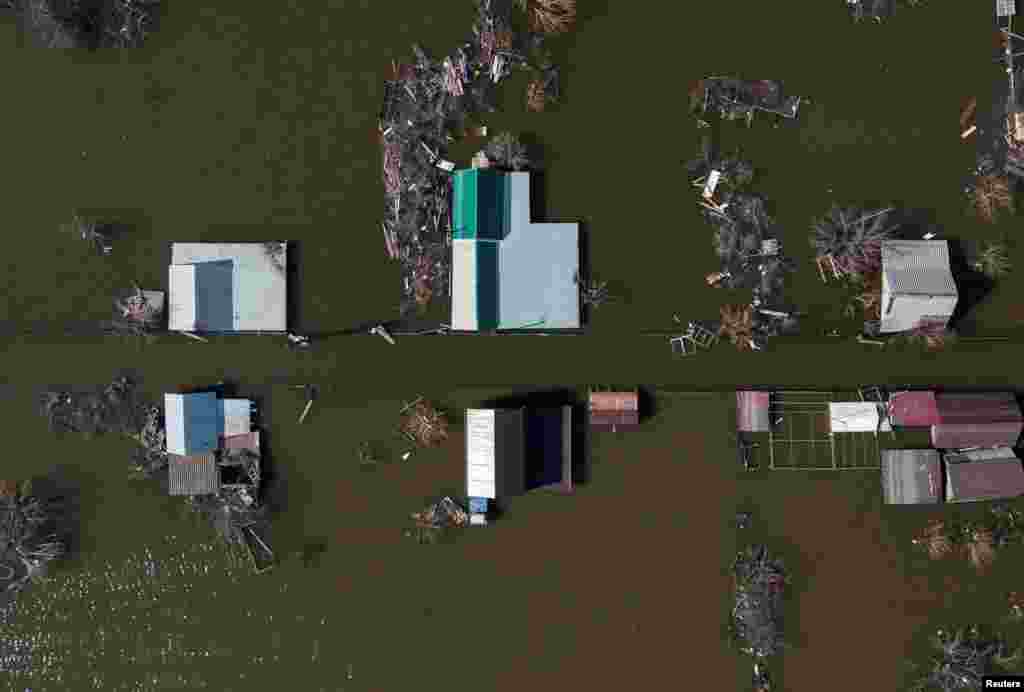
10/12Flooding covers a residential area in Orsk, a city with a population of 240,000 in the Orenburg region, where five people have died, including a 65-year-old man who refused to leave his home.
A state of emergency was declared in the Orenburg region on April 4 after torrential rain led to rising water levels, causing a breachin the dam in Orsk and resulting in catastrophic flooding.
As the worst flooding in living memory persists, floodwaters continue to wreak havoc across Kazakhstan, Tajikistan, and Russia, prompting the mass evacuation of more than 125,000 people.
Show moreShow less
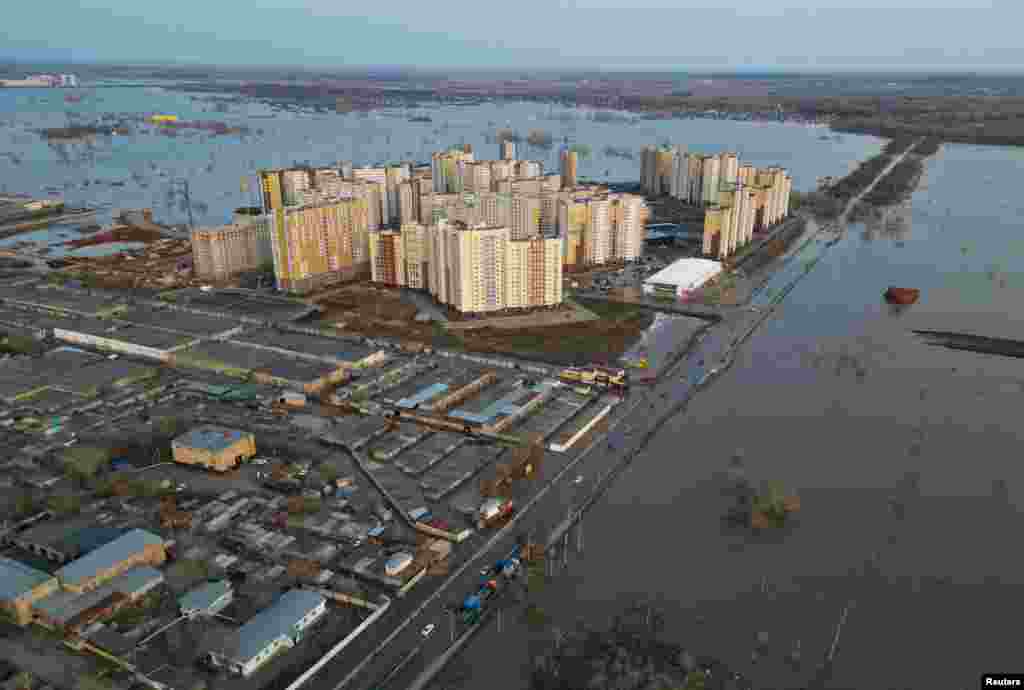
11/12A drone view shows a flooded area around the Dubki residential complex in Orenburg, a city of half a million people.
Russian officials in the Tyumen region of western Siberia and Kurgan in the south near the border with Kazakhstan on April 16 ordered moreevacuations as the Ishim and Tobol rivers continued to swell.
As the worst flooding in living memory persists, floodwaters continue to wreak havoc across Kazakhstan, Tajikistan, and Russia, prompting the mass evacuation of more than 125,000 people.
Show moreShow less
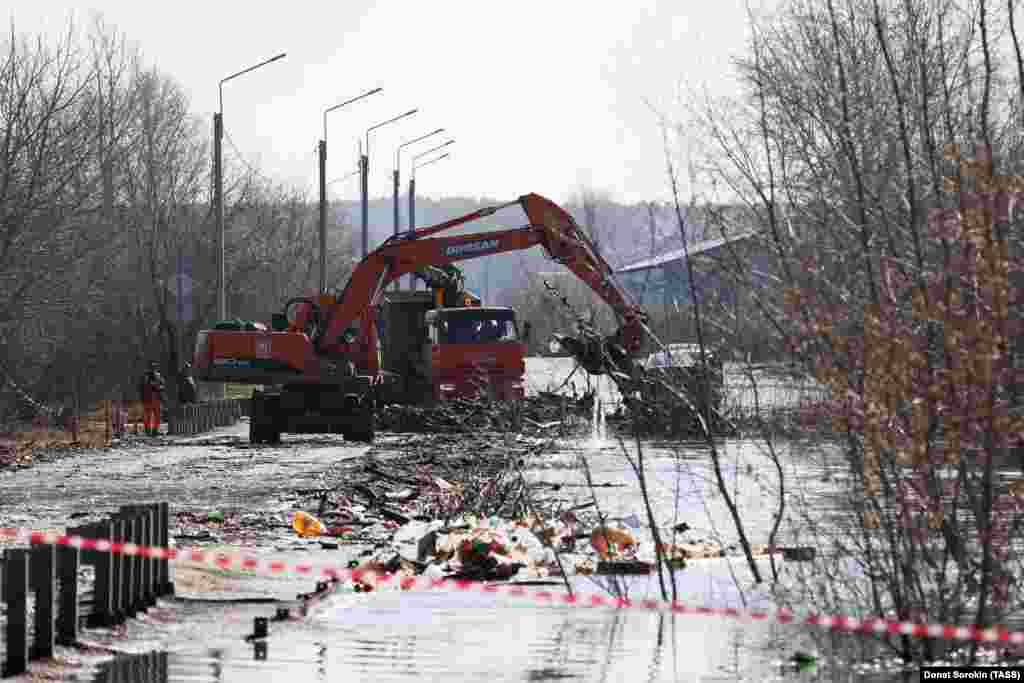
12/12Emergency workers clear logjams on the Malo-Chausovsky Bridge across the Tobol River on April 15 in Kurgan.
The region's governor, Vadim Shumkov, warned of a "colossal" amount of water heading toward the city of Kurgan, which has already experienced power cuts and evacuations. Shmukov said the Tobol River could see water levels rise to 11 meters, double the level where it breaks its banks in some places along its course.
As the worst flooding in living memory persists, floodwaters continue to wreak havoc across Kazakhstan, Tajikistan, and Russia, prompting the mass evacuation of more than 125,000 people.
Show moreShow less
Previous slide
Next slide
Officials also said earlier that only those whose houses were damaged, but not fully destroyed, will receive cash for repair works, while those whose houses were fully destroyed will receive newly built homes.
Funds for the program will go directly to construction companies, a system the protesters rejected saying they want all financial compensation to be given directly to them.
"We demand cash. If they give us money, we will decide ourselves if we want to build new houses at sites we choose or buy new houses," one of the protesters told RFE/RL.
About 3,000 private homes were either damaged or destroyed by the floods. Officials condemned some 570 houses affected by the floods, saying they are beyond repair.
In recent weeks, several regions in Kazakhstan’s north and adjacent Russian regions have faced devastating floods caused by abrupt warm weather that led to a massive snowmelt.
Qulsary, with some 66,000 residents, was the worst-hit area in Kazakhstan.
RFE/RL's Kazakh Service offers informed and accurate reporting in the Kazakh and Russian languages about issues that matter in Kazakhstan, while providing a dynamic platform for audience engagement and the free exchange of news and ideas.