


WATCH: Georgians Hold Massive Rally Against Draft 'Foreign Agents' Law Ahead Of Second Reading
TBILISI -- Seven opposition lawmakers were expelled on April 29 from a session of Georgia's parliament that is discussing a piece of legislation that domestic critics and Western countries have said will be used to crack down on independent voices in the country.
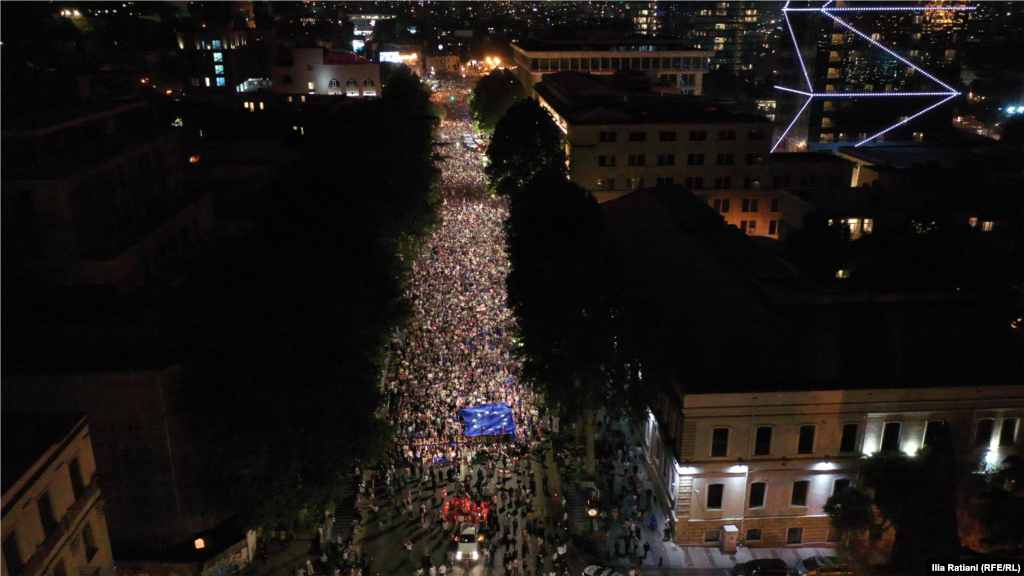
The session of the parliament's Legal Committee got under way after tens of thousands of people on April 28 again took to the streets of the capital, Tbilisi, to voice their opposition to the so-called "foreign agents" bill, regarded by many as mirroring the one used by the Kremlin to silence its critics.
The ruling Georgian Dream party has argued that the legislation would bring transparency among NGOs and combat what they call "values imposed by foreigners."
The seven expelled opposition members were Levan Bezhashvili of the United National Movement; Giorgi Vashadze, the leader of the Strategy Agmashenebeli party; independent lawmaker Tamar Kordzaia; Salome Samadashvili of the Lelo party; independent Tako Charkviani; Ketevan Turazashvili of the Citizens party; and Ana Tsitlidze of the United National Movement.
The decision to expel the seven was made by session chairman Anri Okhanashvili of Georgian Dream, who cited what he said were "violations" of parliamentary procedures. Several other members of the opposition were not allowed to finish their speeches against the piece of legislation advanced by Georgian Dream.
Before the start of the session, called ahead of an expected vote on April 30 on the second reading, the press center said only journalists from accredited TV stations would be allowed inside the building and due to "security" reasons, online and print media journalists were not allowed to work in parliament.
The press center also announced that visitors were banned from entering the building, with the exception of those "invited by the relevant structures."
The protest on April 28 was a continuation of two weeks of rallies led by opposition parties and activist groups against the bill, which was passed in a first reading earlier this month.
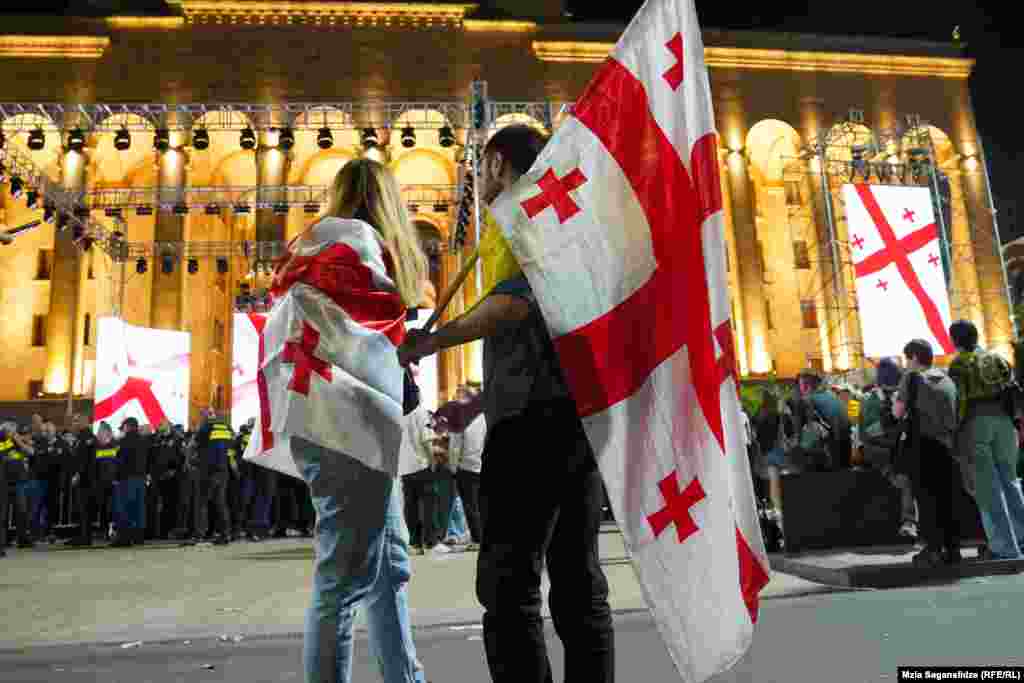
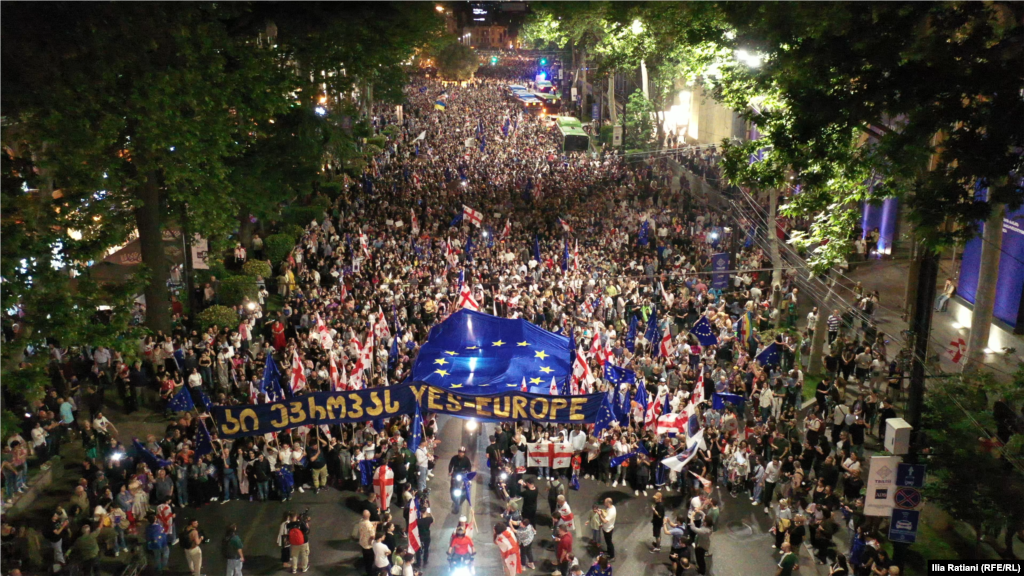
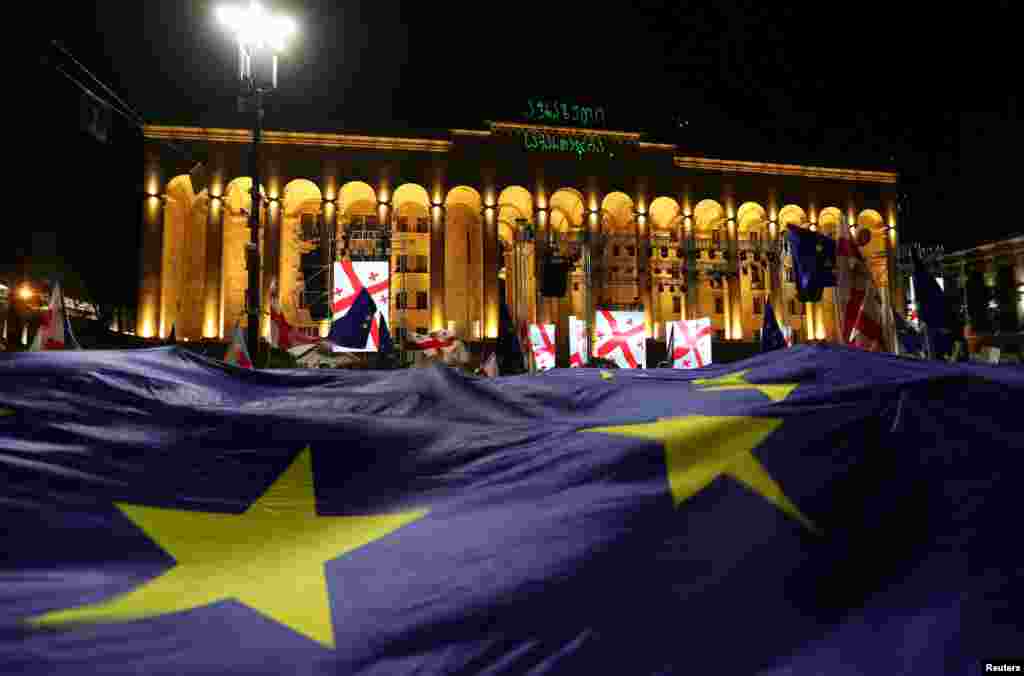
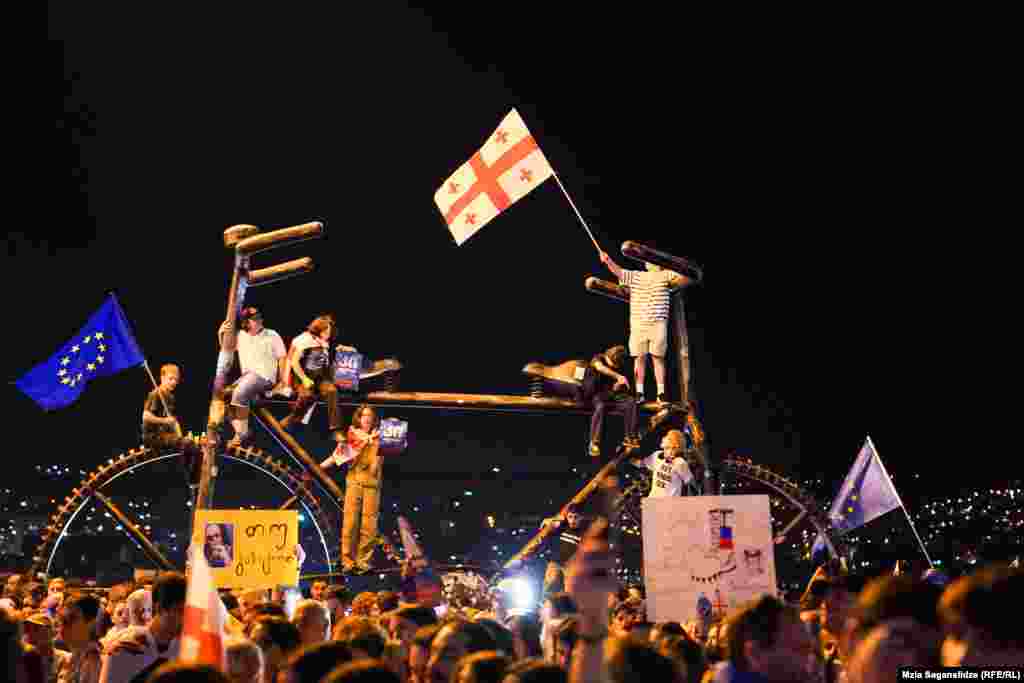
Tens of thousands of people gathered on Republic Square in central Tbilisi into the night on April 28, with many singing Georgian and European Union anthems and holding EU banners.

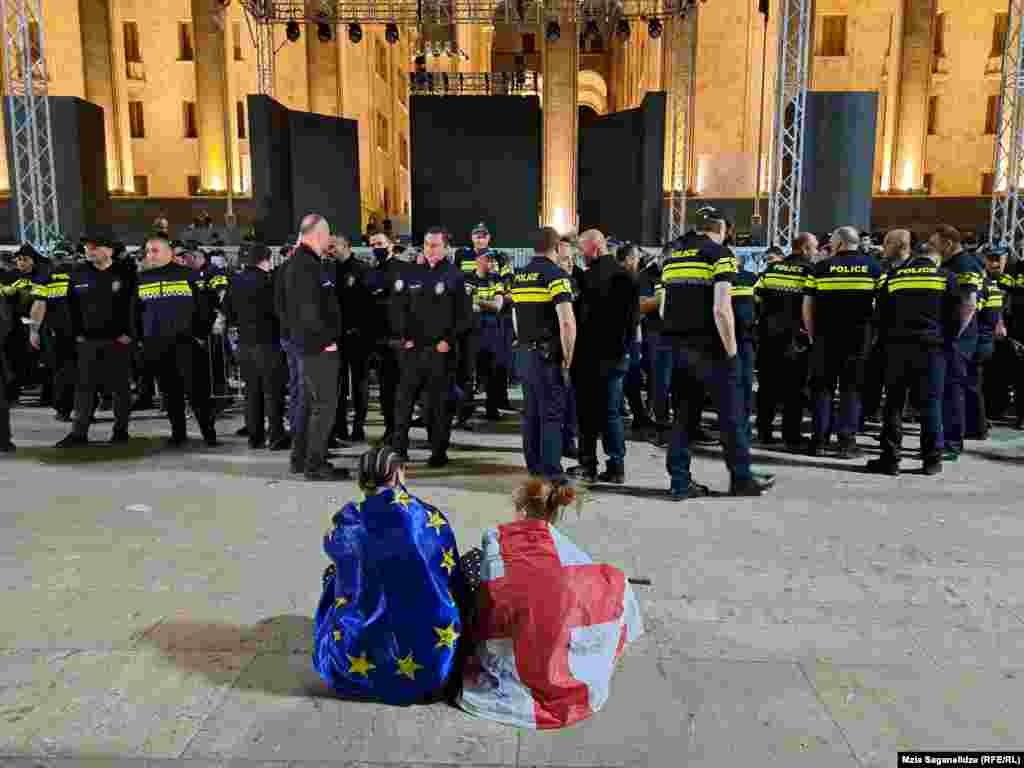
The protest extended into the early morning on April 29, with reports saying that some protesters had broken through security lines near the parliament building, leading police to use tear gas and pepper spray without warning in order to disperse crowds.
The last few dozen demonstrators remained in the vicinity of the parliament until 3 a.m. local time before dispersing.
Georgians 'March For Europe' Against 'Russian-Style Foreign Agents Law'
1/12Tens of thousands of people took to the streets of the Georgian capital, Tbilisi, on April 28 to again protest plans by the ruling party to introduce a law that domestic critics and Western countries say will be used to crack down on independent voices in the South Caucasus nation.
Tens of thousands of Georgians staged a "March for Europe" on April 28 calling on the government to discard a controversial "foreign influence" bill, which the EU has warned would undermine Tbilisi's European aspirations.
2/12A video grab shows tens of thousands of Georgians who rallied late into the night of April 28–29, demanding that the government withdraw the controversial "foreign agents" bill.
Tens of thousands of Georgians staged a "March for Europe" on April 28 calling on the government to discard a controversial "foreign influence" bill, which the EU has warned would undermine Tbilisi's European aspirations.
3/12The protests were a continuation of several weeks of rallies led by opposition parties and activist groups against the parliament’s advancement of the controversial draft law, which was passed in a first reading on April 17.
Tens of thousands of Georgians staged a "March for Europe" on April 28 calling on the government to discard a controversial "foreign influence" bill, which the EU has warned would undermine Tbilisi's European aspirations.
4/12People embrace beside a security cordon near the parliament building.
The ruling Georgian Dream party announced its plans to reintroduce the bill after a previous version was dropped in 2023. This new version omits the phrase "foreign agent."
Tens of thousands of Georgians staged a "March for Europe" on April 28 calling on the government to discard a controversial "foreign influence" bill, which the EU has warned would undermine Tbilisi's European aspirations.
5/12EU officials have said that if Georgia adopts the bill as law, it would disrupt the nation’s membership hopes.
The government withdrew the bill introduced last year due to widespread protests against the proposal. The law would require organizations with foreign funding to register their activities, give the authorities broad oversight powers, and allow criminal penalties for vague infractions.
Tens of thousands of Georgians staged a "March for Europe" on April 28 calling on the government to discard a controversial "foreign influence" bill, which the EU has warned would undermine Tbilisi's European aspirations.
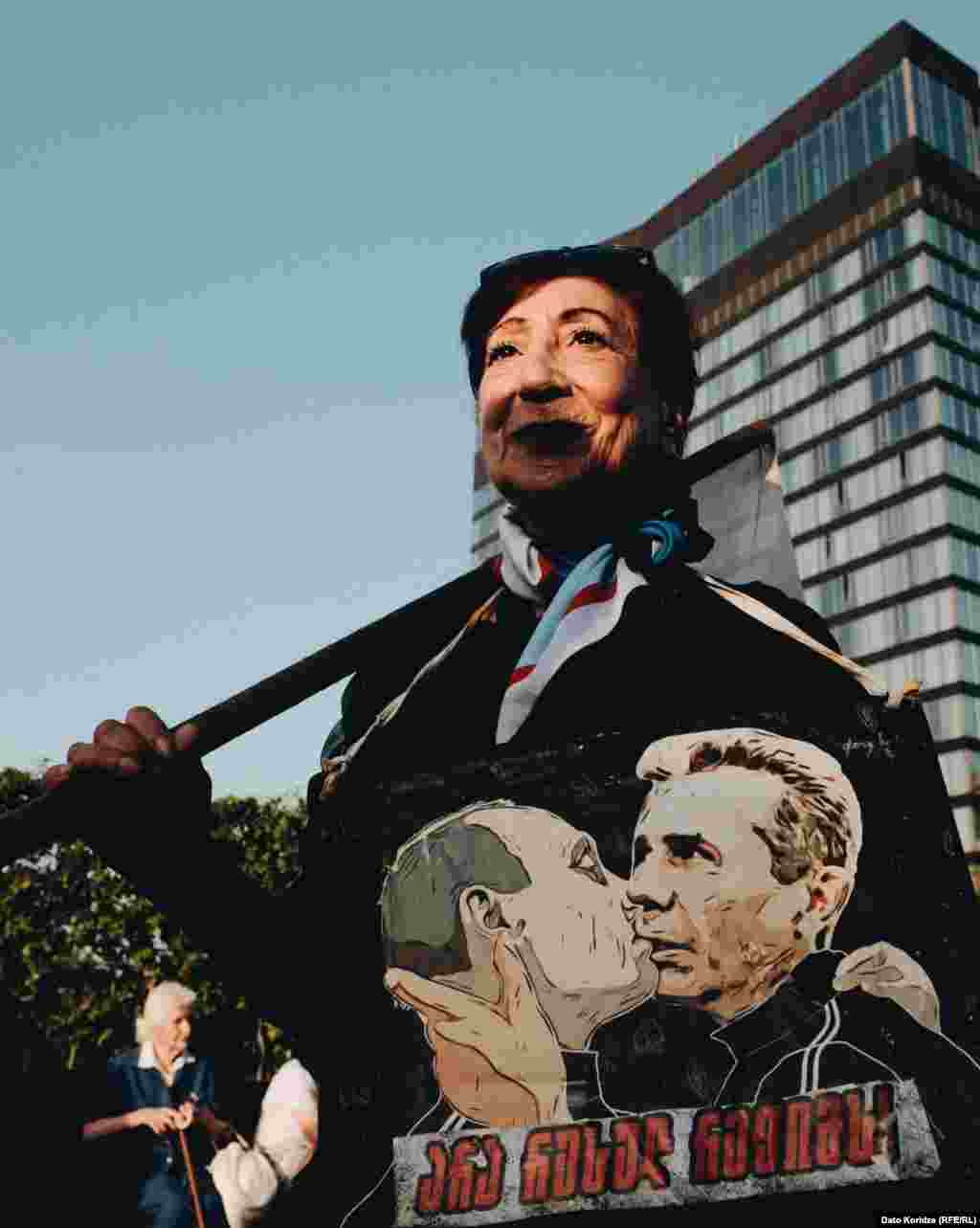
6/12A woman attends the protest earlier in the day on April 28.
Supporters of the bill say it mirrors similar U.S. legislation and promotes transparency. Opponents say the proposed legislation would stifle dissent and silence independent media. They have compared it to similar legislation in Russia, which is why many call it the "Russian law."
Tens of thousands of Georgians staged a "March for Europe" on April 28 calling on the government to discard a controversial "foreign influence" bill, which the EU has warned would undermine Tbilisi's European aspirations.
7/12Another protester carries both a Georgian and an EU flag near the parliament building.
The final reading of the bill is scheduled to be debated on May 17. Georgian President Salome Zurabishvili told media that she will veto it if it’s approved in its final reading. However, she also said the ruling Georgian Dream party has enough lawmakers to override her decision if she does so.
Tens of thousands of Georgians staged a "March for Europe" on April 28 calling on the government to discard a controversial "foreign influence" bill, which the EU has warned would undermine Tbilisi's European aspirations.
8/12Another protester smells a rose as she attends the rally.
Zurabishvili said her major concern is the fact that the bill is "exactly a copy of [Russian President Vladimir] Putin's law."
Tens of thousands of Georgians staged a "March for Europe" on April 28 calling on the government to discard a controversial "foreign influence" bill, which the EU has warned would undermine Tbilisi's European aspirations.
9/12The protest extended into the early morning of April 29 with many singing Georgian and European Union anthems while holding national flags and EU banners.
Tens of thousands of Georgians staged a "March for Europe" on April 28 calling on the government to discard a controversial "foreign influence" bill, which the EU has warned would undermine Tbilisi's European aspirations.
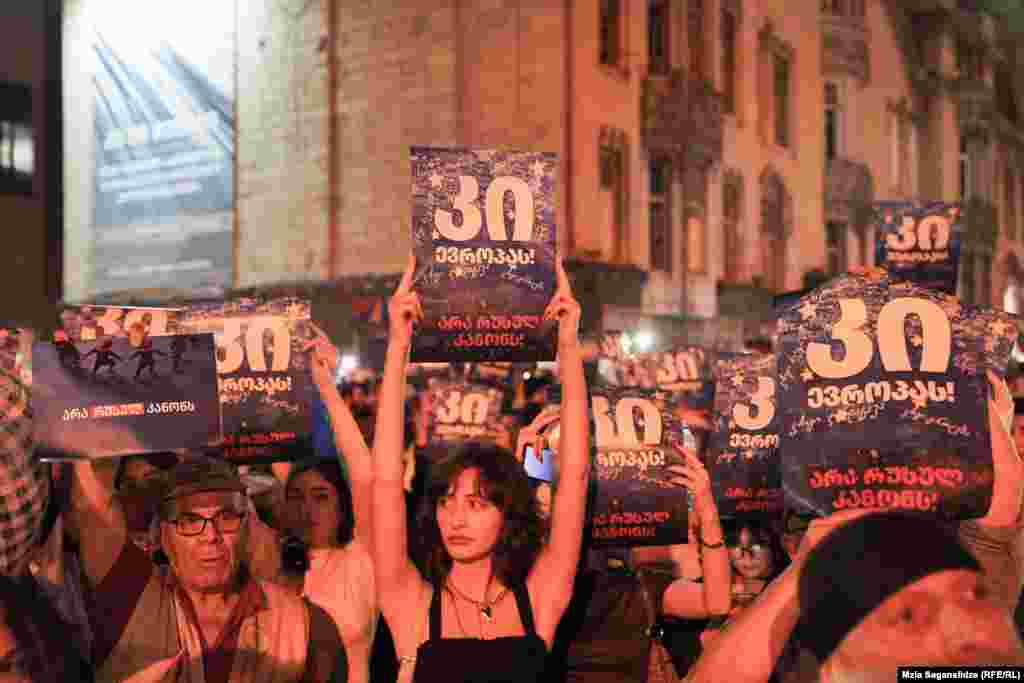
10/12Protesters hold up signs that say, "Yes to Europe" and "No to Russian law."
Tens of thousands of Georgians staged a "March for Europe" on April 28 calling on the government to discard a controversial "foreign influence" bill, which the EU has warned would undermine Tbilisi's European aspirations.
11/12Medics flush the eyes of protestors who were exposed to tear gas.
Police used tear gas and pepper spray to disperse crowds after they broke through security lines near the parliament building around midnight.
Tens of thousands of Georgians staged a "March for Europe" on April 28 calling on the government to discard a controversial "foreign influence" bill, which the EU has warned would undermine Tbilisi's European aspirations.
12/12The parliament's press center announced that only journalists from accredited TV stations would be allowed inside the building, while online and print media journalists would not be allowed to work in parliament due to "security" reasons.
Tens of thousands of Georgians staged a "March for Europe" on April 28 calling on the government to discard a controversial "foreign influence" bill, which the EU has warned would undermine Tbilisi's European aspirations.
Previous slide
Next slide
A bipartisan group of U.S. senators on April 26 warned in a letter to Georgian Prime Minister Irakli Kobakhidze that the country's plan to reintroduce a "Russian-style foreign agents law" could lead to a change in U.S. policy toward Tbilisi.
In the letter -- obtained by Voice of America (VOA) -- the senators said they were "increasingly concerned that Georgia’s transatlantic aspirations are being undermined."

EU officials have said that if Georgia adopts the bill as law, it would disrupt the South Caucasus country's membership hopes.
The ruling Georgian Dream party introduced the legislation in 2023 but was forced to withdraw it following mass protests. The party’s parliamentary group brought the law back with minor wording changes and passed its first reading on April 17.
The final reading of the bill is scheduled to be debated on May 17. Georgian President Salome Zurabishvili told the BBC that she will veto it if it's approved in its final reading.
Zurabishvili said her major concern was the fact that the bill is "exactly a copy of [Russian President Vladimir] Putin's law."
However, Zurabishvili said Georgian Dream had enough lawmakers to override her if she does use her veto.
Mamuka Mdinaradze, the leader of the parliamentary faction of Georgian Dream, said earlier this month that the party planned to reintroduce the bill, which would oblige noncommercial organizations and media outlets that receive foreign funding and who are engaged in broadly defined "political" activities to report their activities to the authorities.
It would also introduce wide oversight powers by the authorities and potential criminal sanctions for undefined criminal offenses.
Former Georgian Prime Minister Irakli Gharibashvili, the chairman of Georgia Dream, and other party leaders say the legislation is intended to increase transparency in the country’s political environment.

RFE/RL's Georgian Service is a trusted source of politically and financially independent journalism in a country where much of the media is aligned with the government or the opposition.