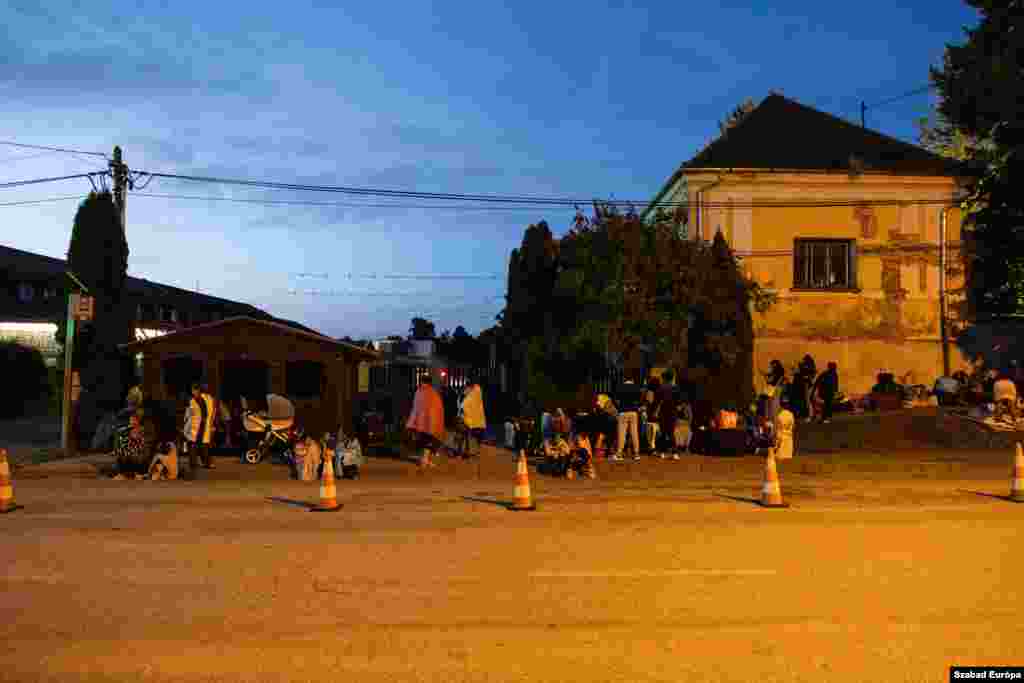
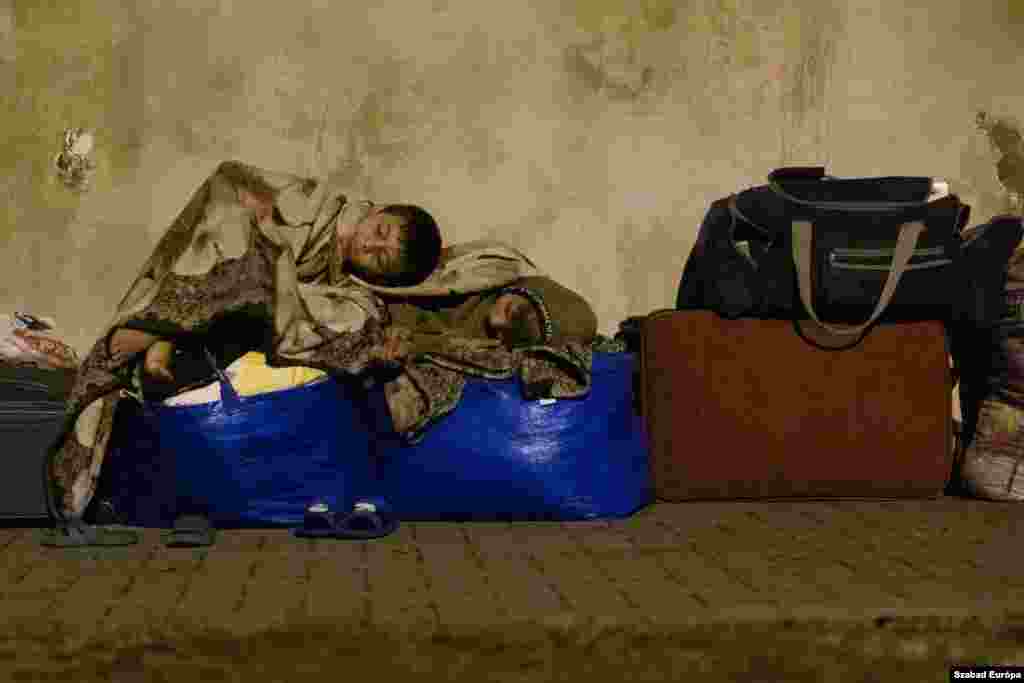
A group of about 120 refugees from western Ukraine were evicted from a privately run shelter in Kocs on August 21 after the Hungarian government decided to limit support to refugees from areas directly affected by the war.
Dozens of Ukrainian refugees, many of whom are children, spent the night sleeping on the street in Hungary after a government-approved legal change revoked their access to state-subsidized accommodation.
The refugees were evicted due to a decree signed by nationalist Prime Minister Viktor Orban that took effect on August 21. The decree limits state support for refugees who came to Hungary from parts of Ukraine that Budapest says were not affected by Russia's full-scale invasion and the war it has sparked.
"Since the publication of the government decree, we have continuously warned the parties involved and civil organizations about the problem hoping that there will be some solution. This shouldn't happen in a state based on the rule of law," Magdolna Szecsi, an equal-opportunities expert at the Civil College Foundation in Hungary, told RFE/RL on August 22.
Ukrainian Refugees Homeless After Hungary Limits Support
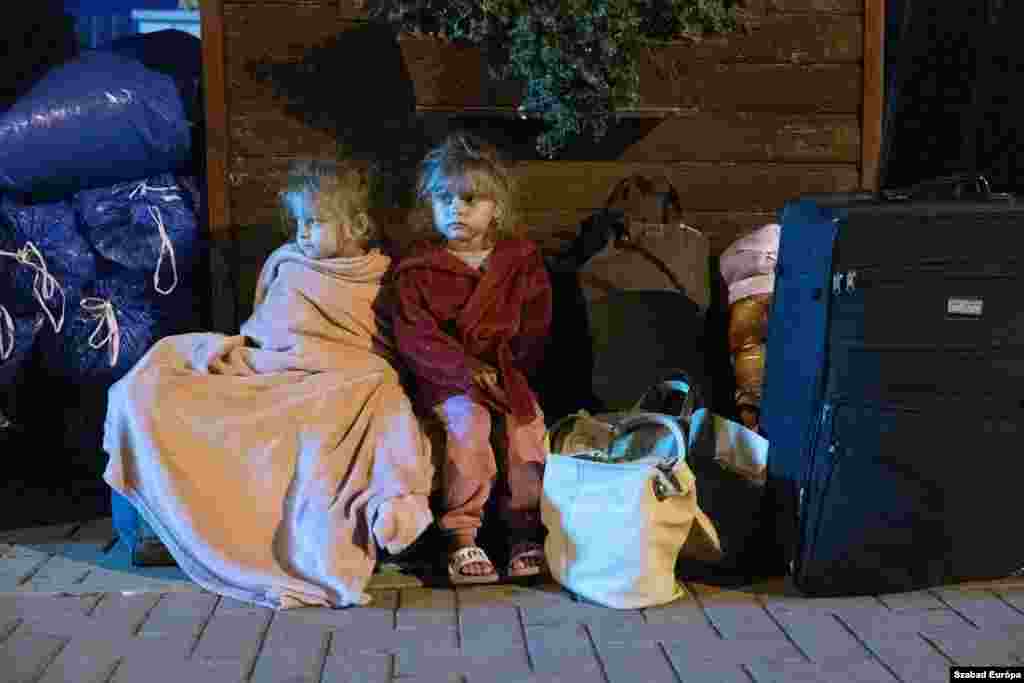
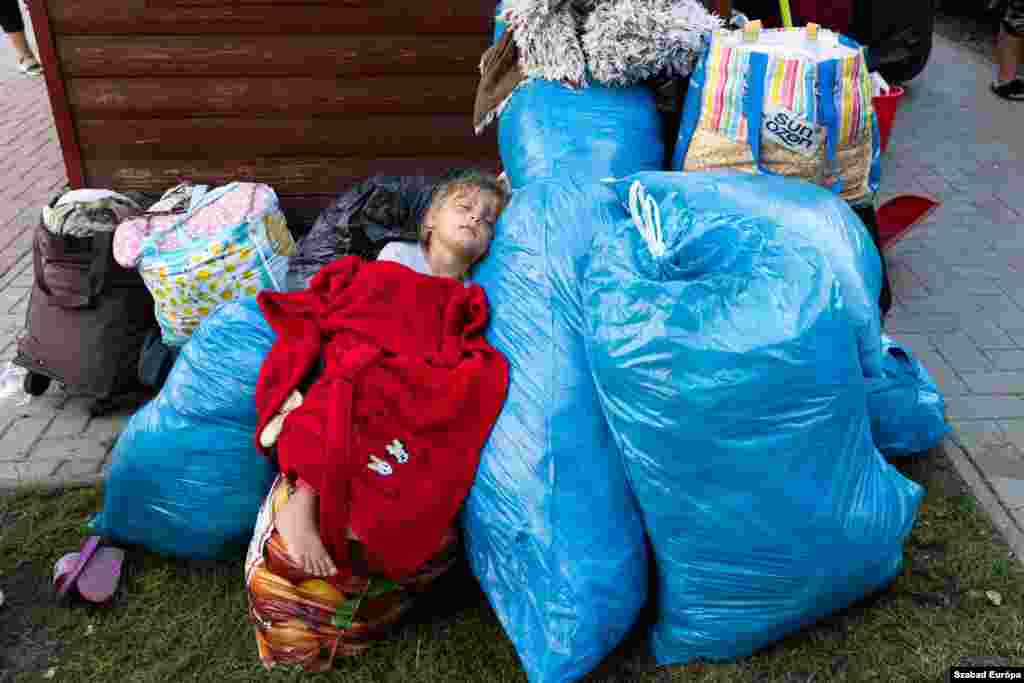
1/11Children huddle up for warmth as they try to sleep on the pavement with their belongings in the Hungarian town of Kocs, about 70 kilometers west of Budapest, on August 22. They were evicted from a privately owned shelter after a Hungarian government directive limited free shelter to refugees from conflict-affected regions of Ukraine.
At least 120 Ukrainian citizens, mainly from the Transcarpathian region, are now homeless, with thousands more facing eviction as Hungary enforces a decree that restricts state-subsidized accommodation to those directly affected by the war in Ukraine.
Show moreShow less
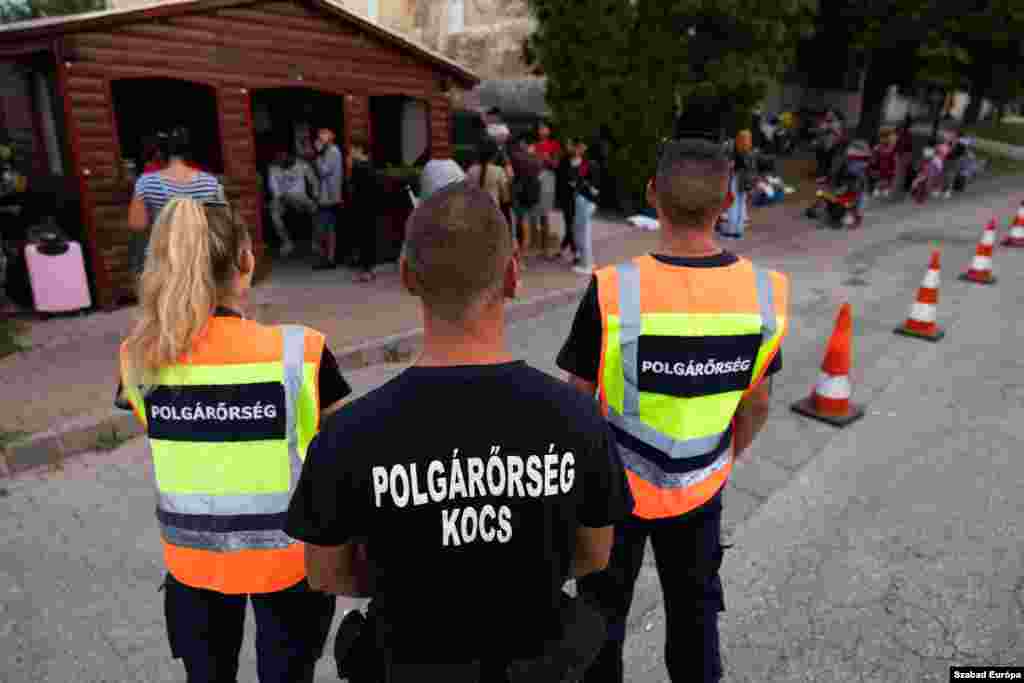
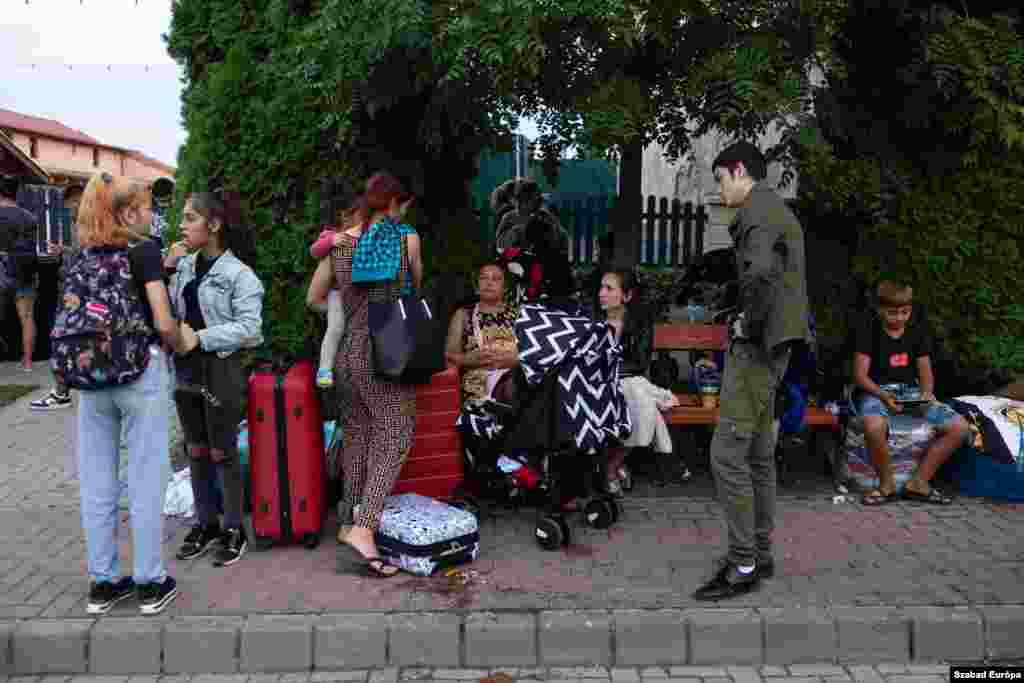
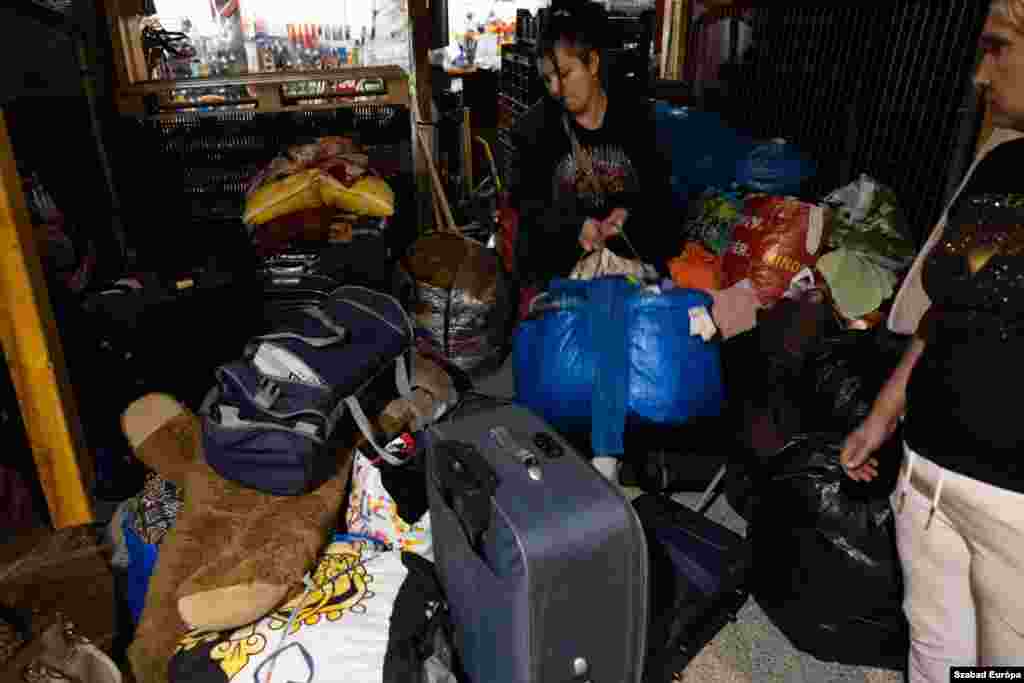
2/11Refugees, under the watch of civil guards, set up camp near a bus station after being evicted from their temporary accommodation.
At least 120 Ukrainian citizens, mainly from the Transcarpathian region, are now homeless, with thousands more facing eviction as Hungary enforces a decree that restricts state-subsidized accommodation to those directly affected by the war in Ukraine.
Show moreShow less
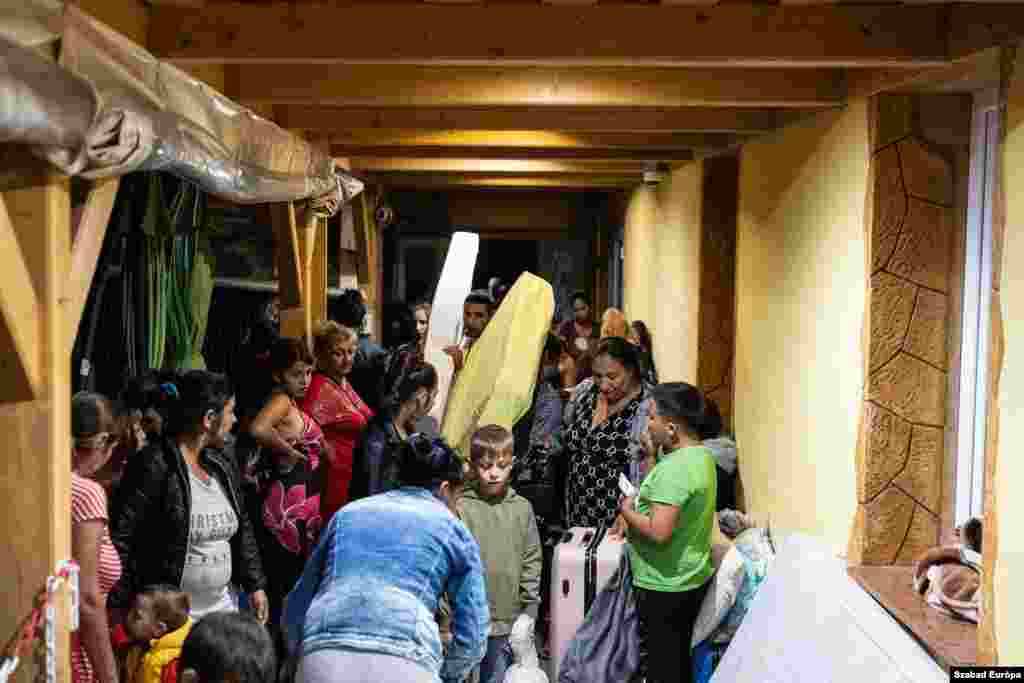
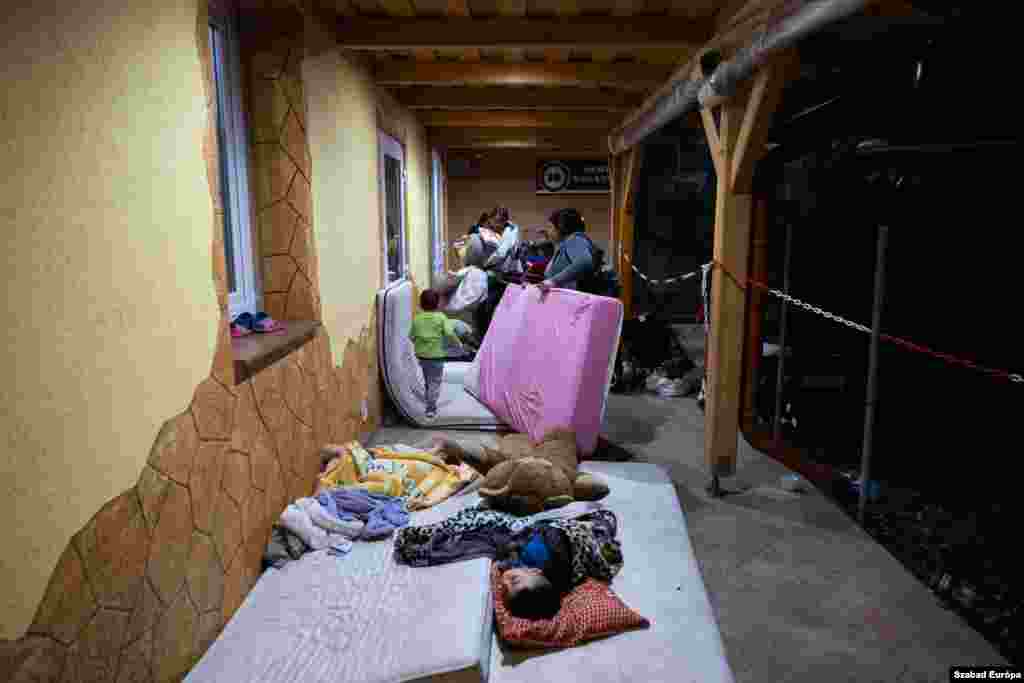
3/11Donated mattresses are passed along as families with young children prepare to sleep for the night at the bus station.
At least 120 Ukrainian citizens, mainly from the Transcarpathian region, are now homeless, with thousands more facing eviction as Hungary enforces a decree that restricts state-subsidized accommodation to those directly affected by the war in Ukraine.
Show moreShow less
4/11Throughout the night, police monitored the area to ensure that children did not wander into traffic.
At least 120 Ukrainian citizens, mainly from the Transcarpathian region, are now homeless, with thousands more facing eviction as Hungary enforces a decree that restricts state-subsidized accommodation to those directly affected by the war in Ukraine.
Show moreShow less
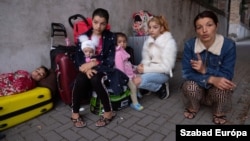
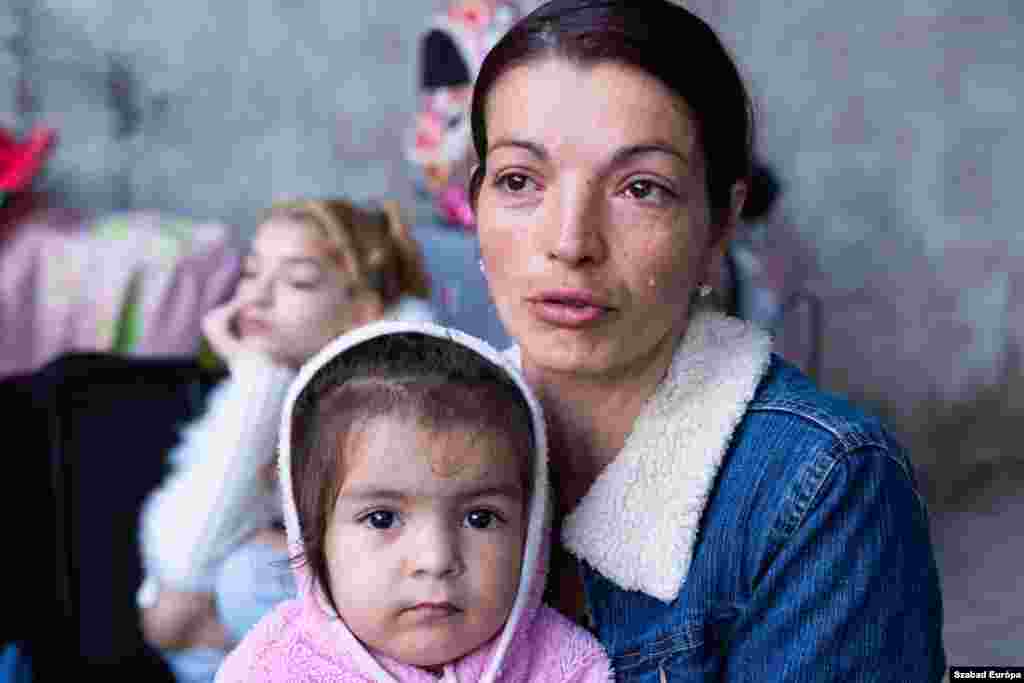
5/11Olga Berki, pictured with her granddaughter, fled from Badalo, Transcarpathia, leaving behind her husband and other family members, including an uncle who died fighting Russian forces.
At least 120 Ukrainian citizens, mainly from the Transcarpathian region, are now homeless, with thousands more facing eviction as Hungary enforces a decree that restricts state-subsidized accommodation to those directly affected by the war in Ukraine.
Show moreShow less
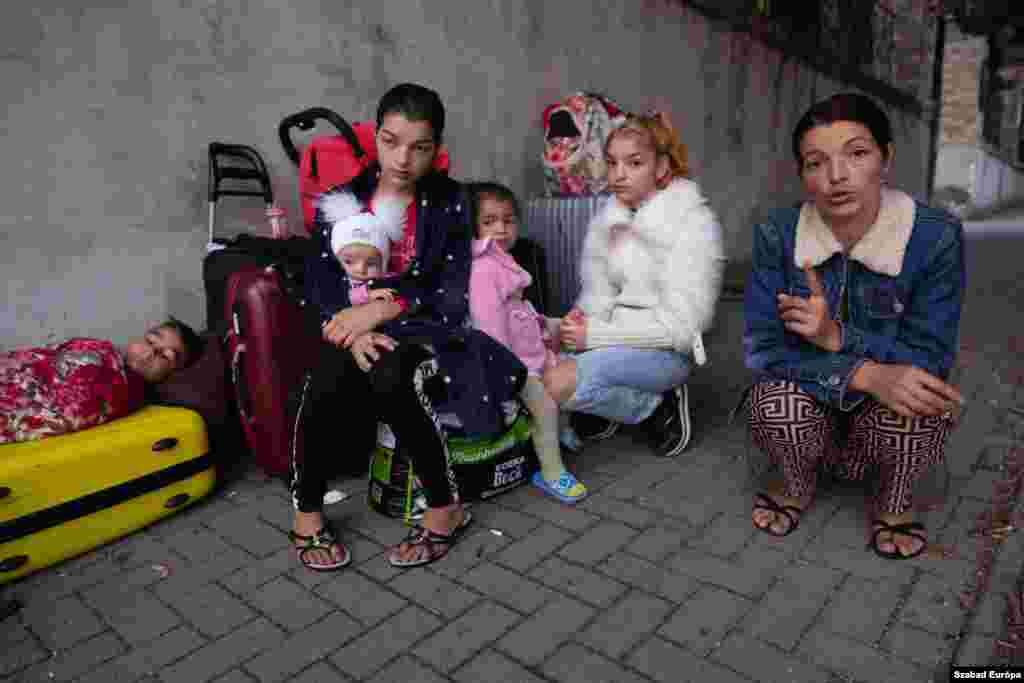
6/11Olga (right) and her daughter Kata (left, holding her daughter) are now living here.
At least 120 Ukrainian citizens, mainly from the Transcarpathian region, are now homeless, with thousands more facing eviction as Hungary enforces a decree that restricts state-subsidized accommodation to those directly affected by the war in Ukraine.
Show moreShow less
7/11Many displaced persons are either paying for their own housing or staying with family, friends, or volunteers, struggling to find stability amid the ongoing war.
At least 120 Ukrainian citizens, mainly from the Transcarpathian region, are now homeless, with thousands more facing eviction as Hungary enforces a decree that restricts state-subsidized accommodation to those directly affected by the war in Ukraine.
Show moreShow less
8/11Civic organizations warn that the new legislation could leave thousands of refugees homeless, as many lack the means or are unwilling to return home while Russia's invasion of Ukraine continues.
At least 120 Ukrainian citizens, mainly from the Transcarpathian region, are now homeless, with thousands more facing eviction as Hungary enforces a decree that restricts state-subsidized accommodation to those directly affected by the war in Ukraine.
Show moreShow less
9/11Government commissioner Norbert Pal defended the change as "reasonable and proportionate" after 2 1/2 years of war. He told the pro-government Magyar Nemzet newspaper that "those who wanted to get back on their feet in Hungary have been able to do so."
At least 120 Ukrainian citizens, mainly from the Transcarpathian region, are now homeless, with thousands more facing eviction as Hungary enforces a decree that restricts state-subsidized accommodation to those directly affected by the war in Ukraine.
Show moreShow less
10/11When Russian troops invaded Ukraine on February 24, 2022, the European Union Council activated its 2001 Temporary Protection Directive, granting Ukrainian refugees residency, access to public service, and the labor market in host countries.
At least 120 Ukrainian citizens, mainly from the Transcarpathian region, are now homeless, with thousands more facing eviction as Hungary enforces a decree that restricts state-subsidized accommodation to those directly affected by the war in Ukraine.
Show moreShow less
11/11There are currently 4.19 million displaced Ukrainians across the EU -- with over 1.2 million in Germany, nearly a 1 million in Poland, and 400,000 in the Czech Republic -- dwarfing the numbers in Hungary.
At least 120 Ukrainian citizens, mainly from the Transcarpathian region, are now homeless, with thousands more facing eviction as Hungary enforces a decree that restricts state-subsidized accommodation to those directly affected by the war in Ukraine.
Show moreShow less
Previous slide
Next slide
Szecsi said many of those forced onto the street are Transcarpathian Roma who do not want to return to Ukraine, where their living conditions were "inhumane." Transcarpathia, located in the western part of Ukraine, is home to a large ethnic Hungarian community.
Since moving to Hungary, she added, they have begun to integrate by sending their children to school and getting jobs. However, without the subsidies for housing, they cannot afford a place to live.
"I don't know what kind of solution can be found, but it is certain that these people do not want to leave here," Szecsi said.
According to the Hungarian government, 13 regions in Ukraine are currently accepted as directly affected by the war. While all parts of Ukraine have been subjected to attacks by Russia, the front line of the war runs mainly through the eastern and southern parts of the country.
Norbert Pal, the government commissioner responsible for those who have fled Ukraine, said the decree was "reasonable and proportionate" and that those who "wanted to get back on their feet in Hungary have been able to do so."
Last week the UN refugee agency, UNHCR, expressed "concern" over the law saying up to 3,000 Ukrainians could lose access to subsidized accommodation.
"UNHCR consistently calls on EU Member States to interpret and implement the Temporary Protection Directive in a uniform and inclusive manner. The directive also requires Hungary to provide those with asylum status with suitable accommodation and housing," it said in a statement.
"Accordingly, the UNHCR urges the Hungarian Government to review the current amendment. All changes related to collective accommodation must be gradual and adequate measures must be taken to prevent anyone from becoming homeless or forced to destitution as a result of the changes," it added.
RFE/RL’s Hungarian Service -- closed after the Cold War ended -- was relaunched on September 8, 2020, in response to the country’s steep decline in media freedom. It's an entirely digital service dedicated to serving the public interest by representing a diversity of views and providing reliable, unbiased reporting about the issues audiences care about most.